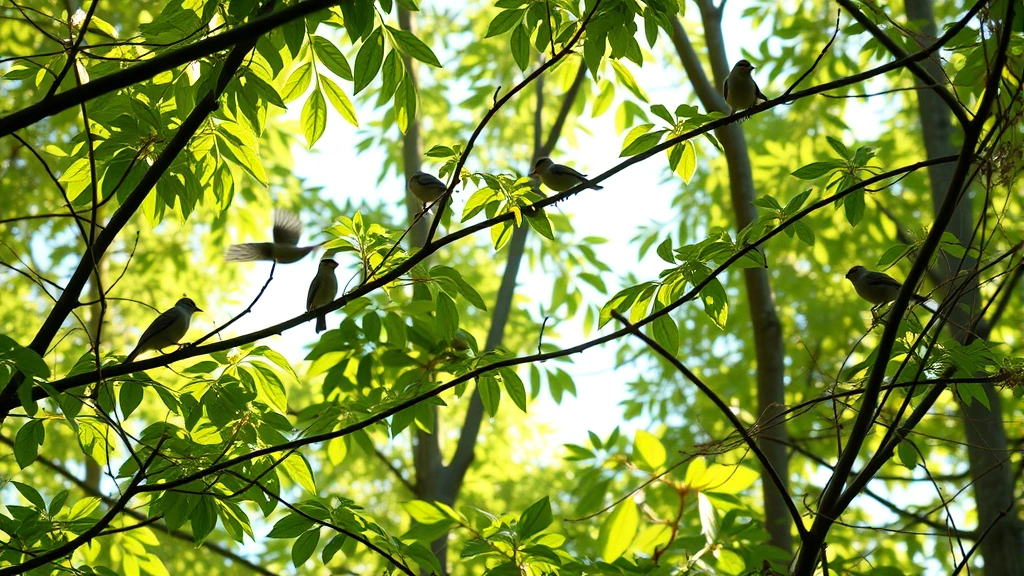
Songbirds’ Role in Ecosystems: Expert Insights
Songbirds represent one of nature’s most sophisticated ecological engineers, wielding disproportionate influence over ecosystem stability despite their relatively modest biomass. These avian species—comprising over 4,000 species globally—serve as keystone organisms whose activities cascade through multiple trophic levels, fundamentally shaping forest structure, pest dynamics, and nutrient cycling. Their decline, documented at rates exceeding 2.9 billion individuals lost in North America over the past five decades, signals profound disruptions to ecosystem functioning that extend far beyond ornithological concern.
Understanding songbirds requires examining their position within complex ecological networks where they simultaneously occupy roles as insectivores, seed dispersers, nutrient transporters, and indicator species. This multifaceted engagement with their environment makes them invaluable subjects for studying how biodiversity loss translates into ecosystem service degradation. The relationship between songbirds and their environment exemplifies the intricate interdependencies that characterize healthy, resilient ecosystems—dependencies increasingly threatened by habitat fragmentation, pesticide application, light pollution, and climate disruption.
Songbirds as Insect Population Controllers
The ecological significance of songbirds as natural pest control agents cannot be overstated. A single songbird family can consume thousands of insects during breeding season, with some species targeting specific pest taxa that would otherwise proliferate unchecked. Research demonstrates that a breeding pair of insectivorous songbirds removes between 3,000 and 40,000 arthropods from their territory annually, depending on species, habitat quality, and seasonal availability. This predation pressure fundamentally alters insect community composition and population dynamics across forest ecosystems.
The economic implications of this ecosystem service prove substantial. World Bank assessments value bird-mediated pest control at approximately $50 billion annually in global agricultural systems alone. When extended to natural forest ecosystems, where songbirds suppress gypsy moths, bark beetles, and defoliating caterpillars, the protective value becomes incalculable. Without songbird predation, forest productivity would decline significantly as pest populations exploded, compromising timber production, carbon sequestration capacity, and overall ecosystem resilience.
Songbird predation exhibits density-dependent characteristics where predation intensity increases with prey abundance, creating negative feedback loops that prevent pest outbreaks. This self-regulating mechanism represents an evolutionary-honed system far more efficient than broad-spectrum pesticide application. When songbird populations decline, this regulatory capacity diminishes, sometimes triggering cascading pest irruptions. Studies of forests experiencing songbird population crashes have documented increases in defoliating insects that subsequently damage tree health, reduce forest cover, and alter microclimatic conditions throughout entire landscapes.
Seed Dispersal and Forest Regeneration
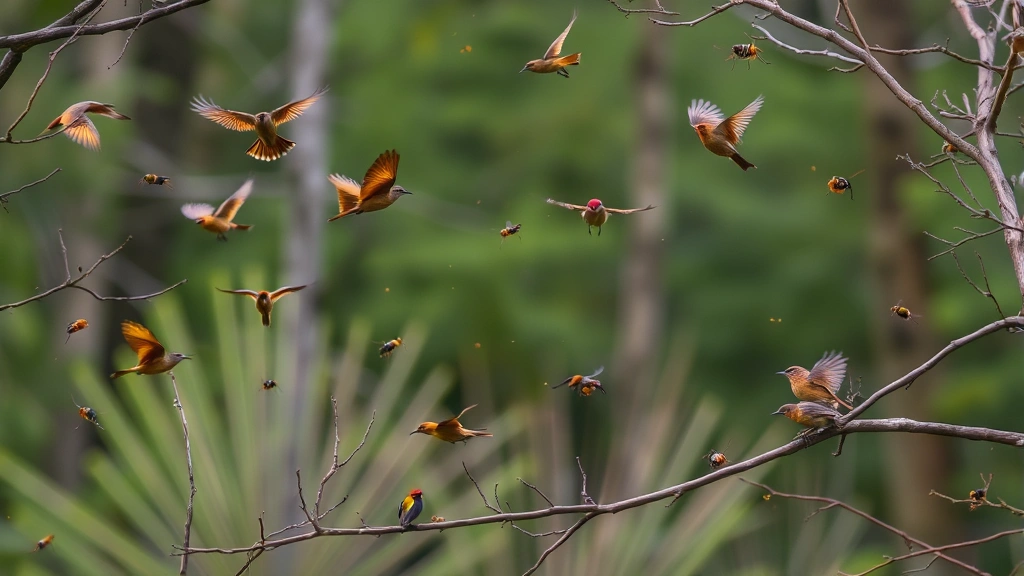
Songbirds function as critical seed dispersal vectors, particularly for shrubs and understory trees whose reproductive success depends on bird-mediated transport. Frugivorous songbirds consume thousands of seeds annually, transporting them across considerable distances and depositing them in feces in locations favorable for germination. This dispersal mechanism generates spatial heterogeneity in forest composition, creating diverse microhabitats that support broader biodiversity. The relationship between songbird activity and forest regeneration patterns directly influences environmental structure and function across multiple scales.
The efficiency of songbird dispersal depends on several factors including fruit phenology, bird movement patterns, and habitat connectivity. Migratory songbirds prove particularly important, as they transport seeds across continental distances during spring and fall movements. A single migratory songbird can disperse seeds from tropical wintering grounds to temperate breeding grounds, effectively colonizing new territories and maintaining genetic connectivity between distant populations. This long-distance dispersal capacity becomes increasingly critical as climate change forces species range shifts and habitat fragmentation limits natural movement corridors.
Forest regeneration following disturbance events—whether natural (windstorms, fires) or anthropogenic (logging)—depends substantially on songbird dispersal services. In recovering forests, songbirds facilitate the establishment of pioneer species that subsequently create conditions for shade-tolerant, late-successional species. Without adequate songbird populations, forest recovery trajectories shift toward species compositions dominated by wind-dispersed or gravity-dispersed plants, reducing structural complexity and biodiversity. This pathway dependence means that songbird declines during critical recovery windows can permanently alter forest community composition.
” alt=”Forest canopy with songbirds in natural habitat”>
Nutrient Cycling and Landscape Connectivity
Songbirds participate in nutrient cycling through multiple mechanisms including nutrient excretion, carcass deposition, and prey transport. Migratory songbirds accumulate nutrients in tropical ecosystems during non-breeding seasons, subsequently transporting these nutrients to temperate forests via their bodies and metabolic products. This mechanism creates a bidirectional nutrient flux between geographically distant ecosystems, effectively subsidizing nutrient-limited northern forests with tropical productivity. The magnitude of this nutrient transfer, while difficult to quantify precisely, becomes apparent when considering continental-scale songbird populations numbering in billions.
The concept of human-environment interaction intersects directly with songbird nutrient transport, as habitat fragmentation disrupts migratory corridors and concentrates nutrient cycling in fragmented patches. Landscape connectivity—the degree to which habitats remain linked rather than isolated—fundamentally determines songbird effectiveness as nutrient vectors. Fragmented landscapes where songbirds face barriers to movement experience disrupted nutrient transport, potentially creating localized nutrient depletion in breeding areas and nutrient accumulation in stopover sites.
Research on songbird carcass deposition reveals that predation by raptors and other predators creates localized nutrient hotspots where songbird remains decompose and release phosphorus, nitrogen, and other essential elements. Owl pellets containing songbird remains demonstrate nutrient concentration mechanisms where nutrients originally dispersed across large feeding territories become concentrated in specific locations. These nutrient deposits support specialized plant communities and invertebrate assemblages, creating biodiversity hotspots within larger forest matrices. The loss of songbird populations therefore reduces nutrient heterogeneity and potentially diminishes landscape-level biodiversity.
Indicator Species and Environmental Health
Songbirds function as sentinel organisms whose population trends reflect broader environmental conditions and ecosystem health status. The remarkable sensitivity of songbirds to habitat quality, pesticide contamination, light pollution, and climate change makes them ideal indicators for environmental monitoring. Conservation organizations and governmental agencies worldwide employ songbird monitoring programs to assess ecosystem integrity, with population trends serving as early warning systems for environmental degradation. This indicator function connects songbirds directly to scientific definitions of environment as integrated systems where biotic components reflect abiotic conditions.
The North American Breeding Bird Survey, spanning over five decades and encompassing thousands of monitoring routes, provides unparalleled data on songbird population dynamics. Analysis of this dataset reveals consistent declines in multiple songbird families, particularly long-distance migrants. These declines correlate strongly with habitat loss, pesticide application intensification, and climate warming, suggesting that songbird population trends accurately reflect multiple stressors affecting ecosystems broadly. When songbird populations decline, managers should recognize these signals as indicators of systemic environmental problems requiring comprehensive solutions.
Specific songbird species serve as indicators of particular habitat conditions or environmental stressors. Wood thrushes indicate mature forest integrity and connectivity, with their presence suggesting unfragmented forest structure. Prothonotary warblers indicate wetland quality and hydrological function, making their status a proxy for wetland ecosystem health. Cerulean warblers indicate forest canopy continuity and structural complexity. By monitoring these species-specific indicators, environmental managers gain nuanced understanding of ecosystem conditions and can target restoration efforts toward addressing specific limiting factors.
Threats to Songbird Populations
Songbird populations face unprecedented pressures from multiple, often synergistic threats that operate across breeding, migration, and wintering grounds. Habitat loss remains the primary driver of songbird decline, with forest fragmentation, agricultural intensification, and urban expansion converting continuous habitats into isolated patches. Fragmentation creates edge effects where increased predation, parasitism, and microclimatic stress reduce reproductive success. Additionally, fragmented landscapes increase collision mortality with human structures and elevate exposure to pesticides applied in surrounding agricultural matrices.
Pesticide application represents a second critical threat, operating through both direct toxicological effects and indirect mechanisms that reduce insect prey availability. Neonicotinoid insecticides, widely applied to agricultural crops and ornamental plants, persist in environments and accumulate in songbird tissues, causing neurological damage and reproductive impairment. More subtly, broad-spectrum pesticides dramatically reduce insect abundance, creating food scarcity during critical breeding and migration periods. A single application of neonicotinoids can reduce arthropod biomass by 75 percent, effectively eliminating food resources for insectivorous songbirds across entire regions.
Light pollution and window collisions cause substantial songbird mortality. Artificial nighttime lighting disorients migratory songbirds, causing them to collide with illuminated buildings or become exhausted from flying in circles around light sources. Estimates suggest that building collisions alone kill hundreds of millions of songbirds annually in North America. These collisions concentrate in urban and suburban areas where songbird populations often already face habitat degradation, compounding population pressures. The solution involves reducing unnecessary nighttime lighting and implementing bird-safe building design principles.
Climate change creates cascading effects on songbird populations through multiple pathways. Phenological mismatches occur when songbirds arrive at breeding grounds before food resources peak, reducing nestling nutritional intake and fledging success. Range shifts in both songbirds and their prey create novel species interactions and habitat availability changes. Extreme weather events—severe storms, droughts, floods—directly cause mortality and reduce breeding success. Additionally, climate change alters vegetation composition, potentially reducing availability of preferred nest trees and food plants.
” alt=”Diverse songbird species perched in natural woodland setting”>
Conservation Strategies and Ecosystem Recovery
Effective songbird conservation requires comprehensive, landscape-scale approaches addressing multiple threat categories simultaneously. Habitat restoration represents the foundational conservation strategy, involving reforestation, wetland restoration, and grassland management to create suitable breeding habitat. Reducing carbon footprint through habitat restoration and forest protection contributes directly to songbird conservation while simultaneously addressing climate change. Protecting existing old-growth forests proves more cost-effective than attempting to restore degraded habitats, making forest preservation a conservation priority.
Habitat connectivity deserves particular emphasis, as maintaining corridors that link fragmented patches enables songbird movement and reduces isolation effects. Corridor creation can involve planting riparian buffers, establishing hedgerows in agricultural landscapes, and protecting greenways in urban areas. These connectivity improvements benefit not only songbirds but entire ecological communities, generating broad ecosystem resilience benefits. Conservation planning should explicitly consider landscape connectivity when prioritizing habitat protection and restoration investments.
Pesticide reduction represents another critical conservation strategy with multiple co-benefits. Transitioning agricultural systems toward integrated pest management, organic farming, and reduced-input approaches restores insect communities and eliminates direct toxicological threats to songbirds. Sustainable production practices across economic sectors reduce pesticide contamination and support broader environmental health. Individual homeowners can contribute by eliminating pesticide use in gardens and yards, collectively creating pesticide-free habitat patches that support songbird food webs.
Light pollution mitigation involves reducing unnecessary outdoor lighting, implementing motion sensors and timers, using warm-colored bulbs that disorient fewer birds, and directing light downward rather than upward. These changes require minimal investment while generating substantial songbird mortality reductions. Building design modifications—installing bird-safe glass, reducing reflective surfaces, eliminating building-mounted lights—prevent collisions while enhancing urban aesthetics. Municipal governments increasingly adopt dark sky ordinances and bird-safe building standards, creating regulatory frameworks that institutionalize songbird protection.
Climate change mitigation through carbon emissions reduction provides essential long-term songbird conservation benefits. Renewable energy adoption and energy efficiency improvements reduce greenhouse gas emissions while creating opportunities for habitat restoration on land previously devoted to fossil fuel extraction. Integrating climate adaptation into conservation planning—such as facilitating range shifts and maintaining genetic diversity—enhances songbird population resilience to climate impacts.
International cooperation proves essential given songbirds’ migratory nature and the need for coordinated habitat protection across multiple countries. The Migratory Bird Treaty Act and similar international agreements establish legal frameworks for songbird protection, though enforcement and adequate funding remain persistent challenges. Bilateral and multilateral conservation agreements between wintering and breeding ground countries facilitate information sharing and coordinated management strategies. Research collaborations across international boundaries advance understanding of population dynamics and threat mechanisms operating across geographic scales.
FAQ
Why do songbirds matter if they represent small biomass?
Songbirds demonstrate keystone species characteristics where their ecological impact far exceeds their biomass. Their roles as pest controllers, seed dispersers, and nutrient transporters generate ecosystem services worth billions annually. Additionally, their indicator function provides early warning of environmental problems, making them valuable for environmental monitoring and ecosystem assessment.
How many songbirds have declined and why?
North America has lost approximately 2.9 billion songbirds since 1970, representing a 29 percent population decline. Primary causes include habitat fragmentation, pesticide application, light pollution, window collisions, and climate change. These threats often operate synergistically, making comprehensive conservation approaches essential.
Can songbirds recover if we protect habitat?
Songbird populations can recover when comprehensive conservation addresses multiple threats simultaneously. Habitat protection alone proves insufficient if pesticide application continues or light pollution persists. However, integrated conservation approaches combining habitat restoration, threat reduction, and climate mitigation demonstrate capacity to stabilize and recover songbird populations within decades.
What can individuals do to help songbirds?
Individual actions include reducing pesticide use, installing bird-friendly windows, reducing outdoor lighting, maintaining native plants for food and shelter, protecting local habitats, and supporting conservation organizations. Collective individual action generates landscape-scale impacts that complement governmental and organizational conservation efforts.
How do songbirds respond to climate change?
Songbirds respond through range shifts, phenological changes, and altered breeding success. Some species shift northward or to higher elevations, while others face phenological mismatches between arrival timing and food availability. Long-term population viability depends on habitat availability in new ranges and maintenance of adequate genetic diversity for adaptation.


