
Tech’s Environmental Impact: A 2023 Overview
Technology has become the defining force of our era, reshaping economies, societies, and ecosystems at unprecedented scales. From artificial intelligence processing centers consuming vast quantities of electricity to renewable energy innovations transforming power grids, the relationship between technological advancement and environmental outcomes remains profoundly complex. In 2023, this paradox intensified: while digital solutions offered pathways toward sustainability, the material and energetic demands of technology itself generated mounting environmental pressures. Understanding these dual dynamics requires examining technology not as monolithic good or evil, but as a multifaceted system embedded within ecological and economic realities.
The technological sector now represents one of the world’s most consequential environmental actors. Data centers, semiconductor manufacturing, electronic waste streams, and supply chain networks collectively shape carbon emissions, water consumption, biodiversity loss, and resource depletion patterns. Yet simultaneously, renewable energy technologies, precision agriculture, environmental monitoring systems, and circular economy innovations demonstrate technology’s capacity for ecological restoration. This 2023 overview synthesizes empirical evidence, economic analysis, and systems thinking to illuminate how technology fundamentally alters our planet’s carrying capacity and future sustainability trajectories.
The Carbon Footprint of Digital Infrastructure
The information and communications technology (ICT) sector accounts for approximately 2-3% of global greenhouse gas emissions, rivaling the aviation industry. This figure encompasses data center operations, telecommunications networks, device manufacturing, and user-end electricity consumption. Data centers alone consume roughly 1% of global electricity, with projections suggesting this could reach 3-4% by 2030 if current growth trajectories continue unchecked. The impact of technology on the environment manifests most acutely in these energy-intensive operations, where cooling requirements and processing demands drive continuous power consumption.
Hyperscale data centers operated by major technology corporations have become cities of computation, processing trillions of transactions daily. The energy intensity of machine learning and artificial intelligence training exemplifies this challenge—training a single large language model generates carbon emissions equivalent to hundreds of transatlantic flights. However, technological heterogeneity matters significantly: renewable energy adoption varies dramatically among providers. Companies investing in wind and solar infrastructure reduce their operational carbon intensity, while others remain dependent on fossil fuel grids. This creates competitive advantages for firms prioritizing environmental considerations in corporate strategy, though market failures persist in pricing carbon externalities accurately.
The embodied carbon in semiconductor manufacturing deserves particular attention. Producing a single microchip requires extensive water, rare earth elements, and energy-intensive chemical processes. The semiconductor industry’s expansion to meet artificial intelligence and computing demands has accelerated this environmental pressure. Supply chain complexity obscures full carbon accounting—a smartphone’s lifecycle emissions often exceed 100 kilograms of CO2 equivalent when manufacturing, transportation, and end-of-life processing are included. Understanding these systemic impacts requires examining specific human-environment interaction patterns embedded in technology production networks.
Electronic Waste and Resource Extraction
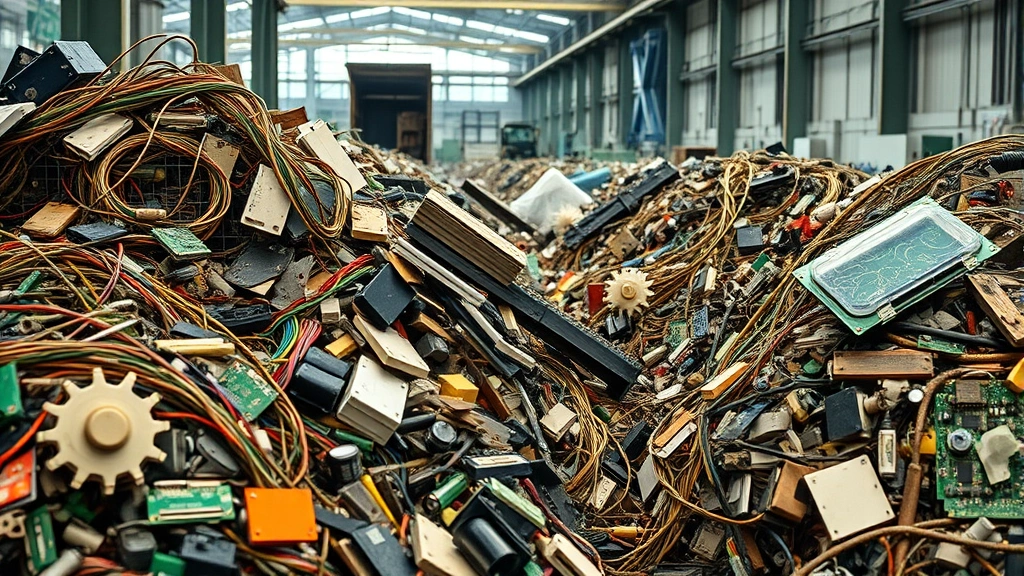
Global electronic waste generation reached 62 million metric tons in 2022, with only 22% being formally recycled. This represents one of the fastest-growing waste streams globally, driven by accelerating device replacement cycles and planned obsolescence business models. The environmental consequences extend far beyond waste volume—electronic devices contain hazardous substances including lead, mercury, cadmium, and brominated flame retardants that contaminate soil and water systems when improperly disposed. Informal recycling in developing nations exposes workers and communities to severe health risks while recovering minimal material value.
Resource extraction for technology manufacturing creates profound ecological disruption. Lithium mining for battery production has depleted water aquifers in South American salt flats, threatening indigenous communities and fragile ecosystems. Cobalt extraction in the Democratic Republic of Congo involves artisanal mining operations with minimal environmental or labor protections. Rare earth element processing in China generates toxic tailings containing radioactive thorium and uranium. These extraction patterns exemplify how technology’s environmental burden distributes unequally across geographies, with wealthy nations consuming resources while bearing minimal extraction costs, while resource-rich developing nations absorb environmental degradation and health externalities.
The circular economy presents theoretical solutions through material recovery and remanufacturing, yet implementation remains limited. Recovering gold, copper, and precious metals from electronic waste costs more than primary extraction in many cases, creating perverse economic incentives. Furthermore, technological complexity—integrated circuits, composite materials, and proprietary designs—complicates disassembly and material separation. Designing for circularity requires fundamental changes in product architecture, business models, and supply chain structures, demanding regulatory intervention and technological innovation simultaneously. Understanding these challenges connects to broader positive human impacts on the environment through sustainable design approaches.
Water Consumption and Pollution
Technology’s water demands have intensified dramatically with data center expansion and semiconductor manufacturing scaling. A single data center can consume millions of gallons daily for cooling purposes, competing with agricultural and municipal water supplies in water-stressed regions. Taiwan’s semiconductor industry, concentrated in water-scarce regions, consumes approximately 8% of national water supplies, exacerbating droughts affecting agriculture and domestic consumption. Technology’s water footprint extends through supply chains—cotton production for device packaging, paper manufacturing for documentation, and chemical processing for component production all demand substantial water inputs.
Water pollution from technology manufacturing introduces persistent contaminants into aquatic ecosystems. Semiconductor fabrication releases perfluorinated compounds (PFCs) into groundwater, affecting drinking water supplies in multiple countries. Electronics manufacturing generates effluent containing heavy metals and organic solvents that bioaccumulate through food chains. Lithium extraction for batteries acidifies water sources and increases salinity levels, rendering water unsuitable for agriculture or human consumption. These pollution patterns create long-term ecological damage and economic costs borne by downstream communities and future generations.
The geographic concentration of manufacturing in developing nations with minimal water protection regulations exacerbates environmental justice concerns. Corporations optimize for cost reduction while externalizing environmental and health costs onto vulnerable populations. This dynamic reflects deeper systemic problems in how technology companies account for natural capital—water remains underpriced in markets, creating inadequate incentives for conservation or pollution prevention. Addressing these issues requires integrated policy approaches combining water pricing reform, manufacturing standards, and corporate accountability mechanisms.

Technology as Environmental Solution
Despite these substantial challenges, technology simultaneously offers crucial mechanisms for environmental monitoring, conservation, and sustainable transitions. Renewable energy technologies—solar photovoltaics, wind turbines, geothermal systems—have experienced exponential cost reductions driven by technological innovation and manufacturing scaling. Solar electricity costs declined 90% over the past decade, fundamentally altering energy economics and enabling grid decarbonization pathways. Battery storage technologies have advanced sufficiently to support grid-scale renewable integration, creating technical feasibility for deep decarbonization scenarios.
Digital technologies enable precision agriculture, reducing fertilizer and pesticide applications through sensor networks and data analytics. Remote sensing via satellites monitors deforestation, wetland degradation, and ecosystem health at continental scales. Artificial intelligence optimizes building energy consumption, industrial processes, and transportation networks, identifying efficiency improvements that would be computationally infeasible through traditional analysis. Internet of Things sensors track environmental parameters in real-time, enabling adaptive management of water systems, air quality, and biodiversity conservation efforts.
Climate modeling relies entirely on computational infrastructure, with supercomputers simulating atmospheric dynamics, ocean circulation, and ice sheet behavior. These models inform climate policy, disaster preparedness, and adaptation planning across global institutions. Blockchain technologies enable transparent supply chain tracking for sustainable products, though their energy requirements remain controversial. Virtual and augmented reality applications reduce physical travel demands for professional meetings, potentially decreasing transportation-related emissions. These solutions demonstrate technology’s capacity for environmental benefit when designed and deployed with ecological considerations prioritized.
Economic Implications and Policy Frameworks
The technology sector’s environmental impacts generate substantial economic externalities—costs imposed on society and ecosystems rather than reflected in market prices. The World Bank estimates environmental degradation costs at 4-6% of GDP annually in many developing nations, with technology-related extraction and manufacturing contributing significantly. These unpriced externalities create market failures where private profits diverge from social welfare, incentivizing overproduction of environmentally damaging technologies.
Policy frameworks addressing technology’s environmental impact remain fragmented and inadequate. The European Union’s Digital Product Passport initiative requires transparency in device environmental impacts, attempting to internalize information asymmetries. Extended Producer Responsibility (EPR) policies shift waste management costs to manufacturers, creating incentives for circular design. However, enforcement remains weak and jurisdictional arbitrage allows corporations to relocate manufacturing to less-regulated regions. Carbon pricing mechanisms, when implemented, create economic incentives for emission reductions but face political resistance and insufficient stringency to achieve climate targets.
International coordination on technology environmental standards remains limited, with competing national interests and corporate lobbying preventing comprehensive frameworks. The Basel Convention restricts hazardous waste exports but lacks enforcement mechanisms and exempts certain electronics categories. Voluntary corporate sustainability commitments often rely on optimistic accounting and lack independent verification. UN Environment Programme initiatives promote circular economy principles but depend on national government implementation and corporate cooperation. Effective policy requires binding international agreements, mandatory environmental impact assessment, and substantial investment in circular infrastructure.
Economic transition toward sustainable technology requires fundamental shifts in business models, investment patterns, and consumer behavior. Circular business models emphasizing product longevity, repairability, and material recovery challenge planned obsolescence paradigms but require regulatory support and consumer education. Divestment from fossil fuel infrastructure and reinvestment in renewable technologies accelerates decarbonization but demands carbon pricing sufficient to make clean technologies economically competitive. Ecological economics research demonstrates that environmental accounting frameworks must incorporate natural capital valuations rather than treating ecosystems as infinite resource repositories.
Future Trajectories and Transition Pathways
Technology’s environmental trajectory depends on policy choices, investment decisions, and systemic transformations over the next decade. Optimistic scenarios envision exponential renewable energy adoption, circular economy scaling, and AI-enabled efficiency improvements reducing technology’s absolute environmental footprint despite continued growth. These pathways require deliberate policy intervention including carbon pricing, manufacturing standards, extended producer responsibility enforcement, and substantial public investment in sustainable technology infrastructure. Success demands overcoming corporate resistance to regulation and consumer willingness to prioritize longevity over constant device upgrades.
Pessimistic scenarios project continued environmental deterioration despite technological solutions, driven by rebound effects where efficiency improvements enable greater overall consumption. Data center expansion to support artificial intelligence and metaverse development could exceed renewable energy capacity additions, intensifying grid reliance on fossil fuels. Electronic waste generation may accelerate beyond recycling infrastructure capacity, deepening material scarcity and pollution. Resource extraction pressures could trigger geopolitical conflicts over lithium, cobalt, and rare earth elements, destabilizing supply chains and increasing technology costs. These risks materialize absent transformative policy intervention.
Realistic pathways likely involve mixed outcomes—technological progress enabling substantial emissions reductions while resource constraints and environmental degradation persist in specific sectors and geographies. Renewable energy transitions may succeed in wealthy nations while developing countries remain dependent on fossil fuels for technology manufacturing. Circular economy principles may advance in some product categories while others remain embedded in linear extraction-consumption-disposal models. Addressing these inequalities requires international cooperation, technology transfer, and financial mechanisms enabling developing nations to leapfrog unsustainable industrialization patterns.
The fundamental challenge involves reconciling technology’s material demands with planetary boundaries. Earth’s biophysical limits constrain extraction rates, pollution absorption capacity, and ecosystem productivity. Technology’s expansion cannot continue indefinitely on a finite planet without triggering ecological collapse. This reality demands absolute decoupling—achieving economic growth while reducing environmental impacts in absolute terms, not merely improving efficiency ratios. Current trends show relative decoupling in some wealthy nations but continued absolute growth in global environmental pressures. Achieving true sustainability requires deliberate constraints on resource consumption, mandatory circular design standards, and acceptance that infinite technological growth contradicts finite planetary systems.
FAQ
What percentage of global emissions comes from technology?
The technology sector generates approximately 2-3% of global greenhouse gas emissions directly, though indirect impacts through supply chains, manufacturing, and end-of-life processing significantly increase this figure. Data centers, telecommunications, and device manufacturing represent the largest contributors. Some analyses suggest technology’s total climate footprint exceeds 4-5% when all lifecycle stages are included.
How much electronic waste is generated annually?
Global electronic waste reached 62 million metric tons in 2022, with only approximately 22% being formally recycled. This represents one of the fastest-growing waste streams globally, increasing 3-4% annually. Informal recycling in developing nations handles substantial volumes but with minimal environmental protection, creating health hazards and material losses.
Can renewable energy support technology’s growing electricity demands?
Renewable energy expansion has accelerated substantially, with solar and wind now representing the fastest-growing electricity sources globally. However, technology sector growth rates may exceed renewable deployment rates without aggressive policy intervention and investment increases. Achieving net-zero technology operations requires renewable energy scaling 3-4 times current growth rates while simultaneously decelerating technology sector expansion or improving efficiency substantially.
What solutions exist for electronic waste?
Comprehensive solutions require multiple approaches: extended producer responsibility policies shifting costs to manufacturers, design-for-circularity standards ensuring product disassembly and material recovery feasibility, regulated take-back programs preventing informal recycling, and investment in advanced recycling infrastructure. Technological solutions like automated disassembly and material sorting improve recovery rates, but business model transformation emphasizing product longevity and repairability provides the most impactful approach.
How does technology manufacturing impact developing nations?
Technology manufacturing concentrates in developing nations with lower labor costs and minimal environmental regulations, externalizing pollution and health impacts onto vulnerable communities. Resource extraction for technology materials—lithium, cobalt, rare earths—devastates ecosystems and displaces indigenous populations in developing nations while enriching corporations headquartered in wealthy countries. This pattern exemplifies environmental injustice and requires international policy reform ensuring equitable benefit distribution and environmental protection.


