How GDP Growth Impacts Ecosystems: Study Insights
Economic growth has long been presented as the ultimate measure of national progress and prosperity. Gross Domestic Product (GDP), the total monetary value of goods and services produced within a country, dominates policy discussions across governments worldwide. Yet mounting scientific evidence reveals a troubling paradox: rapid GDP expansion frequently correlates with severe ecosystem degradation, biodiversity loss, and environmental instability. This analysis examines the complex relationship between economic growth metrics and ecological health, drawing on recent research to illuminate how conventional development models compromise planetary boundaries.
Understanding this dynamic requires moving beyond simplistic growth narratives. The relationship between GDP and ecosystems operates through multiple pathways—resource extraction, pollution generation, habitat conversion, and climate forcing. Nations pursuing aggressive GDP targets often externalize environmental costs, creating a false economic picture where growth appears profitable while ecological debts accumulate invisibly. Recent studies from ecological economists and environmental scientists challenge the assumption that GDP growth automatically benefits human welfare, particularly when ecosystem services collapse.
The GDP-Ecosystem Paradox: Foundational Concepts
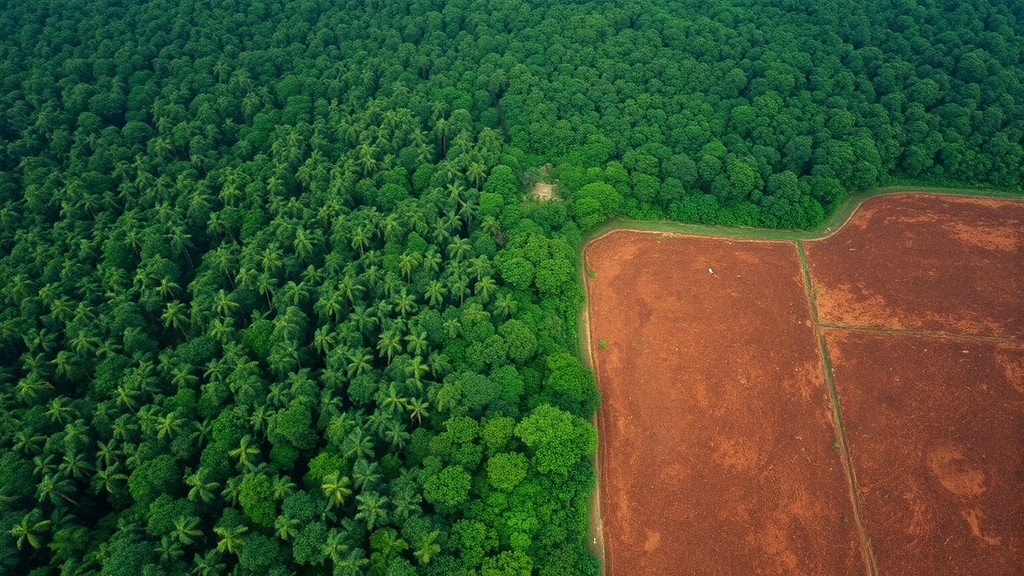
GDP measures economic activity without distinguishing between productive and destructive transactions. A forest clearance counts positively toward GDP through timber sales and agricultural development, even though it eliminates carbon sequestration, biodiversity habitat, and watershed regulation. This accounting blind spot has created what economists call the “environmental Kuznets curve” hypothesis—the theory that environmental degradation initially increases with economic growth before improving at higher income levels. However, empirical evidence increasingly contradicts this optimistic narrative.
Recent research demonstrates that high-income nations have not decoupled growth from environmental impact; they have merely shifted resource extraction and pollution to lower-income countries through global supply chains. When consumption-based carbon accounting replaces production-based metrics, wealthy nations show continued emissions growth despite reported reductions. The World Bank and United Nations Environment Programme have documented how GDP growth in developing regions correlates with accelerating deforestation, fisheries collapse, and soil degradation.
Understanding the environment and environmental science requires recognizing that ecosystems operate within finite planetary boundaries. The scientific definition of environment encompasses interconnected living and non-living systems that sustain all life. When economic growth transgresses these boundaries—exceeding sustainable harvest rates, accumulating toxins beyond ecological tolerance, or converting habitat faster than regeneration—the system experiences irreversible damage. GDP growth that breaches these limits represents not genuine progress but deferred collapse.

Resource Extraction and Habitat Loss
The pursuit of GDP growth drives unprecedented resource extraction. Global material extraction has tripled since 1970, reaching over 90 billion tons annually. This extraction directly destroys ecosystems through mining, logging, agriculture expansion, and infrastructure development. Tropical deforestation—largely driven by commodity production for GDP-contributing sectors—eliminates 10 million hectares annually, erasing habitat for species representing millions of years of evolutionary adaptation.
Agricultural intensification, essential for feeding growing populations but incentivized by GDP-growth policies, converts diverse ecosystems into monocultures. This reduces biodiversity, degrades soil structure, and increases vulnerability to pest outbreaks and climate variability. The carbon footprint of global agriculture extends far beyond direct emissions—it encompasses deforestation, wetland drainage, and peatland conversion. Studies show that countries maximizing agricultural GDP contribution experience proportional ecosystem service losses.
Aquatic ecosystems face similar pressures. Industrial fishing, expanded to maximize seafood production and economic value, has collapsed major fish stocks globally. The Grand Banks cod fishery collapse in the 1990s demonstrated how growth-maximizing extraction can destroy the very resource base supporting it. Current overfishing removes 90 million tons annually, exceeding sustainable yields by 30-40 percent. These extractions generate short-term GDP increases while eliminating long-term ecosystem productivity.
Pollution, Emissions, and Ecosystem Degradation
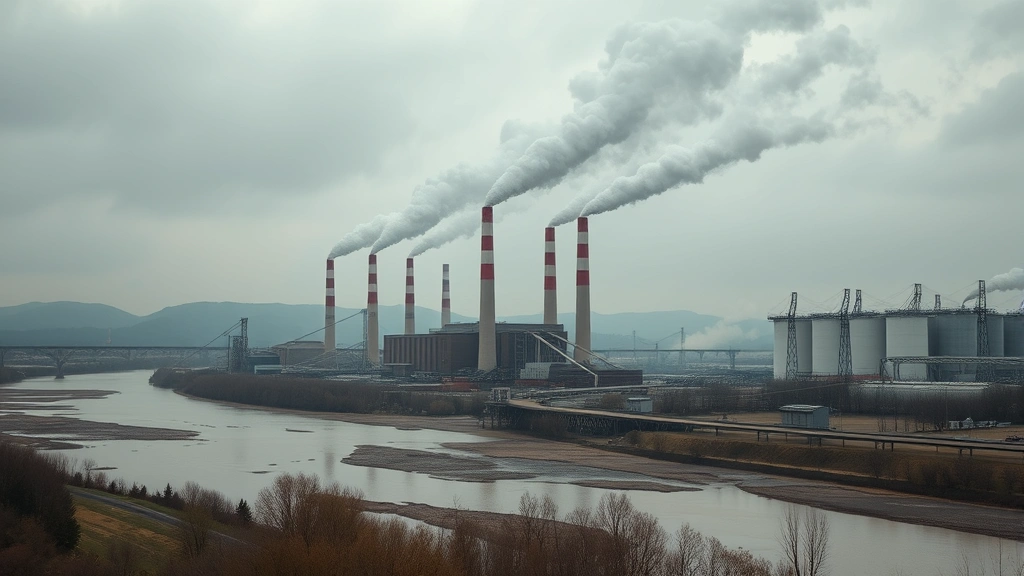
GDP growth typically correlates with increased energy consumption, industrial production, and transportation—all major pollution sources. Manufacturing sectors contributing significantly to national GDP generate toxic waste streams contaminating soil and water. Fossil fuel combustion, powering GDP-growth economies, accumulates atmospheric CO2 at rates exceeding natural carbon cycling capacity. The relationship is quantifiable: research published in ecological economics journals demonstrates that each percentage point of GDP growth in industrialized nations generates proportional greenhouse gas increases, despite efficiency improvements.
Pollution impacts ecosystems through multiple pathways. Nitrogen and phosphorus runoff from agriculture and industry creates oceanic dead zones where aquatic life cannot survive. Persistent organic pollutants accumulate in food chains, disrupting reproduction and immune function in apex predators. Plastic pollution, a byproduct of GDP-contributing consumer economies, now contaminates every ecosystem from deep ocean trenches to mountain peaks. Microplastics have been detected in human blood, demonstrating how pollution externalities ultimately affect the populations generating GDP.
Climate change, driven by GDP-growth economies’ greenhouse gas emissions, represents the ultimate ecosystem disruption. Rising temperatures alter precipitation patterns, shift species ranges, and destabilize ecosystems adapted to historical climate regimes. Coral bleaching events, intensifying wildfires, and shifting agricultural zones all reflect ecosystem responses to anthropogenic warming. The economic costs of climate impacts—estimated at 5-20% of global GDP by 2100 without intervention—vastly exceed the growth benefits that generated the emissions.
The True Cost of Economic Growth
Conventional GDP accounting ignores ecosystem service valuations. Natural capital depreciation—the depletion of forests, fisheries, minerals, and soil—should be subtracted from GDP just as capital depreciation is subtracted in national accounting. When researchers incorporate environmental costs, many celebrated growth periods transform into net economic losses. Indonesia’s rapid GDP growth during the 1990s, when adjusted for natural capital depletion, showed negligible or negative net economic progress.
Ecosystem services—pollination, water purification, climate regulation, nutrient cycling—support all economic activity yet receive zero valuation in GDP. A forest clearing that generates $1 million in timber sales and agricultural development appears profitable, but it eliminates pollination services, carbon sequestration, and watershed protection worth billions over time. This accounting failure systematically biases policy toward ecosystem destruction.
Research from environmental economics institutes demonstrates that genuine wealth indicators incorporating natural capital show stagnation or decline in many high-GDP nations. The Genuine Progress Indicator (GPI) and Inclusive Wealth Index (IWI) adjust for environmental degradation, inequality, and health outcomes. Nations with stable or growing GPI despite stagnant GDP growth have typically implemented sustainable production practices reducing ecological impact. These alternative metrics suggest that pursuing GDP growth without environmental constraints represents economically irrational policy.
Alternative Economic Frameworks
Degrowth and steady-state economics propose fundamentally different approaches. Rather than pursuing endless expansion, these frameworks emphasize optimizing human welfare within ecological limits. Degrowth advocates argue that wealthy nations must reduce material throughput while improving life quality through non-material means—community engagement, cultural participation, health services, and leisure. This requires restructuring economies away from consumption-driven growth toward sufficiency and equity.
Ecological economics, a transdisciplinary field integrating economics with ecology and thermodynamics, challenges neoclassical assumptions about infinite substitution and growth. Ecological economists recognize that natural capital and human capital are complements, not substitutes—economic activity cannot exceed ecosystem regenerative capacity regardless of technological efficiency. This perspective suggests that optimal economic scale occurs well below current levels in industrialized nations.
Circular economy models attempt to decouple growth from resource extraction through material reuse and regeneration. However, research indicates that absolute decoupling—simultaneous growth and environmental improvement—remains elusive. Relative decoupling (slower environmental degradation than growth) provides temporary relief while absolute throughput continues increasing. True sustainability likely requires combining circular principles with growth reduction in wealthy nations.
Nature-based solutions and regenerative agriculture demonstrate that economic activity can enhance ecosystem function. Agroforestry systems, wetland restoration, and marine protected areas generate economic value while rebuilding natural capital. These approaches suggest that economic activity need not degrade ecosystems if priorities shift from growth maximization to regeneration and resilience.
Policy Implications and Solutions
Transforming the GDP-ecosystem relationship requires multi-level policy intervention. Carbon pricing mechanisms, implemented through taxes or cap-and-trade systems, begin internalizing climate costs. However, current carbon prices—averaging $5-15 per ton globally—fall far below social cost estimates of $50-200 per ton, indicating insufficient incentive alignment. Strengthening carbon pricing to reflect true costs would shift investment toward low-impact activities.
Natural capital accounting, adopted by nations including India and Costa Rica, systematically measures ecosystem service values and natural resource depletion. Integrating these metrics into national accounts would reveal true economic performance, potentially shifting policy priorities. The UNEP promotes System of Environmental-Economic Accounting (SEEA) standards enabling comparable environmental accounting across nations.
Regulatory approaches, including habitat protection, pollution limits, and extractive industry restrictions, directly constrain ecosystem-degrading activities. Protected areas covering 17% of terrestrial and 8% of marine environments demonstrate that conservation is achievable, though current protection levels remain insufficient for biodiversity maintenance. Strengthening protected area networks while improving management effectiveness provides essential ecosystem safeguards.
Subsidy reform represents a critical policy lever. Global subsidies for fossil fuels, agriculture, and fishing total $7-8 trillion annually when environmental costs are included. Redirecting these supports toward renewable energy, sustainable agriculture, and ecosystem restoration would fundamentally alter economic incentives. However, political resistance from beneficiary industries remains substantial.
International cooperation through frameworks like the Convention on Biological Diversity and Paris Agreement establishes shared environmental goals. Yet implementation gaps persist between commitments and action. Strengthening enforcement mechanisms, increasing climate finance, and ensuring just transitions for affected communities remain essential for effective policy.
Ultimately, decoupling human welfare from GDP growth requires redefining progress. Bhutan’s Gross National Happiness framework, New Zealand’s well-being budget approach, and Finland’s circular economy transition demonstrate that alternative metrics can guide policy. These examples suggest that genuine prosperity emerges from ecological stability, equitable distribution, and community resilience rather than endless consumption expansion.
FAQ
Does all economic growth harm ecosystems?
Not necessarily. Growth in renewable energy, sustainable agriculture, ecosystem restoration, and health services can improve both economic and environmental metrics. However, aggregate global growth continues exceeding planetary boundaries. Wealthy nations must reduce material throughput while developing nations require space for poverty reduction. This implies differentiated growth pathways—contraction in resource-intensive sectors, expansion in regenerative activities.
Can technology solve the GDP-ecosystem problem?
Technology improves efficiency but cannot overcome thermodynamic limits. Renewable energy reduces emissions intensity but expanding energy consumption still increases absolute environmental impact. Efficiency gains frequently trigger rebound effects where lower costs increase consumption. Technology is necessary but insufficient; fundamental changes in economic structure and consumption patterns remain essential.
What happens if we stop pursuing GDP growth?
Transitioning away from growth requires managing employment, investment, and social welfare through alternative mechanisms. Shorter work weeks, universal basic services, and regenerative employment in ecosystem restoration could maintain welfare while reducing throughput. Historical precedent for degrowth is limited, creating policy uncertainty. However, continued growth within planetary boundaries appears physically impossible, making transition inevitable.
How do developing nations balance growth and conservation?
This represents the central equity challenge in environmental policy. Developing nations argue that wealthy countries industrialized through resource extraction and pollution; restricting their development perpetuates inequality. However, planetary boundaries leave no room for universal high-consumption lifestyles. Solutions require climate finance, technology transfer, and recognition that sustainable development differs fundamentally from replicating wealthy-nation consumption patterns.
What is the relationship between GDP growth and human welfare?
Beyond approximately $75,000 annual income per capita, additional GDP growth shows minimal correlation with life satisfaction, health, or happiness. Inequality matters more than absolute wealth for population well-being. This suggests that wealthy nations pursuing further growth sacrifice ecosystem health for marginal welfare gains, an economically irrational trade-off.


