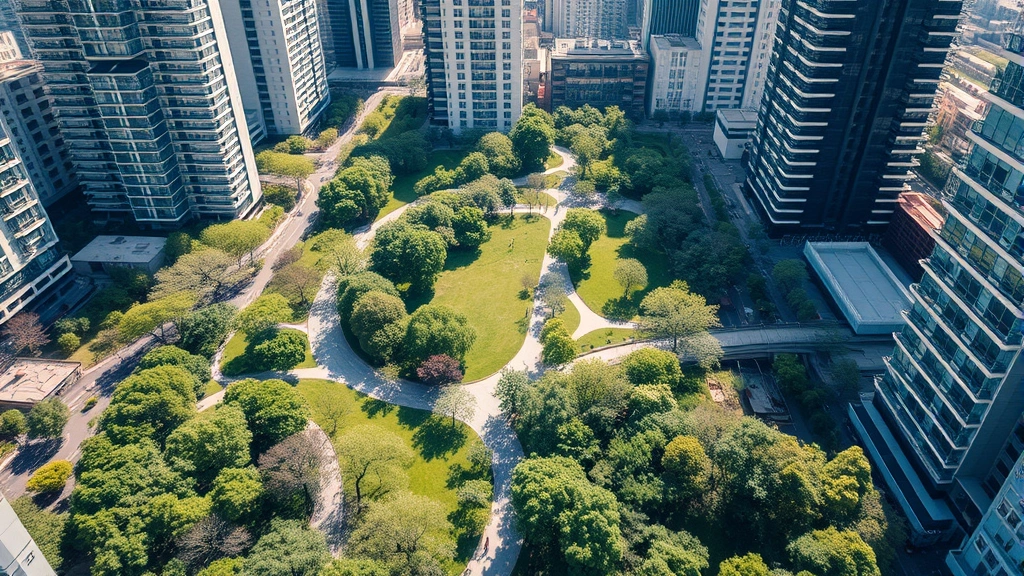
Urban Ecosystems’ Role in Economy: A Study
Urban ecosystems represent one of the most economically significant yet undervalued natural systems in the modern world. As cities expand and urbanization accelerates globally, the economic contributions of urban green spaces, waterways, and biodiversity networks have become increasingly quantifiable and essential to metropolitan prosperity. These ecosystems provide critical services that directly impact productivity, property values, public health, and resilience, yet their economic value often remains invisible in traditional accounting frameworks.
The intersection of urban ecology and economics reveals a paradox: cities consume approximately 78% of global carbon emissions and generate the majority of economic output, yet they occupy less than 2% of Earth’s land surface. Within this compressed geography, urban ecosystems function as both economic engines and essential stabilizers, offering services worth trillions of dollars annually. Understanding this relationship requires examining how natural capital embedded within cities generates economic returns that far exceed conventional measures of urban development.
This comprehensive analysis explores the multifaceted economic dimensions of urban environments, from ecosystem services valuation to employment generation, climate resilience benefits, and the emerging field of nature-based urban economics. The evidence demonstrates that investing in stewardship and environmental protection within cities yields measurable financial returns while addressing critical sustainability challenges.

Defining Urban Ecosystems and Economic Value
Urban ecosystems encompass all living organisms and physical environments within metropolitan areas, including parks, street trees, green roofs, urban forests, wetlands, rivers, and even small-scale backyard gardens. These systems differ fundamentally from rural and wilderness ecosystems in their structure, function, and human management intensity. Yet they provide measurable economic value through multiple pathways that contemporary urban economics increasingly recognizes.
The economic significance of urban ecosystems stems from their capacity to deliver ecosystem services—the direct and indirect benefits that natural systems provide to human societies. Unlike traditional economic assets, these services often function silently and invisibly, making their quantification challenging but essential for informed policy decisions. Research from the United Nations Environment Programme (UNEP) demonstrates that urban green infrastructure provides economic returns ranging from 2:1 to 5:1 depending on the service and geographic context.
The conceptual framework distinguishing urban ecosystem economics from conventional urban development recognizes that nature-based solutions often outperform gray infrastructure in both economic and environmental terms. A city’s relationship with its human and environment interaction dynamics determines whether urban development enhances or diminishes long-term economic productivity. Cities that integrate ecosystem preservation into planning frameworks consistently demonstrate superior economic outcomes across multiple metrics.

Ecosystem Services Valuation in Urban Contexts
Quantifying the economic value of urban ecosystem services requires sophisticated methodologies that translate ecological functions into monetary terms. The most commonly assessed services include carbon sequestration, air purification, stormwater management, temperature regulation, pollination, and recreational opportunities. Each service generates measurable economic benefits that can be calculated through market pricing, replacement cost analysis, or hedonic pricing methods.
Urban trees alone represent tremendous economic value. A single mature tree provides approximately $73 in annual air quality benefits, $75 in stormwater management value, and $50 in property value enhancement. In cities with robust street tree inventories, such as New York City with over 5 million street trees, the aggregate annual benefit exceeds $500 million. This calculation excludes carbon sequestration, aesthetic value, and psychological benefits—all of which generate additional economic returns through enhanced productivity and reduced healthcare costs.
Green roofs and living walls demonstrate particularly high economic efficiency ratios in dense urban environments. These installations reduce building energy consumption by 20-30%, extend roof lifespan by 40-60%, and create employment opportunities for installation and maintenance. The World Bank’s research on urban green infrastructure reveals that every dollar invested in green roofs generates $2-5 in economic benefits through energy savings, extended asset life, and stormwater fee reductions. Cities like Copenhagen and Singapore have calculated that comprehensive green infrastructure integration yields net economic returns exceeding 15% annually on invested capital.
Wetlands within urban boundaries provide particularly high economic value relative to their area. Urban wetlands filter water at a cost of approximately $1,000-2,000 per acre annually—a service that would cost $10,000-50,000 per acre if provided through conventional treatment facilities. These ecosystems simultaneously support biodiversity, provide recreational opportunities, and reduce flood damage risk, generating cumulative economic benefits that justify comprehensive protection policies.
Property Values and Real Estate Economics
The relationship between urban environmental quality and property values represents one of the most directly measurable economic impacts of ecosystem preservation. Extensive hedonic pricing research demonstrates that proximity to parks, green spaces, and water features generates consistent property value premiums ranging from 5-20% depending on location and market conditions. This translates to hundreds of billions of dollars in aggregate wealth creation directly attributable to environmental quality.
Properties adjacent to parks command measurable price premiums that reflect buyer willingness to pay for environmental amenities. Research analyzing residential real estate transactions across multiple metropolitan areas reveals that homes within 500 meters of parks appreciate 2-3% faster than comparable properties in areas lacking green space access. In expensive urban markets, this differential translates to price premiums of $50,000-200,000 per property, generating enormous aggregate wealth effects across entire metropolitan regions.
Commercial real estate demonstrates similar environmental value effects. Office buildings with green certifications command 3-12% rental premiums and experience 5-10% higher occupancy rates compared to conventional structures. Corporations increasingly prioritize locations offering environmental quality and employee access to nature, recognizing that such amenities enhance recruitment, retention, and productivity. The relationship between urban environmental quality and contemporary economic development has become increasingly explicit in competitive metropolitan regions.
Urban waterfronts illustrate the extreme value creation potential of environmental restoration. Waterfront properties command 50-100% premiums over comparable inland properties, yet many cities allowed industrial contamination and ecosystem degradation to destroy this value. Waterfront rehabilitation projects that restore ecological function have generated property value increases exceeding $10 billion in individual metropolitan areas, demonstrating that environmental restoration represents economically rational investment even from purely financial perspectives.
Employment and Green Economy Growth
The urban environment sector generates substantial employment across multiple occupational categories, from landscape maintenance and environmental engineering to green technology development and ecosystem management. The green economy now represents one of the fastest-growing employment sectors in developed economies, with urban ecosystem management contributing significantly to job creation.
Urban forestry alone employs hundreds of thousands of workers globally, with direct employment in tree planting, maintenance, and management complemented by indirect employment in manufacturing, supply chains, and service provision. The International Labour Organization estimates that comprehensive urban greening initiatives create 15-25 jobs per million dollars invested, exceeding employment multipliers for most conventional infrastructure investment categories.
Green infrastructure maintenance generates sustained employment opportunities with lower capital requirements than many industrial sectors. A comprehensive urban greening initiative planting 5 million trees creates approximately 75,000-125,000 job-years of employment across planting, establishment care, and long-term management phases. When complemented by green roof installation, urban agriculture development, and ecosystem restoration, comprehensive environmental investment programs generate employment growth rates exceeding 3-5% annually in participating regions.
Technology development supporting urban ecosystem management represents high-value employment in engineering, data science, and environmental consulting sectors. Smart irrigation systems, air quality monitoring networks, biodiversity tracking platforms, and ecosystem service accounting software all represent emerging employment categories driven by urban environmental management demands. These sectors typically offer higher wages and skill development opportunities compared to traditional environmental employment categories.
Climate Resilience and Economic Adaptation
Urban ecosystems provide essential climate adaptation services that reduce economic damages from extreme weather events, heat stress, and water scarcity. As climate change intensifies precipitation extremes and heat waves, the economic value of ecosystem-based adaptation becomes increasingly apparent through avoided disaster costs and reduced infrastructure strain.
Urban tree canopy and green infrastructure reduce surface temperatures by 2-5°C in dense urban areas, a phenomenon known as the urban heat island effect mitigation. This temperature reduction decreases air conditioning energy demand by 20-40%, reducing both energy costs and grid stress during peak demand periods. In hot climates, comprehensive canopy expansion generates annual energy savings exceeding $500-1,000 per hectare while reducing heat-related mortality and healthcare costs.
Green infrastructure for stormwater management demonstrates exceptional economic efficiency compared to gray infrastructure alternatives. A study examining stormwater management costs in Philadelphia revealed that green infrastructure solutions cost 25-50% less than conventional pipe and treatment systems while providing superior performance during extreme precipitation events. These cost advantages expand as urban areas experience more frequent intense rainfall events, making ecosystem-based solutions increasingly economically superior to conventional approaches.
Wetland preservation and restoration provides critical flood protection services with particularly high economic returns in vulnerable areas. Urban wetlands reduce flood damage through water storage and flow attenuation, providing protection valued at $5,000-15,000 per acre annually in high-risk areas. Compared to levee and pump station construction costs exceeding $100,000-500,000 per acre, wetland preservation represents exceptional economic value even before considering habitat and water quality benefits.
Urban forest resilience to climate stress requires ongoing investment in species diversity and ecosystem management. Cities that proactively manage urban forests to increase climate resilience reduce future costs associated with disease, pest outbreaks, and heat stress. This preventive investment approach yields cost savings of 3:1 to 5:1 compared to reactive management of ecosystem collapse scenarios.
Urban Agriculture and Food Systems
Urban agriculture represents a rapidly growing economic sector that integrates food production into urban ecosystems while generating employment, reducing food miles, and enhancing community food security. From rooftop farms and community gardens to vertical farming facilities and aquaponics systems, urban food production creates economic value through multiple pathways.
Community gardens in urban neighborhoods generate $500-2,000 per plot annually in direct food production value while providing employment for garden managers, coordinators, and educational staff. Beyond direct food production, community gardens generate property value increases, reduce crime through environmental stewardship, and create social capital that enhances community economic resilience. Research examining community garden impacts across multiple cities reveals aggregate economic returns of $3-5 for every dollar invested in establishment and maintenance.
Commercial vertical farming operations in urban areas achieve yields of 100-300 times greater than conventional agriculture per unit land area, while reducing water consumption by 90-99% and eliminating pesticide use. Though requiring significant capital investment, vertical farms in urban areas benefit from reduced transportation costs, premium pricing for local production, and proximity to consumer markets. Economic analysis of established vertical farming operations demonstrates profitability with payback periods of 5-8 years and return on investment exceeding 20% annually.
Rooftop agriculture integrates food production with other ecosystem services including stormwater management, building insulation, and urban heat island mitigation. Comprehensive rooftop farm development in dense urban areas can generate $10,000-50,000 per 1,000 square meters annually while simultaneously reducing building energy costs by 10-15% and managing stormwater. This integration of multiple services demonstrates how ecosystem approaches generate superior economic returns compared to single-purpose infrastructure.
Water Management and Economic Efficiency
Urban water systems represent critical economic infrastructure where ecosystem-based approaches often outperform conventional gray infrastructure in both cost-effectiveness and performance. Ecosystem-based water management integrates green infrastructure, wetland restoration, and aquifer recharge systems that provide superior water security while generating multiple co-benefits.
Green infrastructure for water management reduces municipal water treatment costs while improving water quality. Rain gardens, bioswales, and permeable pavements filter runoff through soil systems, removing pollutants and reducing treatment demand. A comprehensive analysis of green stormwater infrastructure across North American cities revealed average cost savings of 30-50% compared to conventional pipe and treatment systems, with superior performance during extreme precipitation events.
Urban aquifer recharge through ecosystem-based infiltration systems reduces reliance on distant water supplies while building groundwater reserves. Cities implementing comprehensive aquifer recharge through green infrastructure report 15-30% reductions in water supply costs while increasing drought resilience. This approach proves particularly valuable in water-stressed regions where conventional supply expansion becomes economically infeasible.
Wetland restoration for water purification provides exceptional economic value in regions with agricultural or industrial pollution. Urban wetlands remove nitrogen and phosphorus at costs of $100-500 per acre annually—a service that would cost $5,000-20,000 per acre through conventional treatment. When combined with habitat restoration and recreational amenities, comprehensive wetland development generates economic returns exceeding 10:1 over 20-year periods.
Health Benefits and Healthcare Economics
Urban ecosystems generate substantial health benefits that reduce healthcare costs while enhancing quality of life and economic productivity. Access to green space, physical activity opportunities, improved air quality, and psychological benefits from nature exposure all contribute to measurable health improvements with significant economic consequences.
Air quality improvements from urban vegetation reduce respiratory and cardiovascular disease burden, generating healthcare cost savings of $1,000-5,000 per capita in high-pollution areas. A comprehensive study in Toronto, Canada, calculated that urban tree canopy generates annual healthcare savings exceeding $30 million through air quality improvement, noise reduction, and psychological benefits. These savings represent pure economic benefit unrelated to property value effects or other ecosystem services.
Physical activity opportunities provided by urban parks and green infrastructure reduce obesity, diabetes, and cardiovascular disease prevalence, generating healthcare cost savings of $500-2,000 per capita annually in communities with robust park access. These health benefits simultaneously increase workforce productivity and reduce disability-related economic losses, creating multiplier effects that extend far beyond direct healthcare savings.
Mental health benefits from nature access and reduced stress represent significant but often unquantified economic value. Research demonstrates that park access reduces depression and anxiety prevalence by 15-25%, with corresponding improvements in workforce productivity and reduced absenteeism. In economic terms, these mental health benefits generate productivity gains worth $2,000-5,000 per capita annually in urban populations with regular nature access.
Heat stress reduction through urban tree canopy and green infrastructure prevents heat-related mortality and morbidity, generating particularly high economic returns in warming climates. Each degree of temperature reduction through canopy expansion prevents approximately 10-20 heat-related deaths per million population, translating to economic value of $50-100 million in large metropolitan areas.
Policy Frameworks and Investment Strategies
Effective policy frameworks that recognize and monetize urban ecosystem services have emerged as critical determinants of investment in environmental quality. Policies incorporating ecosystem service valuation into cost-benefit analysis, green infrastructure mandates, and environmental accounting systems consistently generate superior economic outcomes compared to conventional development approaches.
Payment for ecosystem services programs create direct economic incentives for ecosystem preservation and restoration. Cities implementing such programs—including stormwater fee reductions for green infrastructure installation and property tax incentives for green roof development—consistently achieve rapid adoption and significant environmental improvements. These policy mechanisms align private economic interests with public environmental objectives, generating win-win outcomes.
Green bonds and environmental impact investing have mobilized substantial capital for urban ecosystem projects. Cities issuing green bonds for park development, urban forest expansion, and green infrastructure installation typically achieve lower borrowing costs while accessing dedicated capital pools. The economic advantage of green bonds creates financial incentives for environmental investment independent of environmental motivation, accelerating ecosystem restoration timelines.
Natural capital accounting frameworks that incorporate ecosystem services into municipal accounting systems provide essential information for informed decision-making. Cities adopting such frameworks consistently redirect investment from environmentally destructive projects toward ecosystem-enhancing alternatives when true costs and benefits become transparent. This accounting revolution represents one of the most powerful policy levers for aligning economic incentives with environmental sustainability.
Comprehensive approaches to reducing carbon footprint in urban contexts increasingly integrate ecosystem-based solutions with renewable energy and efficiency improvements. This integrated approach recognizes that urban ecosystems provide essential adaptation benefits while contributing to mitigation objectives, justifying substantial investment in environmental quality.
Urban development regulations increasingly mandate environmental quality standards that recognize ecosystem service values. Zoning codes requiring minimum green space percentages, mandatory green roof installation, and tree canopy preservation standards have become mainstream in progressive jurisdictions. These regulatory approaches internalize ecosystem service values into development requirements, ensuring that new construction contributes to rather than detracts from environmental quality.
Public-private partnerships for ecosystem restoration and management have emerged as effective mechanisms for leveraging private capital and expertise for environmental objectives. Corporations increasingly recognize that ecosystem investment enhances brand value, employee satisfaction, and operational resilience, creating business cases for environmental investment that align corporate interests with public environmental objectives. These partnerships have funded billions of dollars in urban ecosystem restoration globally.
FAQ
How are urban ecosystem services economically valued?
Urban ecosystem services are valued through multiple approaches including market pricing (for services sold directly), replacement cost analysis (cost of providing equivalent service through infrastructure), hedonic pricing (value reflected in property prices), and contingent valuation (willingness to pay surveys). Different services require different valuation methodologies, with most urban ecosystems providing multiple services that require comprehensive assessment frameworks.
What are the most economically valuable urban ecosystem services?
The highest-value urban ecosystem services typically include stormwater management, temperature regulation, air quality improvement, property value enhancement, and recreation provision. The specific ranking varies by geographic location, climate, and urban density, but these five services consistently generate the largest economic returns across diverse urban contexts.
How much do urban ecosystems contribute to city economies?
Research from the World Bank indicates that urban ecosystem services generate economic value equivalent to 5-15% of urban GDP in developed economies, with potentially higher percentages in developing regions where ecosystem service alternatives remain limited. In absolute terms, major cities benefit from ecosystem services worth tens of billions of dollars annually.
Can ecosystem investment compete economically with conventional development?
Yes, comprehensive economic analysis demonstrates that ecosystem investment frequently outperforms conventional development on purely financial grounds when all costs and benefits are properly calculated. Green infrastructure, urban agriculture, and ecosystem restoration consistently generate superior return on investment compared to gray infrastructure and conventional development alternatives.
What policy changes most effectively encourage urban ecosystem investment?
The most effective policies combine natural capital accounting frameworks with financial incentives including green bonds, stormwater fee structures, and tax incentives. Regulatory mandates for green infrastructure and ecosystem preservation prove essential for establishing minimum environmental standards, while financial incentives accelerate investment beyond regulatory minimums.
How do urban ecosystems enhance climate resilience?
Urban ecosystems enhance climate resilience through temperature regulation (reducing heat stress vulnerability), stormwater management (reducing flood damage), water supply augmentation (increasing drought resilience), and carbon sequestration (contributing to climate mitigation). These multiple resilience pathways make ecosystem investment essential for climate adaptation planning.
What role does urban agriculture play in urban economies?
Urban agriculture generates direct food production value while creating employment, reducing food miles, enhancing community food security, and providing property value enhancement. Integrated with green infrastructure, urban agriculture generates cumulative economic returns that justify significant investment in system development and management.
How can cities measure ecosystem service economic value?
Cities can measure ecosystem service values through ecosystem service assessment frameworks like i-Tree (for urban forests), ARIES (Artificial Intelligence for Ecosystem Services), and INVEST (InVEST) models. These tools integrate ecological data with economic valuation methodologies, providing quantified ecosystem service values that support decision-making. Consider exploring our comprehensive guide on renewable energy solutions for complementary economic strategies.
What employment opportunities exist in urban ecosystem management?
Urban ecosystem management generates employment across landscape maintenance, environmental engineering, ecological restoration, green technology development, environmental consulting, data science, and urban planning. These occupations span both skilled trades and professional careers, offering diverse economic opportunities as urban environmental investment accelerates.
How do urban ecosystems impact property values?
Urban ecosystems enhance property values through multiple mechanisms including aesthetic appeal, recreation opportunities, air quality improvement, temperature regulation, and flood risk reduction. Empirical research consistently documents 5-20% property value premiums for properties with superior environmental quality and green space access, generating hundreds of billions in aggregate wealth effects across metropolitan regions.
What is the relationship between urban environmental quality and economic competitiveness?
Cities with superior environmental quality consistently attract higher-skilled workers, retain talented populations, and develop competitive advantages in knowledge-intensive industries. Environmental quality represents a critical factor in metropolitan economic competitiveness, with cities investing in ecosystem preservation reporting faster economic growth and superior workforce retention compared to environmentally degraded competitors.
How can communities implement ecosystem-based economic development?
Effective implementation requires combining natural capital accounting frameworks with stakeholder engagement, policy development, and strategic investment prioritization. Communities should begin by assessing existing ecosystem service values, identifying highest-priority investment opportunities, developing enabling policies, and establishing monitoring frameworks to track economic and environmental outcomes. Reviewing approaches to sustainable practices across economic sectors provides additional perspective on comprehensive sustainability integration.


