
Types of Environments: An In-Depth Study
The environment encompasses all living and non-living elements that surround organisms and influence their survival, growth, and development. Understanding the types of environment is fundamental to ecological science, environmental management, and sustainable development policy. Each environmental type presents distinct characteristics, challenges, and opportunities for both natural ecosystems and human economies. This comprehensive exploration examines the major classifications of environments, their interconnected systems, and their implications for biodiversity conservation and economic resilience.
Environmental classification systems have evolved significantly over the past century, driven by advances in ecology, geography, and climate science. Researchers now recognize that environments exist along complex spectrums rather than in discrete categories. The study of different environmental types reveals how ecosystems regulate critical services—from carbon sequestration to water purification—that underpin global economic systems worth trillions of dollars annually. This analysis bridges ecological understanding with economic valuation, demonstrating why environmental preservation directly correlates with economic stability and human wellbeing.
Natural Environments and Their Characteristics
Natural environments represent ecosystems that function with minimal direct human intervention, though increasingly, even remote areas experience indirect anthropogenic impacts. These environments are characterized by self-regulating biological and physical processes that have evolved over millennia. The World Bank estimates that natural ecosystems provide approximately $125 trillion in ecosystem services annually—a valuation that underscores their economic significance beyond intrinsic environmental value.
Natural environments exhibit several defining characteristics: biodiversity hotspots support thousands of interdependent species; nutrient cycling processes maintain soil fertility and atmospheric composition; and climate regulation mechanisms influence precipitation patterns and temperature stability. Understanding the definition of environment science requires recognizing these complex system interactions. The resilience of natural environments depends on maintaining habitat connectivity, genetic diversity, and ecological redundancy—factors increasingly threatened by fragmentation and resource extraction.
Primary forests, coral reef systems, and pristine wetlands represent some of Earth’s most valuable natural environments. These systems exhibit high endemism rates, meaning species found nowhere else on Earth. The Amazon rainforest alone harbors approximately 10% of global species diversity while regulating regional and continental climate patterns. Economic analyses increasingly incorporate ecosystem service valuations into land-use decisions, recognizing that preservation often generates greater long-term returns than conversion to agricultural or industrial use.
Terrestrial Environment Types
Terrestrial environments encompass all land-based ecosystems, classified along gradients of precipitation, temperature, and elevation. Major terrestrial environment types include tropical forests, temperate forests, grasslands, deserts, and tundra regions. Each represents distinct adaptations to climatic conditions and supports specialized communities of organisms.
Tropical Environments exist near the equator where consistent solar radiation and high precipitation support maximum biodiversity. Tropical rainforests contain more species per hectare than any other terrestrial environment—some areas exceed 300 tree species in a single hectare. These environments drive global biogeochemical cycles and represent critical carbon sinks. However, deforestation rates in tropical regions exceed 10 million hectares annually, with profound implications for climate stability and indigenous communities dependent on forest resources.
Temperate Environments experience distinct seasonal variations with moderate precipitation. Temperate deciduous and coniferous forests provide timber resources, wildlife habitat, and recreational value. These regions typically support lower species diversity than tropical systems but often exhibit greater ecosystem stability. Temperate grasslands, including prairies and steppes, evolved under grazing pressure and periodic fire regimes. Understanding human environment interaction in these zones is crucial, as agricultural conversion has eliminated approximately 99% of native prairie in North America.
Arid and Semi-Arid Environments represent approximately 30% of Earth’s terrestrial surface. Deserts and dry grasslands support specialized flora and fauna adapted to water scarcity. These environments provide valuable minerals, renewable energy potential, and pastoralist livelihoods for millions of people. Climate change projections suggest desertification will expand, affecting food security and economic stability in vulnerable regions. The United Nations Environment Programme (UNEP) emphasizes that sustainable land management in drylands is essential for poverty reduction and climate resilience.
Mountain Environments create distinct ecological zones based on elevation gradients. Alpine ecosystems support unique species assemblages and serve as critical water sources for billions of people. Mountains harbor disproportionate biodiversity relative to their area and contain 25% of terrestrial species despite occupying only 24% of land surface. Mountain communities face particular vulnerability to climate change, with glacier retreat threatening water security across Asia, Latin America, and other regions.
Aquatic Environments and Ecosystem Services
Aquatic environments—comprising freshwater and marine systems—cover approximately 71% of Earth’s surface and generate ecosystem services valued at over $24 trillion annually. These environments exhibit fundamentally different physical and chemical properties compared to terrestrial systems, supporting distinct biological communities and biogeochemical processes.
Freshwater Environments include rivers, lakes, wetlands, and groundwater systems. Despite occupying only 2.5% of global water resources, freshwater ecosystems support approximately 10% of known species and provide essential services including water purification, flood regulation, and nutrient cycling. Rivers function as ecological corridors connecting landscapes and transporting nutrients and organisms across regions. Wetlands—among Earth’s most productive environments—generate disproportionate ecosystem services relative to their area, supporting fish populations that feed billions of people and filtering contaminants from agricultural runoff.
Recognizing how humans affect the environment becomes apparent when examining freshwater degradation. Dam construction, water extraction, pollution, and invasive species have severely impacted freshwater ecosystems. The Ecological Economist journal documents how freshwater ecosystem degradation generates external costs exceeding $250 billion annually through lost fisheries, water treatment expenses, and reduced agricultural productivity.
Marine Environments represent Earth’s largest ecosystem, encompassing coastal zones, continental shelves, and open ocean. Marine biodiversity centers on coral reefs—often called rainforests of the sea—despite occupying less than 1% of ocean area. Coral reef ecosystems generate $375 billion annually through fisheries, tourism, and pharmaceutical discoveries. However, ocean acidification and warming threaten approximately 50% of coral reefs with complete degradation by 2050.
Open ocean environments support unique communities adapted to extreme pressure, cold temperatures, and scarce food resources. Deep-sea hydrothermal vent communities represent a paradigm shift in understanding life’s requirements—these ecosystems function without photosynthesis, powered instead by chemosynthesis. Ocean environments regulate global climate through carbon sequestration, with deep waters storing carbon for centuries. Understanding marine ecosystem dynamics is crucial for sustainable fisheries management, as marine capture fisheries provide protein for approximately 3 billion people.
Coastal environments represent transition zones between terrestrial and marine systems, characterized by dynamic energy and nutrient flows. Mangrove forests, salt marshes, and seagrass beds provide nursery habitat for commercially important fish species, storm surge protection, and carbon sequestration rivaling tropical forests. Economic valuations of coastal ecosystem services frequently exceed $100,000 per hectare annually, yet development pressures continue degrading these critical zones.
Human-Modified and Urban Environments
Human-modified environments—including agricultural lands, urban areas, and managed forests—now dominate terrestrial ecosystems, covering approximately 75% of ice-free land surface. These environments represent intentional human restructuring of natural systems to produce goods and services, creating novel ecological conditions and economic interdependencies.
Agricultural Environments convert natural ecosystems into simplified systems optimized for food and fiber production. Modern agriculture occupies approximately 5 billion hectares—37% of global land surface—yet produces only 20% of global calories due to inefficiency. Industrial agriculture generates substantial ecosystem service losses through soil degradation, water pollution, and biodiversity decline. The FAO estimates soil degradation costs approximately $400 billion annually in lost productivity. Conversely, regenerative agriculture and agroforestry systems demonstrate that food production can enhance rather than degrade ecosystem functions when designed appropriately.
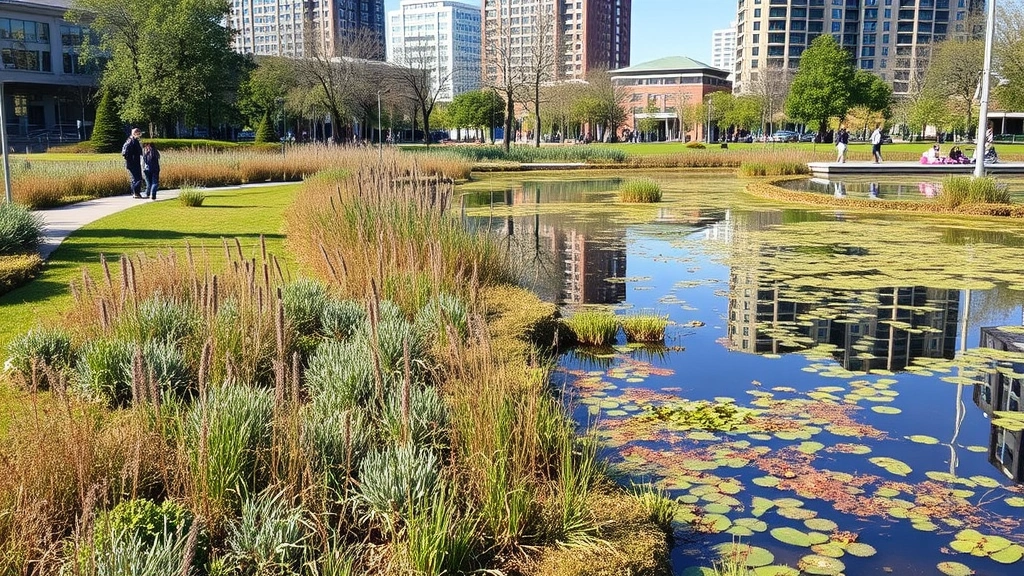
Urban Environments represent humanity’s most densely modified ecosystems, with over 55% of global population now residing in cities. Urban areas generate profound environmental impacts through resource consumption, waste generation, and habitat destruction, yet they also concentrate opportunities for efficiency and sustainability innovation. Urban green infrastructure—parks, green roofs, and restored wetlands—provides ecosystem services including temperature regulation, flood mitigation, and mental health benefits valued at thousands of dollars per hectare annually.
Learning about positive impacts humans have on the environment reveals that human-modified systems can support biodiversity and ecosystem function when designed with ecological principles. Secondary forests recovering on abandoned agricultural land, urban pollinator gardens, and restored riparian zones demonstrate that humans can facilitate ecosystem regeneration. The economics of restoration increasingly demonstrates positive return-on-investment, with wetland restoration generating benefit-cost ratios exceeding 5:1 through water purification, carbon sequestration, and fisheries enhancement.
Atmospheric Environment and Climate Systems
The atmospheric environment—often overlooked in terrestrial-focused environmental discussions—fundamentally regulates all other environmental types through climate patterns, weather systems, and biogeochemical cycles. The atmosphere comprises distinct layers with differing physical and chemical properties, each supporting critical functions.
The troposphere, Earth’s lowest atmospheric layer, contains 80% of atmospheric mass and hosts all weather systems and most atmospheric chemistry. Greenhouse gas concentrations in the troposphere have increased 50% since industrialization, altering global radiative balance and climate patterns. The Intergovernmental Panel on Climate Change (IPCC) projects atmospheric CO₂ concentrations will exceed 550 ppm by 2100 under current emissions trajectories, resulting in climate changes unprecedented in human history.
The stratosphere contains the ozone layer, which protects surface organisms from harmful ultraviolet radiation. Ozone depletion, driven primarily by chlorofluorocarbon emissions, represents one of humanity’s most successful environmental interventions—the Montreal Protocol phased out ozone-depleting substances, preventing an estimated 2 million cases of skin cancer annually by 2030. This demonstrates that atmospheric environmental management generates substantial health and economic benefits.
Atmospheric circulation patterns, driven by solar heating and Earth’s rotation, distribute heat, moisture, and nutrients globally. Ocean-atmosphere interactions create climate oscillations including El Niño and the Atlantic Meridional Overturning Circulation, which influence weather patterns affecting billions of people. Understanding atmospheric environments is essential for climate adaptation and mitigation planning, as projected atmospheric changes will reshape suitable agricultural zones, water availability, and hazard exposure patterns globally.
Microenvironments and Biodiversity Hotspots
Beyond broad environmental classifications, microenvironments—small-scale habitats with distinct physical and chemical conditions—support disproportionate biodiversity and represent critical conservation priorities. Microenvironments exist within all larger environment types, creating ecological complexity and resilience.
Soil Microenvironments represent some of Earth’s most biodiverse environments, with single grams containing billions of microorganisms. Soil ecosystems drive nutrient cycling, carbon sequestration, and water infiltration. Soil biodiversity loss—driven by compaction, salinization, and chemical contamination—generates global economic costs exceeding $300 billion annually through reduced agricultural productivity and compromised water purification.
Leaf litter communities, deadwood habitats, and cave ecosystems exemplify microenvironments supporting specialized species assemblages. Understanding environment awareness requires recognizing that ecosystem conservation operates across multiple scales. A single fallen tree supports hundreds of species dependent on decaying wood, while cave-adapted organisms represent evolutionary laboratories revealing how life adapts to extreme conditions.
Biodiversity Hotspots concentrate disproportionate species diversity and endemism in relatively small areas. Conservation International identifies 36 terrestrial biodiversity hotspots containing 75% of Earth’s threatened species despite occupying only 2.4% of land surface. These regions represent conservation priorities where investment generates maximum biodiversity protection per dollar spent. Economic analyses demonstrate that protecting hotspots generates greater ecosystem service value than converting them to agriculture or resource extraction.
Tropical island ecosystems represent particularly vulnerable microenvironments, with high endemism but limited habitat area and population sizes. Island species lack evolutionary experience with introduced predators and competitors, making them particularly susceptible to extinction. Madagascar, an island hotspot, contains 90% endemic species but faces severe deforestation pressure, highlighting tensions between development demands and conservation imperatives.
Environmental Classification in Economic Policy
Environmental classification systems directly influence economic policy, resource allocation, and conservation priorities. International frameworks increasingly incorporate environmental typology into decision-making processes, recognizing that different environment types require differentiated management approaches.
The Millennium Ecosystem Services Assessment—conducted by UNEP and international research institutions—classified ecosystem services into provisioning services (food, water, materials), regulating services (climate regulation, flood control), supporting services (nutrient cycling, habitat provision), and cultural services (recreation, spiritual value). This framework enables monetary valuation of environmental benefits, demonstrating that ecosystem preservation frequently generates greater economic returns than degradation.
Payment for Ecosystem Services (PES) schemes compensate landowners for maintaining environmental functions. Costa Rica’s pioneering PES program provided payments to forest owners, reversing deforestation while generating rural employment. Economic analyses demonstrate PES programs generate benefit-cost ratios exceeding 3:1, providing both conservation and poverty reduction benefits. Scaling these approaches to additional environment types and regions represents a critical economic policy opportunity.
Carbon markets increasingly incorporate environmental classification, assigning carbon credit values based on ecosystem type and management practices. Wetland restoration, forest protection, and grassland conservation generate carbon credits with market values ranging from $5-$50 per ton CO₂ equivalent. These markets create economic incentives for environmental protection, though concerns about permanence, additionality, and equity require careful policy design.
The World Bank’s Natural Capital Accounting initiative encourages countries to incorporate environmental assets into national accounting systems alongside traditional economic measures. This approach reveals that many countries are experiencing negative genuine savings—environmental degradation exceeds capital accumulation—indicating unsustainable development paths. Environmental classification enables these accounting systems by providing standardized metrics for different ecosystem types.
Biodiversity offsets—where developers mitigate habitat loss by protecting or restoring equivalent environments elsewhere—represent another policy mechanism incorporating environmental classification. However, ecological research reveals that offsetting rarely achieves no-net-loss outcomes, particularly for specialized environments. This highlights the importance of conservation-first approaches that prevent habitat loss rather than relying on subsequent restoration.
Climate adaptation planning increasingly incorporates environmental classification to identify vulnerable regions and appropriate interventions. Arid environments require water management strategies, coastal environments need protection from sea-level rise, and mountain environments require glacier-dependent water supply diversification. Understanding environment types enables targeted adaptation investments maximizing resilience and minimizing maladaptation risks.
FAQ
What is the primary difference between natural and human-modified environments?
Natural environments function with minimal direct human intervention, maintaining self-regulating biological and physical processes. Human-modified environments represent intentional ecosystem restructuring, with simplified structure optimized for specific human benefits. The distinction is increasingly blurred, as even remote natural environments experience indirect anthropogenic impacts including climate change, atmospheric pollution, and invasive species dispersal.
Which environment types are most threatened by climate change?
Mountain, coral reef, and Arctic environments face the most acute climate change threats. Mountain ecosystems experience rapid temperature increases with elevation, causing upslope species migration toward extinction at peaks. Coral reefs face thermal bleaching and acidification stresses simultaneously. Arctic tundra experiences rapid warming and permafrost thaw, releasing carbon stores and fundamentally altering ecosystem structure and function.
How do ecosystem services relate to different environment types?
Different environment types provide distinct ecosystem service portfolios. Forests excel at carbon sequestration and water purification; wetlands provide flood regulation and fish nurseries; grasslands support livestock production and carbon storage; marine environments regulate climate and provide protein. Understanding these relationships enables strategic conservation prioritization, focusing investment on environments providing critical services to vulnerable populations.
Can human-modified environments provide ecosystem services comparable to natural environments?
Well-designed human-modified environments can provide substantial ecosystem services, though typically at lower biodiversity levels. Agricultural lands designed using agroforestry principles provide food, carbon sequestration, and wildlife habitat. Urban green infrastructure provides temperature regulation, flood mitigation, and mental health benefits. However, highly simplified systems like monoculture plantations provide limited ecosystem services and reduced resilience compared to natural ecosystems.
What is the economic value of preserving different environment types?
Economic valuations vary dramatically by environment type and location. Tropical forests provide ecosystem services worth $2,000-$6,000 per hectare annually; wetlands provide $4,000-$30,000 per hectare annually; coral reefs provide $100,000-$375,000 per hectare annually. These valuations typically exceed agricultural conversion returns, demonstrating that preservation generates superior economic outcomes when ecosystem services are properly valued in decision-making frameworks.
How do microenvironments contribute to overall ecosystem function?
Microenvironments provide disproportionate contributions to ecosystem function relative to their area. Soil microenvironments drive nutrient cycling supporting all terrestrial productivity. Leaf litter and deadwood communities support decomposition processes and predator-prey interactions essential for ecosystem stability. Protecting microenvironments is essential for maintaining ecosystem resilience and biodiversity, yet they remain undervalued in conservation prioritization.


