Is Green Economy Sustainable? Economist Insights on Environmental Economics
The green economy represents one of the most significant economic paradigm shifts of the twenty-first century, yet fundamental questions persist about its long-term sustainability. Economists, environmental scientists, and policy analysts continue to debate whether transitioning to a green economy can truly deliver both ecological restoration and economic prosperity simultaneously. This critical examination explores the intersection of environmental economics, ecological sustainability, and practical policy implementation through the lens of contemporary economic research.
The concept of a green economy emerged prominently during the 2008 financial crisis when the United Nations Environment Programme (UNEP) proposed it as a pathway toward sustainable development. However, the reality of implementation has proven far more complex than initial optimism suggested. The environmental print on our planet—measured through carbon emissions, resource depletion, and ecosystem degradation—continues to accelerate even as green economy initiatives expand globally. Understanding whether the green economy can genuinely address these challenges requires examining both the theoretical foundations and practical outcomes of environmental economic policies.
Defining the Green Economy: Economic Theory Meets Environmental Reality
The green economy fundamentally seeks to decouple economic growth from environmental degradation. According to UNEP’s definition, it represents an economy that results in improved human well-being and social equity while significantly reducing environmental risks and ecological scarcities. This ambitious framework attempts to reconcile capitalism’s growth imperative with planetary boundaries—a tension that has occupied ecological economists for decades.
Traditional neoclassical economics largely externalized environmental costs, treating nature as an infinite resource and waste absorption capacity. Green economy proponents argue for internalizing these externalities through mechanisms like carbon pricing, ecosystem service valuation, and natural capital accounting. However, this theoretical reframing encounters substantial practical obstacles. The human environment interaction remains deeply embedded in consumption patterns, production systems, and financial incentives that resist fundamental restructuring.
Ecological economists, represented by scholars associated with institutions studying environmental economics at the World Bank, argue that true sustainability requires recognizing biophysical limits to economic expansion. The green economy must therefore balance three critical dimensions: economic viability, environmental integrity, and social equity. Each dimension presents distinct challenges that resist simultaneous optimization.
[IMAGE_1]
The Sustainability Paradox: Growth vs. Ecological Limits
A central tension in green economy discourse involves the assumption that decoupling is possible—that economies can continue expanding while reducing environmental impact. Evidence suggests this remains partially achievable through efficiency gains and sectoral shifts toward service economies. Yet absolute decoupling (where environmental impact decreases while GDP increases) has proven elusive at the global scale.
Relative decoupling—where environmental impact grows more slowly than economic output—characterizes most developed economies. However, this masks a critical reality: wealthy nations have largely outsourced resource-intensive production to developing countries, effectively exporting their environmental print. When consumption-based accounting replaces production-based metrics, the decoupling narrative becomes considerably less persuasive.
The rebound effect further complicates this picture. When efficiency improvements reduce the cost of goods or services, consumption typically increases, partially or entirely negating environmental gains. A household installing renewable energy for homes might increase electricity consumption for new appliances, reducing net emissions savings. At the macroeconomic level, these individual choices aggregate into systemic limitations on environmental improvement through efficiency alone.
Economists increasingly recognize that achieving genuine sustainability requires not just decoupling but absolute reduction in resource throughput for wealthy economies. This challenges the green economy’s implicit assumption that growth and sustainability prove compatible, raising uncomfortable questions about consumption levels in affluent nations.
Measuring Environmental Impact and Economic Value
Quantifying environmental sustainability involves methodological challenges that fundamentally shape policy conclusions. How do we assign monetary value to ecosystem services? What discount rate should apply when comparing present economic benefits against future environmental costs? These technical questions contain profound philosophical implications.
Natural capital accounting attempts to value forests, fisheries, mineral deposits, and ecosystem functions in economic terms. This approach enables cost-benefit analyses that incorporate environmental considerations into investment decisions. The System of Environmental-Economic Accounting (SEEA), endorsed by the United Nations, provides standardized methodologies for integrating environmental data into national accounts.
However, translating ecological functions into monetary units remains deeply contentious. How much is a pollinator species worth? What economic value attaches to climate regulation services? These calculations inevitably involve arbitrary assumptions that can dramatically alter policy recommendations. A high valuation of ecosystem services strengthens arguments for environmental protection, while low valuations favor development projects.
Furthermore, monetary valuation implicitly suggests that environmental degradation becomes acceptable if economic benefits exceed ecosystem costs. This commodification of nature troubles many ecological economists and environmental philosophers who argue that certain ecological thresholds possess non-negotiable status regardless of economic calculations.
Policy Mechanisms and Market-Based Solutions
Green economy policies predominantly rely on market mechanisms to internalize environmental costs. Carbon pricing through emissions trading systems or carbon taxes represents the flagship approach, creating financial incentives for emissions reduction. The European Union’s Emissions Trading System, the world’s largest carbon market, demonstrates both the potential and limitations of this framework.
Market-based mechanisms offer theoretical elegance: they allow flexible emissions reduction pathways while maintaining cost-effectiveness. However, implementation reveals persistent challenges. Carbon prices often prove insufficient to drive necessary behavioral changes. Political pressure frequently results in generous allocations of free permits or exemptions for politically influential sectors, undermining environmental effectiveness.
Renewable energy subsidies, green bonds, and environmental tax reforms constitute additional policy tools. These initiatives have successfully accelerated renewable capacity deployment and attracted investment toward sustainable technologies. Yet subsidies create their own distortions, potentially supporting inefficient technologies or diverting capital from other critical sectors.
The how to reduce carbon footprint through individual choices remains an important component of green economy messaging, though economists increasingly recognize that systemic change requires policy frameworks rather than relying primarily on consumer behavior modification. Structural incentives, regulatory standards, and infrastructure investments prove more determinative than individual consumption choices in achieving emissions reductions at scale.
Renewable Energy Transitions and Economic Feasibility
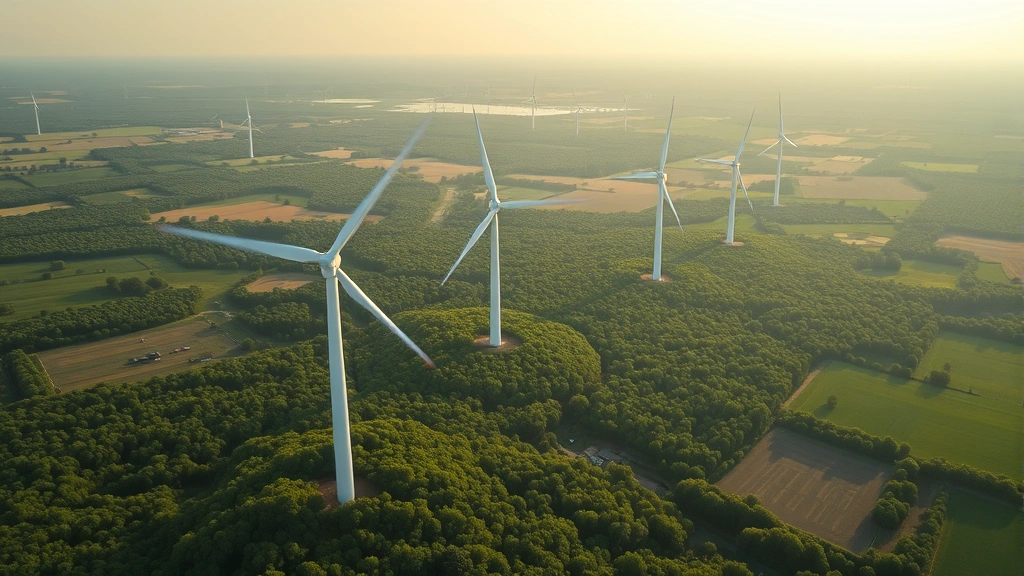
Energy system transformation represents perhaps the most critical element of green economy transitions. Renewable energy technologies—solar, wind, hydroelectric, and emerging alternatives—have experienced dramatic cost reductions over the past decade, fundamentally altering the economic calculus of energy systems.
Levelized cost of electricity (LCOE) analyses demonstrate that renewable sources now compete directly with fossil fuels on cost grounds in most markets. This technological progress validates green economy proponents’ arguments that environmental sustainability need not require economic sacrifice. However, the transition involves substantial complexities beyond simple cost comparisons.
Grid integration of variable renewable sources requires massive investments in storage infrastructure, transmission networks, and demand management systems. These ancillary costs, while declining, remain substantial and unevenly distributed. Regions with existing fossil fuel infrastructure face stranded asset problems—power plants, mines, and related infrastructure becoming economically obsolete before their anticipated retirement dates.
Workers and communities dependent on fossil fuel industries face genuine economic disruption. Just transition policies attempting to support affected populations have shown mixed results, with retraining programs and economic diversification initiatives frequently proving inadequate to replace lost employment and tax revenues. The Ecorise Daily Blog regularly examines these complex transitions occurring across energy-dependent regions worldwide.
Additionally, renewable energy expansion requires substantial material inputs—rare earth elements, lithium, cobalt, and copper—whose extraction carries significant environmental and social costs. A complete lifecycle analysis reveals that renewable energy systems, while dramatically superior to fossil fuels, are not environmentally costless.
Circular Economy Models and Resource Efficiency
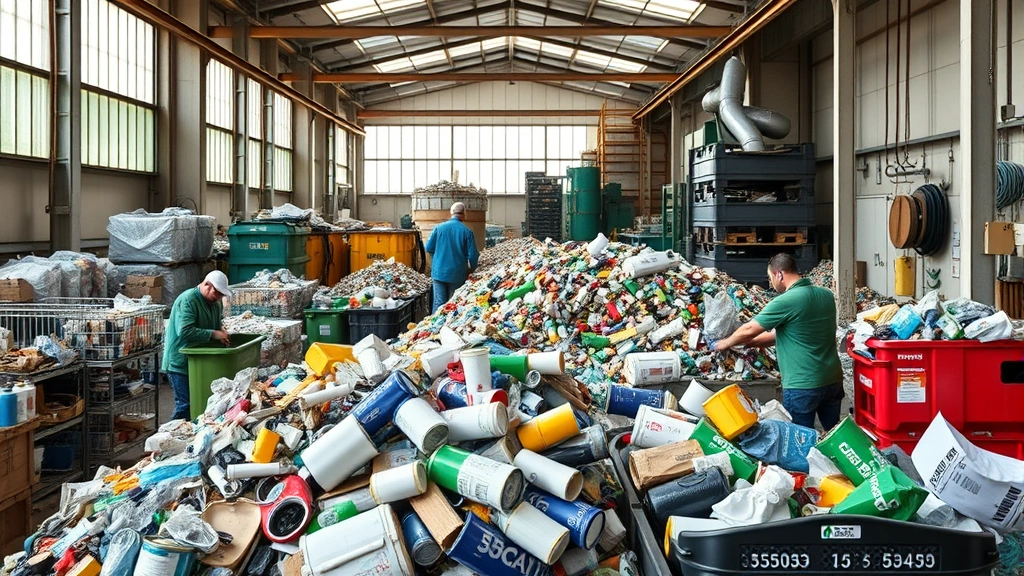
Circular economy concepts propose fundamentally restructuring production and consumption systems to eliminate waste and maximize material reuse. Rather than the linear “take-make-dispose” model, circular approaches emphasize closed-loop systems where materials cycle continuously.
This framework addresses a critical gap in traditional green economy approaches. Even with renewable energy, linear production systems require ever-increasing resource extraction to sustain economic growth. Circular models offer theoretical pathways toward economic activity within planetary boundaries.
However, achieving genuine circularity encounters practical obstacles. Biological nutrients (materials safely returning to natural cycles) and technical nutrients (materials cycling through industrial systems) remain difficult to separate in complex manufactured products. Contamination, degradation, and energy losses limit how many cycles materials can complete before becoming unusable.
Additionally, circular economy models have sometimes been co-opted for greenwashing purposes, where corporations claim circular practices while maintaining fundamentally linear systems. Sustainable fashion brands illustrate both genuine circular efforts and misleading marketing, where some initiatives genuinely reduce environmental impact while others primarily serve brand positioning.
The economic transition toward circular systems requires substantial upfront investments in reverse logistics infrastructure, remanufacturing facilities, and material processing technologies. Whether these investments generate adequate economic returns remains uncertain, particularly given the current low prices of virgin materials subsidized through inadequate environmental accounting.
The Role of Corporate Accountability and Greenwashing
Corporate sustainability commitments have proliferated dramatically, with major companies announcing net-zero pledges and environmental initiatives. However, significant gaps often exist between announced commitments and actual outcomes. Greenwashing—misrepresenting environmental performance through selective disclosure, vague terminology, or misleading metrics—has become increasingly sophisticated.
Environmental, Social, and Governance (ESG) investing frameworks attempt to direct capital toward sustainable enterprises, yet methodological inconsistencies and weak enforcement enable companies to attract ESG capital while maintaining minimal environmental improvements. The absence of standardized, independently verified sustainability metrics creates space for strategic misrepresentation.
Supply chain opacity particularly enables greenwashing. Companies may achieve emissions reductions in direct operations while outsourcing production to facilities with minimal environmental controls. Scope 3 emissions (indirect emissions throughout supply chains) frequently dwarf direct emissions, yet receive minimal scrutiny in corporate sustainability reporting.
Regulatory frameworks remain insufficient to prevent greenwashing systematically. The SEC’s proposed climate disclosure rules represent efforts to standardize reporting, yet face political opposition and implementation challenges. Without mandatory, verified, standardized disclosure requirements, corporate sustainability claims remain largely voluntary assertions lacking independent validation.
Emerging Economic Models for True Sustainability
Recognizing limitations in conventional green economy frameworks, economists and policymakers increasingly explore alternative approaches. Doughnut economics, developed by Kate Raworth, proposes reframing economic objectives around meeting human needs within planetary boundaries rather than maximizing GDP growth. This model challenges fundamental assumptions about economic success.
Ecological economics, drawing from biophysical sciences and environmental philosophy, emphasizes that economies remain embedded within finite ecosystems. This perspective rejects assumptions about infinite substitutability between natural and manufactured capital, recognizing certain ecological thresholds as non-negotiable.
Regenerative economics extends circular concepts further, proposing economic systems that actively restore ecological function rather than merely minimizing harm. This approach recognizes that past industrial activities have degraded ecosystems substantially, requiring positive restoration efforts rather than simply reducing future damage.
The United Nations Environment Programme continues developing frameworks for measuring genuine progress toward sustainability, moving beyond GDP toward indicators capturing ecological integrity, social equity, and long-term human wellbeing. These emerging approaches acknowledge that traditional economic metrics fundamentally misrepresent sustainability progress.
Regenerative agriculture, restorative forestry, and ecosystem restoration economics represent practical applications of these frameworks. However, scaling these approaches globally while maintaining current consumption levels appears economically and ecologically implausible, suggesting that genuine sustainability may require fundamental restructuring of economic systems and consumption patterns in wealthy nations.
The environmental print we leave through economic activity ultimately depends not just on technological solutions and market mechanisms but on profound questions about what constitutes a good economy and desirable human life. The green economy’s future sustainability hinges on whether it can honestly address these questions rather than assuming technological fixes enable indefinite growth within finite planetary systems.
FAQ
Can the green economy truly decouple economic growth from environmental impact?
Relative decoupling has occurred in some developed economies, where environmental impact grows more slowly than GDP. However, absolute decoupling at the global scale remains elusive, particularly when accounting for consumption-based emissions and outsourced production. Economists increasingly recognize that genuine sustainability may require absolute reductions in resource throughput for wealthy economies rather than continued growth.
Are renewable energy sources economically viable without subsidies?
Renewable energy has achieved cost competitiveness with fossil fuels in many markets based on levelized cost comparisons. However, integration into existing grids requires substantial investments in storage, transmission, and grid management infrastructure. Additionally, fossil fuels often benefit from implicit subsidies through externalized environmental costs, making direct cost comparisons misleading.
What is greenwashing and how can investors identify it?
Greenwashing involves misrepresenting environmental performance through selective disclosure, vague metrics, or misleading claims. Investors should demand standardized, independently verified sustainability metrics; examine Scope 3 supply chain emissions; scrutinize specific, quantifiable commitments; and assess alignment between disclosed commitments and actual corporate behavior over time.
Do circular economy models actually work at scale?
Circular economy principles offer valuable frameworks for reducing resource extraction and waste. However, achieving genuine circularity encounters technical limitations (material degradation, contamination), economic challenges (virgin materials remain artificially cheap), and implementation barriers. Most circular initiatives achieve partial rather than complete material cycling.
What would a truly sustainable economy look like?
Genuinely sustainable economies would operate within planetary boundaries while meeting human needs equitably. This likely requires absolute reductions in resource consumption for wealthy nations, fundamental restructuring of production and consumption systems, and reorienting economic success metrics away from GDP growth toward measures capturing ecological integrity, social equity, and long-term wellbeing.


