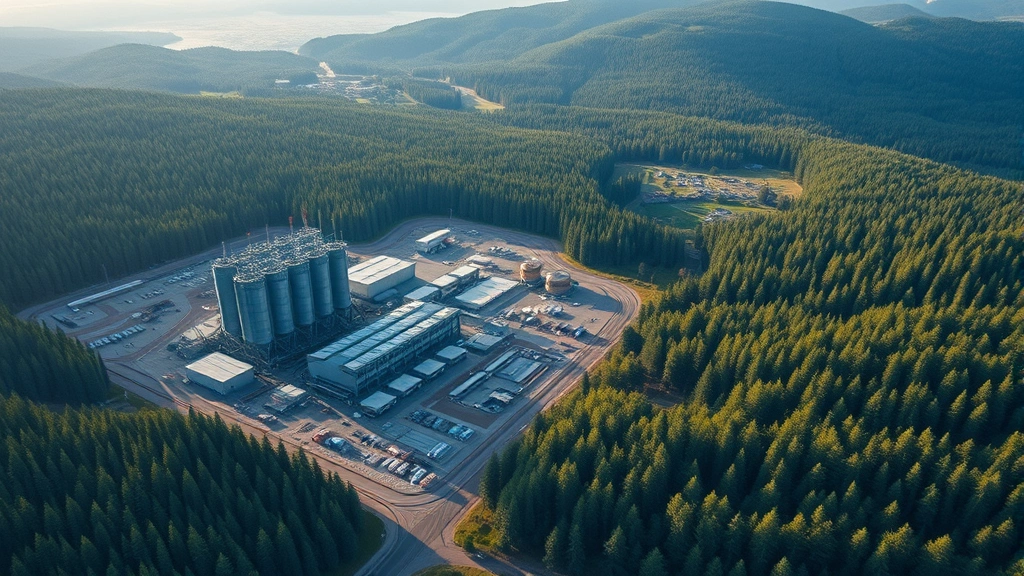
What Is Green GDP? Economists Weigh In
Traditional Gross Domestic Product (GDP) has long served as the primary metric for measuring economic growth and national prosperity. However, this conventional approach fundamentally ignores the depletion of natural resources, environmental degradation, and ecological damage that often accompanies economic expansion. Green GDP—also called adjusted net domestic product or environmentally adjusted GDP—represents a paradigm shift in how economists and policymakers evaluate genuine economic progress. By incorporating the value of environmental assets, pollution costs, and resource depletion into national accounting systems, Green GDP offers a more comprehensive picture of true economic wellbeing and sustainability.
The concept emerged from growing recognition that standard GDP calculations create perverse incentives. When a nation depletes fisheries, clears forests, or accumulates atmospheric carbon, these destructive activities initially appear as economic gains rather than losses. Green GDP corrects this fundamental accounting error by treating natural capital with the same economic rigor applied to manufactured assets. This article explores how leading economists are reshaping our understanding of prosperity, examines methodological approaches to measuring environmental costs, and investigates why this metric remains contested despite its intuitive appeal.
Understanding Green GDP: Beyond Traditional Economics
The foundation of Green GDP rests on a simple but revolutionary premise: natural resources possess genuine economic value that must be quantified and integrated into national accounts. Traditional GDP measures the total monetary value of goods and services produced within a country’s borders during a specific period. Yet this calculation treats the environment as either infinite or irrelevant—a tragic oversight given that all economic activity depends fundamentally on ecosystem services.
Green GDP incorporates three major adjustments to conventional GDP calculations. First, it deducts the value of natural resource depletion, including losses from mining, logging, fishery extraction, and groundwater extraction beyond sustainable levels. Second, it subtracts the cost of environmental damage, such as air pollution health effects, water contamination, and soil degradation. Third, it accounts for defensive expenditures—costs incurred to prevent or mitigate environmental damage, like wastewater treatment and pollution control equipment. These adjustments transform GDP from a production metric into a measure of genuine economic progress that respects planetary boundaries.
The relationship between environment and society fundamentally underpins why Green GDP matters. Economic systems cannot function without healthy ecosystems providing clean air, water, pollination, climate regulation, and raw materials. When standard GDP ignores these foundational systems, it creates an illusion of prosperity that masks underlying ecological collapse. Green GDP attempts to restore this critical connection, making environmental health visible within economic frameworks that policymakers actually use for decision-making.
Methodological Approaches and Measurement Challenges
Calculating Green GDP presents formidable technical and philosophical challenges that have prevented universal adoption despite decades of research. The primary methodological question concerns how to assign monetary values to environmental goods and services that have no established market prices. How much is a forest worth? What price should we place on a stable climate or biodiversity loss?
Economists employ several valuation approaches, each with distinct advantages and limitations. Replacement cost methods estimate expenses required to restore environmental damage or replace lost ecosystem services with technological alternatives. For instance, wetland destruction might be valued by calculating the cost of artificial water filtration systems that would replace natural purification. Hedonic pricing extracts environmental values from real estate markets, observing how property values change based on proximity to pollution sources or natural amenities. Contingent valuation surveys people about willingness to pay for environmental improvements or willingness to accept compensation for degradation. Revealed preference methods infer environmental values from actual consumption patterns, such as analyzing travel costs to natural areas or health expenditures related to pollution exposure.
These methodologies reveal why Green GDP calculations remain contentious. The same environmental asset can yield vastly different valuations depending on which approach economists select. Additionally, some argue that certain environmental goods possess intrinsic value beyond human economic utility—a perspective that market-based valuation fundamentally cannot capture. The philosophical debate about whether nature should be reduced to monetary terms continues to divide economists, environmental ethicists, and conservation advocates.
Technical implementation challenges compound methodological debates. Collecting comprehensive environmental data requires monitoring systems that many developing nations lack. Establishing baseline conditions from which to measure degradation demands historical ecological knowledge often unavailable. Attributing specific environmental damage to particular economic activities requires sophisticated scientific analysis. These practical obstacles explain why China’s 2004 attempt to implement Green GDP accounting was ultimately abandoned after calculating losses equivalent to 3.05% of GDP—the political implications of revealing such substantial environmental costs proved unpalatable to national leadership.
Global Implementation and Policy Applications
Despite conceptual appeal, Green GDP has achieved limited mainstream adoption among national governments. The ways humans affect the environment through economic activity become starkly apparent when Green GDP calculations are performed, creating political pressure that many governments find uncomfortable.
Several nations have experimented with environmental accounting frameworks that parallel or supplement traditional GDP. Bhutan pioneered “Gross National Happiness” accounting, which explicitly incorporates environmental conservation and cultural preservation alongside economic metrics. The World Bank and United Nations have promoted “adjusted net savings” calculations that measure genuine resource depletion and environmental degradation. New Zealand recently mandated that all government spending and policy decisions be evaluated through a wellbeing framework that includes environmental health. Scotland implemented natural capital accounting that values ecosystem services, informing environmental policy and land management decisions.
However, these initiatives typically operate as supplementary frameworks rather than replacing GDP as the primary economic indicator. Politicians and economists generally resist replacing GDP because it remains the metric through which economic performance is judged, career advancement is determined, and international competitiveness is assessed. Shifting to Green GDP would reveal that many developed nations have achieved apparent growth through unsustainable resource depletion and environmental cost-shifting—a revelation that generates considerable resistance from incumbent economic interests.
The interaction between humans and environment becomes measurable through Green GDP frameworks, providing policymakers with tools to identify which economic sectors generate genuine versus illusory prosperity. Manufacturing sectors with high pollution externalities might appear highly productive in traditional GDP terms while actually destroying value when environmental costs are included. Service sectors and renewable energy industries often show stronger performance under Green GDP metrics, potentially redirecting investment toward genuinely sustainable activities.
External Research: The World Bank’s sustainability research provides comprehensive frameworks for environmental accounting. The United Nations Environment Programme coordinates global efforts to integrate environmental considerations into economic policy. Research from ecological economics journals documents evolving approaches to environmental valuation and natural capital accounting.
Economist Perspectives and Debates
The economics profession remains divided on Green GDP’s viability and desirability. Prominent ecological economists, including those aligned with contemporary environmental economics research, argue that Green GDP represents essential progress toward sustainable accounting. They contend that any metric that fails to account for resource depletion and environmental degradation is fundamentally misleading, regardless of technical difficulties in implementation.
Robert Costanza and colleagues’ landmark 1997 study estimated that global ecosystem services—including pollination, water purification, climate regulation, and nutrient cycling—provided approximately $33 trillion annually in value, exceeding global GDP at that time. This research demonstrated that environmental degradation represents staggering economic losses when properly quantified. Subsequent studies have refined these estimates, generally confirming that environmental services provide trillions of dollars in annual economic value that conventional accounting completely ignores.
Conversely, mainstream economists raise legitimate concerns about Green GDP implementation. They question whether assigning monetary values to environmental goods compromises the integrity of economic analysis by reducing complex ecological relationships to simplistic price tags. Some argue that environmental protection is better advanced through targeted regulations and market mechanisms than through accounting adjustments. Others contend that Green GDP calculations, based on inherently uncertain valuations, might prove less reliable than traditional GDP for policy guidance. Economist critics also note that Green GDP adjustments don’t necessarily improve policy outcomes if policymakers lack political will to respond to environmental data, however it’s measured.
A middle position, increasingly influential among institutional economists and policy-oriented researchers, acknowledges Green GDP’s conceptual validity while advocating for its implementation as a supplementary rather than replacement metric. This approach maintains GDP as the standard economic indicator while promoting parallel reporting of environmental accounts, resource depletion measures, and adjusted net savings calculations. Such frameworks provide environmental information without requiring wholesale replacement of established economic measurement systems.
Behavioral economists and institutional scholars add another dimension, noting that measurement frameworks themselves shape policy priorities and institutional behavior. Changing what governments measure and report changes what policymakers attend to and how they allocate resources. From this perspective, Green GDP’s primary value may lie not in providing perfectly accurate environmental valuations but in making environmental costs visible within economic decision-making processes where they’re currently invisible.

Environmental Valuation Techniques
Understanding specific valuation methodologies illuminates both the promise and perils of Green GDP accounting. Each approach offers distinct insights while introducing particular biases and limitations.
Market-based valuation observes actual prices in functioning markets. Carbon markets, for instance, establish prices for greenhouse gas emissions through cap-and-trade systems, providing direct valuations of climate damage costs. Water markets in some regions reveal prices for freshwater extraction rights, indicating scarcity values. Timber prices reflect forest resource values, while fishery quotas establish prices for fish stocks. These market prices offer the advantage of reflecting actual economic behavior and willingness to pay, but they’re often distorted by subsidies, market power, and failure to capture full environmental costs.
Damage cost approaches estimate expenses required to repair environmental harm or treat resulting health effects. Air pollution damage valuations calculate respiratory disease treatment costs, lost productivity from illness, and mortality costs based on statistical life values. Water pollution damages include treatment expenses, lost recreational value, and fishery production losses. Soil degradation costs encompass reduced agricultural productivity and desertification control expenses. These approaches ground valuations in observable economic impacts, though they systematically undervalue environmental goods by focusing only on direct damage costs rather than full ecological loss.
Ecosystem service valuation quantifies specific functions that ecosystems provide, including carbon sequestration, water filtration, pollination, flood regulation, and habitat provision. Researchers employ productivity methods (calculating the economic output from ecosystem functions), replacement cost methods (estimating expenses to replicate services technologically), and benefit transfer methods (applying valuations from studied ecosystems to similar unstudied systems). These approaches capture environmental values more comprehensively but depend heavily on scientific knowledge of ecosystem functions and their economic relationships.
Nonmarket valuation techniques address environmental goods lacking market prices through stated or revealed preference methods. Contingent valuation surveys ask people what they’d pay to preserve environmental amenities or accept as compensation for environmental losses. Travel cost methods infer values from expenditures to access natural areas. Hedonic property analysis extracts environmental values from real estate price differences. These approaches directly measure human preferences but face challenges from strategic behavior (people may misrepresent preferences in surveys) and limited applicability to environmental goods without direct human use.
Real-World Case Studies and Outcomes
Examining actual Green GDP implementations reveals how theoretical frameworks translate into practical policy contexts, with mixed results regarding both technical feasibility and political acceptance.
India’s Environmental Accounting Initiative: India’s Ministry of Statistics attempted comprehensive Green GDP calculations during the 1990s and 2000s, adjusting GDP for resource depletion in forests, minerals, and fisheries, plus environmental degradation costs from air and water pollution. Results indicated that environmental adjustments reduced reported GDP growth rates by 0.5-1.5 percentage points annually. The Indian government abandoned centralized Green GDP reporting, citing data availability challenges and concerns that environmental accounting might discourage investment in resource-dependent sectors. However, India has subsequently developed environmental accounting frameworks that track natural capital separately from GDP, providing environmental data without directly challenging the GDP growth narrative.
Nordic Environmental Accounting: Scandinavian countries have implemented relatively comprehensive environmental accounting systems integrated with national statistical agencies. Sweden, Norway, and Denmark regularly publish environmental and natural capital accounts alongside GDP figures, creating a parallel reporting system where both economic and environmental performance receive explicit measurement. These initiatives have influenced policy decisions regarding forestry management, fisheries regulation, and pollution control, demonstrating that environmental accounting can inform policy even when not replacing GDP.
Costa Rica’s Ecosystem Services Accounting: Costa Rica developed payment for ecosystem services systems and environmental accounting frameworks that value forest conservation, water provision, and biodiversity protection. These valuations informed policy decisions to expand protected areas and implement forest conservation programs. Environmental accounting revealed that forest conservation generated more economic value than timber extraction when ecosystem services were properly quantified, supporting policy shifts toward sustainable management. However, Costa Rica’s experience also demonstrates that even with clear environmental accounting data, implementation depends on political commitment and economic incentives that extend beyond measurement frameworks.
These case studies suggest that Green GDP’s impact depends less on methodological perfection than on institutional integration and political commitment. Nations that embed environmental accounting within existing statistical systems and connect it to actual policy decisions achieve greater influence than those treating environmental accounting as separate analytical exercises. The technical challenges of Green GDP calculation, while genuine, often prove less limiting than institutional and political barriers to implementation.

FAQ
How does Green GDP differ from traditional GDP?
Traditional GDP measures the monetary value of all goods and services produced within a nation, treating natural resources as infinite and ignoring environmental degradation costs. Green GDP adjusts for resource depletion, environmental damage, and defensive expenditures, providing a more accurate picture of genuine economic progress. A nation might show strong GDP growth while depleting fisheries, degrading soils, and accumulating pollution—activities that Green GDP would reveal as economically destructive.
Why haven’t more countries adopted Green GDP as their primary economic metric?
Political and institutional resistance remains substantial. Implementing Green GDP would reveal that many developed nations have achieved apparent prosperity through unsustainable resource extraction and environmental cost-shifting. Governments fear that lower adjusted growth rates might discourage investment, affect credit ratings, and reduce political legitimacy. Additionally, calculating Green GDP requires sophisticated environmental monitoring systems and scientific expertise that developing nations often lack. Most governments prefer supplementary environmental accounting that provides environmental information without directly challenging GDP’s dominance.
What are the main challenges in valuing environmental goods for Green GDP calculations?
Many environmental goods lack market prices, requiring economists to estimate values through indirect methods with inherent uncertainties. Some environmental assets provide irreplaceable services that no technology can replace, making valuation problematic. Attributing specific environmental damage to particular economic activities requires complex scientific analysis. Additionally, philosophical debates persist about whether nature should be reduced to monetary terms or whether certain environmental goods possess intrinsic value beyond human economic utility.
Can Green GDP improve environmental policy outcomes?
Green GDP can make environmental costs visible within economic decision-making processes, potentially influencing policy priorities. When environmental accounting reveals that resource depletion and degradation reduce genuine economic progress, policymakers may shift toward more sustainable approaches. However, Green GDP alone doesn’t guarantee improved outcomes—actual policy changes require political will, institutional capacity, and economic incentives beyond measurement frameworks. Environmental accounting works best when integrated into existing policy institutions and connected to actual decision-making processes.
What is the relationship between Green GDP and sustainable development?
Green GDP attempts to measure whether economic development genuinely improves wellbeing while maintaining natural capital and ecosystem health—the core definition of sustainability. By accounting for environmental costs, Green GDP reveals whether growth is sustainable or whether it represents unsustainable resource depletion and environmental degradation. However, Green GDP is just one tool among many needed to pursue sustainable development. It must be combined with environmental regulations, resource management policies, and institutional reforms that actually protect ecosystems and ensure intergenerational equity.


