
NextJS Environment Variables: A Comprehensive Developer Guide
Environment variables are fundamental to modern web development, serving as the bridge between application code and runtime configuration. In Next.js applications, managing environment variables efficiently determines not only your development workflow but also the security posture and scalability of your production systems. This guide explores the intersection of technical implementation and sustainable development practices, demonstrating how proper configuration management contributes to efficient resource allocation and reduced computational overhead.
The relationship between well-structured environment variables and system performance reflects broader principles found in environment and market dynamics. Just as ecosystems require proper resource distribution to thrive, applications require precise configuration management to operate optimally. By understanding Next.js environment variable implementation, developers create systems that consume resources responsibly while maintaining flexibility across development, staging, and production environments.
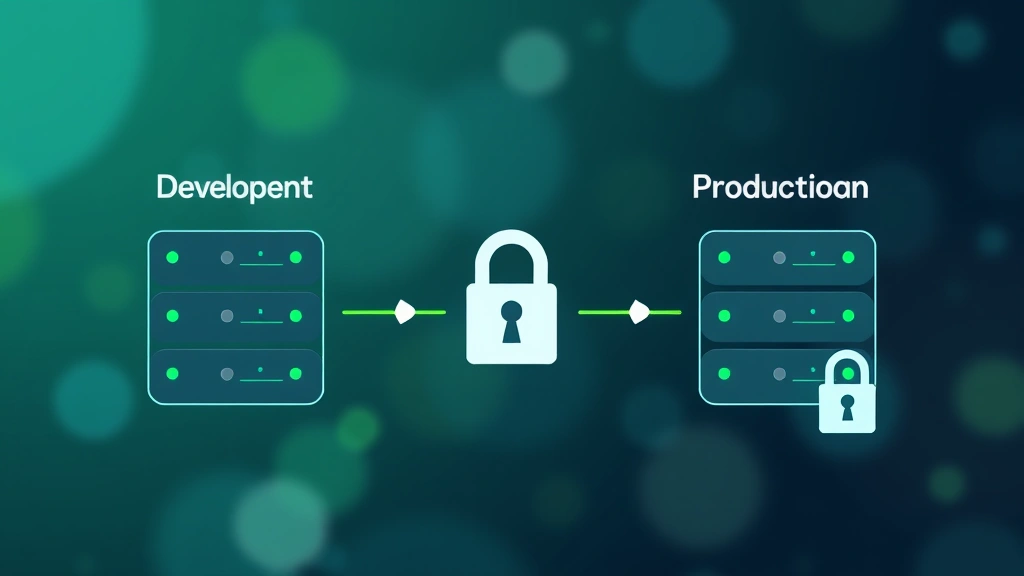
Understanding Next.js Environment Variables
Next.js provides a built-in system for managing environment variables that simplifies configuration across different deployment environments. Unlike traditional Node.js applications, Next.js handles environment variables with special consideration for both server-side and client-side code execution. The framework automatically loads variables from .env.local, .env.development, and .env.production files, creating a seamless development experience.
The Next.js environment variable system operates on a principle of separation of concerns. Variables prefixed with NEXT_PUBLIC_ become available in the browser, while unprefixed variables remain server-side only. This architectural decision reflects the broader concept of human environment interaction, where boundaries and proper resource allocation prevent unintended consequences. Exposing sensitive information to the browser represents a security vulnerability similar to environmental degradation—both stem from improper boundary management.
The loading order matters significantly. Next.js loads files in this sequence: .env.local always loads last and overrides all other files, ensuring local development configurations take precedence. Then .env.{NODE_ENV}.local loads, followed by .env.{NODE_ENV}, and finally .env. This cascading approach enables environment-specific configurations while maintaining sensible defaults.

Setting Up Environment Files
Creating a robust environment variable structure begins with establishing appropriate files in your project root. The .env.local file contains machine-specific or sensitive configurations never committed to version control. This file should be added to your .gitignore immediately, preventing accidental exposure of API keys, database credentials, or authentication tokens.
Start with a .env.example file documenting all required environment variables without sensitive values. This file commits to version control and serves as documentation for team members and deployment systems:
- Document variable names and expected formats
- Include placeholder or example values
- Add brief descriptions of each variable’s purpose
- Specify whether variables should be public or private
For development, create .env.development.local containing development-specific configurations. This might include API endpoints pointing to local services, relaxed authentication requirements, or verbose logging settings. Production environments require .env.production.local with hardened security settings, optimized performance configurations, and production API endpoints.
A typical environment file structure looks like this:
.env– Default values shared across all environments.env.local– Local machine overrides (never committed).env.development– Development environment defaults.env.development.local– Development overrides (never committed).env.production– Production environment defaults.env.production.local– Production overrides (never committed).env.example– Template for team reference
Public vs Private Variables
The distinction between public and private environment variables represents one of the most critical security considerations in Next.js development. Variables intended for browser access must be explicitly prefixed with NEXT_PUBLIC_, making their exposure intentional and deliberate.
Public variables include:
- API endpoint URLs accessible to the frontend
- Third-party service keys for client-side analytics
- Feature flags controlling UI behavior
- Public configuration values
Private variables remain server-side only and include:
- Database connection strings
- API keys for backend services
- Encryption keys and secrets
- Authentication credentials
- Internal service URLs
When a variable is prefixed with NEXT_PUBLIC_, Next.js includes its value in the JavaScript bundle sent to browsers. Inspect the browser’s network requests or view page source to see these values. This transparency prevents accidental exposure of sensitive data—developers cannot accidentally make a private variable public; they must explicitly add the prefix.
The NEXT_PUBLIC_ prefix works in:
- Browser-executed code
getStaticPropsandgetStaticPathsduring build timegetServerSidePropsfor server-side rendering- API routes and middleware
- React components
Development Workflow Best Practices
Establishing effective development workflows with environment variables requires discipline and clear team conventions. The Ecorise Daily blog emphasizes systematic approaches to complex systems, principles equally applicable to development configuration.
Create a .env.example file that team members copy to .env.local when setting up the project:
- Include all required variables with descriptive comments
- Use example or placeholder values
- Document the purpose of each variable
- Specify expected value formats
- Note any dependencies between variables
Implement validation in your Next.js application to ensure all required environment variables exist at startup. Create a configuration file that validates variables during application initialization:
- Check for presence of required variables
- Validate variable formats and ranges
- Provide clear error messages for missing or invalid values
- Fail fast during development to catch configuration issues early
Use environment variable defaults strategically. Development defaults should enable local development without requiring extensive configuration, while production should have no defaults for sensitive values, forcing explicit configuration.
Production Deployment Considerations
Deploying Next.js applications to production requires careful environment variable management. Different hosting platforms provide different mechanisms for setting environment variables securely.
Vercel (the platform behind Next.js) provides a project settings interface where you configure environment variables per deployment environment. Variables set in Vercel’s dashboard override local files, ensuring production secrets never exist in your codebase. Vercel automatically loads these during build and runtime.
Docker-based deployments require passing environment variables through the Docker run command, environment files, or orchestration tools like Kubernetes ConfigMaps and Secrets. The Dockerfile typically runs the Next.js build process, requiring build-time environment variables to be available during the build step.
Traditional servers require setting environment variables through systemd service files, supervisor configuration, or shell scripts that launch the application. The application must be built with production environment variables available during the build process.
A critical distinction exists between build-time and runtime environment variables. Variables used during the build process (like API endpoints for static generation) must be available when running npm run build. Variables used at runtime must be available when the application starts.
The production deployment workflow typically follows this pattern:
- Configure environment variables in your hosting platform
- Trigger a deployment from your repository
- The hosting platform checks out your code
- Build-time environment variables are injected
npm run buildexecutes with these variables- The compiled application is deployed
- Runtime environment variables are injected when the application starts
- The application runs with access to all configured variables
Security and Sensitive Data Management
Managing sensitive data through environment variables requires understanding both technical and organizational security practices. The principle of least privilege applies directly—variables should only be accessible where needed, and sensitive values should be rotated regularly.
Never commit .env.local, .env.*.local, or any files containing actual secrets to version control. Configure your .gitignore file:
.env.local.env.*.local.env.production(if it contains actual secrets)
Consider implementing efficient resource management practices in your secrets strategy. Just as reducing carbon footprint requires systematic changes, securing environment variables demands comprehensive approaches:
- Use secrets management services for production environments
- Rotate credentials regularly
- Implement audit logging for secret access
- Restrict access based on deployment environment
- Use different credentials for different environments
For team development, consider using tools like dotenv-safe or envalid to validate environment variables at application startup. These tools catch missing or improperly formatted variables before they cause runtime errors.
Common Patterns and Anti-Patterns
Experienced developers recognize patterns that emerge from managing environment variables across multiple projects. Understanding these patterns prevents common mistakes and improves maintainability.
Pattern: Centralized Configuration
Create a configuration module that imports and validates all environment variables at application startup:
- Single source of truth for all configuration
- Type-safe access to variables throughout the application
- Validation logic centralized in one location
- Clear documentation of all available variables
Pattern: Environment-Specific Exports
Export different configurations based on the current environment, allowing the application to adapt its behavior accordingly. This pattern enables feature flags, API endpoint switching, and logging level adjustment without code changes.
Anti-Pattern: Committing Secrets
The most critical anti-pattern is committing actual secrets to version control. Even if removed in later commits, secrets remain in git history. If secrets are exposed, rotate them immediately and consider the repository compromised.
Anti-Pattern: Using Environment Variables for Complex Configuration
Environment variables work best for simple scalar values. Complex configuration involving nested objects or arrays becomes difficult to manage through environment variables. Consider using configuration files or configuration services for complex scenarios.
Anti-Pattern: Inconsistent Naming Conventions
Establish consistent naming conventions for environment variables. Use UPPER_SNAKE_CASE, group related variables with common prefixes, and document the naming scheme for team members.
The intersection of technical practices and sustainable development becomes evident when considering resource efficiency. Proper configuration management prevents redundant deployments, failed builds, and wasted computational resources. By implementing environment variables systematically, developers create applications that respect both security boundaries and computational efficiency, principles aligned with broader sustainable technology practices.
FAQ
Can I use environment variables in static site generation (SSG)?
Yes, but with important limitations. Environment variables are available during the build process when getStaticProps executes. However, static pages cannot access runtime environment variables since they’re pre-rendered. Use build-time variables for content that doesn’t change, and implement client-side fetching for dynamic data.
How do I access environment variables in the browser?
Only variables prefixed with NEXT_PUBLIC_ are accessible in the browser. These variables are embedded in the JavaScript bundle during the build process. Access them directly: process.env.NEXT_PUBLIC_API_URL. Never attempt to access private variables from the browser.
What’s the difference between .env and .env.local?
The .env file is committed to version control and contains default values shared across all environments. The .env.local file is never committed and contains machine-specific overrides. The .env.local file takes precedence over .env, allowing developers to customize their local setup without affecting the repository.
How do I use environment variables in API routes?
API routes are server-side code, so they can access both public and private environment variables. Simply import process.env.VARIABLE_NAME in your API route handlers. API routes execute on the server, so private variables remain secure.
Can I change environment variables without rebuilding?
This depends on your deployment platform. For variables used during the build process (like API endpoints for static generation), you must rebuild to apply changes. For runtime-only variables, some platforms allow changes without rebuilding. Check your hosting platform’s documentation for specific capabilities.
How do I validate environment variables?
Create a configuration module that validates variables at startup. Libraries like envalid or zod provide type-safe validation. Validate format, presence, and range. Fail fast during development to catch configuration issues immediately.
Should I use environment variables for feature flags?
Yes, environment variables work well for feature flags. Use boolean or string values to control feature availability. For development, enable experimental features; for production, keep them disabled. This approach enables testing new features without code changes.
How do I handle environment variables in Docker?
Pass environment variables to Docker containers through the -e flag, environment files with the --env-file flag, or in docker-compose.yml files. The container must have access to both build-time and runtime variables depending on when they’re used in the application.