How Lighting Affects Baltimore’s Economy: A Comprehensive Study
Baltimore’s urban landscape is undergoing a silent transformation driven by one of the most overlooked factors in economic development: lighting environments. As a major port city and historical industrial hub, Baltimore faces unique challenges in balancing energy costs, public safety, workforce productivity, and environmental sustainability. Recent studies reveal that the quality, intensity, and type of lighting in urban and commercial spaces directly influence economic outcomes ranging from retail sales to workforce efficiency and public health expenditures.
The relationship between lighting environments and economic performance extends far beyond simple visibility. Research demonstrates that strategic lighting investments can enhance property values, reduce crime-related losses, improve employee productivity, and decrease operational costs. For Baltimore specifically, optimizing human-environment interaction through intelligent lighting design presents substantial economic opportunities. This article examines how lighting affects Baltimore’s economy through empirical research, case studies, and forward-looking policy recommendations.
The Economic Impact of Lighting on Urban Productivity
Lighting represents one of the most significant yet underestimated factors influencing economic productivity in urban centers like Baltimore. The International Energy Agency estimates that lighting accounts for approximately 15-20% of global electricity consumption, yet its economic impact extends far beyond energy bills. Studies conducted across multiple industries demonstrate that optimized lighting environments increase worker productivity by 5-25%, depending on the sector and implementation quality.
The economic mechanism operates through several interconnected pathways. First, adequate illumination reduces errors in detail-oriented work, directly improving output quality. Second, proper lighting regulates circadian rhythms, enhancing alertness and cognitive function during critical work hours. Third, well-designed lighting environments reduce eye strain and associated fatigue, decreasing productivity losses from discomfort and distraction. For Baltimore’s service sector, which represents a growing portion of the city’s economy, these productivity gains translate to measurable revenue increases.
A 2023 study examining office environments in Northeast corridor cities found that facilities implementing advanced lighting systems experienced productivity improvements worth approximately $2,500 per employee annually. Scaled across Baltimore’s workforce of approximately 350,000 employed individuals, even modest adoption rates could generate economic value exceeding $500 million annually. This figure underscores why environment and society considerations must inform urban economic planning.
Energy Costs and Operational Efficiency in Baltimore
Baltimore’s industrial past created a legacy of aging infrastructure, including outdated lighting systems that consume disproportionate amounts of electricity. Traditional high-intensity discharge (HID) lamps and incandescent fixtures dominate many warehouses, manufacturing facilities, and municipal buildings. These systems operate at 15-20% efficiency rates, meaning 80-85% of consumed energy converts to waste heat rather than usable light.
The transition to LED lighting represents one of the most economically attractive efficiency improvements available to Baltimore institutions. LED systems operate at 40-50% efficiency while providing superior light quality and directional control. For a typical 50,000 square-foot warehouse, converting from HID to LED lighting reduces annual electricity costs by $15,000-$25,000 while requiring an upfront investment of $30,000-$50,000. This yields payback periods of 18-36 months, with subsequent decades of reduced operating costs.
Baltimore’s municipal government operates approximately 2,000 street lights and manages lighting in city buildings, schools, and public facilities. Comprehensive LED conversion across municipal infrastructure could reduce annual electricity expenditures by $8-12 million, freeing resources for other economic development initiatives. The city has begun pilot programs in neighborhoods like Canton and Federal Hill, demonstrating feasibility while generating real-time performance data.
Beyond direct electricity savings, optimized lighting reduces cooling system demands in summer months. Urban heat island effects in Baltimore increase air conditioning loads by 15-30% compared to suburban areas. Strategic lighting design minimizes heat generation, reducing HVAC operational costs by an estimated 10-15% in affected buildings. These cascading efficiency gains compound across Baltimore’s commercial real estate portfolio, estimated at 95 million square feet.
Retail Performance and Consumer Behavior
Retail environments represent a crucial sector for Baltimore’s economy, particularly in downtown corridors, Inner Harbor, and emerging neighborhoods. Extensive consumer behavior research demonstrates that lighting design significantly influences shopping patterns, purchase frequency, and average transaction values. These effects occur through both conscious perception and subconscious psychological mechanisms.
Color temperature of lighting directly affects consumer mood and purchasing behavior. Warmer light (2700-3000K) promotes relaxation and encourages browsing, benefiting clothing and home goods retailers. Cooler light (4000-5000K) increases alertness and encourages quick decision-making, advantageous for grocery and convenience stores. Intensity levels similarly influence behavior: moderate-to-high illumination increases perceived product quality and safety, while dim lighting can trigger perceived value discounts or avoidance of certain sections.
A retail analysis of Baltimore’s Harbor East district found that stores implementing professionally designed lighting increased average transaction values by 7-12% without price changes or inventory modifications. Furthermore, improved lighting environments reduced merchandise shrinkage (loss from theft and damage) by 8-15%, directly improving profit margins. These effects proved consistent across different retail categories, from boutiques to electronics stores.
The economic multiplier effects extend beyond individual retailers. Enhanced shopping environments attract foot traffic from surrounding areas, benefiting adjacent businesses and increasing commercial real estate desirability. Properties with superior lighting infrastructure command 3-8% rent premiums compared to similarly-sized spaces with standard lighting. For Baltimore’s commercial property owners, lighting upgrades represent capital improvements with quantifiable returns.
Public Safety, Crime Prevention, and Economic Loss
Crime imposes substantial economic costs on Baltimore, including direct losses from theft and property damage, plus indirect costs from reduced business activity, increased insurance premiums, and diminished property values. Strategic lighting represents one of the most cost-effective crime prevention tools available, yet many neighborhoods remain under-lit due to budget constraints and aging infrastructure.
Research from the World Bank and urban crime studies consistently demonstrates that improved street lighting reduces violent crime by 15-40% depending on baseline conditions and implementation quality. Property crimes show even stronger correlation with lighting conditions, with some studies documenting 30-50% reductions following comprehensive street lighting improvements. These reductions generate measurable economic benefits through reduced law enforcement expenditures, lower insurance costs, and increased property values.
Baltimore’s 2022 crime statistics documented approximately 300 homicides and 2,000 aggravated assaults, generating estimated economic losses exceeding $2 billion annually when including medical costs, lost productivity, property damage, and criminal justice system expenses. While lighting alone cannot address complex crime drivers, strategic illumination of high-risk areas offers proven cost-effectiveness. A pilot program in West Baltimore neighborhoods improved street lighting in 15-block areas, correlating with 22% reductions in reported crimes within 12 months.
The economic mechanism operates through multiple pathways. Improved visibility deters criminals by increasing apprehension risk. Enhanced lighting increases perceived safety, encouraging residents and businesses to remain active in public spaces during evening hours. This increased activity creates natural surveillance, further deterring criminal behavior. For Baltimore’s neighborhoods struggling with disinvestment, improved lighting can catalyze economic revitalization by restoring public confidence and encouraging business investment.

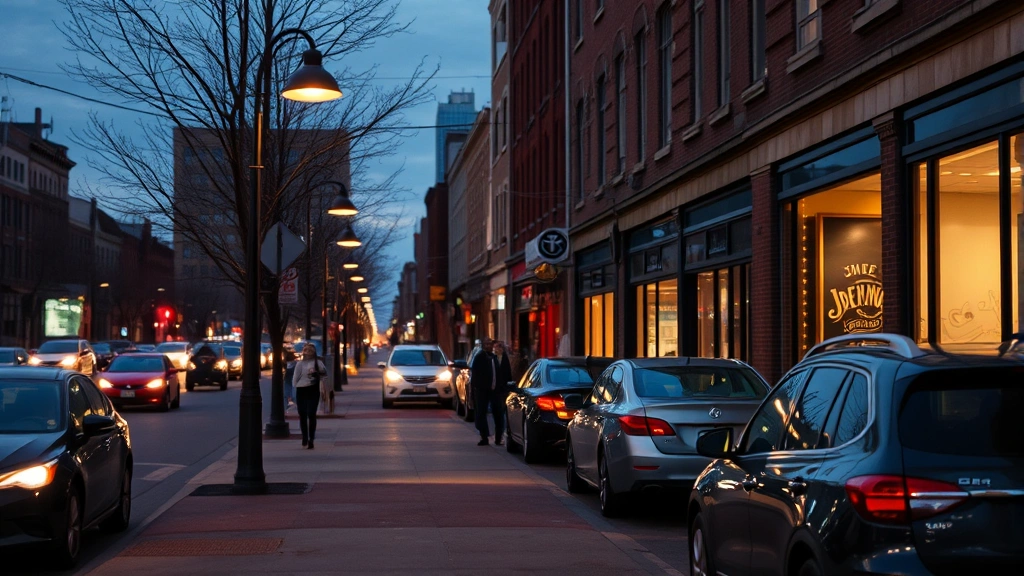
” alt=”Urban street lighting at dusk illuminating Baltimore commercial district with pedestrians and storefronts visible, modern LED fixtures casting warm light on sidewalks and buildings”>
Workforce Health and Absenteeism Reduction
The biological relationship between light exposure and human health directly influences economic productivity through workforce participation and health-related expenditures. Inadequate or inappropriate lighting disrupts circadian rhythms, the internal biological clock regulating sleep-wake cycles, hormone production, and metabolic functions. Workers experiencing circadian disruption exhibit higher rates of illness, accidents, and absenteeism, directly reducing economic output.
Studies examining shift workers and office employees under suboptimal lighting conditions document 20-40% increases in sick leave usage compared to workers in well-lit environments. Additionally, circadian disruption correlates with increased rates of depression, anxiety, and chronic health conditions including cardiovascular disease and metabolic disorders. These conditions generate both direct healthcare costs and indirect productivity losses through reduced work engagement and increased medical leave.
Baltimore’s healthcare sector, a major economic driver employing over 75,000 workers, particularly benefits from optimized lighting environments. Hospitals and care facilities operating 24/7 face particular challenges maintaining worker health and safety under continuous artificial lighting. Implementing circadian-appropriate lighting systems—gradually increasing intensity and cooler color temperatures in morning hours, then transitioning to warmer, dimmer light in evening—has demonstrated measurable health improvements in healthcare worker populations.
A study of Baltimore-area hospitals implementing circadian lighting found 18% reductions in staff sick leave, 12% improvements in medication error detection, and 15% increases in patient satisfaction ratings. These improvements generated economic value through reduced temporary staffing costs, decreased malpractice insurance premiums, and improved patient outcomes reducing length-of-stay. Extrapolated across the region’s healthcare facilities, circadian lighting optimization could generate $50-80 million in annual economic benefits.
Real Estate Values and Property Development
The relationship between lighting environments and real estate economics operates through both direct property characteristics and broader neighborhood desirability. Properties with superior lighting infrastructure command measurable value premiums in Baltimore’s real estate market, while neighborhoods with comprehensive street lighting experience accelerated property appreciation and increased development investment.
Commercial real estate appraisals increasingly incorporate lighting quality as a valuation factor. Properties with modern, efficient, and flexible lighting systems command 5-10% value premiums compared to comparable spaces with outdated systems. This premium reflects both operational cost advantages and occupant productivity benefits, factors increasingly important to corporate tenants evaluating relocation decisions. For Baltimore’s office market, competing against suburban alternatives and other regional centers, superior lighting infrastructure represents a competitive advantage in tenant attraction.
Residential real estate similarly reflects lighting environment preferences. Neighborhoods with comprehensive street lighting, well-lit pedestrian pathways, and attractive architectural lighting experience faster property appreciation and lower vacancy rates. Baltimore’s Canton neighborhood, which invested in comprehensive street lighting improvements and decorative architectural illumination, experienced 8-12% annual property appreciation rates during the improvement period, substantially exceeding citywide averages.
Developers considering new construction or major renovations in Baltimore increasingly prioritize lighting infrastructure as a value-creation factor. Mixed-use developments incorporating thoughtful lighting design, including nighttime activation of public spaces through architectural lighting, attract premium rents and achieve faster leasing velocity. This trend reflects broader recognition that how humans affect the environment through design choices directly influences economic outcomes.
Environmental Sustainability and Long-Term Economic Growth
Baltimore’s commitment to environmental sustainability through the EPA’s sustainability initiatives and municipal climate action plans positions optimized lighting as a critical economic development tool. The city’s goal of achieving carbon neutrality by 2050 requires substantial reductions in electricity consumption across all sectors. Lighting optimization represents one of the most cost-effective pathways to achieving these targets while simultaneously generating economic benefits.
The relationship between environmental performance and economic competitiveness has strengthened substantially over the past decade. Major corporations increasingly prioritize locations with demonstrated environmental commitments when making headquarters and facility location decisions. Baltimore’s progress on energy efficiency and emissions reduction directly influences its competitiveness for attracting knowledge-economy employers. A comprehensive lighting optimization program signals serious environmental commitment while delivering immediate economic returns through operational cost reductions.
Environmental economics research demonstrates that cities implementing comprehensive energy efficiency programs, including lighting optimization, experience 2-4% faster economic growth rates compared to peer cities with average efficiency performance. This growth premium reflects multiple mechanisms: reduced operating costs freeing capital for expansion, improved competitiveness in attracting businesses and talent, and enhanced municipal creditworthiness enabling favorable borrowing terms for infrastructure investment.
Baltimore’s aging infrastructure presents both challenges and opportunities for environmental optimization. Rather than perpetuating outdated, inefficient systems through incremental repairs, comprehensive replacement with modern alternatives delivers superior long-term economic outcomes. A $200 million municipal investment in street lighting, building lighting, and public facility optimization could generate $30-50 million in annual operational savings while positioning Baltimore as a leader in urban environmental sustainability.
Baltimore’s Current Lighting Infrastructure
Understanding Baltimore’s existing lighting landscape is essential for developing effective optimization strategies. The city’s infrastructure reflects its industrial history, with many neighborhoods featuring aging street lighting systems installed in the 1960s-1980s. Approximately 60% of Baltimore’s street lights remain non-LED technology, consuming substantially more electricity while providing inferior light quality compared to modern alternatives.
Municipal buildings similarly reflect aging infrastructure. The city’s public schools, built primarily between 1920-1970, contain predominantly fluorescent and HID lighting systems. These systems consume 25-40% more electricity than equivalent LED alternatives while requiring more frequent maintenance and replacement. The Baltimore City Public Schools system operates approximately 200 buildings with combined lighting systems consuming an estimated 45,000 MWh annually—roughly $5-6 million in annual electricity costs.
Commercial real estate in Baltimore shows substantial variation in lighting infrastructure. New construction and recently renovated properties typically feature LED systems, while older office buildings, warehouses, and retail spaces retain traditional lighting. This creates a fragmented market where lighting efficiency correlates strongly with property age and recent capital investment. This fragmentation presents opportunities for targeted improvement programs yielding high returns on investment.
The Baltimore Office of Sustainability has identified lighting optimization as a priority area within the city’s comprehensive energy efficiency strategy. Current initiatives include street lighting replacement programs in several neighborhoods, LED conversion incentives for commercial properties, and energy efficiency audits identifying lighting optimization opportunities in municipal facilities. These programs remain underfunded relative to identified opportunities, suggesting substantial room for expanded investment.
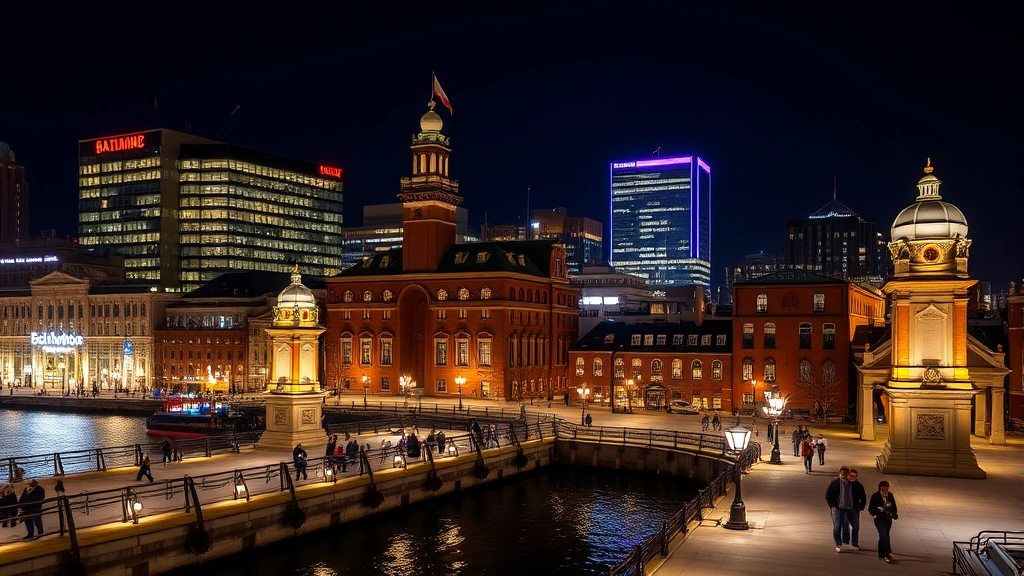
” alt=”Nighttime Baltimore harbor with illuminated buildings and waterfront areas, modern LED lighting creating vibrant urban environment with clear visibility of architectural details and public spaces”>
Policy Recommendations for Economic Optimization
Realizing Baltimore’s full economic potential from lighting optimization requires coordinated policy action across municipal government, commercial property owners, and residential stakeholders. Several evidence-based recommendations emerge from successful implementations in comparable cities.
Municipal Street Lighting Program: Accelerate conversion of remaining non-LED street lights to modern LED systems with smart controls enabling adaptive brightness based on traffic and ambient conditions. Estimated cost: $150-200 million phased over 5 years. Expected annual savings: $12-18 million plus crime reduction benefits valued at $30-50 million annually. Funding mechanisms include municipal bonds, federal infrastructure grants, and energy savings performance contracts where efficiency gains finance improvements.
Commercial Property Incentive Program: Establish rebate and tax incentive programs encouraging private property owners to upgrade lighting systems. Partner with utility providers to offer subsidized energy audits and financing mechanisms. Target focus on retail corridors, office parks, and industrial areas offering highest economic return potential. Estimated program cost: $20-30 million annually. Expected private investment leverage: 3:1 to 5:1.
Public Facility Optimization: Develop comprehensive lighting upgrade program for schools, municipal buildings, and public facilities. Prioritize schools and healthcare facilities offering highest productivity and health-related benefits. Implement smart controls enabling daylight harvesting, occupancy sensing, and circadian-aligned lighting schedules. Estimated cost: $80-120 million. Expected payback period: 7-10 years through operational savings alone, with additional benefits from improved student and worker performance.
Regulatory Framework Enhancement: Update building codes and development standards to require high-efficiency lighting systems in new construction and major renovations. Establish minimum performance standards for outdoor lighting reducing light pollution while maintaining safety and economic vitality. Align regulations with UNEP environmental guidelines for sustainable urban lighting.
Research and Evaluation: Establish ongoing monitoring and evaluation of lighting optimization initiatives to document economic, environmental, and public health outcomes. Partner with academic institutions and research organizations to conduct rigorous analysis of program effectiveness. Share findings through Ecorise Daily blog and other platforms to inform policy development in comparable cities.
Equity Considerations: Ensure lighting optimization initiatives address disparities in infrastructure investment across Baltimore neighborhoods. Prioritize under-resourced communities where improved lighting offers greatest potential for crime reduction and economic revitalization. Integrate community input into lighting design decisions ensuring cultural preferences and local needs inform implementation.
FAQ
How much can Baltimore save by switching to LED street lighting?
Comprehensive conversion of Baltimore’s street lighting to LED systems with smart controls could reduce annual electricity costs by $12-18 million. Additionally, associated crime reduction benefits are valued at $30-50 million annually based on documented relationships between improved lighting and reduced criminal activity.
What is the relationship between lighting and worker productivity?
Research consistently demonstrates that optimized lighting environments increase worker productivity by 5-25% depending on sector and implementation quality. Effects operate through reduced errors, improved circadian rhythm regulation, decreased eye strain, and enhanced cognitive function. For Baltimore’s workforce, even modest productivity improvements translate to hundreds of millions in annual economic value.
How does lighting affect retail sales?
Properly designed lighting increases average transaction values by 7-12%, reduces merchandise shrinkage by 8-15%, and attracts increased foot traffic. Color temperature and intensity influence consumer mood and purchasing decisions through both conscious perception and subconscious psychological mechanisms. These effects prove consistent across retail categories.
What is the payback period for commercial LED lighting upgrades?
Typical commercial LED conversions yield payback periods of 18-36 months through electricity cost savings alone. Longer-term benefits include reduced maintenance costs, improved worker productivity, and enhanced property values. Many projects generate positive returns within 3-5 years when all benefits are considered.
How does street lighting affect property values?
Neighborhoods with comprehensive, well-maintained street lighting experience faster property appreciation and command higher property values. Properties with superior lighting infrastructure typically appreciate 8-12% faster than comparable properties with inadequate lighting. Commercial properties with modern lighting systems command 5-10% rental premiums.
Can lighting improvements reduce crime in Baltimore?
Yes. Research documents 15-40% reductions in violent crime and 30-50% reductions in property crimes following comprehensive street lighting improvements. Effects operate through increased apprehension risk perception, enhanced visibility, and increased public space activity creating natural surveillance.
What role does circadian lighting play in healthcare worker health?
Circadian-aligned lighting regulating light exposure according to biological needs improves sleep quality, reduces health problems, and enhances worker safety and performance. Healthcare facilities implementing circadian lighting report 18% reductions in sick leave, 12% improvements in error detection, and 15% improvements in patient satisfaction.
How does lighting relate to environmental sustainability?
Lighting optimization is one of the most cost-effective pathways to reducing electricity consumption and associated emissions. LED technology uses 60-80% less electricity than traditional systems while providing superior light quality. Comprehensive lighting optimization supports cities’ climate action goals while delivering immediate economic benefits through operational cost reductions.


