Can Learning Environments Boost Economies? Study Insights
The relationship between educational infrastructure and economic growth has long fascinated policymakers, economists, and environmental scholars alike. Recent research suggests that well-designed learning environments—encompassing physical spaces, digital infrastructure, and pedagogical approaches—can catalyze measurable economic gains across multiple sectors. This phenomenon extends beyond traditional classroom productivity metrics, influencing workforce development, innovation capacity, and sustainable economic transitions that align with ecological imperatives.
Understanding how learning environments drive economic outcomes requires examining the interconnections between human capital development, technological adoption, and systemic economic resilience. When students and professionals engage in thoughtfully designed educational spaces, they develop cognitive flexibility, collaborative competencies, and problem-solving abilities that translate into entrepreneurial ventures, improved productivity, and enhanced capacity to navigate complex economic challenges. The evidence increasingly demonstrates that investment in learning infrastructure yields returns comparable to traditional capital investments, while simultaneously addressing workforce skills gaps and fostering innovation ecosystems.

The Economic Impact of Physical Learning Spaces
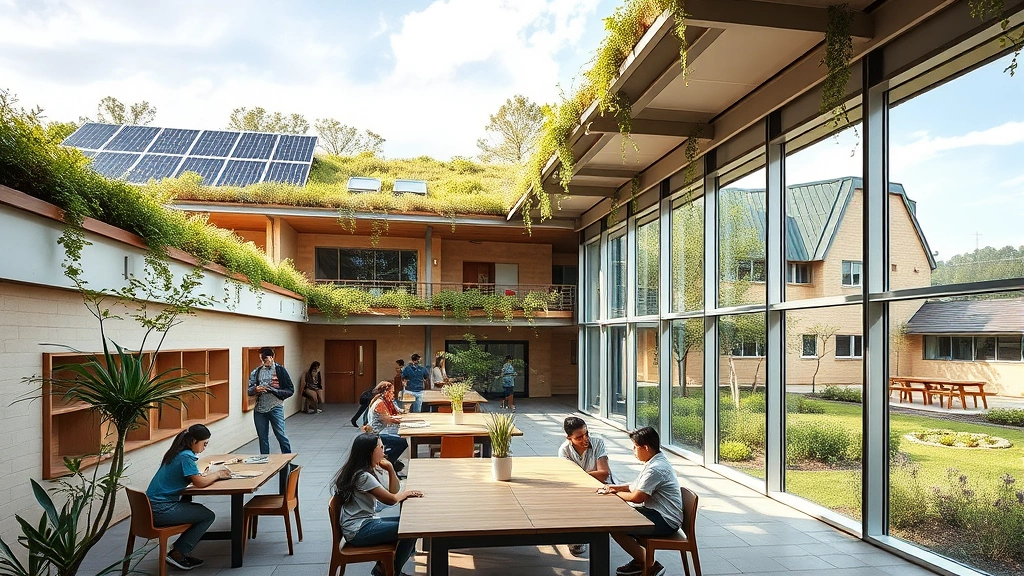
Physical learning environments—schools, universities, research facilities, and training centers—function as economic anchors within communities while simultaneously shaping cognitive development trajectories. Recent studies demonstrate that architectural design, natural lighting, air quality, and spatial organization directly influence student engagement, retention rates, and academic performance. These behavioral outcomes translate into measurable economic effects through improved graduation rates, enhanced employment prospects, and increased lifetime earnings trajectories.
The World Bank’s research on educational infrastructure investments reveals that every dollar spent on school infrastructure generates approximately $10-15 in long-term economic returns through improved workforce productivity and reduced social costs. Schools with superior physical conditions report 15-20% higher attendance rates and significantly improved learning outcomes. These facilities also function as community hubs, supporting local economic activity and fostering social cohesion that reduces transaction costs in economic exchanges.
Emerging evidence indicates that human environment interaction within educational settings profoundly affects economic behaviors and preferences. Students educated in green-certified facilities demonstrate greater environmental consciousness, translating into consumer preferences for sustainable products and career choices in emerging green economy sectors. This preference formation mechanism represents an underappreciated economic multiplier, gradually shifting aggregate demand toward more sustainable production systems.
Beyond immediate academic benefits, well-maintained learning environments reduce student dropout rates, which carry substantial economic costs. The lifetime earnings differential between high school graduates and dropouts exceeds $300,000 in developed economies, representing significant opportunity costs for individuals and foregone tax revenues for governments. Investment in superior physical learning spaces thus functions as preventive economic policy, addressing root causes of income inequality and unemployment.
Human Capital Development and Earnings Potential
The fundamental mechanism linking learning environments to economic growth operates through human capital accumulation. Educational quality determines workforce productivity, adaptability to technological change, and capacity for innovation. Learning environments that foster critical thinking, collaborative problem-solving, and interdisciplinary knowledge integration produce graduates with substantially higher earnings potential and employment stability.
Research from the Organisation for Economic Co-operation and Development (OECD) demonstrates that each additional year of quality education increases individual earnings by 8-10% on average, with variations reflecting institutional quality and labor market conditions. However, the quality of learning environments mediates this relationship significantly. Students in superior educational facilities progress through curricula more efficiently, achieve higher standardized assessment scores, and demonstrate better long-term employment outcomes.
The concept of environment awareness developed through quality learning spaces extends economic benefits beyond individual income gains. Workers educated in environments emphasizing sustainability, systems thinking, and ecological literacy demonstrate superior decision-making capacity in complex organizational contexts. They exhibit greater innovation propensity, higher entrepreneurial success rates, and enhanced ability to navigate regulatory and market transitions toward sustainability.
Longitudinal studies tracking cohorts through different educational environments reveal that learning space quality influences not merely academic achievement but personality development and social-emotional competencies. These non-cognitive skills—including resilience, cooperation capacity, and emotional regulation—predict earnings and employment stability almost as strongly as traditional academic measures. Superior learning environments cultivate these competencies through structured peer interaction, mentorship relationships, and psychologically supportive spatial design.
Innovation Ecosystems and Entrepreneurial Outcomes
Advanced learning environments function as innovation incubators, generating technological breakthroughs and new business ventures that drive economic growth. Universities and research institutions with state-of-the-art facilities, collaborative spaces, and interdisciplinary research infrastructure produce disproportionate shares of patents, publications, and spin-off companies. These innovation outputs generate substantial economic multipliers through technology transfer, employment creation, and industry development.
The geography of innovation reveals strong correlations with educational infrastructure concentration. Silicon Valley’s dominance in technology entrepreneurship reflects not merely proximity to Stanford University but the specific characteristics of learning environments that Stanford maintains—advanced laboratories, maker spaces, venture capital connections, and collaborative research culture. Replicating these environmental conditions in less-developed regions yields measurable improvements in local innovation rates and entrepreneurial venture success.
Learning environments designed to support cross-disciplinary collaboration produce innovations addressing complex economic-ecological challenges. When engineers, ecologists, economists, and business professionals work within shared learning spaces, they generate solutions integrating technical feasibility with environmental sustainability and economic viability. Such innovations command premium market valuations and attract impact investment capital, creating virtuous cycles of sustainable economic development.
Entrepreneurship education delivered within superior learning environments demonstrates substantially higher venture success rates. Students exposed to mentorship networks, prototype facilities, and peer collaboration ecosystems launch businesses with 40-50% higher survival rates than those educated in conventional classroom settings. The environmental factors enabling this success—access to equipment, professional networks, feedback mechanisms—represent relatively modest investments compared to their economic returns through job creation and wealth generation.
Digital Learning Infrastructure and Economic Accessibility
Digital learning environments have democratized access to quality educational content, enabling economic participation by geographically remote and economically disadvantaged populations. Online platforms, virtual classrooms, and digital resource libraries reduce barriers to human capital development, expanding the talent pools available to employers and enabling broader-based economic growth. However, infrastructure quality remains critically important, as inadequate digital learning environments—characterized by poor connectivity, insufficient technical support, and limited interactive capability—fail to generate equivalent economic benefits.
The economic implications of digital divide closure are substantial. Regions with superior broadband infrastructure and digital learning platforms experience faster employment growth, higher startup formation rates, and improved wage growth compared to digitally isolated areas. Investment in digital learning infrastructure thus represents essential economic development policy, particularly for rural and peripheral regions seeking to participate in knowledge economy transitions.
Hybrid learning environments combining physical and digital components optimize economic outcomes by enabling flexible skill development accommodating diverse work schedules and learning preferences. Workers pursuing skill development while maintaining employment productivity benefit from asynchronous learning options, reducing opportunity costs and enabling broader workforce participation in continuous learning. This flexibility particularly benefits underrepresented populations in professional development, improving labor market equity and expanding economic participation.
Digital learning infrastructure also enables rapid workforce retraining during economic transitions. As technological change and efforts to reduce carbon footprint reshape labor markets, digital learning platforms allow rapid scaling of training programs without proportional facility expansion. This responsiveness reduces structural unemployment during transitions and maintains economic competitiveness through continuous workforce skill upgrading.
Sustainable Learning Environments and Green Economy Transitions
Learning environments designed with ecological sustainability principles generate economic benefits extending beyond educational outcomes to influence broader economic transitions. Green-certified schools and universities reduce operational costs through energy efficiency, water conservation, and waste minimization, freeing resources for instructional improvements. These facilities also serve as living laboratories, demonstrating sustainable technologies and practices that students carry into professional careers and consumer decisions.
The green economy represents one of the fastest-growing employment sectors globally, with job creation rates exceeding traditional economy sectors. Learning environments that emphasize renewable energy systems, sustainable agriculture, circular economy principles, and ecological restoration prepare students for these high-growth employment opportunities. Career readiness for green economy sectors represents a critical competitive advantage as economic systems transition toward sustainability.
Research from the United Nations Environment Programme (UNEP) demonstrates that education for sustainable development—delivered within appropriately designed learning environments—correlates strongly with subsequent adoption of sustainable practices in both professional and personal contexts. Graduates of programs emphasizing sustainability demonstrate higher propensity to pursue green careers, invest in sustainable consumption, and support environmental policies, creating demand-side drivers for green economic transitions.
Learning environments implementing renewable energy systems for homes and buildings serve educational functions while reducing operational carbon footprints. Students observing solar thermal systems, geothermal heating, and wind generation develop practical understanding of renewable technologies, reducing adoption barriers when these students make investment decisions. This knowledge transfer mechanism represents an underappreciated channel through which educational infrastructure influences broader economic transitions.
Regional Economic Disparities and Educational Investment
Geographic variation in learning environment quality perpetuates regional economic inequalities, as students in under-resourced areas receive inferior education regardless of individual ability. Investment in learning infrastructure in economically disadvantaged regions represents high-return development policy, enabling local talent development and reducing dependence on external labor recruitment. Such investments also attract businesses seeking educated workforces, catalyzing broader regional economic development.
The economic geography of learning environments reveals self-reinforcing patterns. Prosperous regions attract talented educators and invest heavily in educational infrastructure, producing highly educated workforces that attract further investment and business formation. Conversely, economically peripheral regions struggle to compete for educational talent and funding, producing less-educated workforces and slower economic development. Strategic national investment in learning infrastructure in lagging regions can disrupt these patterns, enabling more equitable economic development.
International development institutions increasingly recognize learning environment investment as essential infrastructure for inclusive growth. The World Bank, regional development banks, and bilateral development agencies prioritize educational facility construction in developing economies, recognizing that superior learning environments yield returns comparable to transportation or energy infrastructure while simultaneously building human capacity for sustained development.
Within developed economies, regional disparities in learning environment quality correlate strongly with long-term economic performance divergence. Metropolitan areas with superior universities and research facilities maintain competitive advantages in knowledge economy sectors, while peripheral regions lacking equivalent institutions struggle with brain drain and limited entrepreneurial ecosystems. Policies addressing these disparities through strategic learning environment investment represent essential regional development tools.
Measuring Returns on Educational Infrastructure
Quantifying economic returns from learning environment investments requires sophisticated methodological approaches capturing both direct and indirect effects across extended time horizons. Traditional cost-benefit analyses focusing solely on graduation rate improvements underestimate total economic impact by ignoring effects on innovation, entrepreneurship, and broader social outcomes. Comprehensive impact assessment requires tracking individual earnings trajectories, business formation rates, patent production, and social cost reductions across decades.
Recent studies employing quasi-experimental designs—comparing outcomes for cohorts experiencing learning environment improvements at different times—reveal substantial economic multipliers. Each dollar invested in superior learning environments generates $8-12 in long-term economic returns through earnings increases, reduced social costs, and enhanced productivity. These multipliers exceed typical returns from traditional infrastructure investments, suggesting substantial underinvestment in educational facilities relative to economic efficiency.
The World Bank’s Education Research Database aggregates evidence from thousands of studies examining educational investment returns across diverse contexts. Meta-analyses confirm that learning environment quality represents one of the most consistent predictors of educational outcomes and subsequent economic performance, with effects particularly pronounced in developing economy contexts where baseline facility quality remains low.
Measuring economic returns requires attention to distributional effects, as learning environment improvements may benefit different population segments unequally. However, evidence generally indicates that superior facilities benefit disadvantaged students disproportionately, as these students lack access to compensatory resources available to privileged peers. From an equity perspective, learning environment investment represents progressive redistribution policy, narrowing opportunity gaps and improving intergenerational mobility.
The relationship between Ecorise Daily Blog coverage of educational sustainability and economic transitions reveals growing recognition that learning environment quality influences not merely individual economic outcomes but systemic economic resilience and sustainability capacity. As economic systems confront ecological constraints and technological disruption, the role of learning environments in enabling adaptive capacity and innovation becomes increasingly central to economic policy.
Long-term economic modeling incorporating learning environment effects demonstrates that sustained investment in educational infrastructure produces compounding returns across generations. Students educated in superior environments achieve higher earnings and pass educational advantages to children, creating virtuous cycles of economic mobility and human capital accumulation. Conversely, underinvestment in learning environments perpetuates poverty cycles, suggesting that education represents not merely consumption but fundamental economic investment.
FAQ
How do physical learning environments directly influence economic outcomes?
Physical learning environments influence economic outcomes through multiple mechanisms: improved student engagement and retention increase graduation rates; better facility conditions enhance cognitive development and academic achievement; superior spaces attract talented educators and support advanced research; and environmental design influences student preferences and values, shaping subsequent economic behaviors and career choices. These effects accumulate across cohorts, generating substantial long-term economic impacts.
What is the measurable return on investment for learning environment improvements?
Research indicates that each dollar invested in superior learning environments generates $8-12 in long-term economic returns through increased individual earnings, reduced social costs, enhanced productivity, and innovation outputs. These returns accrue over decades as improved cohorts progress through education and into productive employment, suggesting learning environment investment yields returns comparable to or exceeding traditional infrastructure investments.
How do learning environments support green economy transitions?
Learning environments designed with sustainability principles prepare students for green economy careers, demonstrate renewable technologies and sustainable practices, reduce operational costs through efficiency, and shape student values toward environmental responsibility. These effects combine to increase green sector employment, accelerate technology adoption, and create demand-side drivers for sustainable economic transitions.
Can digital learning environments replicate economic benefits of physical facilities?
Digital learning environments provide valuable accessibility benefits and enable flexible skill development, but optimal economic outcomes typically result from hybrid models combining physical and digital components. Physical facilities provide irreplaceable benefits including collaborative learning, mentorship relationships, hands-on skill development, and innovation ecosystem participation that digital-only approaches struggle to replicate.
How do learning environment investments address regional economic inequality?
Strategic investment in learning infrastructure in economically disadvantaged regions enables local talent development, attracts businesses seeking educated workforces, and disrupts self-reinforcing patterns of regional inequality. Such investments represent high-return development policy, producing both immediate educational benefits and long-term regional economic development through improved workforce capacity and innovation potential.
What role do learning environments play in workforce adaptation during economic transitions?
Superior learning environments enable rapid workforce retraining during technological and ecological transitions through flexible delivery mechanisms, access to cutting-edge equipment and expertise, and connection to evolving labor market opportunities. Digital infrastructure within learning environments allows scaling training programs without proportional facility expansion, reducing structural unemployment during transitions and maintaining economic competitiveness.