Is Green Economy the Future? Economist Insights
The transition toward a green economy represents one of the most significant economic paradigm shifts of our era. As climate change accelerates and resource scarcity intensifies, economists increasingly recognize that traditional economic models—which externalize environmental costs—are fundamentally unsustainable. The green economy framework proposes integrating ecological limits into economic decision-making, creating markets that reward sustainability rather than penalize it. This shift isn’t merely aspirational; it’s becoming economically rational as renewable energy costs plummet, biodiversity loss threatens supply chains, and investors demand climate accountability.
Understanding whether green economy principles will dominate future markets requires examining empirical evidence, economic incentives, institutional barriers, and technological trajectories. Leading economists from institutions like the World Bank and UNEP increasingly frame environmental protection as economic opportunity rather than burden. This analysis synthesizes current research to evaluate the green economy’s viability as our economic future.

What is the Green Economy?
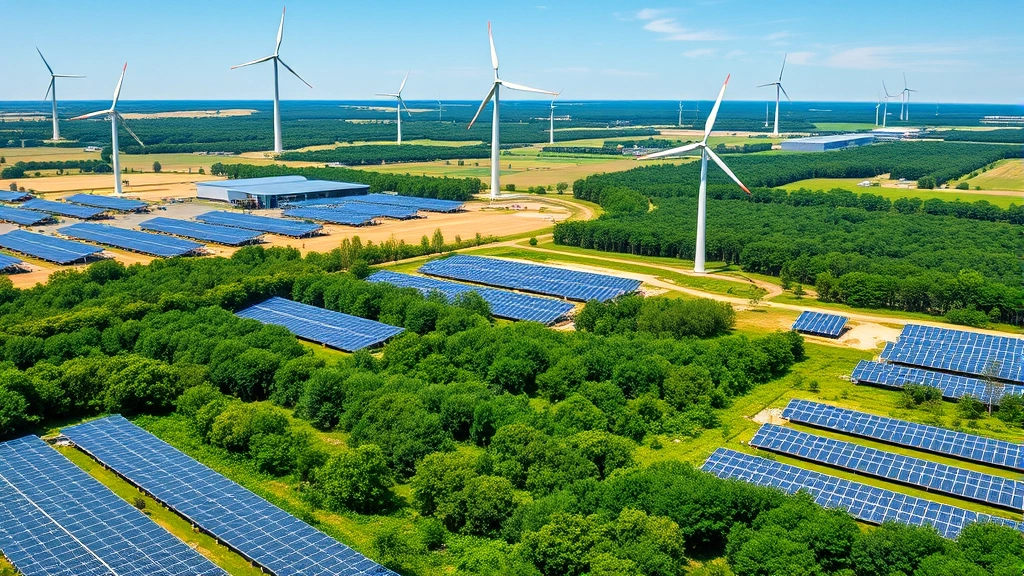
The green economy encompasses economic activities that generate income and employment while reducing environmental impact and ecological scarcity. Rather than a single unified system, it represents a spectrum of market-based and policy-driven mechanisms designed to align profit motives with planetary boundaries. Key sectors include renewable energy, sustainable agriculture, circular economy manufacturing, green infrastructure, and ecosystem restoration.
The concept differs fundamentally from traditional environmental regulation, which often treats sustainability as a cost burden. Green economy thinking reframes environmental protection as a source of competitive advantage, innovation, and long-term profit. This distinction matters because it shifts incentives: businesses don’t comply with environmental standards reluctantly; they pursue green strategies because they’re profitable. Understanding the environment and environmental science foundations helps economists model how ecosystem services translate into measurable economic value.
The green economy also emphasizes the relationship between human environment interaction and economic productivity. When humans degrade ecosystems through pollution, deforestation, or resource extraction, they simultaneously undermine the natural capital that supports economic output. Green economy frameworks quantify these trade-offs, revealing that sustainable practices often generate superior returns.

Economic Case for Transition
The economic argument for green economy transition rests on several converging factors. First, renewable energy costs have declined 90% for solar and 70% for wind over the past decade, making clean energy cheaper than fossil fuels in most markets. This represents a fundamental shift: sustainability is no longer premium-priced; it’s cost-competitive. Second, natural capital depletion imposes hidden costs that traditional accounting ignores. Fisheries collapse, soil degradation, and freshwater depletion represent billions in annual economic losses that green economy valuation methods make visible.
Third, stranded asset risk threatens trillions in fossil fuel infrastructure. As renewable energy dominates, coal plants, oil refineries, and gas infrastructure become economically obsolete. Investors increasingly divest from carbon-intensive assets, creating capital flight that accelerates green economy investment. Fourth, health and productivity costs of pollution are staggering: air pollution alone costs the global economy $5 trillion annually in lost productivity and healthcare expenses.
The World Bank estimates that green growth can deliver equivalent GDP expansion while reducing environmental impact. This decoupling of growth from resource consumption is critical: it means the green economy isn’t about accepting lower living standards but achieving prosperity within planetary boundaries. Economists like Nicholas Stern have quantified that delaying climate action costs 5-20% of global GDP, while immediate transition costs only 1-2% of GDP annually.
Market Mechanisms and Policy Drivers
Green economy expansion depends on policy frameworks that correct market failures. Carbon pricing—through taxes or cap-and-trade systems—makes fossil fuels reflect their true environmental cost. Subsidy reform eliminates $7 trillion in annual fossil fuel subsidies that artificially suppress energy prices. Green bonds mobilize capital for renewable infrastructure, while sustainability standards in corporate reporting create market transparency.
Developing awareness about the environment among consumers and investors has strengthened demand for green products. ESG (Environmental, Social, Governance) investing now represents $35 trillion in global assets, fundamentally reshaping capital allocation. Companies that ignore environmental risks face financing penalties and reputational damage. This creates virtuous cycles where green leaders attract capital, innovate faster, and capture market share from laggards.
Policy mechanisms vary by region. The EU’s emissions trading system covers 40% of emissions, pricing carbon at €50-80 per ton. China’s national carbon market launched in 2021, eventually covering 50% of emissions. However, policy inconsistency—some jurisdictions subsidizing fossils while others tax carbon—creates inefficiencies. The UNEP Emissions Gap Report emphasizes that current policies fall 50% short of what’s needed for 2°C climate targets, indicating that market mechanisms alone are insufficient without stronger government action.
Technological Innovation Catalysts
Battery technology improvements have reduced lithium-ion costs 89% since 2010, enabling electric vehicle proliferation. Green hydrogen production via electrolysis offers decarbonized fuel for heavy industry and shipping. Precision agriculture uses sensors and AI to optimize water and fertilizer use, reducing environmental impact while boosting yields. Carbon capture technologies, though still expensive, are improving and scaling.
These innovations create positive feedback loops: as green technologies scale, costs decline, spurring adoption, which drives further innovation. Solar and wind now represent the cheapest electricity sources in history. Battery costs will decline another 50% by 2030 according to energy experts, making electric vehicles cheaper than combustion engines without subsidies. This technological momentum suggests green economy transition is increasingly inevitable—not because of environmental idealism, but because it’s economically superior.
The strategies to reduce carbon footprint increasingly align with business profitability. Companies reducing emissions often discover operational efficiencies, waste elimination, and innovation opportunities that improve margins. This convergence of environmental and financial goals strengthens green economy momentum.
Challenges and Implementation Barriers
Despite favorable economics, substantial barriers obstruct green economy transition. Incumbent power in fossil fuel industries lobbies against carbon pricing and climate regulation. Stranded worker concerns create political resistance in coal and oil regions. Capital requirements for infrastructure transition are immense—estimates suggest $2-3 trillion annually through 2050. Technology gaps persist in aviation, shipping, and cement production, where decarbonization remains technically challenging.
Perhaps most critically, institutional lock-in perpetuates carbon-intensive systems. Infrastructure built for fossil fuels—power plants, refineries, distribution networks—takes decades to replace. Pension funds and insurance companies hold trillions in carbon assets they’re reluctant to abandon. Political systems, particularly in democracies, struggle to implement economically rational but politically unpopular policies.
Global inequality compounds these challenges. Developing nations argue they shouldn’t sacrifice growth to address climate change created by wealthy countries’ historical emissions. Yet many developing economies face the worst climate impacts despite minimal responsibility. This creates tensions between economic development imperatives and environmental sustainability, making unified global green economy transition difficult.
Regional Variations and Adoption Patterns
Europe leads green economy transition with aggressive climate targets, carbon pricing, and renewable investment. The EU aims for climate neutrality by 2050, driving rapid energy system transformation. China dominates renewable manufacturing and has become the world’s largest investor in clean energy, though it continues expanding coal capacity. United States policies remain inconsistent—Biden administration supports green transition while Congress remains divided.
Developing economies face distinct challenges. India must balance poverty reduction with climate action. Sub-Saharan Africa possesses massive renewable resources but lacks capital for infrastructure. Small island states face existential climate threats yet have negligible emissions. These disparities mean green economy adoption won’t be uniform; different regions will follow different pathways based on resources, development stage, and climate vulnerability.
Understanding research on natural environment dynamics helps economists model regional climate impacts and adaptation needs. Regions most vulnerable to climate change often have least capacity to transition—a cruel irony that complicates global green economy coordination.
Future Outlook and Economist Consensus
The economist consensus increasingly supports green economy transition as economically rational, not merely environmentally necessary. McKinsey Global Institute estimates that transitioning to a net-zero economy could create $23 trillion in business value and 65 million jobs by 2030. International Labour Organization projects 24 million net new jobs from green economy transition through 2030, offsetting displaced fossil fuel workers.
However, transition speed remains uncertain. Optimistic scenarios assume rapid technology improvement, strong policy support, and investor alignment, achieving net-zero emissions by 2050. Realistic scenarios account for political resistance, capital constraints, and technology gaps, achieving net-zero by 2070-2080. Pessimistic scenarios see insufficient action, continued emissions growth, and catastrophic climate impacts.
Most economists believe the green economy is inevitable—not necessarily tomorrow, but within the next 20-30 years. The convergence of declining renewable costs, stranded asset risks, climate impacts, and investor pressure creates powerful momentum. The question isn’t whether green economy will be the future, but how quickly transition occurs and whether it’s orderly or chaotic.
Leading research from Nature Climate Change journals and ecological economics research demonstrates that environmental and economic goals increasingly align. The World Resources Institute emphasizes that green economy frameworks create win-win solutions: economic growth, poverty reduction, and environmental restoration can occur simultaneously when properly designed.
The green economy represents not a sacrifice of prosperity but a redefinition of it. Rather than measuring success by GDP growth regardless of environmental cost, green economy thinking values genuine progress—improvements in wellbeing, health, security, and opportunity within planetary boundaries. This perspective shift, combined with technological and financial momentum, suggests the green economy isn’t merely the future; it’s increasingly the present, reshaping investment decisions, corporate strategy, and policy frameworks today.
For stakeholders navigating this transition, the strategic imperative is clear: aligning with green economy principles isn’t optional for long-term viability. Investors, businesses, and governments that anticipate and lead this transition will capture opportunity; those that resist will face stranded assets, regulatory penalties, and competitive disadvantage. The green economy’s future isn’t guaranteed, but the economic logic supporting it is increasingly undeniable.


