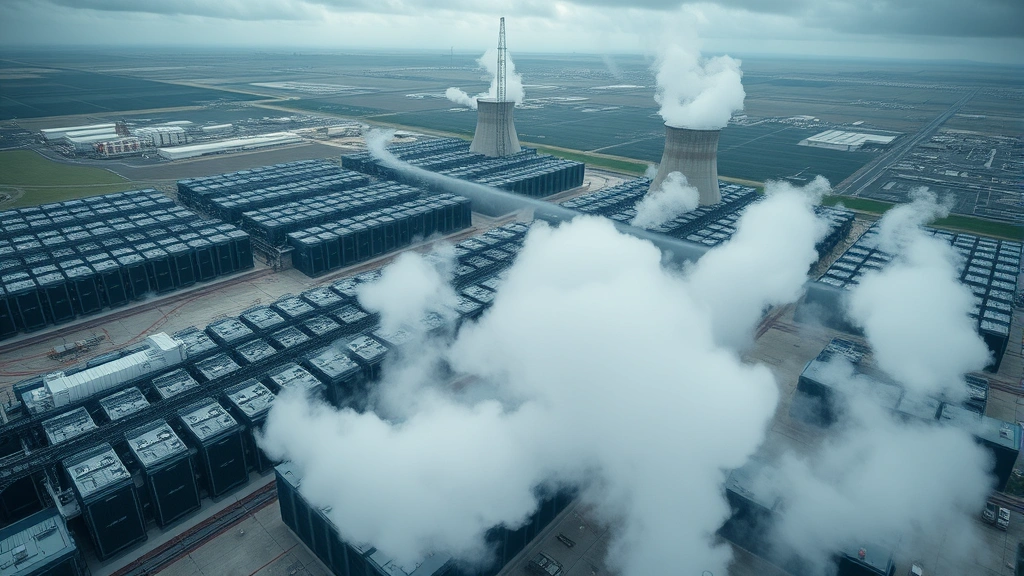
Is AI Hurting the Economy? Environmental Impact of Artificial Intelligence
Artificial intelligence has emerged as one of the most transformative technologies of our era, reshaping industries, labor markets, and economic structures globally. Yet beneath the promise of efficiency and innovation lies a complex environmental reality that demands scrutiny. The question isn’t whether AI is inherently good or bad for the economy—it’s far more nuanced. AI systems, particularly large language models and data-intensive applications, consume extraordinary amounts of energy, generate substantial electronic waste, and create ripple effects throughout supply chains that often remain invisible to end users. Understanding these dynamics requires examining the intersection of technological advancement, environmental degradation, and economic sustainability.
The environmental cost of AI infrastructure represents one of the least discussed aspects of the technology boom. Training a single large language model can consume as much electricity as hundreds of homes use in a year. When multiplied across the thousands of AI systems being developed globally, the cumulative impact becomes staggering. This energy consumption translates directly into carbon emissions, water usage, and resource extraction—costs that aren’t reflected in market prices but are ultimately borne by ecosystems and future generations. The economic implications extend beyond simple energy bills; they encompass the true cost of environmental degradation, a concept central to ecological economics.

Energy Consumption and Carbon Emissions
The energy footprint of artificial intelligence systems has grown exponentially alongside computational demands. Modern AI models, particularly transformer-based architectures used in large language models, require massive parallel processing infrastructure. According to research from prominent technology institutions, training GPT-3 consumed approximately 1,300 megawatt-hours of electricity—equivalent to the annual energy consumption of roughly 130 American households. Subsequent models have grown even larger, with estimates suggesting some contemporary systems require three to four times this energy expenditure.
This energy consumption matters because the electricity grid’s carbon intensity varies dramatically by region. Data centers powered primarily by fossil fuels generate substantially higher emissions than those using renewable energy. A facility in a coal-dependent region produces far greater carbon emissions than an equivalent facility powered by wind or hydroelectric sources. The geographic distribution of AI infrastructure thus becomes economically and environmentally significant. Companies seeking to minimize their carbon footprint face incentives to locate data centers in regions with cleaner energy grids, but these regions often have higher electricity costs, creating economic tension between environmental responsibility and operational efficiency.
The emissions from AI infrastructure training represent only part of the picture. Inference—the process of running trained models to generate outputs—occurs millions of times daily and collectively consumes substantial energy. A single query to a large language model generates carbon emissions measurable in grams, seemingly trivial until multiplied across billions of daily interactions. This distributed consumption pattern makes it difficult to attribute responsibility and creates what economists call an externality: costs borne by society rather than reflected in market prices.

Water Usage and Resource Depletion
Beyond electricity, AI data centers consume enormous quantities of water for cooling systems. Large facilities can use millions of gallons daily, competing with agricultural irrigation, municipal supplies, and ecosystem needs. In water-stressed regions, this consumption creates genuine scarcity pressures. The relationship between environment and natural resources becomes particularly acute when technological infrastructure directly competes with human and ecological water needs.
Water withdrawal for cooling represents a direct impact, but equally concerning is thermal pollution. Heated water returned to natural systems disrupts aquatic ecosystems, affecting fish populations, algae growth, and microbial communities. These ecological impacts translate into economic costs through reduced fishery productivity, altered recreational value, and degraded ecosystem services. Yet these costs rarely appear in corporate balance sheets or technology pricing models.
The extraction of rare earth elements and minerals for semiconductor production adds another dimension to resource depletion concerns. Mining operations for lithium, cobalt, copper, and rare earths create habitat destruction, soil contamination, and water pollution. As AI infrastructure expands, demand for these materials intensifies, accelerating extraction rates in regions often lacking robust environmental regulations. This pattern exemplifies how technological advancement in wealthy nations can displace environmental costs to developing regions, creating what scholars term ecological debt.
Electronic Waste and Supply Chain Impact
The rapid obsolescence of computing hardware drives substantial electronic waste generation. As AI systems require increasingly powerful processors, older equipment becomes economically obsolete long before physical failure. This replacement cycle generates enormous quantities of e-waste, much of which ends up in developing nations where recycling occurs under minimal environmental and safety standards.
Electronic waste contains toxic materials including lead, cadmium, and mercury that leach into soil and water when improperly managed. Workers in informal recycling operations face direct health hazards while extracting valuable materials. The human-environment interaction becomes particularly troubling when considering that wealthy nations export environmental and health costs to poorer regions in exchange for resource recovery efficiency.
Supply chain impacts extend throughout semiconductor manufacturing, where production of advanced chips requires ultra-pure water, exotic chemicals, and intensive energy inputs. A single semiconductor fabrication plant can consume as much water as a city of several hundred thousand people. As AI demands drive semiconductor production increases, these concentrated environmental impacts intensify. The economic benefits of AI innovation accrue primarily to technology companies and wealthy consumers, while environmental costs distribute across global ecosystems and vulnerable populations.
Economic Implications and Market Failures
From an ecological economics perspective, AI’s environmental impact represents a fundamental market failure. The prices of AI services and devices don’t incorporate environmental costs, creating incentives for overproduction and overconsumption. This separation between market prices and true economic costs—what ecological economists call the failure to internalize externalities—distorts resource allocation across the entire economy.
When a company develops an AI system, it captures the economic benefits while distributing environmental costs across society. This asymmetry creates perverse incentives favoring AI deployment even when total social costs exceed benefits. A cost-benefit analysis incorporating environmental damages might reveal that many AI applications generate negative net value—they destroy more wealth through environmental degradation than they create through operational efficiency.
The economic implications compound when considering labor market disruption. AI threatens employment across numerous sectors, from customer service to knowledge work, creating social costs through unemployment, retraining needs, and reduced consumer spending. The economic gains from AI productivity improvements concentrate among capital owners and technology companies, while displacement costs distribute among workers and communities. This distributional dimension adds another layer of economic inefficiency to AI’s impact.
Research from the World Bank and similar institutions increasingly recognizes that true economic growth must account for natural capital depletion. By this standard, AI-driven economic growth that accelerates environmental degradation may represent illusory gains—growth in measured GDP that actually reduces genuine wealth when environmental costs are properly calculated.
Character AI and Specific Environmental Concerns
Character AI, a subset of generative AI focused on creating conversational agents with distinct personalities, presents particular environmental concerns. These systems require continuous training on massive datasets and must maintain responsiveness to millions of concurrent users. The infrastructure demands exceed even typical large language models because personality consistency and nuanced interaction require additional computational overhead.
Character AI applications often encourage extended user engagement, meaning higher cumulative inference costs compared to task-specific AI tools. A user might interact with a character AI for hours, each interaction consuming energy and generating emissions. This engagement-maximization business model creates incentives to increase environmental impact through increased usage—the opposite of environmental sustainability goals.
The resource intensity of character AI becomes particularly problematic when considering its utility. Unlike AI applications solving specific problems—medical diagnosis, scientific research, or engineering optimization—character AI primarily provides entertainment and companionship. The environmental cost per unit of genuine economic value generated may be substantially higher than for more utilitarian applications. This raises difficult questions about how societies should prioritize AI development when environmental constraints become binding.
Moreover, character AI systems can perpetuate consumption patterns and behaviors that increase overall environmental impact. An AI companion encouraging shopping, travel, or resource-intensive activities indirectly drives environmental degradation beyond the direct energy consumption of the AI system itself. Understanding carbon footprint reduction requires examining these indirect behavioral effects alongside direct infrastructure impacts.
Solutions and Sustainable AI Development
Addressing AI’s environmental impact requires multifaceted approaches spanning technological innovation, policy reform, and economic restructuring. Improving computational efficiency represents the most direct technical solution. Researchers are developing models requiring substantially less training data and computational power while maintaining performance levels. Techniques like knowledge distillation, pruning, and quantization reduce resource requirements without proportional performance losses.
Transitioning AI infrastructure to renewable energy sources provides another crucial pathway. Companies can locate data centers in regions with abundant clean energy, though this requires coordinating infrastructure development with renewable energy expansion. Policy incentives supporting this transition—carbon pricing, renewable energy subsidies, or location-specific tax benefits—can align private incentives with environmental goals.
More fundamentally, society must develop frameworks for evaluating AI applications based on genuine economic value rather than technological novelty. This requires implementing true cost accounting that incorporates environmental damages into project evaluation. Some jurisdictions are beginning to require environmental impact assessments for major technology deployments, similar to existing requirements for industrial facilities.
Circular economy principles offer another approach, emphasizing hardware reuse, recycling, and material recovery. Rather than discarding computing equipment after obsolescence, refurbishment and redeployment can extend useful life. Advanced recycling technologies can recover valuable materials with minimal environmental impact, though currently economic incentives don’t favor such approaches.
Policy interventions must address the distributional aspects of AI’s environmental impact. Carbon pricing mechanisms, environmental taxes, and strict e-waste regulations can internalize externalities, making environmental costs visible in market prices. International agreements addressing rare earth element extraction and semiconductor manufacturing standards can prevent cost-shifting to developing nations.
The concept of human-environment interaction must be central to AI governance frameworks. Rather than treating environmental protection as peripheral to technology policy, integration should be fundamental from inception. Technology assessment processes should evaluate environmental impacts alongside economic and social considerations.
Corporate sustainability commitments require credibility through independent verification and binding targets. Voluntary measures have proven insufficient; mandatory environmental reporting, third-party auditing, and enforceable reduction targets create accountability. Some technology companies have committed to carbon neutrality by 2030, though achieving this requires substantial operational changes and may necessitate purchasing carbon offsets—a solution that addresses atmospheric carbon but not local environmental damage from resource extraction and e-waste.
Educational initiatives must increase awareness of AI’s environmental footprint among developers, policymakers, and users. Currently, environmental considerations rarely factor into technology development decisions. Building environmental consciousness into technology culture could shift priorities toward efficiency and sustainability. Universities and research institutions can emphasize green computing principles in computer science curricula.
International cooperation on AI governance becomes increasingly important as environmental impacts cross borders. Global standards for data center efficiency, semiconductor manufacturing practices, and e-waste management can prevent regulatory arbitrage where companies locate polluting operations in jurisdictions with weak environmental standards. Organizations like the United Nations Environment Programme could play coordinating roles in developing such standards.
Research into alternative computing architectures deserves increased funding and attention. Neuromorphic computing, optical processors, and biological computing approaches might eventually provide comparable capabilities with dramatically lower energy requirements. Current investment in these technologies remains minimal relative to conventional AI development, representing a market failure in innovation incentives.
The relationship between AI development and sustainable consumption patterns deserves examination. Rather than developing AI systems encouraging consumption and material accumulation, society might prioritize AI applications supporting circular economy transitions, renewable energy optimization, and ecosystem restoration.
FAQ
How much energy does training a large AI model actually consume?
Training large language models consumes between 1,000 and 3,500 megawatt-hours of electricity depending on model size and architecture. This equals the annual electricity consumption of 100-350 American households. Subsequent inference operations, multiplied across billions of daily uses, create substantial ongoing energy demands.
Can renewable energy solve AI’s environmental problems?
Renewable energy can substantially reduce carbon emissions from AI infrastructure, but doesn’t address water consumption, rare earth element extraction, or electronic waste generation. Even with clean energy, resource depletion and ecosystem disruption from mining and manufacturing remain significant concerns.
Is character AI particularly environmentally problematic?
Character AI presents specific concerns due to engagement-maximization business models encouraging extended use and potentially lower utility per unit of environmental impact compared to task-specific applications. However, all AI infrastructure carries substantial environmental costs.
What’s the difference between AI’s direct and indirect environmental impacts?
Direct impacts include energy consumption, water usage, and e-waste from infrastructure. Indirect impacts include behavioral changes encouraged by AI systems, supply chain effects from hardware production, and ecosystem disruption from resource extraction.
Could AI help solve environmental problems?
AI applications optimizing renewable energy systems, improving agricultural efficiency, or accelerating materials science breakthroughs could provide environmental benefits. However, these potential benefits don’t offset current environmental costs and require deliberate development prioritizing environmental outcomes.
What policy changes could address AI’s environmental impact?
Effective approaches include carbon pricing making environmental costs visible in market prices, mandatory environmental impact assessments for major technology deployments, international standards for manufacturing and e-waste, requirements for renewable energy sourcing, and investment in more efficient computing architectures.


