
How Humans Impact Ecosystems: A Scientist’s View
The relationship between humanity and the natural world has fundamentally transformed over the past two centuries. What was once a relatively balanced interaction has evolved into a dominant force reshaping ecosystems at unprecedented scales and speeds. Scientists across disciplines—from ecology and conservation biology to environmental economics and systems theory—now recognize that human activities represent the primary driver of ecological change on Earth. This shift from passive inhabitants to planetary engineers carries profound implications for biodiversity, ecosystem services, and human survival itself.
Understanding how people interact with the environment requires moving beyond simplistic narratives of human dominance or victimhood. Instead, we must examine the complex, bidirectional relationships between human economic systems, technological capabilities, and natural processes. The scientific consensus is clear: our species now operates as a geological force, with impacts comparable to previous mass extinction events. Yet this same scientific understanding also reveals pathways toward more sustainable and regenerative relationships with nature.
Mechanisms of Human-Ecosystem Interaction
Human impact on ecosystems operates through multiple interconnected pathways. The most direct mechanisms involve land conversion, resource extraction, and habitat destruction. When forests are cleared for agriculture, wetlands are drained for development, or coral reefs are bleached by warming waters, we witness the immediate erasure of critical ecological structures. However, the mechanisms extend far beyond these visible transformations.
One fundamental way humans interact with their environment involves nutrient cycling disruption. Industrial agriculture has fundamentally altered nitrogen and phosphorus cycles, creating dead zones in aquatic ecosystems where fertilizer runoff accumulates. The World Bank estimates that agricultural intensification has increased nitrogen fertilizer use by over 800% since 1961, with cascading effects on freshwater and marine ecosystems globally.
Energy flow through ecosystems has also been redirected by human activity. By harvesting fish, game, and plant resources faster than they regenerate, we’ve fundamentally altered the trophic structure of ecosystems. Apex predator removal has triggered trophic cascades—where the loss of top predators causes population explosions in their prey, subsequently devastating plant communities and altering entire ecosystem functions. This represents a profound disruption of evolutionary relationships that developed over millions of years.
Invasive species introductions constitute another critical mechanism. Whether intentional or accidental, human transport of organisms across biogeographic barriers has created ecological chaos in countless regions. The zebra mussel in North American freshwaters, the Burmese python in the Florida Everglades, and countless plant species worldwide demonstrate how human mobility can overwhelm local evolutionary defenses that evolved in isolation.
Chemical pollution introduces novel compounds into ecosystems that have no evolutionary context. Persistent organic pollutants, heavy metals, and microplastics now contaminate every ecosystem on Earth, from the deepest ocean trenches to the highest mountain peaks. These substances bioaccumulate through food chains, concentrating in predator tissues at levels far exceeding environmental concentrations, with documented impacts on reproduction, immunity, and neurological function.
Biodiversity Loss and Species Extinction
The current extinction rate represents one of the most compelling indicators of human ecosystem impact. Scientists estimate we are losing species at rates 100 to 1,000 times higher than the background extinction rate observed in the fossil record. This acceleration correlates precisely with human population growth and technological capability expansion over the past 200 years.
Habitat loss remains the primary extinction driver, accounting for approximately 73% of documented species declines. When we fragment landscapes through development, we don’t simply reduce habitat area—we fundamentally alter ecological processes. Edge effects become more pronounced, genetic diversity declines in isolated populations, and ecosystem resilience diminishes. Research in conservation genetics demonstrates that small, isolated populations lose genetic variation rapidly, reducing their capacity to adapt to environmental change.
The relationship between human activities and environmental degradation becomes particularly stark when examining megafauna extinctions. Large-bodied animals with low reproductive rates prove especially vulnerable to hunting pressure. From woolly mammoths to passenger pigeons to recently declining elephant and rhinoceros populations, human hunting has repeatedly driven species toward extinction. The ecological consequences extend beyond the species themselves—megafauna often serve as ecosystem engineers, dispersing seeds, creating water holes, and maintaining vegetation structure through herbivory.
Insect populations have experienced catastrophic declines, with some regions reporting 75% biomass reductions over recent decades. These declines have profound implications given that insects comprise the foundation of most terrestrial food webs and provide pollination services worth an estimated $15-20 billion annually in the United States alone. The causes remain multifactorial—habitat loss, pesticide exposure, light pollution, and climate disruption all contribute—but human activity clearly dominates.
Oceanic ecosystems face particularly severe biodiversity impacts. Overfishing has depleted fish stocks across all ocean basins, with approximately 34% of global fish stocks now fully exploited or overexploited. This depletion cascades through marine food webs, affecting seabirds, marine mammals, and the fishing communities dependent on these resources. Simultaneously, ocean acidification from atmospheric carbon dioxide absorption threatens calcifying organisms including pteropods, sea urchins, and coral reef builders.
Climate Change as an Ecosystem Disruptor
Climate change represents perhaps the most systemic human impact on ecosystems, fundamentally altering the physical and chemical environment within which all organisms evolved. The atmospheric carbon dioxide concentration has increased from 280 parts per million in pre-industrial times to over 420 ppm currently—a level unprecedented in at least 800,000 years. This rapid change outpaces most organisms’ capacity to adapt through evolutionary processes.
Temperature shifts directly affect metabolic rates, phenological timing, and geographic range distributions. Spring arrives progressively earlier, disrupting the synchronization between flowering plants and their pollinators. Migratory birds arrive to breeding grounds to find food sources already depleted. Permafrost thaw releases methane and carbon dioxide, amplifying warming through positive feedback mechanisms. These cascading disruptions demonstrate how climate change acts as an ecosystem-wide stressor affecting virtually every biological process simultaneously.
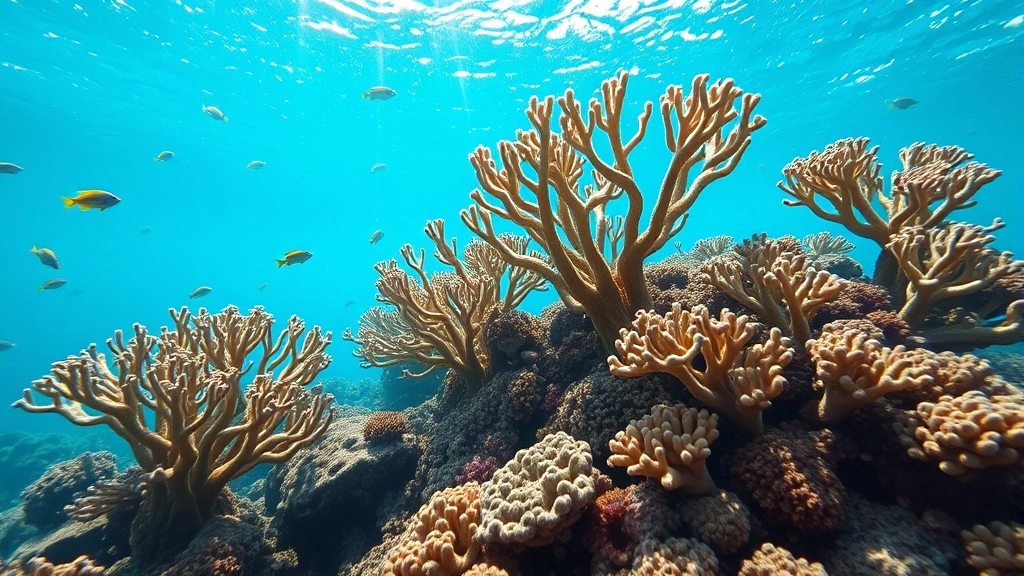
Coral bleaching events exemplify climate change’s ecosystem impacts. When water temperatures exceed thermal tolerance thresholds by even 1-2 degrees Celsius, corals expel their symbiotic zooxanthellae, losing their primary energy source. Repeated bleaching events—increasingly frequent due to warming—prevent recovery and cause widespread coral death. Given that coral reefs support approximately 25% of marine species despite occupying less than 1% of ocean area, their degradation represents a catastrophic biodiversity loss with direct economic consequences for fishing communities and tourism-dependent economies.
Mountainous regions experience disproportionate climate impacts as warming shifts ecological zones upslope and reduces snowpack. Alpine ecosystems, already restricted to narrow elevational bands, face compression as suitable habitat shrinks. Species at mountain peaks have nowhere to migrate, creating “climate refugees” with no refuge. Similarly, polar ecosystems experience the most rapid warming on Earth, with cascading effects from reduced sea ice affecting entire food webs dependent on ice-associated algae as their base.
Pollution and Chemical Contamination
Human chemical production has created an entirely novel environmental challenge: organisms must now cope with synthetic compounds that have no natural analogs. Since 1950, global chemical production has increased 50-fold, with approximately 350,000 synthetic chemicals now in commercial use. The vast majority have never been tested for ecological toxicity.
Plastic pollution represents a particularly visible manifestation of this chemical contamination crisis. An estimated 8-12 million metric tons of plastic enter oceans annually, fragmenting into microplastics that penetrate every marine ecosystem from surface waters to abyssal depths. These microplastics absorb persistent organic pollutants, effectively serving as vectors for toxic compounds. Fish and other organisms ingest microplastics, which accumulate in tissues and have demonstrated impacts on feeding behavior, reproduction, and immune function.
Pesticide use, essential to modern agriculture, creates significant ecological collateral damage. Neonicotinoid insecticides, used on approximately 140 million hectares of global cropland, persist in the environment and affect non-target organisms including beneficial insects, birds, and aquatic invertebrates. The documented impact on pollinator populations directly threatens food security, as approximately 75% of global food crops depend partially on animal pollination.
Heavy metal contamination from mining, smelting, and industrial processes persists in soils and sediments indefinitely, bioaccumulating through food chains. Mercury, lead, and cadmium cause documented neurological, developmental, and reproductive damage across species. The United Nations Environment Programme estimates that industrial pollution costs developing nations approximately 4-6% of annual GDP through health impacts and ecosystem degradation.
Economic Drivers of Environmental Change
Understanding human ecosystem impacts requires examining the economic systems that drive environmental degradation. The dominant economic paradigm treats natural capital as an infinite resource rather than a finite stock providing essential services. This accounting error creates perverse incentives where ecosystem destruction generates immediate economic gains while environmental costs are externalized and borne by future generations.
The tragedy of the commons—where individual rational economic decisions lead to collectively irrational outcomes—operates across global commons including fisheries, atmosphere, and forests. When no single actor bears the full cost of resource depletion or pollution, overexploitation becomes economically rational despite being ecologically catastrophic. International fishing fleets operate in international waters where no governance structure prevents overharvesting. Countries emit greenhouse gases without bearing the full climate change costs they impose on others.
Agricultural expansion represents the dominant driver of deforestation and habitat loss globally. The economic incentive to convert forests to cropland or pasture remains powerful despite the ecosystem services lost—carbon storage, water regulation, biodiversity habitat, and cultural value. This conversion typically happens without accounting for these lost services in economic calculations. Understanding how humans adapt to their environment requires recognizing that economic systems profoundly shape these adaptations, often in environmentally destructive directions.
Consumption patterns in wealthy nations drive global environmental degradation disproportionately. The average American consumes resources equivalent to approximately 5 Earth’s worth of biocapacity. This consumption drives deforestation in distant tropical regions, overfishing in international waters, and mining operations with severe local environmental impacts. The economic globalization that enables this consumption obscures the environmental costs, making them invisible to consumers.
Ecological economics research increasingly demonstrates that infinite growth on a finite planet represents a physical impossibility. Recent analysis on ecological economics emphasizes that beyond certain development thresholds, additional economic growth fails to improve human wellbeing while continuing to degrade natural systems. This recognition has spawned alternative economic frameworks—steady-state economics, circular economy models, and degrowth theory—that attempt to decouple economic activity from environmental degradation.
Adaptive Management and Restoration
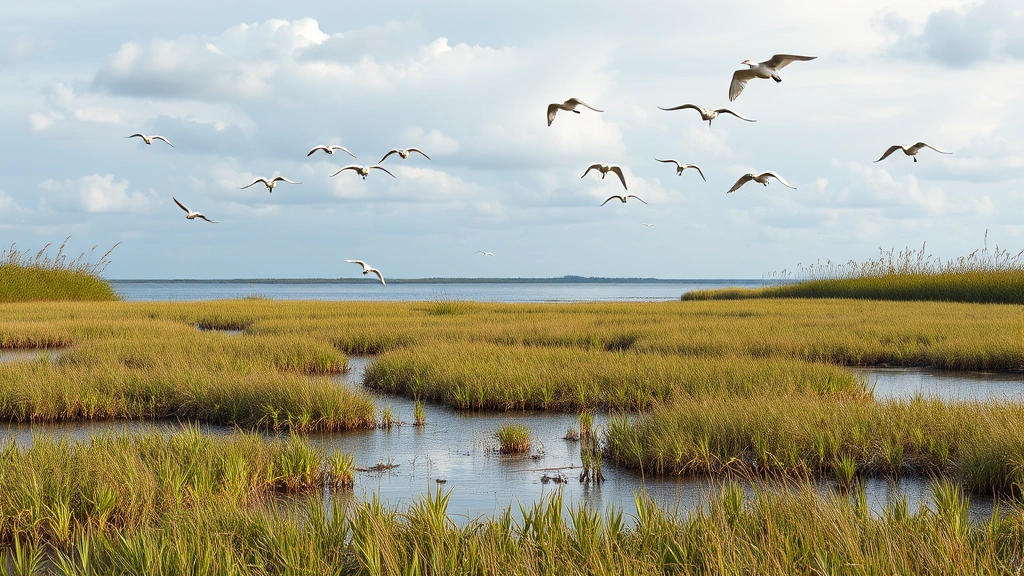
Despite the severity of human ecosystem impacts, emerging evidence demonstrates that ecosystems possess remarkable recovery capacity when degradation pressures are removed. Marine protected areas show rapid fish population recovery when fishing ceases. Reforested areas accumulate biomass and biodiversity relatively quickly on ecological timescales. Wetland restoration improves water quality and flood regulation within years. These successes suggest that reducing human environmental impact through active restoration can partially reverse degradation.
Adaptive management approaches recognize that ecological systems are complex, dynamic, and incompletely understood. Rather than implementing fixed management plans, adaptive management involves monitoring outcomes, testing hypotheses, and adjusting strategies based on results. This approach acknowledges uncertainty while maintaining flexibility to respond to unexpected ecosystem responses or new information.
Restoration ecology has matured into a rigorous scientific discipline with demonstrated success across diverse ecosystems. Wetland restoration in the Mississippi River Delta, prairie reconstruction in the Great Plains, and coral reef restoration projects worldwide show that degraded ecosystems can recover ecological function and biodiversity when properly managed. However, restoration remains expensive and resource-intensive—prevention of degradation remains far more cost-effective than restoration.
Nature-based solutions increasingly feature in climate and biodiversity strategies. Protecting and restoring forests, wetlands, and coastal ecosystems provides carbon sequestration benefits while maintaining biodiversity and ecosystem services. Mangrove restoration simultaneously protects coastal communities from storms, provides fish nursery habitat, and sequesters carbon. These co-benefits demonstrate that environmental and economic interests need not conflict when ecosystem services are properly valued.
Indigenous land management practices demonstrate that humans can maintain ecosystems sustainably over centuries. Indigenous territories, comprising approximately 22% of global land area, contain approximately 80% of remaining biodiversity. Traditional ecological knowledge, developed through centuries of careful observation and adaptive management, offers valuable insights for contemporary conservation. Recognizing indigenous peoples’ land rights and incorporating traditional knowledge into conservation strategies represents both an ethical imperative and a pragmatic approach to ecosystem protection.
Sustainable practices in human industries, from agriculture to manufacturing to fashion, demonstrate that economic activity can be restructured to minimize environmental impact. Regenerative agriculture builds soil health and sequesters carbon while maintaining productivity. Industrial ecology principles design manufacturing systems to minimize waste and maximize resource efficiency. Circular economy models keep materials in productive use rather than discarding them as waste.
The transition toward sustainability requires fundamental shifts in how we value natural systems. Environmental economics frameworks increasingly incorporate ecosystem service valuation—placing monetary values on pollination, water purification, climate regulation, and other services nature provides. While imperfect, this approach makes environmental costs visible in economic decision-making. Research on ecosystem service valuation demonstrates that protecting nature often proves economically rational once these services are properly accounted for.
FAQ
What are the main ways humans impact ecosystems?
The primary mechanisms include habitat destruction and land-use conversion, resource overexploitation, pollution and chemical contamination, invasive species introduction, and climate change. These impacts operate simultaneously and interact synergistically, making ecosystem degradation particularly severe. Most ecosystems face multiple stressors simultaneously, reducing their resilience to additional disturbances.
How does human activity contribute to species extinction?
Habitat loss remains the dominant extinction driver, followed by overexploitation, pollution, invasive species, and climate change. These factors interact—for example, climate change may push species into smaller remaining habitat patches where they face increased hunting pressure. The extinction risk is particularly acute for large-bodied, slow-reproducing species and those with specialized habitat requirements or limited geographic ranges.
Can ecosystems recover from human damage?
Yes, ecosystems demonstrate substantial recovery capacity when degradation pressures cease. Marine protected areas, restored wetlands, and reforested areas all show recovery of ecological function and biodiversity. However, recovery timescales vary dramatically—some ecosystems recover within years while others require decades or centuries. Some degraded ecosystems may have crossed tipping points where recovery becomes impossible without active intervention.
What role does climate change play in ecosystem disruption?
Climate change acts as a systemic stressor affecting virtually every ecosystem simultaneously. It alters temperature regimes, precipitation patterns, seasonal timing, and extreme weather frequency. These changes disrupt ecological relationships, shift species ranges, and reduce ecosystem resilience to other stressors. Climate change amplifies other human impacts, making ecosystems increasingly vulnerable to degradation.
How can economic systems be restructured to reduce environmental impact?
Approaches include incorporating ecosystem service valuation into economic decisions, transitioning to circular economy models that minimize waste, adopting regenerative agriculture and industrial ecology principles, and recognizing planetary boundaries as constraints on economic activity. Additionally, recognizing indigenous land rights and incorporating traditional ecological knowledge offers pathways toward sustainable human-nature relationships developed through centuries of successful practice.


