
Is Green Economy Sustainable? Expert Insights on Environmental Ethics
The green economy promises a pathway toward prosperity without planetary degradation, yet fundamental questions persist about its true sustainability. As nations invest trillions in renewable energy, carbon markets, and sustainable development initiatives, critical voices from ecological economics and environmental ethics challenge whether these mechanisms address root causes of environmental destruction or merely create new markets for exploitation.
This comprehensive analysis examines the intersection of economic systems, environmental ethics, and genuine sustainability through expert perspectives, empirical evidence, and the complex relationship between human-environment interaction and economic frameworks. We explore whether the green economy represents transformative change or greenwashing at scale.
Defining the Green Economy and Its Ethical Foundations
The United Nations Environment Programme (UNEP) defines the green economy as one that results in improved human well-being and social equity while significantly reducing environmental risks and ecological scarcities. However, this definition conceals profound philosophical tensions between economic growth paradigms and biophysical planetary boundaries.
Environmental ethics, fundamentally concerned with our moral obligations to non-human nature and future generations, raises critical questions about whether market-based solutions can genuinely address ecological crises. The dominant anthropocentric approach—valuing nature primarily for human benefit—differs markedly from ecocentric perspectives that recognize intrinsic value in ecosystems independent of economic utility.
Expert consensus from ecological economists, including environment design specialists and systems theorists, suggests that genuine sustainability requires abandoning the assumption that technological innovation and market efficiency can decouple economic growth from material throughput. The Jevons Paradox—whereby efficiency improvements increase overall consumption—haunts green economy rhetoric, as technological advances often enable rather than constrain resource exploitation.
The ethical foundation of a truly sustainable economy must incorporate:
- Intergenerational justice: Ensuring future generations inherit viable ecosystems and resources
- Intragenerational equity: Addressing how green economy benefits and burdens distribute across current populations
- Non-human rights: Recognizing ecological integrity independent of economic valuation
- Procedural justice: Including marginalized communities in sustainability decision-making
Core Sustainability Challenges in Green Markets
The fundamental paradox of green economy approaches lies in attempting to solve ecological crises through market mechanisms designed to maximize consumption. Several critical challenges emerge when examining sustainability claims:
Rebound Effects and Consumption Growth: When renewable energy becomes cheaper through subsidies and technological advancement, energy consumption often increases rather than decreases. Studies demonstrate that reducing carbon footprint at individual levels frequently fails when systemic incentives promote consumption growth. A household installing solar panels may increase electricity usage for air conditioning and electric vehicles, offsetting efficiency gains.
Material Extraction and Biodiversity Loss: Green technologies demand unprecedented quantities of rare earth elements, lithium, cobalt, and copper. Mining operations for battery production devastate ecosystems in the Democratic Republic of Congo, Indonesia, and Australia, creating new environmental crises while supposedly solving others. The World Bank reports that mineral extraction for renewable energy infrastructure will increase 500% by 2050, with severe biodiversity implications.
Systemic Externalities: Green economy frameworks often fail to account for embodied emissions in supply chains, manufacturing processes, and product transportation. A wind turbine manufactured in China and installed in Europe carries significant carbon costs not reflected in green economy accounting.
Temporal Displacement: By focusing on future technological solutions, green economy narratives delay urgent emission reductions and ecosystem protection. The assumption that carbon capture technology will eventually solve climate change enables continued fossil fuel investments and postpones necessary behavioral and systemic changes.
Carbon Markets and the Commodification of Nature
Carbon markets represent the green economy’s most contentious mechanism, transforming atmospheric capacity into tradeable commodities. While theoretically enabling cost-effective emission reductions, critical analysis reveals profound ethical and practical failures.
Permanence and Additionality Problems: Carbon offset projects, particularly in forestry and agricultural sectors, frequently fail to demonstrate genuine, permanent emission reductions. A forest preservation project may receive carbon credits despite facing no credible deforestation threat—generating revenue for activities that would occur anyway. Research from ecological economics journals documents that 73% of offset projects likely overestimate climate benefits.
Environmental Justice Concerns: Carbon markets create perverse incentives where wealthy nations and corporations purchase offsets in developing countries, enabling continued high-emission activities while directing minimal benefits to communities affected by extraction or conservation projects. Indigenous communities in the Amazon and Southeast Asia report that carbon credit schemes dispossess them of traditional lands without meaningful consent or benefit-sharing.
Moral Hazard: Carbon pricing mechanisms, even when functioning optimally, set prices far below the true social cost of emissions. Current carbon prices of $50-100 per ton remain insufficient to drive systemic change, while enabling corporations to greenwash continued fossil fuel dependence through offset purchases.
The commodification of nature through carbon markets reflects a deeper ethical problem: treating ecosystem services as infinitely substitutable market goods rather than acknowledging irreplaceable biophysical foundations of human civilization. This approach, critiqued extensively by ecological economists, assumes nature’s complexity can be reduced to numerical valuations—a fundamentally flawed premise.
Renewable Energy Transition: Promise and Reality
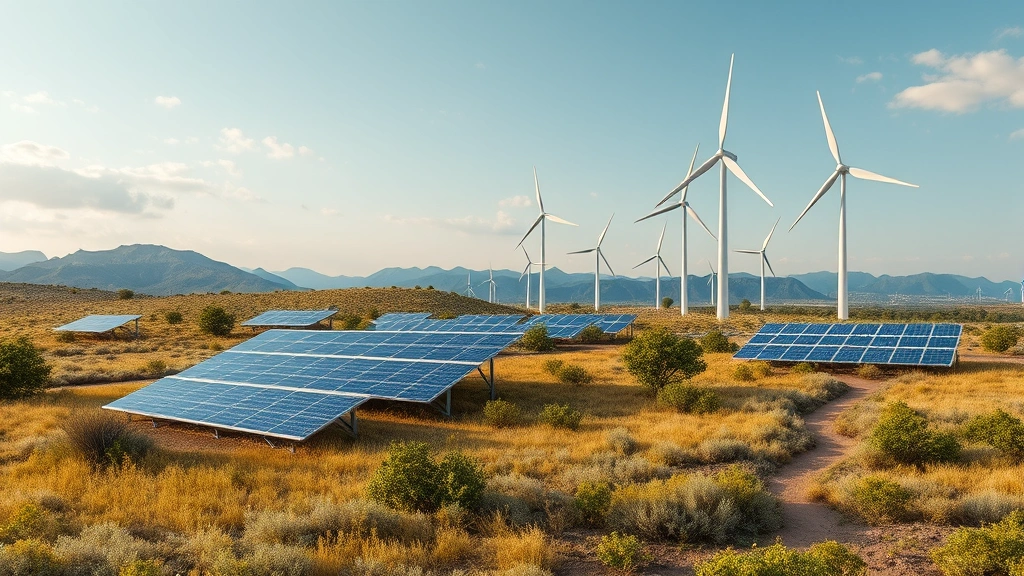
The renewable energy sector exemplifies green economy contradictions. While renewable energy for homes and industrial applications represent essential components of decarbonization, the transition’s actual sustainability remains contested among experts.
Energy Density and Infrastructure Challenges: Renewable sources provide lower energy density than fossil fuels, requiring vastly expanded infrastructure, transmission networks, and storage systems. This expansion demands enormous material inputs, land use changes, and manufacturing emissions. The total carbon payback period for solar installations ranges from 1-4 years, but this calculation excludes supply chain complexities and recycling challenges.
Intermittency and Backup Requirements: Renewable energy’s variable nature necessitates either massive battery storage (requiring unprecedented mineral extraction), fossil fuel backup plants (maintaining dual infrastructure), or nuclear expansion (introducing new sustainability debates). Most renewable energy transitions currently rely on natural gas peaker plants, meaning fossil fuels remain essential infrastructure components rather than being truly replaced.
Land Use and Ecosystem Impacts: Large-scale solar and wind installations require substantial land areas, often in biodiverse regions. Utility-scale solar farms in California and Morocco displace native vegetation and wildlife. Offshore wind installations impact marine ecosystems and fisheries. These tradeoffs receive insufficient ethical scrutiny in green economy discourse.
Realistic Transition Timelines: Expert analyses from the International Energy Agency acknowledge that achieving net-zero emissions by 2050 requires rapid renewable deployment combined with dramatic energy consumption reductions in wealthy nations. The green economy framework, emphasizing market solutions and technological innovation, systematically underestimates the behavioral and systemic changes necessary—changes that conflict with perpetual growth economics.
Indigenous Knowledge and Environmental Justice
Environmental ethics demands centering perspectives of communities most affected by ecological degradation and most knowledgeable about sustainable resource management. Indigenous peoples, managing 80% of Earth’s remaining biodiversity on 22% of global land area, offer profound lessons contradicting green economy assumptions.
Traditional Ecological Knowledge vs. Market Rationality: Indigenous resource management systems evolved over millennia through adaptive practices respecting ecological limits. These systems prioritize long-term ecosystem health and intergenerational responsibility—values fundamentally opposed to market discount rates that devalue future ecological services. The green economy’s integration of indigenous knowledge typically involves extracting specific practices while maintaining underlying market frameworks, diluting effectiveness and perpetuating colonial power dynamics.
Land Rights and Green Colonialism: Green economy initiatives, particularly sustainable development projects, frequently involve establishing protected areas or carbon offset projects on indigenous territories without meaningful consultation or benefit-sharing. Conservation efforts, despite environmental benefits, displace indigenous communities and restrict traditional resource use. This represents environmental justice failure—solving global environmental problems through local dispossession.
Epistemological Pluralism: Recognizing multiple valid knowledge systems about human-nature relationships fundamentally challenges green economy frameworks built on Western scientific rationality and market economics. Indigenous cosmologies often recognize reciprocal obligations to non-human nature, spiritual dimensions of environmental relationships, and fundamental constraints on resource extraction—perspectives incompatible with growth economics.
Circular Economy Models and Resource Limits
Circular economy concepts, promoted as solutions enabling unlimited economic growth within planetary boundaries, face serious scrutiny from ecological economists and systems scientists.
Thermodynamic Realities: The second law of thermodynamics establishes that all material processes generate entropy—disorder and waste heat that cannot be recovered. Perfect circularity is physically impossible; recycling processes consume energy, degrade material quality, and produce toxic byproducts. Aluminum recycling, among the most efficient processes, still requires 5% of original extraction energy, while recycling rates for many materials remain below 20%.
Contamination and Material Degradation: Complex products containing multiple materials bonded through permanent adhesives cannot be disassembled for recycling. Plastic recycling degrades material properties with each cycle, eventually requiring virgin material input. Electronics recycling involves toxic substance exposure and generates hazardous waste, often exported to developing nations with minimal environmental protections.
Rebound Effects in Circular Systems: Making products recyclable and manufacturing more efficient reduces perceived environmental costs, encouraging greater consumption. A reusable shopping bag manufactured from organic cotton with lower environmental impact may increase overall consumption relative to single-use bags if perceived sustainability encourages more shopping trips.
Absolute Resource Limits: Circular economy models fail to address resource scarcity for essential materials. Phosphorus, critical for fertilizer, faces depletion within decades. Rare earth elements, concentrated in few nations, create geopolitical vulnerabilities. The circular economy cannot overcome absolute scarcity of finite resources; it merely delays depletion while consuming energy in recycling processes.
Policy Frameworks and Regulatory Effectiveness
Government policies ostensibly promoting green economy transitions reveal fundamental weaknesses in market-based approaches to environmental protection.
Regulatory Capture and Corporate Influence: Fossil fuel and extractive industries substantially influence green economy policy development, ensuring regulations protect profit margins rather than environmental integrity. Renewable energy subsidies often concentrate benefits among large corporations while small-scale renewable projects struggle with bureaucratic barriers. Tax structures favor capital-intensive renewable infrastructure over demand reduction and efficiency improvements.
Inadequate Pricing Mechanisms: Carbon pricing, even when implemented, remains far below social cost estimates. Research from UNEP indicates carbon prices must reach $100-200 per ton by 2030 to align with climate targets, yet current prices average $50 globally. This gap enables corporations to treat carbon emissions as acceptable business costs rather than unacceptable environmental damage.
Growth Imperative Conflicts: Green economy policies operate within frameworks requiring perpetual GDP growth. Environmental protection measures that reduce consumption or production—genuinely sustainable approaches—face political opposition as economically harmful. This structural contradiction ensures green economy policies remain insufficient for actual sustainability, merely greening capitalism’s margins.
Enforcement Gaps and Jurisdictional Issues: Environmental regulations in wealthy nations frequently outsource pollution to developing countries with weaker enforcement. A manufacturing company relocating to Bangladesh to avoid environmental regulations achieves compliance in wealthy markets while increasing global environmental damage. International trade agreements often prioritize corporate profits over environmental protection, with environmental provisions subordinate to trade provisions.
Time Horizon Mismatches: Political systems operate on election cycles (2-5 years) while ecological regeneration requires decades and systemic change requires generations. Green economy policies emphasize near-term economic metrics over long-term ecological integrity, ensuring insufficient urgency for actual sustainability transitions.

FAQ
Can green economy approaches achieve genuine sustainability without degrowth?
Expert consensus increasingly suggests that decoupling absolute material throughput from economic growth remains theoretically possible but practically unachieved at necessary scales. Most green economy models assume relative decoupling (reducing resource intensity per unit GDP) rather than absolute decoupling (reducing total resource consumption). Ecological economists argue that wealthy nations must reduce absolute material consumption while improving equity, requiring fundamental economic restructuring beyond green economy frameworks.
What distinguishes greenwashing from genuine green economy initiatives?
Greenwashing involves marketing environmental benefits that don’t materialize, using vague sustainability claims without measurable targets, or offsetting emissions rather than reducing them. Genuine initiatives require transparent measurement, third-party verification, consideration of full lifecycle impacts, and prioritization of waste reduction over recycling. Most corporate green economy initiatives contain substantial greenwashing elements, using environmental rhetoric to maintain business-as-usual operations.
How do environmental ethics inform sustainability assessments?
Environmental ethics provides frameworks for evaluating whether approaches respect non-human nature, protect future generations, and distribute benefits equitably. An initiative may appear economically efficient while failing ethically if it prioritizes human consumption over ecosystem integrity or concentrates benefits among wealthy populations while imposing burdens on marginalized communities. Incorporating ethical dimensions requires moving beyond purely technical sustainability metrics.
What roles should indigenous communities play in green economy development?
Environmental justice demands recognizing indigenous peoples as knowledge holders and decision-makers rather than stakeholders consulted superficially. Genuine partnership requires indigenous communities controlling resources and decisions affecting their territories, receiving equitable benefit-sharing, and maintaining authority over traditional practices. This represents fundamental power redistribution rather than incorporating indigenous knowledge into existing market frameworks.
Are renewable energy transitions sufficient for climate stabilization?
Energy transitions alone cannot achieve climate stabilization without simultaneous reductions in energy consumption, particularly in wealthy nations. Renewable energy enables continued consumption growth if efficiency improvements are offset by increased demand. Climate science indicates that wealthy nations must reduce energy consumption 50-80% by 2050 while transitioning to renewables, requiring lifestyle changes and economic restructuring beyond green economy technological solutions.
How can policy frameworks better support genuine sustainability?
Policies must establish absolute resource and emission limits (caps) rather than relying on pricing mechanisms, enforce strict environmental standards with adequate penalties, prioritize demand reduction and efficiency over supply-side solutions, protect ecosystems and communities from extractive industries, and acknowledge growth limits in wealthy nations. This requires moving beyond green economy market-based approaches toward regulatory frameworks explicitly constraining environmental degradation.


