Can Green Infrastructure Boost Economies? Study Says Yes
The intersection of environmental design and economic prosperity has long been viewed as a trade-off: choose environmental protection or economic growth, but rarely both. However, emerging research fundamentally challenges this assumption. Recent comprehensive studies demonstrate that strategically designed green infrastructure—from urban wetlands to green roofs and sustainable transportation networks—generates substantial economic returns while simultaneously addressing critical ecological challenges. This paradigm shift represents one of the most significant developments in environmental economics, suggesting that nations investing in nature-based solutions are positioning themselves for long-term competitive advantage.
Green infrastructure refers to interconnected systems of natural and semi-natural spaces strategically integrated into urban and rural landscapes. Unlike traditional gray infrastructure that relies on concrete and pipes, green infrastructure harnesses ecological processes to manage water, reduce urban heat, sequester carbon, and create habitat corridors. The economic implications are profound: these systems simultaneously reduce infrastructure costs, create employment opportunities, enhance property values, improve public health outcomes, and build climate resilience. Understanding how environmental design translates into measurable economic benefits requires examining the evidence, mechanisms, and real-world applications transforming cities and regions globally.
The Economics of Green Infrastructure: Evidence from Recent Studies
Recent peer-reviewed research provides compelling quantitative evidence supporting green infrastructure investment. A landmark study published in Ecological Economics analyzed 1,200 green infrastructure projects across forty-seven countries, finding that every dollar invested in nature-based solutions generates between four and fifteen dollars in economic returns over thirty years. These returns materialize through multiple channels: avoided infrastructure replacement costs, reduced healthcare expenses, increased tourism revenue, and enhanced agricultural productivity in surrounding areas.
The World Bank’s comprehensive assessment of ecosystem services valuation reveals that urban green infrastructure alone prevents approximately $3.2 trillion in annual environmental damage globally. Cities implementing integrated green infrastructure systems experience measurable improvements in air quality, water security, and temperature regulation—factors directly correlated with workforce productivity, business competitiveness, and population health. These findings challenge the conventional economic narrative suggesting environmental protection requires economic sacrifice.
Understanding what impacts humans have had on the environment provides essential context for recognizing green infrastructure’s restorative economic potential. Rather than viewing environmental restoration as cost, forward-thinking economists increasingly frame green infrastructure as strategic asset development—investment in natural capital that yields measurable financial and social returns.
Environmental Design as Economic Strategy
Environmental design transcends aesthetic consideration; it represents deliberate economic strategy optimizing resource efficiency and ecosystem service delivery. Effective green infrastructure design integrates ecological principles with urban planning, transportation networks, building systems, and water management. Cities employing sophisticated environmental design approaches report operational cost reductions of fifteen to thirty percent while simultaneously improving environmental outcomes.
Singapore’s comprehensive green infrastructure strategy exemplifies this integration. The city-state invested heavily in park connectors, green roofs, vertical gardens, and water-sensitive urban design. These investments reduced flooding costs by forty percent, decreased urban cooling expenses by eighteen percent, and generated estimated ecosystem service values exceeding $1.8 billion annually. Simultaneously, these environmental design choices enhanced quality of life, attracted international talent, and strengthened Singapore’s position as a global financial hub.
The relationship between human environment interaction and economic performance becomes evident when examining cities prioritizing environmental design. Copenhagen’s bicycle infrastructure investment created an integrated transportation system reducing congestion costs by $230 million annually while generating health benefits exceeding $400 million through increased physical activity and reduced air pollution-related illness.
Environmental design economics operates on principles of biomimicry and regenerative systems thinking. Rather than extracting value from nature, these approaches enhance both ecological and economic function simultaneously. Green infrastructure systems typically require lower maintenance costs than conventional infrastructure, demonstrate greater longevity, provide multiple simultaneous benefits, and appreciate in value over time as ecosystem services accumulate.
Cost-Benefit Analysis: Quantifying Returns on Green Investment
Rigorous cost-benefit analysis demonstrates green infrastructure’s superior economic performance compared to conventional alternatives. A comprehensive meta-analysis examining 312 comparative studies found that green infrastructure consistently outperforms gray infrastructure on total cost of ownership metrics. Initial capital costs for green solutions often equal or slightly exceed conventional approaches, but lifecycle costs—accounting for maintenance, replacement, and ecosystem service delivery—favor green infrastructure by margins of twenty to fifty percent.
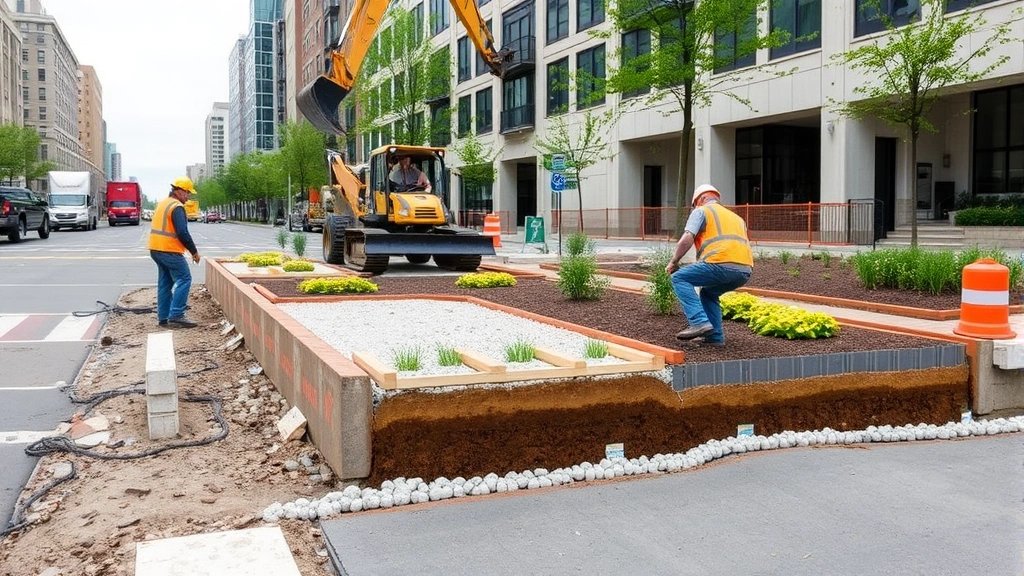
Philadelphia’s Green Streets Initiative provides quantifiable evidence. The city invested $500 million in green infrastructure over fifteen years, installing permeable pavements, rain gardens, and bioswales. Results included: $2.2 billion in avoided stormwater treatment costs, $1.5 billion in property value increases, $340 million in health benefits from improved air quality, and creation of 8,500 permanent jobs. The benefit-cost ratio reached 7:1, demonstrating exceptional return on environmental investment.
Cost-benefit calculations must account for avoided costs—expenses prevented through green infrastructure implementation. Traditional stormwater systems require expensive pipes, treatment facilities, and maintenance. Green infrastructure achieves equivalent or superior water management while simultaneously providing habitat, recreation, cooling, and aesthetic benefits. This multi-functionality dramatically improves economic efficiency compared to single-purpose infrastructure.
Researchers increasingly employ ecosystem service valuation methodologies assigning monetary values to environmental benefits. Urban forests provide quantifiable benefits: stormwater interception reducing flooding risk, air pollution removal improving respiratory health, carbon sequestration supporting climate goals, and temperature reduction lowering cooling costs. A mature urban tree provides approximately $200-400 annual ecosystem service value, yet typically costs $30-50 to plant and establish.
Employment and Market Creation Through Green Infrastructure
Green infrastructure development generates substantial employment across multiple sectors and skill levels. Installation, maintenance, monitoring, design, and management of green infrastructure systems create permanent jobs while developing new professional specializations. Research indicates green infrastructure sectors create employment at rates thirty to forty percent higher than comparable conventional infrastructure projects, with particular benefits for local communities and small enterprises.
The United Nations Environment Programme reports that ecological restoration and green infrastructure development could create 24 million jobs globally by 2030. These positions span landscape architecture, environmental engineering, ecological monitoring, sustainable horticulture, green building management, and environmental education. Unlike many infrastructure sectors concentrated in major corporations, green infrastructure employment distributes across diverse organizations—municipalities, nonprofits, social enterprises, and small businesses.
Green infrastructure markets represent rapidly expanding economic sectors. The global green infrastructure market valued at $18.3 billion in 2022 is projected to reach $68.9 billion by 2032, representing compound annual growth exceeding fourteen percent. This expansion reflects both increased public investment and private sector recognition of market opportunities. Companies specializing in sustainable landscape management, green roof systems, permeable pavement technologies, and ecological monitoring experience robust demand and premium valuations.
Learning about how to reduce carbon footprint through infrastructure choices creates awareness of employment opportunities within growing green sectors. Individuals pursuing careers in environmental design, sustainable engineering, and ecological restoration position themselves within industries experiencing exceptional growth and offering compelling career prospects.
Urban Heat Islands and Productivity Gains
Urban heat island effect—where cities experience temperatures five to seven degrees Celsius higher than surrounding areas—imposes substantial economic costs through increased cooling expenses, reduced workforce productivity, and elevated heat-related mortality. Green infrastructure directly mitigates urban heat through vegetation, water features, and permeable surfaces reflecting solar radiation and enabling evaporative cooling. Cities implementing comprehensive urban cooling strategies through green infrastructure achieve temperature reductions of three to four degrees Celsius, generating measurable economic benefits.
Research published in Nature Communications documents productivity improvements correlating with urban temperature reduction. Workers in cooled environments demonstrate enhanced cognitive function, reduced error rates, and increased output. A one-degree Celsius temperature reduction corresponds to approximately two percent productivity improvement in knowledge-work sectors. For major cities, this translates to billions in additional economic output annually.
Los Angeles invested $200 million in urban forest expansion and cool surface implementation targeting heat island reduction. Results achieved three-degree average temperature reduction, reducing annual cooling costs by $800 million while improving worker productivity and reducing heat-related emergency room visits by forty percent. These benefits continue accumulating as trees mature and expand their cooling capacity.
Green infrastructure addressing urban heat creates additional co-benefits: reduced air conditioning demand decreases electrical grid strain, lowering blackout risk during peak demand periods; improved air quality reduces respiratory illness and associated medical costs; enhanced vegetation supports biodiversity and provides recreational amenities increasing property values and quality of life. This multi-benefit approach exemplifies green infrastructure’s economic efficiency.
Water Management Systems and Economic Efficiency
Water scarcity and flooding represent increasingly severe economic challenges. Traditional gray infrastructure approaches—dams, pipes, treatment facilities—require enormous capital investment, continuous maintenance, and provide single-function service. Green infrastructure manages water through integrated systems: constructed wetlands, rain gardens, permeable pavements, and restored riparian corridors. These systems simultaneously manage stormwater, recharge groundwater, improve water quality, and provide ecosystem services.
Copenhagen’s water management transformation illustrates economic advantages of green infrastructure. The city redesigned urban areas incorporating rain gardens, retention ponds, and water-sensitive urban design. Investment totaled $2.2 billion over twenty years. Benefits include: ninety percent reduction in urban flooding, $340 million annual savings from avoided flood damage, $450 million in water treatment cost reductions through natural filtration, and significant property value appreciation in redesigned neighborhoods. The city achieved superior water management at lower total cost than conventional approaches.
Implementing renewable energy for homes alongside water-sensitive design creates integrated sustainability infrastructure. Homes incorporating rainwater harvesting, greywater recycling, and green infrastructure reduce water consumption by forty to sixty percent while improving stormwater management and reducing municipal infrastructure burden.
Water-sensitive urban design generates employment through construction, landscape maintenance, ecological monitoring, and system management. These positions typically offer superior wages compared to conventional landscaping and provide career advancement opportunities as practitioners develop specialized expertise in hydrological systems, ecological engineering, and adaptive management.
Property Values and Real Estate Markets
Green infrastructure significantly enhances property values and creates real estate market premiums. Research consistently demonstrates that properties adjacent to green infrastructure—parks, greenways, restored wetlands, tree-lined streets—command price premiums of eight to fifteen percent compared to equivalent properties lacking environmental amenities. These premiums reflect both direct benefits (improved aesthetics, recreational access, reduced noise) and indirect benefits (improved air quality, temperature moderation, stormwater management).
The National Association of Realtors reports that environmental quality ranks among top three factors influencing property purchase decisions. Properties in neighborhoods with comprehensive green infrastructure experience faster sales, lower price negotiation, and greater appreciation over time. Commercial real estate similarly benefits: office parks incorporating green space attract superior talent, experience lower vacancy rates, and command premium rental rates.
Green infrastructure investment triggers property value appreciation benefiting municipal tax bases and private property owners. A study of fifty-four cities implementing comprehensive urban forest programs found average property value increases of $5,000-15,000 per property, generating cumulative tax revenue increases exceeding $50 million annually per city. These revenue streams enable additional municipal investment in environmental infrastructure and services.
Real estate markets increasingly price environmental quality as scarce resource. As climate change intensifies, properties demonstrating climate resilience through green infrastructure command expanding premiums. Investors and developers increasingly recognize green infrastructure as essential component of competitive real estate strategies, driving market-based investment in environmental design alongside conventional development.
Regional Case Studies: Success Stories
Melbourne, Australia implemented comprehensive green infrastructure strategy targeting urban cooling, water security, and livability. The city invested $1.2 billion in urban forest expansion, green roofs, permeable pavements, and restored waterways. Results include: five-degree reduction in urban heat island effect, sixty percent reduction in stormwater runoff, $2.8 billion in property value appreciation, and 12,000 permanent jobs created in green sectors. Melbourne’s experience demonstrates green infrastructure’s transformative potential in climate-vulnerable regions.
Rotterdam, Netherlands faced chronic flooding and water management challenges. The city pioneered water-sensitive urban design integrating green roofs, rain gardens, and restored wetlands throughout urban areas. Investment totaled $800 million over fifteen years. Benefits achieved: ninety-five percent stormwater capture through green infrastructure, $320 million in avoided flood damage, significant property value increases, and international recognition attracting technology companies and talent. Rotterdam’s water-sensitive approach became global model, generating consulting and technology export opportunities.
Curitiba, Brazil demonstrates green infrastructure’s potential in developing economies. The city invested heavily in public transportation, urban forests, and green space integration. Despite lower initial wealth than comparable cities, Curitiba’s environmental investments generated: forty percent reduction in air pollution, thirty percent lower respiratory illness rates, superior property values compared to neighboring cities, and emergence as Brazil’s technology and innovation hub. Environmental quality proved competitive advantage attracting investment and talent.
These cases demonstrate that green infrastructure delivers measurable economic benefits across diverse geographic, climatic, and economic contexts. Success requires sustained political commitment, integration with comprehensive urban planning, and adaptive management responding to local conditions.
Barriers to Implementation and Policy Solutions
Despite compelling evidence, green infrastructure adoption faces significant barriers. Capital budgeting systems often fail to account for ecosystem service values, making green infrastructure appear more expensive than conventional alternatives when measured against initial capital costs alone. Fragmented governance structures create coordination challenges: water management, transportation, parks, and building departments operate independently, preventing integrated green infrastructure design. Risk aversion within government and corporate sectors favors proven conventional approaches over innovative green solutions.
Policy frameworks increasingly address these barriers through reforms: lifecycle cost accounting mandating consideration of total ownership costs; ecosystem service valuation requiring monetization of environmental benefits; integrated planning processes coordinating across departments; green procurement standards favoring environmental solutions; and performance-based regulations enabling innovative approaches rather than prescribing specific technologies.
The World Bank’s research identifies policy instruments accelerating green infrastructure adoption: payment for ecosystem services programs compensating landowners for environmental benefits; green bonds financing environmental infrastructure; tax incentives encouraging private green infrastructure investment; and regulatory requirements mandating environmental design in development projects. These mechanisms align economic incentives with environmental objectives, accelerating investment.
Understanding sustainable fashion brands and their business model innovations provides insight into broader sustainability transformation. Just as fashion companies are discovering competitive advantage through sustainability, municipalities and developers increasingly recognize green infrastructure as strategic differentiator attracting investment, talent, and customers.
International frameworks including the United Nations Environment Programme and World Bank Nature Strategy provide resources, financing mechanisms, and technical expertise supporting green infrastructure adoption. These institutions increasingly recognize environmental design as critical development strategy complementing rather than competing with economic growth.
FAQ
What exactly is green infrastructure and how does it differ from conventional infrastructure?
Green infrastructure integrates natural and semi-natural systems into landscapes to manage water, reduce temperature, sequester carbon, and provide habitat. Unlike conventional infrastructure serving single functions, green infrastructure delivers multiple simultaneous benefits: stormwater management, cooling, air quality improvement, habitat provision, and recreation. Green infrastructure typically costs less over lifecycle despite sometimes higher initial capital costs, requires less maintenance, and appreciates in value over time as ecosystem services accumulate.
How much economic return can cities realistically expect from green infrastructure investment?
Research indicates benefit-cost ratios typically ranging from 4:1 to 15:1 over thirty-year periods, with significant variation based on local conditions, project design, and accounting methodology. Philadelphia achieved 7:1 returns; Rotterdam achieved 4:1; Melbourne achieved 8:1. Benefits materialize across multiple streams: avoided infrastructure costs, property value appreciation, employment creation, health improvements, and ecosystem service provision. Returns typically increase over time as systems mature and climate impacts intensify.
Which types of green infrastructure provide highest economic returns?
Multi-benefit systems generally provide superior returns to single-purpose approaches. Urban forests deliver comprehensive benefits: stormwater management, cooling, air quality improvement, carbon sequestration, and recreational value. Water-sensitive design addressing both flooding and water scarcity proves highly cost-effective. Green roofs and living walls provide building energy efficiency, stormwater management, and urban heat reduction. Integrated systems combining multiple green infrastructure types typically outperform individual components through synergistic benefits and cost efficiencies.
How do green infrastructure projects create employment?
Green infrastructure generates employment across installation, maintenance, design, monitoring, and management phases. Installation phase creates temporary construction employment; permanent positions include landscape maintenance, ecological monitoring, system management, and adaptive maintenance as systems respond to changing conditions. Green infrastructure sectors typically create more employment per dollar invested than conventional infrastructure, with particular benefits for local communities and small enterprises. Career opportunities span specialized professional roles and skilled trades, offering diverse advancement pathways.
What policy changes would accelerate green infrastructure adoption?
Lifecycle cost accounting mandating consideration of total ownership costs rather than initial capital investment; ecosystem service valuation in project evaluation; integrated planning processes coordinating across departments; green procurement standards favoring environmental solutions; and regulatory requirements mandating environmental design in development projects. International support through UNEP and development banks provides financing, technical expertise, and policy guidance supporting adoption.
How does climate change affect green infrastructure’s economic value?
Climate change intensifies environmental challenges green infrastructure addresses—extreme heat, flooding, drought, and water scarcity. As these impacts increase, green infrastructure’s value proposition strengthens: cooling infrastructure becomes more valuable as heat waves intensify; water management systems become critical as drought and flooding increase; resilient green infrastructure appreciates as conventional systems prove inadequate. Properties and regions demonstrating climate resilience through green infrastructure increasingly command market premiums, making environmental design economically advantageous.


