
Tech’s Environmental Impact: A Balanced Perspective
Technology has become humanity’s most powerful tool for reshaping the planet—for better and worse. From renewable energy innovations that combat climate change to digital infrastructure consuming unprecedented amounts of electricity, technology presents a paradox that demands nuanced analysis. Understanding the impact of technology on the environment today requires examining both the transformative solutions and the hidden environmental costs embedded in our digital age.
The relationship between technological advancement and environmental outcomes has fundamentally shifted in the past two decades. Where once technology was viewed primarily as a driver of ecological degradation through industrialization and resource extraction, we now recognize its dual capacity to both harm and heal natural systems. This balanced perspective acknowledges that technology itself is neither inherently sustainable nor destructive—rather, how we develop, deploy, and govern technological systems determines their ultimate environmental footprint.
The stakes have never been higher. As global temperatures rise and biodiversity collapses at alarming rates, technology offers potential pathways toward sustainable futures. Yet simultaneously, the manufacturing, operation, and disposal of technological devices create environmental challenges that often go unexamined by consumers and policymakers alike. This comprehensive analysis explores both dimensions of technology’s environmental relationship.
The Dual Nature of Technological Progress
Technology’s environmental impact cannot be reduced to a simple positive or negative assessment. The smartphone in your pocket represents both remarkable innovation and ecological complexity. Its development required rare earth minerals extracted from sensitive ecosystems, yet it enables real-time environmental monitoring that helps protect those very ecosystems. This paradox defines contemporary technological society.
The historical trajectory of technology reveals this duality clearly. The Industrial Revolution unleashed unprecedented economic growth and improved living standards while simultaneously triggering the Anthropocene—the geological epoch defined by human dominance over natural systems. Similarly, modern agricultural technology has increased food production capacity exponentially, reducing hunger for billions, yet it has also concentrated pesticide use and driven monoculture farming that devastates biodiversity.
According to research from the World Bank, technology sector emissions now represent approximately 2-3% of global carbon emissions, comparable to aviation industry output. This figure has doubled since 2010 and continues accelerating. However, the same technological systems are simultaneously enabling the transition toward renewable energy, precision agriculture, and circular economy models that promise substantial emissions reductions.
Understanding human environment interaction examples reveals how technology mediates nearly every aspect of our ecological footprint. From the moment raw materials are extracted to manufacture devices, through their operational lifetime consuming electricity, to their eventual disposal or recycling, technology creates cascading environmental consequences across multiple ecosystems and systems.
Digital Infrastructure and Energy Consumption
The invisible infrastructure supporting our digital lives consumes staggering amounts of energy. Data centers worldwide use approximately 1% of global electricity, a figure projected to reach 3-4% within a decade. Each email sent, each video streamed, each cloud backup created requires physical infrastructure consuming electricity—electricity that increasingly comes from renewable sources, but often still relies on fossil fuels.
Bitcoin and cryptocurrency mining represent perhaps the most energy-intensive digital application, consuming an estimated 120 terawatt-hours annually—equivalent to Argentina’s entire electricity consumption. This extraordinary energy demand occurs for transactions that could be processed with infinitesimal energy requirements using alternative technologies, illustrating how technological choices, not technological necessity, drive environmental impact.
Conversely, digital technologies enable efficiency gains that reduce overall environmental impact. Smart building systems optimize heating and cooling, reducing energy consumption by 15-30%. Precision agriculture technologies help farmers apply water, fertilizers, and pesticides more efficiently, decreasing resource waste substantially. Remote work and digital communication reduce transportation emissions, though this benefit is partially offset by increased home energy use and device manufacturing.
The International Energy Agency reports that information and communication technology could enable emissions reductions five times larger than the sector’s own emissions by 2040. This potential remains contingent upon intentional design choices prioritizing efficiency and renewable energy integration.
Manufacturing and Resource Extraction
The manufacturing phase of technology products generates environmental impacts disproportionate to device size. Electronics manufacturing requires extraction of rare earth elements, cobalt, lithium, and other minerals from ecologically sensitive regions, often with minimal environmental protection. The Democratic Republic of Congo supplies 70% of global cobalt, much of it extracted through artisanal mining that devastates local ecosystems and violates labor standards.
Producing a single smartphone requires approximately 240 kilograms of raw materials extracted from the earth. Manufacturing that device generates substantial greenhouse gas emissions, consumes enormous quantities of water, and produces toxic waste streams containing lead, mercury, and other hazardous substances. These upstream emissions often exceed operational emissions across the device’s lifetime.
Water consumption in semiconductor manufacturing is particularly concerning. A single microchip fabrication facility can consume 100 million gallons of water daily, straining local water supplies in regions already experiencing scarcity. In Taiwan, which produces the majority of advanced semiconductors, water scarcity has reached critical levels partly due to semiconductor industry demands.
The textile industry supporting wearable technology and device accessories contributes significantly to environmental degradation. Synthetic fabric production requires petroleum extraction and generates microplastics that contaminate aquatic systems. Types of environment affected by technology manufacturing include freshwater systems, tropical forests, and coastal ecosystems bearing disproportionate extraction burdens.
Supply chain opacity remains a critical challenge. Most technology companies cannot fully account for environmental impacts throughout their supply chains, particularly in extraction and early-stage processing stages. This information gap prevents accountability and perpetuates environmental externalities.
Renewable Energy and Climate Solutions
Technology’s most significant environmental benefit lies in enabling the renewable energy transition. Solar photovoltaic technology has experienced exponential cost reductions—declining 90% in price over the past decade—making renewable energy economically competitive with fossil fuels globally. Wind turbine efficiency has improved dramatically, with modern turbines generating electricity at costs below coal in most markets.
Battery technology, fundamental to both renewable energy storage and electric vehicle deployment, has advanced rapidly. Lithium-ion battery costs have fallen 89% since 2010, enabling grid-scale energy storage that solves renewable energy’s intermittency challenge. This technological progress directly enables climate change mitigation at unprecedented scales.
Electric vehicles represent another transformative technology reducing transportation emissions. Despite manufacturing impacts, EVs generate 50-70% fewer emissions across their lifecycle compared to internal combustion vehicles when powered by average grid electricity. In regions with high renewable energy penetration, this advantage expands to 80%+ emissions reductions.
Climate modeling technology enables sophisticated understanding of climate change impacts and policy effectiveness. Satellite monitoring reveals deforestation in real-time, helping conservation efforts. Artificial intelligence applications optimize energy systems, reduce industrial waste, and accelerate materials science research toward sustainable alternatives. United Nations Environment Programme research confirms that technology acceleration represents essential infrastructure for achieving climate targets.
Carbon capture and removal technologies, though still nascent, demonstrate technological potential for addressing historical emissions. Direct air capture systems, enhanced weathering, and bioenergy with carbon capture represent technological pathways that might help stabilize atmospheric carbon concentrations if deployed at scale.
Circular Economy and Waste Management
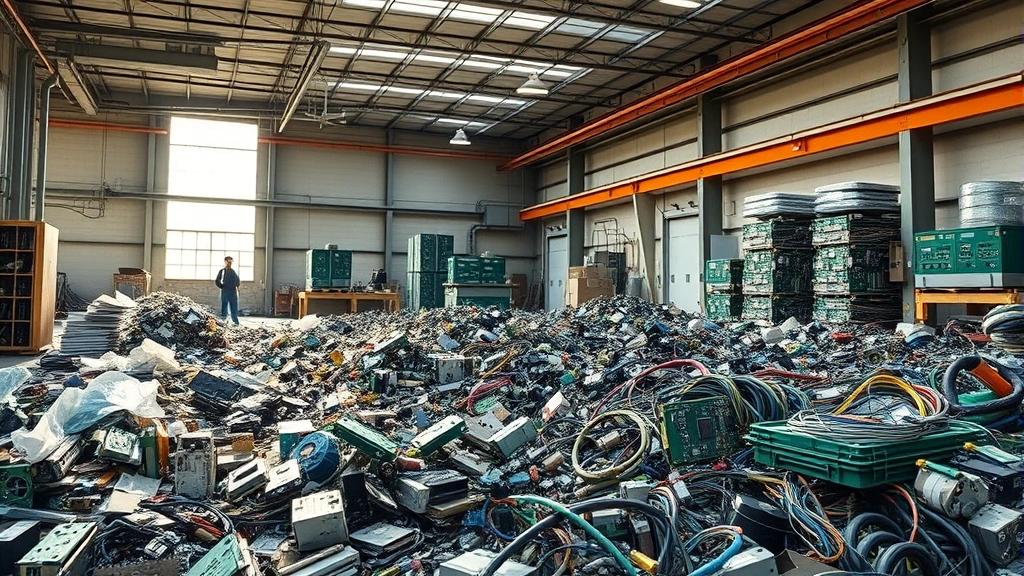
Electronic waste represents one of the fastest-growing waste streams globally, with approximately 57 million tons generated annually. Most e-waste is dumped in developing nations where informal recycling operations expose workers and communities to toxic substances while recovering only a fraction of valuable materials. This linear take-make-dispose model contradicts sustainability principles fundamentally.
Circular economy technologies offer alternatives emphasizing material recovery and product longevity. Advanced recycling technologies can recover 95% of materials from electronic devices, including rare earth elements previously considered lost. Companies implementing take-back programs and designing products for disassembly demonstrate that circular approaches are technically and economically viable.
Modular device design, where components can be replaced rather than requiring entire device replacement, extends product lifespans and reduces manufacturing impacts. Fairphone and similar manufacturers demonstrate that repairable, upgradeable technology is possible, though market adoption remains limited due to consumer preferences and corporate profit incentives favoring replacement cycles.
Biotechnology offers promising circular economy solutions. Mycelium-based materials and other bio-based alternatives to plastic and synthetic materials represent technological pathways toward truly sustainable products. Enzymatic plastic degradation, recently demonstrated at scale, could revolutionize plastic waste management if deployed widely.
Positive impacts on the environment by humans increasingly depend upon technology-enabled circular systems. Blockchain technology enables supply chain transparency and material tracking. IoT sensors monitor product conditions, optimizing maintenance and extending useful life. These technological innovations create structural possibilities for sustainability that didn’t previously exist.
Biodiversity Loss and Habitat Disruption
Technology infrastructure development directly destroys habitat and fragments ecosystems. Data center construction, renewable energy facility siting, and telecommunications tower installation require land conversion. While renewable energy infrastructure has far lower ecological impact than fossil fuel extraction, it nonetheless creates environmental trade-offs requiring careful assessment.
Mining for technology materials drives significant habitat loss. Rare earth element mining in China has contaminated vast agricultural areas with radioactive waste. Lithium extraction in South America depletes aquifers in some of Earth’s most biodiverse regions. Cobalt mining in Central Africa occurs in biodiversity hotspots of global significance.
Light pollution from technology infrastructure and increased nighttime illumination disrupts circadian rhythms across countless species. Electromagnetic radiation from wireless networks and mobile devices raises concerns about impacts on pollinators and other sensitive organisms, though scientific evidence remains contested.
Conversely, technology enables biodiversity conservation at unprecedented scales. Camera trap networks powered by AI identify endangered species and detect poaching activities in real-time. Drone technology monitors deforestation and tracks animal populations across vast landscapes. Genetic sequencing technology enables population genetics research informing conservation strategies. Satellite monitoring provides early warning of environmental crises.
Restoration technology demonstrates capacity for ecological recovery. Drone seed dispersal restores forests at scales previously impossible. Artificial reef technology supports marine ecosystem recovery. These technological applications show potential for reversing some biodiversity losses if scaled appropriately.
Emerging Technologies and Future Pathways
Artificial intelligence represents perhaps the most consequential emerging technology for environmental outcomes. AI optimization algorithms can reduce energy consumption across industrial processes, transportation networks, and building systems by 10-20% or more. Machine learning accelerates materials science research toward sustainable alternatives. AI-powered environmental monitoring enables ecosystem management at scales and speeds previously impossible.
However, AI development and deployment consume enormous computational resources. Training large language models generates carbon emissions equivalent to transatlantic flights for hundreds of people. The energy demands of AI infrastructure could undermine climate benefits if not carefully managed through renewable energy integration and efficiency improvements.
Quantum computing offers potential for solving previously intractable computational problems relevant to sustainability. Molecular simulation enabled by quantum computers could accelerate development of sustainable materials, batteries, and chemical processes. These potential benefits remain theoretical, with practical applications years away.
Synthetic biology and genetic engineering technologies enable development of organisms engineered for environmental remediation, sustainable material production, and enhanced food production. Genetically modified crops requiring fewer pesticides and water inputs could reduce agricultural environmental impact significantly. However, ecological risks of releasing modified organisms into environments require careful assessment.
Nuclear fusion technology, if successfully commercialized, could provide abundant clean energy fundamentally transforming environmental prospects. Current fusion research progresses toward net energy gain, though commercial deployment remains decades away at minimum. Fission reactor technology improvements, including small modular reactors, offer near-term clean energy alternatives.
Nanotechnology applications in materials science, energy production, and environmental remediation show promise for sustainability improvements. However, potential ecological impacts of nanomaterial release into environments remain poorly understood, requiring precautionary approaches to development and deployment.
The Nature journal publishes extensive research examining technology’s environmental futures, consistently emphasizing that technological potential means nothing without intentional governance, policy frameworks, and corporate accountability mechanisms ensuring sustainable deployment.
FAQ
What is the biggest environmental impact of technology?
The largest impacts vary by technology type. For electronics, manufacturing environmental costs typically exceed operational impacts. For energy systems, fossil fuel dependence during electricity generation remains critical. For emerging technologies, uncertain ecological impacts of large-scale deployment present significant risks. No single impact dominates across all technological domains.
Can technology solve environmental problems it created?
Technology can contribute substantially to environmental solutions, but technology alone cannot solve systemic environmental crises. Solutions require simultaneous technological innovation, policy changes, behavioral shifts, and economic restructuring. Technology is necessary but insufficient for sustainability.
Is renewable energy technology truly sustainable?
Renewable energy technology represents substantially lower environmental impact than fossil fuels across lifecycle analysis. However, manufacturing impacts, material extraction, and land use considerations mean renewable technology is not impact-free. Careful siting, material efficiency, and circular economy approaches maximize sustainability benefits.
How can consumers reduce technology’s environmental impact?
Strategies include extending device lifespans through repair rather than replacement, purchasing from manufacturers with transparent supply chains and recycling programs, choosing refurbished or secondhand devices, and supporting policy requiring manufacturer responsibility for end-of-life management. Reducing overall consumption remains most impactful.
What role should government play in technology environmental governance?
Governments must establish regulatory frameworks requiring environmental impact assessment, supply chain transparency, and extended producer responsibility. Tax structures should reflect true environmental costs. Investment in sustainable technology development and infrastructure remains essential. International coordination prevents regulatory arbitrage and ensures equitable burden-sharing.
Are there technologies we should avoid developing?
Precautionary approaches suggest some technologies warrant restricted development until ecological impacts are thoroughly understood. Certain nanomaterial applications, large-scale genetic modification of organisms, and geoengineering technologies present uncertain ecological risks warranting careful governance. However, blanket technology restrictions risk foregoing beneficial innovations.


