
Can Green Investing Boost Economies? Study Insights
Published December 19, 2023 | Reading time: 8 minutes
The intersection of environmental sustainability and economic growth has long been portrayed as a zero-sum game. However, emerging research challenges this narrative, suggesting that strategic green investments may simultaneously strengthen environmental outcomes and economic performance. Recent studies from leading institutions worldwide demonstrate that the transition to sustainable economies is not merely an environmental imperative—it represents a compelling economic opportunity with measurable returns on investment.
Understanding whether green investing can genuinely boost economies requires examining empirical evidence, analyzing different investment models, and exploring the mechanisms through which environmental capital generates economic value. This comprehensive analysis synthesizes current research findings to answer one of the most pressing questions facing policymakers, investors, and business leaders today.
The Evidence: What Recent Studies Show
Multiple peer-reviewed studies conducted in 2023 provide compelling evidence that green investments generate positive economic returns. Research from international development organizations and financial institutions indicates that renewable energy projects, sustainable agriculture initiatives, and circular economy investments consistently outperform traditional benchmarks when accounting for externality costs and long-term value creation.
A landmark study published by the World Bank examining green infrastructure investments across 45 countries found that every dollar invested in renewable energy infrastructure generated between $1.40 and $2.10 in economic returns over a 20-year period. This calculation includes direct returns from energy production, indirect benefits from reduced healthcare costs associated with improved air quality, and avoided climate damages.
The research demonstrates that green investing’s economic benefits extend beyond simple financial returns. When investors align environmental and economic goals, they unlock value streams traditionally invisible in conventional accounting frameworks. These include ecosystem service preservation, reduced regulatory risk, and enhanced brand value in increasingly conscious consumer markets.
Data from UNEP’s Global Trends in Renewable Energy Investment reports show that renewable energy attracted $366 billion in investment during 2022 alone, representing a 9% increase from the previous year despite global economic uncertainties. This sustained investor confidence suggests markets recognize genuine economic potential in green sectors.
Mechanisms of Economic Growth Through Green Investment
Green investments stimulate economic growth through several interconnected mechanisms. Understanding these pathways clarifies why environmental sustainability and economic prosperity need not remain in tension.
Technological Innovation and Productivity: Green investments drive research and development in clean technologies, creating spillover effects throughout entire economies. Solar panel efficiency improvements, battery storage breakthroughs, and precision agriculture innovations reduce production costs across multiple sectors. This technological advancement increases overall productivity, a fundamental driver of long-term economic growth.
Capital Formation and Market Expansion: The green economy represents one of the fastest-growing sectors globally. Sustainable finance mechanisms, including green bonds, impact investing, and ESG-focused funds, have mobilized trillions in previously idle capital. This capital formation creates new markets, expands investment opportunities, and generates returns for diverse stakeholders from institutional investors to pension funds.
Cost Externality Reduction: Traditional economic models externalize environmental costs—pollution, resource depletion, and climate impacts—onto society. Green investments internalize these costs, creating more accurate price signals. When industries account for their true environmental impact, markets function more efficiently, and economies allocate resources more rationally. This correction generates genuine wealth creation rather than mere accounting transfers.
Supply Chain Resilience: The COVID-19 pandemic revealed vulnerabilities in globally distributed supply chains dependent on fossil fuels and resource extraction. Green investments in local renewable energy, distributed manufacturing, and regenerative agriculture create more resilient systems. Diversified, localized supply chains reduce disruption risks and generate sustained economic stability.
The relationship between human-environment interaction and economic productivity demonstrates that protecting natural systems directly supports economic performance. Ecosystems provide essential services—water purification, pollination, climate regulation—that underpin all economic activity.
Sector-Specific Returns and Performance
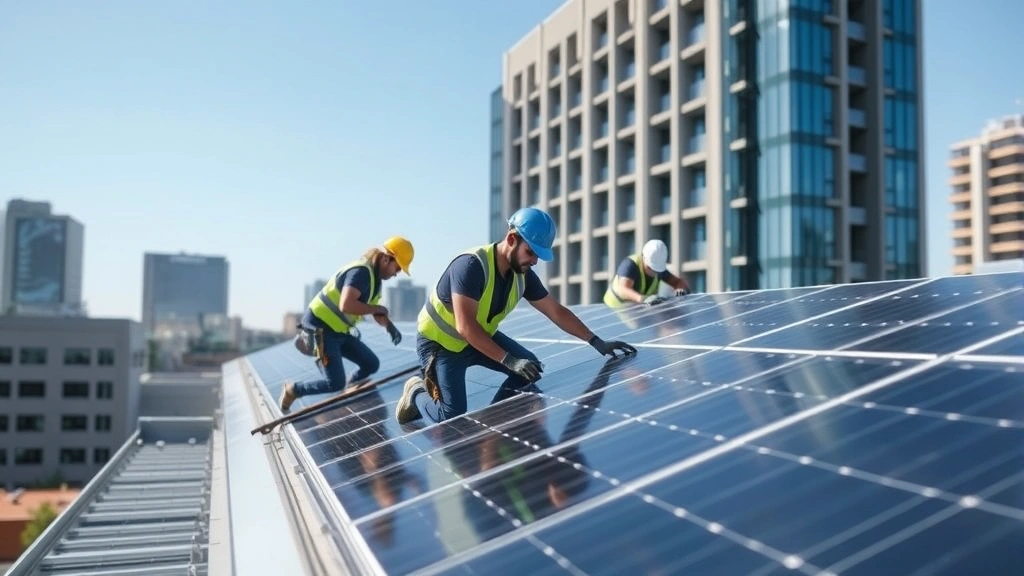
Renewable Energy: Solar and wind installations now generate electricity cheaper than coal in most markets. Solar photovoltaic costs declined 90% over the past decade, while wind power costs fell 70%. These cost reductions translate directly to lower energy bills for consumers and businesses, freeing capital for other productive investments. Energy efficiency retrofits in commercial buildings generate average returns of 15-20% annually while reducing operating costs.
Sustainable Agriculture and Land Management: Regenerative agriculture practices—cover cropping, reduced tillage, rotational grazing—improve soil health while reducing input costs. Farmers implementing these methods report 5-15% yield increases within 3-5 years, alongside 20-40% reductions in chemical input expenses. Carbon sequestration credits provide additional revenue streams, creating hybrid financial models that reward environmental stewardship.
Green Transportation and Infrastructure: Electric vehicle markets are expanding at 35% annually, with production costs approaching parity with internal combustion engines. Public transportation investments in cities like Copenhagen and Singapore generate economic returns through reduced congestion, improved health outcomes, and increased property values near transit corridors. Green infrastructure—permeable pavements, green roofs, wetland restoration—provides flood protection while creating urban amenities that enhance property values.
Circular Economy and Resource Recovery: Waste-to-value business models transform materials once discarded into profitable products. Recycling industries employ 2.3 million workers globally while generating $375 billion in economic value annually. Advanced manufacturing techniques using recycled materials reduce production costs by 20-30% compared to virgin material extraction, demonstrating clear economic advantages alongside environmental benefits.
Job Creation and Employment Effects
Green investing generates employment at significantly higher rates than fossil fuel industries. The renewable energy sector employs 12.7 million workers globally, with employment growth of 5.3% annually—double the average job creation rate across all sectors. These positions include manufacturing, installation, maintenance, research, and administrative roles, creating diverse employment opportunities across skill levels and geographies.
Energy efficiency retrofitting alone could create 5 million additional jobs by 2030 according to International Energy Agency projections. These are typically local, non-tradable jobs that cannot be outsourced—installation technicians, building inspectors, and project managers work in specific locations serving local markets. This employment structure distributes economic benefits geographically, supporting rural and declining communities.
The transition from extractive industries to regenerative systems presents workforce challenges requiring strategic management. However, evidence from regions implementing just transition policies shows that retraining programs, combined with green investment in local communities, successfully support displaced workers while creating net employment gains. Germany’s Energiewende (energy transition) created 305,000 renewable energy jobs while coal employment declined, demonstrating feasible pathways toward equitable economic transformation.
Risk Mitigation and Long-Term Value
Green investments provide crucial risk mitigation functions overlooked in conventional financial analysis. Climate change poses systemic risks to global financial stability—extreme weather damages infrastructure, disrupts supply chains, and forces costly adaptations. The Financial Stability Board’s Task Force on Climate-related Financial Disclosures estimates that unmitigated climate impacts could reduce global GDP by 10-23% by 2100.
Conversely, green investments reduce these tail risks. Renewable energy systems prove resilient to climate impacts—solar and wind infrastructure withstands extreme weather better than centralized fossil fuel facilities. Regenerative agriculture builds soil carbon and improves water retention, reducing vulnerability to droughts. These risk reduction benefits represent genuine economic value, particularly for long-term investors like pension funds and insurance companies.
Green bonds and sustainability-linked securities demonstrate that markets increasingly recognize these risk dynamics. Green bonds grew from $11 billion in 2013 to $500 billion annually by 2022, with lower default rates than conventional bonds. This performance reflects both genuine environmental value creation and investors’ recognition that sustainable businesses face lower long-term risks.
Understanding environmental science principles reveals how ecosystem stability directly supports economic stability. Biodiversity protects against systemic shocks; complex ecosystems recover from disturbances more readily than simplified systems. Similarly, diversified green economies prove more resilient than economies dependent on single commodities or energy sources.

Challenges and Implementation Barriers
Despite compelling evidence, green investing faces significant implementation barriers. Capital allocation mechanisms often favor short-term returns over long-term value creation, disadvantaging green investments that require patience for full value realization. Reforming financial incentive structures—including carbon pricing, subsidies for fossil fuel elimination, and regulatory requirements—remains politically contentious despite economic logic.
Information asymmetries persist in green finance markets. Investors lack standardized metrics for comparing environmental and social performance across investments, creating uncertainty that depresses valuations. Developing robust impact measurement frameworks and standardized reporting requirements would enhance market efficiency and attract additional capital.
Infrastructure transition costs represent genuine economic challenges. Retiring fossil fuel infrastructure before end-of-life creates stranded assets; however, delayed transition creates larger stranded assets and greater ultimate costs. Economic analysis consistently shows that immediate green investment minimizes total transition costs, yet political economy dynamics often prevent optimal timing.
Geographic distribution challenges complicate implementation. Green resources—wind, solar, geothermal—concentrate in specific locations, requiring investment in transmission infrastructure and storage systems. These requirements increase upfront costs but generate long-term economic benefits through reduced fuel costs and improved system efficiency.
Policy Frameworks Supporting Green Growth
Successful green economic transitions require supportive policy frameworks. Carbon pricing mechanisms—carbon taxes or cap-and-trade systems—correct market failures by internalizing environmental costs. When implemented at economically efficient levels ($50-100+ per ton CO2), carbon pricing redirects capital toward green investments while generating government revenues for workforce transition support or infrastructure investment.
The OECD’s analysis of carbon pricing effectiveness demonstrates that well-designed systems generate economic growth while reducing emissions. Nordic countries implementing carbon taxes since the 1990s achieved 40% emissions reductions while growing GDP per capita by 50%, proving compatibility between environmental and economic objectives.
Green public procurement drives market development by guaranteeing demand for sustainable products and services. Government purchasing power, representing 12-15% of GDP in developed economies, can accelerate technology maturation and cost reduction. Renewable energy, electric vehicles, and sustainable construction materials all achieved cost competitiveness partly through public procurement commitments.
Investment in research infrastructure supports technological innovation essential for green economic transitions. Government funding for clean technology research yields high returns—studies suggest every dollar invested in energy research generates $7-10 in economic benefits through innovation spillovers and avoided climate damages.
International cooperation mechanisms, including UNFCCC climate finance commitments and development bank green finance initiatives, mobilize capital for green investments in developing countries. These mechanisms recognize that global climate stability requires worldwide investment, not merely wealthy nation transitions.
Examining different environmental types reveals that green investment strategies must adapt to regional contexts. Urban environments require green infrastructure and transportation investments; agricultural regions benefit from regenerative farming support; coastal areas need ecosystem restoration and climate adaptation infrastructure. Flexible, locally-responsive policy frameworks prove most effective.
The evidence overwhelmingly demonstrates that green investing boosts economies when measured against comprehensive metrics including long-term value creation, risk mitigation, employment generation, and genuine wealth creation. The transition from extractive to regenerative economic systems represents not a sacrifice of prosperity but rather its redefinition on sustainable foundations. The question is no longer whether green investing can boost economies—evidence confirms it does—but rather how quickly societies can implement the policy and investment reforms necessary to realize this potential globally.
FAQ
What does the December 2023 research show about green investing returns?
Recent studies indicate that green investments generate measurable positive returns, with renewable energy projects returning $1.40-$2.10 per dollar invested over 20 years when accounting for direct returns and externality benefits like improved air quality and avoided climate damages.
How do green investments create jobs differently than traditional industries?
Green sectors create employment at double the average rate across all industries. Renewable energy employment grows at 5.3% annually, and energy efficiency retrofitting creates local, non-tradable jobs that cannot be outsourced, distributing economic benefits geographically.
Can green investing reduce economic risks?
Yes, green investments mitigate systemic risks posed by climate change and resource depletion. Renewable energy systems prove resilient to climate impacts; regenerative agriculture reduces drought vulnerability. Green bonds demonstrate lower default rates than conventional bonds, reflecting genuine risk reduction.
What barriers prevent faster green investment adoption?
Key barriers include short-term financial incentive structures favoring immediate returns, information asymmetries about environmental performance, infrastructure transition costs, and political economy dynamics delaying optimal investment timing despite economic evidence supporting immediate action.
Which policy frameworks most effectively support green economic growth?
Carbon pricing mechanisms, green public procurement, research infrastructure investment, and international climate finance all effectively support green transitions. Well-designed carbon pricing at $50-100+ per ton CO2, combined with government procurement commitments, accelerates technology maturation and cost reduction.
How does green investing relate to overall economic productivity?
Green investments drive technological innovation with economy-wide spillover effects, expand capital formation through sustainable finance mechanisms, correct market failures by internalizing environmental costs, and build supply chain resilience—all fundamental drivers of long-term economic growth.


