
Do Carbon Taxes Boost Economies? Economist Insights
Carbon taxes represent one of the most debated policy instruments in environmental economics today. While critics argue they burden economies and reduce competitiveness, a growing body of economic research suggests that well-designed carbon pricing mechanisms can simultaneously reduce emissions and stimulate economic growth. This paradox—achieving environmental goals while enhancing economic performance—challenges conventional assumptions about the trade-off between ecological protection and prosperity.
Understanding whether carbon taxes truly boost economies requires examining empirical evidence from jurisdictions that have implemented them, analyzing the mechanisms through which carbon pricing influences economic behavior, and considering how revenue recycling strategies determine net economic outcomes. The answer is far more nuanced than simple yes or no responses suggest, depending heavily on policy design, implementation context, and macroeconomic conditions.
How Carbon Taxes Work in Modern Economies
Carbon taxes function as price signals that internalize the external costs of greenhouse gas emissions into market transactions. When governments impose a tax per ton of carbon dioxide or equivalent emissions, they fundamentally alter the relative prices of energy sources and production methods. Fossil fuel-intensive activities become more expensive, while cleaner alternatives become relatively more competitive. This mechanism operates across the entire economy—from electricity generation and transportation to manufacturing and agriculture.
The elegance of carbon taxation lies in its simplicity compared to regulatory alternatives. Rather than mandating specific technologies or production methods, carbon taxes allow businesses and consumers to discover the most cost-effective ways to reduce emissions. A manufacturing firm might choose between upgrading equipment, switching fuel sources, or improving efficiency based on which option delivers the greatest emissions reduction per dollar spent. This flexibility typically reduces the overall cost of achieving environmental targets.
When examining carbon tax mechanisms, it’s helpful to understand how environmental variables interact with economic systems, particularly how policy parameters shape behavioral responses. The tax rate itself—whether set at $20, $50, or $100 per ton of CO2—determines the magnitude of price changes and behavioral responses. Higher tax rates drive more aggressive emissions reductions but also create greater economic disruption if poorly designed.
Countries implementing carbon taxes have adopted different approaches. Canada’s federal carbon pricing system applies a baseline price that increases annually, creating predictability for long-term investment decisions. Sweden’s carbon tax, among the world’s highest at approximately $130 per ton, has coexisted with economic growth for decades. The European Union’s Emissions Trading System, while technically a cap-and-trade program rather than a pure tax, functions similarly by creating a carbon price through market mechanisms.
Economic Theory Behind Carbon Pricing
Mainstream economic theory provides strong theoretical support for carbon taxation as an efficiency-enhancing policy. The fundamental insight comes from Pigouvian economics: when activities generate external costs not reflected in market prices, taxing those activities to equal the external cost improves overall economic efficiency. Greenhouse gas emissions impose costs through climate change—increased extreme weather, agricultural disruption, infrastructure damage, and public health impacts—that emitters don’t bear.
The “double dividend” hypothesis suggests carbon taxes might generate benefits beyond emissions reductions. If governments recycle carbon tax revenues by reducing distortionary taxes like income or payroll taxes, the economy could theoretically gain a first dividend (emissions reduction) and a second dividend (reduced economic distortion from lower income taxes). This possibility has generated considerable research attention, though empirical confirmation remains contested among scholars.
Ecological economics perspectives, which integrate biophysical constraints with economic analysis, offer additional theoretical frameworks. These approaches emphasize that economies operate within planetary boundaries and that carbon pricing must reflect genuine scarcity of atmospheric carbon-absorption capacity. From this perspective, carbon taxes represent not a burden on growth but a necessary correction ensuring that economic activity remains compatible with Earth’s biophysical systems.
The relationship between carbon pricing and innovation provides another theoretical mechanism for economic benefits. By increasing returns to clean technology development, carbon taxes incentivize research and commercialization of renewable energy, energy efficiency, and carbon capture technologies. These innovations can reduce long-term energy costs, improve productivity, and create new industries and employment opportunities. This dynamic aligns with endogenous growth theory, which emphasizes how policy-driven technological change shapes long-term economic trajectories.

” alt=”Carbon tax policy implementation in modern industrial economy”>
Evidence from Global Carbon Tax Implementations
Empirical evidence from jurisdictions with carbon taxes provides mixed but generally encouraging results regarding economic impacts. Sweden, which implemented a carbon tax in 1991 at initially modest levels and has increased it substantially over three decades, offers perhaps the strongest case study. The Swedish economy has grown approximately 80% since 1990 while emissions declined by roughly 30%. This decoupling of economic growth from emissions demonstrates that carbon taxation need not constrain prosperity.
However, Sweden’s success reflects specific contextual factors: abundant hydroelectric power providing clean energy alternatives, high public acceptance of environmental policies, strong institutional capacity, and a developed economy with technological sophistication. These conditions don’t universally apply to other nations, limiting direct policy transfer.
Canada’s carbon pricing system, implemented federally in 2019 and expanded subsequently, shows more recent evidence. Economic analyses suggest the policy has reduced emissions while maintaining positive economic growth. The Parliamentary Budget Office found that the carbon price’s economic impacts were modest in either direction—neither substantially harming nor boosting GDP, though distributional effects varied across regions and income groups.
British Columbia’s carbon tax, implemented in 2008, initially reduced emissions by 5-15% depending on measurement methodology. Economic growth continued, though attributing causation proves challenging given multiple simultaneous economic factors. The province experienced the 2008 financial crisis shortly after implementation, making clean economic impact assessment difficult.
France’s experience offers cautionary lessons. When the government attempted to increase carbon taxes substantially in 2018-2019, public backlash contributed to the “Yellow Vest” protests. This political reaction highlighted that carbon tax success requires not just economic design but also social acceptance and equitable distribution of costs and benefits. The experience underscores that resistance to environmental policies can create hostile political environments when implementation lacks transparency and fairness.
Research from the World Bank analyzing carbon pricing initiatives across multiple jurisdictions found that well-designed systems generally achieve emissions reductions without significant GDP losses. A comprehensive 2021 assessment of carbon pricing’s economic impacts concluded that properly implemented carbon taxes represent cost-effective climate policy compared to regulatory alternatives.
Revenue Recycling and Economic Growth
How governments spend carbon tax revenues fundamentally determines whether the policy boosts or constrains economic growth. This revenue recycling question separates theoretical potential from practical outcomes. Different recycling approaches create dramatically different economic effects.
When governments use carbon tax revenue to reduce income taxes or payroll taxes, they can offset the regressive burden of carbon pricing while reducing labor market distortions. Lower income tax rates increase take-home pay, potentially stimulating consumption and investment. Lower payroll taxes reduce hiring costs for businesses, potentially encouraging employment growth. Economic modeling suggests this approach could generate modest positive economic effects while achieving emissions reductions.
Alternatively, governments might use carbon tax revenue for public investment in clean infrastructure—renewable energy systems, public transportation, energy efficiency retrofits, and green technology research. These investments can generate economic multiplier effects as construction workers, engineers, and manufacturers expand production. Infrastructure investments also enhance long-term productivity by reducing energy costs and improving transportation efficiency.
Some jurisdictions distribute carbon tax revenue directly to citizens as dividends or rebates. This approach prioritizes equity and maintains consumer purchasing power while creating incentives for emissions reductions. Evidence from Alaska’s oil dividend and proposed carbon dividend schemes suggests this approach can maintain political support while achieving environmental goals.
Conversely, when governments use carbon tax revenue for general budget purposes without deliberate recycling strategy, economic benefits diminish. Carbon taxes then function primarily as revenue-raising instruments rather than incentive mechanisms driving behavioral change toward sustainability.
The relationship between revenue use and broader human environment interaction patterns deserves careful consideration. Revenue invested in sustainable infrastructure fundamentally reshapes how humans interact with natural systems, potentially creating virtuous cycles where environmental protection and economic opportunity reinforce each other.
Competitiveness and International Trade Impacts
A primary concern about unilateral carbon taxation involves impacts on international competitiveness. If one country implements carbon taxes while trading partners don’t, businesses in the carbon-taxing jurisdiction face higher costs than international competitors. This could theoretically drive production and emissions to other countries—a phenomenon called “carbon leakage.”
Several mechanisms mitigate this concern in practice. First, many carbon-intensive, trade-exposed industries receive partial exemptions or rebates, reducing competitive disadvantages. Second, carbon costs often represent small portions of total production costs outside energy-intensive sectors. Third, consumers increasingly value low-carbon products, creating market advantages for producers in carbon-taxing jurisdictions with green credentials.
Border carbon adjustment mechanisms—tariffs on imports from jurisdictions without equivalent carbon pricing—can theoretically level competitive playing fields. The European Union’s proposed Carbon Border Adjustment Mechanism exemplifies this approach. However, international trade law complexity and concerns about protectionism limit implementation of such mechanisms.
Evidence from existing carbon-taxing jurisdictions suggests competitiveness concerns, while real, haven’t materialized as catastrophically as some predicted. Swedish and Canadian industries remain globally competitive despite carbon pricing. This reflects that competitiveness depends on multiple factors—technology, labor costs, infrastructure quality, and innovation capacity—beyond carbon pricing alone.
Interestingly, carbon pricing can enhance long-term competitiveness by driving innovation in clean technologies. Jurisdictions pioneering renewable energy, battery technology, and efficiency innovations gain first-mover advantages in growing global markets. As climate policies proliferate internationally, early movers in clean technology gain competitive advantages in the emerging low-carbon economy.
Employment Effects and Labor Markets
Carbon taxes create complex employment effects that vary across sectors and regions. Fossil fuel industries—coal mining, oil refining, and natural gas extraction—face reduced demand, potentially creating localized job losses. These impacts concentrate geographically in regions historically dependent on fossil fuel production, raising legitimate concerns about worker displacement and community economic disruption.
Simultaneously, carbon taxes stimulate employment in clean energy, energy efficiency, and green infrastructure sectors. Renewable energy installation, retrofitting buildings for efficiency, developing and manufacturing clean technologies, and expanding public transportation all generate employment. Studies suggest that employment growth in expanding sectors typically exceeds job losses in contracting sectors, particularly over medium and long timeframes.
The net employment effect depends heavily on policy design. Carbon taxes coupled with workforce development programs, transition assistance for displaced workers, and targeted investment in affected communities can minimize disruption while capturing employment gains. Without such complementary policies, carbon taxation risks creating unequal burden-sharing where some workers and communities bear disproportionate costs.
Research from ecological economics perspectives emphasizes that carbon pricing must address environmental definitions and implications for labor holistically. This means recognizing that employment in fossil fuel extraction represents unsustainable use of natural capital and that transitions toward sustainable livelihoods align both economic and ecological interests.
Challenges and Implementation Barriers
Despite theoretical appeal and some positive empirical evidence, carbon taxes face substantial implementation challenges. Political resistance from fossil fuel industries, consumer concerns about rising energy costs, and ideological opposition to government intervention all constrain adoption and ambition levels.
Setting appropriate carbon tax rates presents technical challenges. Rates must reflect the social cost of carbon—the economic damage from each ton of emissions. Estimates vary widely ($50-$200+ per ton depending on methodology and assumptions), creating uncertainty about optimal policy levels. Too-low rates fail to drive necessary behavioral change; too-high rates create economic disruption and political backlash.
Distributional equity concerns remain significant. Carbon taxes can be regressive, consuming larger shares of low-income households’ budgets since they spend proportionally more on energy and transportation. Without careful revenue recycling toward equity-enhancing uses, carbon taxes can worsen inequality. This political economy challenge has derailed several proposed carbon tax initiatives.
International coordination challenges complicate carbon pricing effectiveness. Without global carbon pricing or equivalent mechanisms, emissions-intensive industries can relocate to jurisdictions without carbon pricing, reducing effectiveness. Achieving international agreement on carbon pricing remains difficult given divergent national interests and development priorities.
The United Nations Environment Programme and various research institutions have documented these implementation barriers extensively, highlighting that policy success requires not just economic theory but also political will, institutional capacity, and social acceptance.
Complementary policies strengthen carbon tax effectiveness. Investments in clean infrastructure, research and development support for emerging technologies, workforce development programs, and regulations addressing non-price barriers all enhance outcomes. Carbon pricing functions most effectively as part of comprehensive climate policy portfolios rather than isolated instruments.
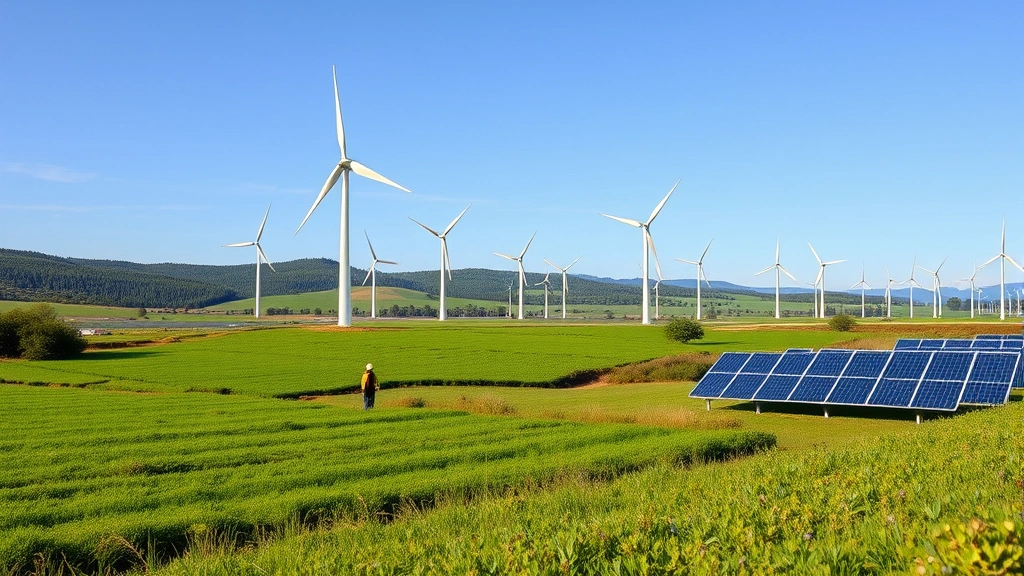
” alt=”Green economy transition with renewable energy infrastructure and sustainable business development”>
FAQ
Do carbon taxes actually reduce emissions?
Yes, empirical evidence consistently shows carbon taxes reduce emissions by making fossil fuels more expensive and clean alternatives relatively more attractive. The magnitude of reduction varies with tax rate, ranging from 5-30% depending on jurisdiction and time period. However, carbon taxes alone typically don’t achieve deep emissions reductions required for climate targets without complementary policies.
How do carbon taxes affect household budgets?
Carbon taxes increase energy, transportation, and goods costs, with impacts varying by household consumption patterns. Low-income households typically face larger proportional impacts since they spend more on energy. However, revenue recycling through tax reductions, dividends, or targeted assistance can offset or reverse these regressive effects, making overall policy progressive depending on design.
What’s the difference between carbon taxes and cap-and-trade systems?
Carbon taxes set a price per ton of emissions while allowing quantities to vary. Cap-and-trade systems set emission quantity limits while allowing prices to vary. Both create financial incentives for emissions reductions. Carbon taxes offer more price certainty; cap-and-trade offers more certainty about emissions outcomes. Economic theory suggests both can achieve similar efficiency levels under ideal conditions.
Can carbon taxes coexist with economic growth?
Yes, evidence from Sweden, Canada, and other jurisdictions demonstrates that carbon taxes can coexist with economic growth when properly designed. Growth depends more on overall macroeconomic conditions, innovation, and complementary policies than on carbon pricing alone. However, very high carbon taxes without offsetting policies could constrain growth in carbon-dependent economies.
What happens to workers in fossil fuel industries?
Carbon taxes reduce demand for fossil fuels, potentially affecting workers in extraction, refining, and power generation sectors. However, employment growth in clean energy and efficiency sectors typically exceeds losses in fossil fuel industries. Outcomes depend heavily on transition policies including workforce development, income support, and investment in affected communities. Without such policies, some workers face genuine hardship.
How do carbon taxes compare to other climate policies?
Economic analyses suggest carbon taxes and cap-and-trade systems achieve emissions reductions more cost-effectively than regulatory mandates or technology-specific subsidies. However, no single policy instrument addresses all market failures and behavioral barriers. Optimal climate policy typically combines carbon pricing with complementary measures including research investment, infrastructure development, and regulations addressing specific barriers.
What’s the relationship between carbon taxes and innovation?
Carbon taxes create financial incentives for developing and deploying clean technologies by making emissions reduction valuable. This can accelerate innovation in renewable energy, efficiency, and alternative fuels. However, research suggests that combining carbon pricing with direct innovation support—research funding, demonstration projects, early-stage investment—generates faster technological progress than carbon pricing alone.


