
Can Technology Improve the Economy-Ecosystem Balance? Critical Insights for 2024
The intersection of technological innovation and ecological preservation represents one of the most pressing challenges of our era. As a critical environment technician would attest, the tools we deploy today will determine whether economic growth and ecosystem health can coexist sustainably. The global economy generates approximately $96 trillion in annual output, yet simultaneously degrades natural capital worth an estimated $125 trillion annually—a paradox that technology alone cannot solve, but strategically deployed solutions offer genuine promise.
Technology has emerged as both culprit and potential savior in the economy-ecosystem relationship. Data centers consume 1-2% of global electricity, while renewable energy technologies have dropped 90% in cost over the past decade. This dual reality underscores a fundamental truth: technological advancement without ecological consideration merely accelerates degradation, but technology guided by environmental economics principles can fundamentally rebalance our relationship with natural systems.
Understanding whether technology can genuinely improve economy-ecosystem balance requires examining evidence across sectors, analyzing the role of critical environment technicians in implementation, and evaluating economic frameworks that measure true environmental value.
The Current Economy-Ecosystem Imbalance
Traditional economic models have systematized the undervaluation of ecosystem services. A forest counted as zero in GDP calculations until it’s harvested; clean water disappears from economic accounting until it’s polluted and requires expensive treatment. The World Bank estimates that natural capital depletion costs developing countries 5-20% of their annual income, yet these losses remain invisible in conventional economic reporting.
This accounting failure creates perverse incentives. Companies that externalize environmental costs appear more profitable than those internalizing them. Economic growth metrics reward resource extraction without penalizing depletion. The result: ecosystems deteriorate while GDP metrics suggest prosperity. The human environment interaction has fundamentally shifted from sustainable coexistence to extractive domination.
Technology enters this landscape with significant potential. Real-time monitoring systems can quantify ecosystem degradation previously invisible to markets. Artificial intelligence can optimize resource allocation to reduce waste. Blockchain technologies can create transparent supply chains that price environmental externalities. However, technology’s effectiveness depends entirely on whether economic systems are restructured to reward rather than penalize ecological stewardship.
Technology as an Economic Efficiency Tool
Efficiency gains represent technology’s most straightforward contribution to economy-ecosystem balance. Industrial symbiosis networks—where one industry’s waste becomes another’s input—have reduced material consumption by 30-50% in integrated manufacturing regions. Smart agriculture technologies enable farmers to reduce water consumption by 40% while increasing yields by 25%, simultaneously improving economic returns and ecosystem health.
Manufacturing efficiency technologies deserve particular attention. Additive manufacturing (3D printing) reduces material waste from 90% to less than 10% compared to subtractive processes. Digital twins—virtual replicas of physical systems—allow companies to optimize production parameters before physical implementation, eliminating costly trial-and-error cycles. These innovations don’t merely reduce environmental impact; they improve profitability, aligning economic and ecological incentives.
Energy efficiency in buildings demonstrates this convergence powerfully. Smart HVAC systems, LED lighting, and automated controls reduce energy consumption by 20-40% while simultaneously lowering operational costs by similar percentages. The payback period for these investments typically ranges from 3-7 years, after which savings accumulate indefinitely. Yet adoption remains incomplete, suggesting barriers beyond technology exist—primarily institutional inertia and split incentives between building owners and occupants.
Digital Monitoring and Environmental Intelligence
Perhaps technology’s most valuable contribution involves rendering previously invisible environmental conditions transparent and quantifiable. Satellite-based monitoring systems now track deforestation in real-time, enabling rapid response to illegal logging. Ocean acidification sensors provide continuous data that informs marine conservation policy. Air quality monitoring networks create accountability mechanisms where none previously existed.
A critical environment technician deploying these systems faces complex challenges. Data collection represents only the initial step; interpretation, integration with other information streams, and translation into actionable policy requires sophisticated analytical capabilities. The environment variables affecting ecosystem health are interdependent and non-linear, making prediction and optimization substantially more difficult than managing mechanical systems.
Machine learning algorithms trained on environmental data can identify patterns humans might miss. Predictive models can forecast ecosystem collapse before it occurs, enabling preventive intervention. Computer vision systems can count wildlife populations automatically, replacing expensive manual surveys. These technological capabilities create new possibilities for evidence-based environmental management previously impossible at scale.
Renewable Energy Technologies and Economic Transition
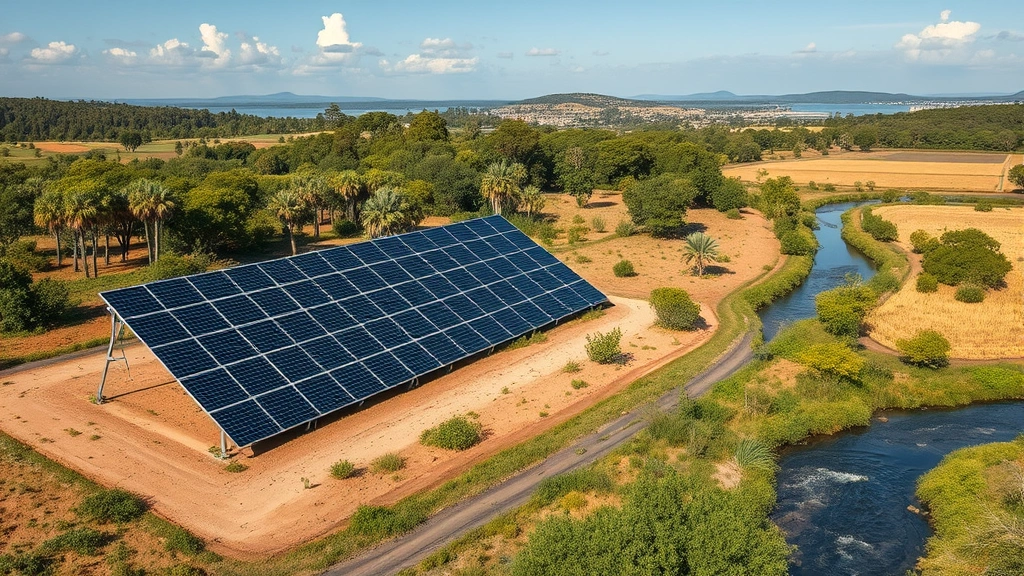
The renewable energy revolution exemplifies technology’s potential to simultaneously improve economic and ecological outcomes. Solar photovoltaic costs have declined 90% since 2010; wind energy costs have dropped 70% over the same period. In many markets, renewable electricity now costs less than fossil fuel generation, fundamentally changing energy economics.
This cost trajectory creates powerful incentives for transition. Battery storage technologies—essential for managing renewable intermittency—have declined 89% in cost over the past decade. Grid management technologies enable integration of distributed renewable sources. Electric vehicle adoption accelerates as battery costs approach parity with internal combustion engines. Each technological advance pulls economic incentives toward decarbonization.
However, the energy transition illustrates technology’s limitations when operating within unchanged economic systems. Fossil fuel subsidies globally total $7 trillion annually when accounting for environmental externalities, artificially suppressing renewable adoption despite superior technology. Critical environment technicians implementing renewable systems often encounter regulatory barriers designed to protect incumbent industries. Technology superiority alone doesn’t guarantee adoption when institutional structures resist change.
” alt=”Solar panels installed on agricultural land with ecosystem preservation, showing sustainable energy integration with natural landscape and diverse vegetation”>
Critical Environment Technicians: Implementation Reality
The role of critical environment technicians in technology deployment deserves deeper examination. These professionals operate at the intersection of environmental science, engineering, and systems management. They install, maintain, and optimize environmental monitoring systems; implement pollution control technologies; manage waste treatment facilities; and ensure compliance with environmental regulations.
Their work reveals technology’s real-world constraints. Sensors drift out of calibration; data transmission fails; software crashes; maintenance requirements exceed budgets. A critical environment technician implementing IoT sensors for water quality monitoring across rural regions discovers that connectivity infrastructure doesn’t exist, requiring parallel investment in communication systems. The hidden costs of technology deployment often exceed equipment expenses.
These technicians also encounter the complexity of what is the built environment and how technology must integrate with existing infrastructure designed without environmental consideration. Installing smart building management systems in structures built for maximum resource consumption requires retrofitting that often costs more than original construction. Technology operates within inherited constraints that limit optimization potential.
Despite challenges, critical environment technicians report genuine improvements when technology implementation couples with organizational commitment to environmental responsibility. Facilities that combine monitoring technology with performance-based incentives for staff achieve superior environmental outcomes compared to facilities relying on either technology or incentives alone. The synergy between technological capability and human motivation drives real change.
Circular Economy Technologies
Circular economy technologies represent perhaps the most promising approach to economy-ecosystem balance by fundamentally restructuring the material flows underlying economic activity. Instead of linear extraction-production-disposal, circular systems return materials to productive use indefinitely.
Advanced sorting technologies using AI-powered computer vision enable recycling streams to achieve 95% purity, previously impossible with manual sorting. Chemical recycling technologies break plastics into molecular components, enabling infinite recyclability without degradation. 3D printing enables on-demand production with minimal inventory waste. Blockchain enables transparent tracking of material provenance and recycling status throughout product lifecycles.
These technologies create economic value while reducing resource consumption. Companies implementing circular design report 20-40% reduction in material costs while simultaneously reducing waste disposal expenses. The Ellen MacArthur Foundation documents cases where circular approaches generate equivalent or superior profitability compared to linear alternatives.
Yet circular economy implementation remains limited to pioneering companies and regions. Systemic adoption requires regulatory frameworks that mandate extended producer responsibility, tax structures that penalize virgin material extraction, and supply chain coordination across industries. Technology enables circular economy but cannot alone create the institutional structures necessary for systemic transition.
Economic Incentives and Market Mechanisms
Technology’s effectiveness in improving economy-ecosystem balance ultimately depends on economic incentive structures. Carbon pricing mechanisms—whether through carbon taxes or cap-and-trade systems—create financial penalties for emissions, incentivizing technological adoption for emissions reduction. Payments for ecosystem services technologies enable monetization of conservation, creating financial incentives for preservation.
Research from World Bank environmental economics research demonstrates that properly designed economic instruments can achieve environmental goals at substantially lower cost than regulatory mandates while generating economic efficiency gains. Tradeable pollution permits enable cost-effective abatement where low-cost reduction opportunities concentrate. Ecosystem service payments can channel economic value to conservation activities.
However, market mechanisms require careful design to generate genuine environmental improvement rather than perverse outcomes. Carbon offset markets have been criticized for enabling continued emissions through questionable offset projects. Biodiversity credits risk commodifying nature in ways that don’t protect ecosystems. Technology enables measurement and verification of environmental claims, but cannot alone ensure that economic mechanisms generate authentic improvement.
The create conda environment metaphor proves useful here: just as software environments require careful configuration to function properly, economic environments require precise design to align technological capabilities with ecological objectives. Misaligned incentives will cause even superior technologies to generate inferior outcomes.
Limitations and Systemic Challenges
Technological optimism must confront several fundamental limitations. The rebound effect—where efficiency improvements reduce costs, increasing consumption and offsetting environmental benefits—undermines many technological solutions. More fuel-efficient vehicles encourage additional driving; more energy-efficient buildings enable larger structures. Decoupling economic growth from resource consumption remains largely theoretical.
Technological solutions often shift environmental burdens rather than eliminating them. Rare earth mining for renewable energy technologies devastates local ecosystems. Battery production requires water-intensive processing in arid regions. Cryptocurrency and data center expansion consume enormous electricity quantities. Technology’s environmental footprint must be accounted for in lifecycle assessments, often revealing that apparent solutions merely relocate problems.
Additionally, technology cannot address fundamental questions about economic scale. If global GDP doubles while environmental impact per unit of GDP halves, total environmental impact increases 60%. Technology enabling efficiency gains of 50% cannot overcome economic growth of 100%. Decoupling economic growth from environmental degradation at required scales remains largely undemonstrated at global levels.
Systemic challenges rooted in economic structure limit technology’s effectiveness. The imperative for continuous capital accumulation drives consumption growth regardless of environmental consequences. Quarterly earnings reporting incentivizes short-term optimization over long-term sustainability. Ownership structures that externalize environmental costs to society while privatizing profits undermine incentives for genuine improvement.
” alt=”Mixed renewable energy infrastructure with wind turbines and solar panels integrated into natural landscape with forests and water bodies, showing coexistence of technology and ecosystem”>
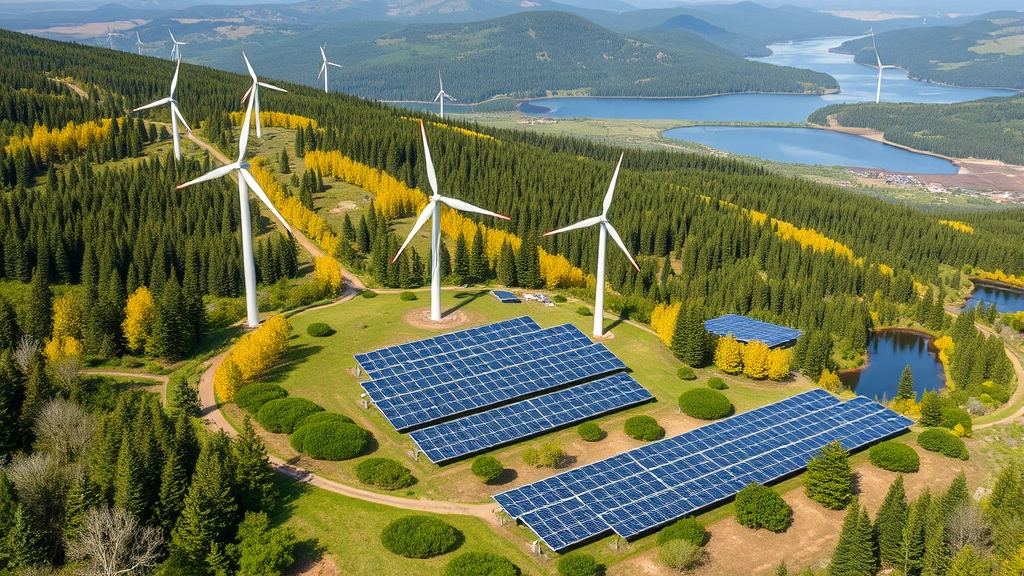
Research from UNEP environmental assessment programs indicates that technological innovation alone cannot achieve required environmental targets without parallel transformation of economic institutions, consumption patterns, and governance structures. Technology enables transition but cannot substitute for fundamental changes in how economies value and account for natural capital.
Pathways to Genuine Economy-Ecosystem Balance
Optimistic assessment of technology’s potential must be tempered by realistic understanding of implementation constraints. Genuine improvement in economy-ecosystem balance requires technology deployed within transformed economic frameworks that:
- Account for natural capital in national accounting systems, making environmental degradation visible in GDP calculations and corporate balance sheets
- Price environmental externalities through carbon pricing, ecosystem service payments, and extended producer responsibility mechanisms that align economic incentives with ecological outcomes
- Restructure ownership to align stakeholder interests with long-term sustainability, moving beyond shareholder primacy toward stakeholder governance
- Implement technological solutions at scale, with critical environment technicians deploying monitoring, efficiency, and circular economy technologies supported by institutional commitment
- Govern technology development to ensure innovations genuinely serve environmental objectives rather than merely greenwashing existing practices
The Ecorise Daily Blog documents numerous cases where this integrated approach generates superior outcomes. Companies that combine technological efficiency improvements with genuine environmental commitment, supported by economic incentive structures rewarding sustainability, achieve profitability while reducing environmental impact.
Academic research from Ecological Economics journal demonstrates that economy-ecosystem balance emerges not from technology alone, but from technology integrated with economic reform, institutional change, and cultural shift toward recognizing ecological limits. Technological capability exists; implementation remains constrained by institutional resistance and misaligned incentives.
FAQ
Can technology alone solve the economy-ecosystem imbalance?
No. Technology is necessary but insufficient. Even optimal technological solutions cannot overcome misaligned economic incentives, institutional structures that externalize environmental costs, or consumption patterns exceeding planetary boundaries. Technology enables transition but must operate within reformed economic systems that value natural capital appropriately.
What is the role of critical environment technicians in technology deployment?
Critical environment technicians implement, maintain, and optimize environmental technologies. They work at the intersection of environmental science and engineering, translating technological potential into practical reality. Their experience reveals both technology’s genuine benefits and real-world constraints that theoretical analyses often overlook.
Which technologies show the most promise for economy-ecosystem balance?
Renewable energy, circular economy technologies, environmental monitoring systems, and energy efficiency solutions demonstrate genuine potential when deployed at scale. However, no single technology category provides complete solutions; integrated approaches combining multiple technologies with economic and institutional reform generate superior outcomes.
How do economic incentives affect technology adoption?
Economic incentives are often decisive. Technologies that reduce costs while improving environmental outcomes achieve rapid adoption. However, when economic incentives misalign with ecological outcomes—as with fossil fuel subsidies or carbon offset markets lacking integrity—even superior technologies struggle for adoption.
What prevents faster technology deployment for environmental improvement?
Barriers include institutional inertia, regulatory capture by incumbent industries, misaligned incentive structures, capital constraints in developing economies, and the hidden costs of technology implementation beyond equipment expenses. These systemic obstacles often prove more significant than technological limitations.
Can economic growth decouple from environmental degradation through technology?
Relative decoupling (reducing environmental impact per unit of GDP) has been demonstrated. Absolute decoupling (reducing total environmental impact while increasing GDP) remains largely undemonstrated at required scales. Technology enables efficiency improvements but cannot overcome growth in economic activity exceeding efficiency gains.


