
How Do Ecosystems Impact GDP? Economist Insights
The relationship between ecosystems and gross domestic product represents one of the most critical—yet frequently overlooked—dimensions of modern economic analysis. Traditional GDP measurements capture market transactions and industrial output, yet they systematically exclude the foundational services that natural systems provide to human economies. From pollination and water filtration to climate regulation and nutrient cycling, ecosystems generate trillions of dollars in economic value annually. This disconnect between ecological health and economic accounting has created a fundamental blind spot in policy-making, one that economists and environmental scientists are now racing to address.
Understanding how ecosystems impact GDP requires moving beyond conventional economic frameworks. Natural capital—the stock of environmental assets including forests, wetlands, fisheries, and mineral deposits—functions as the ultimate source of all economic activity. When ecosystems degrade, GDP may initially appear stable or even grow through extractive industries, yet this growth masks the depletion of underlying assets. This paradox reveals a critical truth: economies that destroy their ecological foundations are not truly prospering, they are merely converting natural wealth into temporary financial gains while accumulating massive ecological debts.
The Natural Capital Foundation of Economic Systems
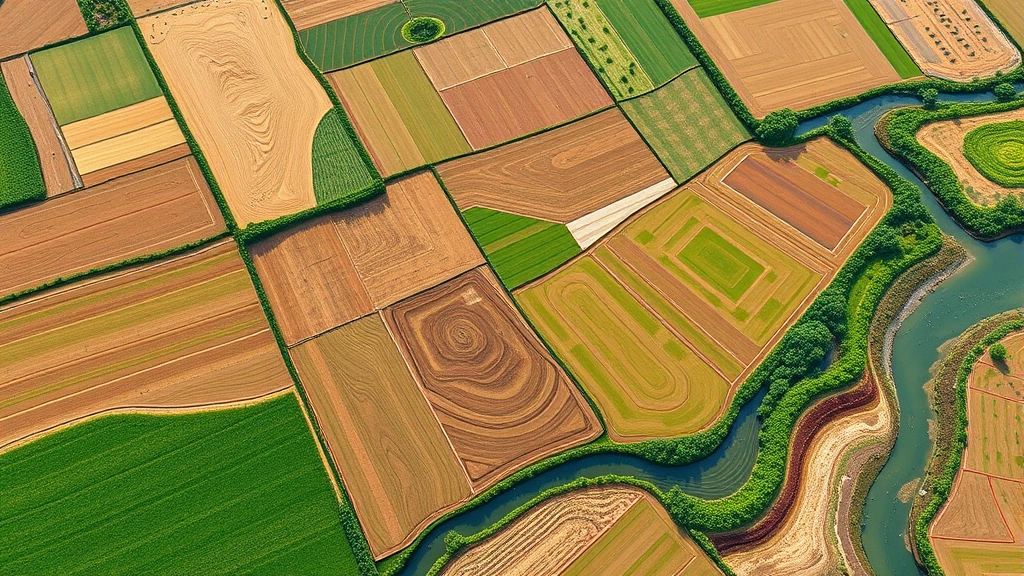
Ecosystems function as the fundamental infrastructure upon which all economic activity depends. This concept, termed natural capital, encompasses renewable resources (forests, fisheries, agricultural land) and non-renewable resources (mineral deposits, fossil fuels) alongside the regulatory services that ecosystems provide without direct human intervention. The World Bank estimates that natural capital represents approximately 26% of total wealth in low-income countries, yet this proportion receives minimal attention in policy discussions dominated by financial and manufactured capital.
Traditional economic models treat nature as either infinite or infinitely substitutable with human-made capital. This assumption has driven centuries of unsustainable resource extraction. However, ecological economics—a heterodox school of thought gaining traction among mainstream economists—recognizes that certain ecosystem functions are irreplaceable. Photosynthesis cannot be substituted with technology. Soil formation cannot be manufactured. The nitrogen cycle cannot be replicated in laboratories. These biophysical realities impose hard constraints on economic expansion, constraints that conventional GDP accounting entirely ignores.
The distinction between weak and strong sustainability illuminates this tension. Weak sustainability assumes that natural capital can be replaced by produced capital—that losing a forest is acceptable if the timber revenue finances industrial development. Strong sustainability recognizes critical natural capital thresholds beyond which substitution becomes impossible. Maintaining ecosystem function requires preserving these thresholds, which means certain natural systems cannot be liquidated regardless of short-term economic returns.
- Natural capital provides 40-60% of global GDP through ecosystem services in developing economies
- Wetland loss eliminates flood protection worth billions annually
- Pollinator decline threatens agricultural systems producing one-third of global food
- Mangrove destruction removes coastal protection valued at trillions
Ecosystem Services and Economic Valuation
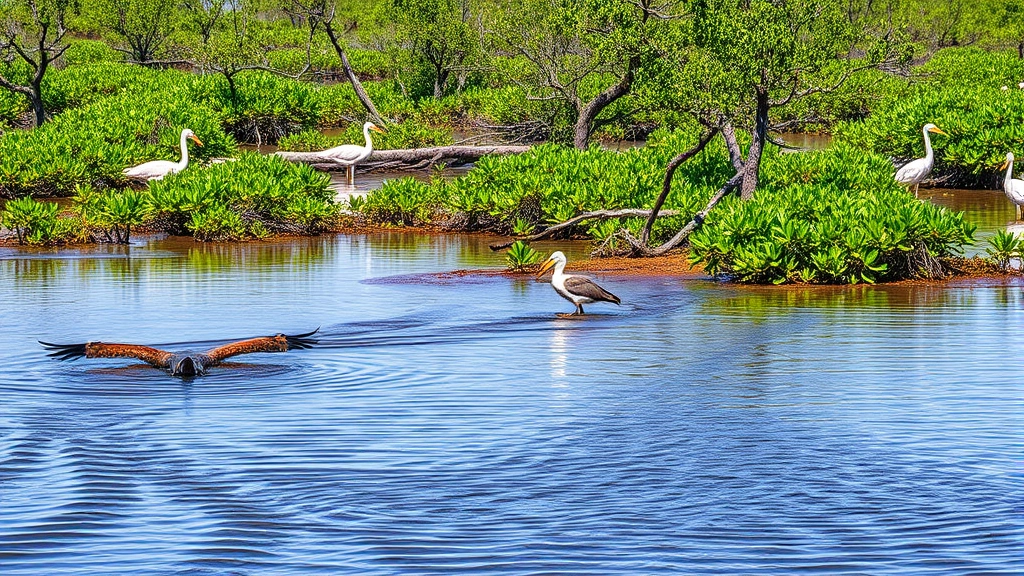
Ecosystem services—the benefits humans derive from natural systems—can be categorized into provisioning services (food, water, materials), regulating services (climate, water purification, pollination), supporting services (nutrient cycling, soil formation), and cultural services (recreation, spiritual value, scientific knowledge). Each category generates measurable economic value, yet most remain completely absent from national accounts.
A landmark 1997 study published in Nature estimated global ecosystem services at $33 trillion annually, a figure that dwarfed global GDP at the time. While subsequent analyses have refined these estimates, all reach similar conclusions: ecosystem services generate economic value vastly exceeding the direct market value of extracted resources. When you reduce your carbon footprint, you contribute to preserving climate regulation services worth thousands of dollars per person annually.
Pollination services alone represent $15-20 billion in annual global agricultural value. These services depend entirely on wild pollinator populations—bees, butterflies, birds, bats—whose habitats are rapidly disappearing. The economic impact of pollinator decline extends beyond agriculture into pharmaceutical production, textile manufacturing, and food security. Yet this value never appears in GDP accounts, creating perverse incentives that favor habitat destruction over preservation.
Water purification services provide another compelling example. Natural wetlands and forests filter water, removing contaminants that would otherwise require expensive industrial treatment. Destroying these systems forces governments and industries to build water treatment infrastructure costing billions. The economic calculation seems straightforward: preserve wetlands or build treatment plants. Yet GDP accounting makes wetland destruction look profitable (through timber sales) while wetland preservation appears to generate no economic benefit.
Explore how greenhouse gas emissions connect to ecosystem degradation for deeper insights into climate-ecosystem-economy linkages. The relationship becomes clearer when examining carbon sequestration services, where forests absorb atmospheric carbon dioxide, preventing climate destabilization. This service generates enormous economic value by avoiding future climate damage, yet receives zero valuation in conventional GDP.
Biodiversity Loss and GDP Consequences
Biodiversity represents the genetic library underlying all ecosystem functions. Species extinction reduces this library, degrading ecosystem resilience and productive capacity. The current extinction rate—100 to 1,000 times above background levels—represents an unprecedented assault on natural capital. Economic analysis reveals that this biodiversity loss imposes massive costs on human economies.
Genetic resources for agriculture, medicine, and biotechnology depend entirely on wild biodiversity. Approximately 25% of pharmaceutical drugs contain active ingredients derived from rainforest plants, yet less than 1% of tropical plants have been screened for medicinal properties. Destroying rainforests eliminates potential medicines before they can be discovered, representing an incalculable loss of future economic value. Similar patterns emerge across agriculture, where crop wild relatives provide genetic traits essential for breeding disease-resistant and climate-adapted varieties.
Ecosystem resilience—the capacity to recover from disturbances—decreases as biodiversity declines. This creates economic vulnerability. Monoculture agricultural systems, while appearing efficient in the short term, prove catastrophically fragile when pests or diseases emerge. The Irish Potato Famine, caused by pathogen attack on genetically uniform crops, killed one million people and triggered mass emigration. Modern agricultural systems face similar risks. Maintaining genetic diversity in wild crop relatives provides insurance against future food system collapse.
Industrial fisheries provide a concrete case study. Overfishing has collapsed numerous fish stocks, destroying multi-billion-dollar industries in the process. The Grand Banks cod fishery, which sustained Newfoundland’s economy for centuries, collapsed in the 1990s due to unsustainable harvesting. Thousands of jobs disappeared, communities devastated, and the ecosystem remains severely degraded decades later. This represents pure economic loss—resources depleted, livelihoods destroyed, ecosystem services eliminated. Yet this collapse was entirely predictable through basic ecological principles that economists ignored.
Climate Systems and Economic Stability
Climate represents perhaps the most critical ecosystem service for economic stability. Stable climate systems regulate temperature, precipitation patterns, and extreme weather frequency—prerequisites for agricultural productivity, infrastructure reliability, and human settlement patterns. Climate destabilization imposes enormous economic costs while appearing to generate short-term gains through fossil fuel extraction and carbon-intensive industries.
The Stern Review on the Economics of Climate Change, commissioned by the UK government, estimated that climate change could reduce global GDP by 5-20% permanently if left unaddressed. More recent analyses suggest even larger impacts when accounting for cascading ecological failures, resource conflicts, and migration pressures. These costs dwarf the expense of transitioning to renewable energy systems. Yet climate destabilization continues because the economic system fails to price carbon emissions appropriately.
Forests function as critical climate regulators through carbon sequestration and evapotranspiration—the process by which forests release water vapor that influences regional precipitation patterns. Amazon deforestation reduces rainfall across agricultural regions thousands of kilometers away, threatening food production across South America. This represents a massive negative externality—a cost imposed on distant economies without compensation. The rancher clearing forest for cattle pasture gains private profit while imposing climate costs on global society.
Insurance markets provide one indicator of climate risk perception. Insurance premiums for extreme weather events have increased exponentially over recent decades, reflecting growing recognition that climate destabilization increases economic risk. Yet this risk remains largely invisible in GDP accounting, allowing governments and corporations to pursue climate-destabilizing activities while appearing economically rational.
Consider exploring renewable energy for homes as one mechanism for reducing climate impact while supporting economic transition toward sustainability. Individual actions, multiplied across millions of households, create market signals that accelerate the transition away from fossil fuels.
Agricultural Productivity and Soil Health
Agricultural systems depend entirely on soil health, yet soil degradation represents one of the most economically destructive yet invisible ecological crises. Soil formation occurs at rates of inches per century, while erosion removes topsoil at rates of feet per decade in many regions. This represents a massive depletion of natural capital that appears nowhere in agricultural GDP calculations.
Industrial agriculture maximizes short-term yields through intensive tillage, monoculture cropping, and synthetic chemical inputs. This approach depletes soil organic matter, reduces microbial communities, compacts soil structure, and increases erosion vulnerability. Yields remain high temporarily through chemical substitution, yet underlying soil capital steadily declines. When soil degradation becomes severe enough to impact yields, the damage often proves irreversible within human timescales.
The economics of this system prove perverse. Farmers who practice soil-conserving agriculture—crop rotation, reduced tillage, cover cropping, integrated pest management—incur higher labor costs and lower short-term yields. They receive no market premium for maintaining soil health. Farmers who mine soil capital through intensive monoculture maximize short-term profits. Economic rationality, as conventionally defined, encourages soil destruction.
Soil also functions as a massive carbon reservoir. Healthy soils contain more than twice the carbon in the atmosphere, stored in organic matter and microbial biomass. Soil degradation releases this carbon as CO2, accelerating climate change. This represents another massive externality—soil mining contributes to climate destabilization while generating no economic compensation for society.
Regenerative agriculture offers an alternative pathway that rebuilds soil health while maintaining productivity. However, transitioning to these systems requires upfront investments and yield reductions during the transition period. Without economic policies that value soil health and carbon sequestration, farmers lack financial incentives to make this transition despite the massive long-term economic benefits.
Water Systems and Economic Resilience
Freshwater systems provide essential services for agriculture (70% of withdrawals), industry (19%), and human consumption (11%). Yet water systems face unprecedented stress from overextraction, pollution, and climate change. Groundwater aquifers that took millennia to fill are being drained in decades. Rivers no longer reach the ocean. Lakes evaporate entirely. These represent catastrophic depletions of natural capital with enormous economic implications.
The Aral Sea crisis provides a historical example of water system collapse. Soviet-era irrigation projects diverted water from the Aral Sea to grow cotton, transforming one of the world’s largest lakes into a desiccated basin. Fisheries worth hundreds of millions collapsed. Regional climate became more extreme. Soil salinization destroyed agricultural productivity. The economic losses vastly exceeded any gains from cotton production, yet these losses appeared nowhere in Soviet GDP accounting.
Groundwater depletion follows similar patterns globally. The Ogallala Aquifer, which irrigates vast agricultural regions across the American Great Plains, is being depleted at unsustainable rates. When this aquifer becomes exhausted—a prospect within decades at current extraction rates—agricultural productivity across multiple states will collapse. The economic consequences will be devastating, yet current policy treats groundwater as an infinitely renewable resource.
Watershed protection provides another critical ecosystem service. Forests and wetlands in watersheds filter water, regulate flow, reduce flooding, and recharge groundwater. Destroying these systems requires expensive infrastructure investments to replace lost services. New York City, recognizing this principle, invested billions in watershed protection rather than building water treatment facilities—a clear economic calculation favoring ecosystem preservation.
When considering how to save energy at home, water conservation emerges as a complementary priority. Energy-intensive water treatment and heating represent major household expenses; reducing consumption decreases both energy use and water stress simultaneously.
Integrating Ecosystems into Economic Measurement
Reforming economic measurement to account for ecosystem services represents a critical policy frontier. Several approaches have emerged to address GDP’s ecological blindness. Green GDP adjusts conventional GDP by subtracting resource depletion and environmental damage. Natural capital accounting creates balance sheets that track ecosystem assets alongside financial and produced capital. Genuine Progress Indicator (GPI) adjusts GDP for environmental and social factors omitted from conventional accounting.
These alternative metrics reveal striking divergences from conventional GDP. Countries appearing to experience robust economic growth often show stagnant or declining genuine progress when ecosystem degradation is properly accounted for. Indonesia, for example, experienced rapid GDP growth during the 1990s driven largely by forest conversion and resource extraction. Yet accounting for forest loss and soil degradation revealed that genuine economic progress was minimal or negative.
The World Bank has pioneered natural capital accounting methodologies, developing frameworks that countries can adopt to track ecosystem assets. Several nations now produce comprehensive natural capital accounts alongside conventional national accounts. This represents genuine progress toward economic measurement that reflects biophysical reality.
However, integrating ecosystem accounting into policy remains challenging. GDP retains powerful institutional momentum. International organizations, corporations, and governments have invested decades in GDP-based metrics and comparisons. Transitioning to alternative metrics requires overcoming entrenched interests and institutional inertia. Additionally, political leaders often prefer metrics that show their policies in favorable light; GDP’s blindness to environmental degradation provides convenient cover for ecologically destructive development.
Carbon pricing mechanisms offer one practical approach to ecosystem integration. By assigning prices to greenhouse gas emissions and other environmental impacts, markets can internalize externalities. This creates economic incentives for ecosystem preservation rather than destruction. However, current carbon prices remain far below the true social cost of emissions, limiting their effectiveness.
Biodiversity offsetting represents another emerging mechanism. Companies that damage ecosystems can compensate by funding ecosystem restoration elsewhere. While controversial—critics argue this creates a license to destroy nature—biodiversity offsetting at least acknowledges that ecosystem destruction imposes real economic costs requiring compensation.
The transition toward circular economy models offers additional promise. By designing production systems that minimize waste and resource depletion, circular economies reduce pressure on ecosystems while potentially increasing efficiency and profitability. However, circular economy transitions require major investments and structural changes that current economic incentives do not encourage.
International policy frameworks increasingly recognize ecosystem-economy linkages. The Convention on Biological Diversity, UN Sustainable Development Goals, and emerging nature-based solutions initiatives all incorporate ecosystem valuation into policy frameworks. The United Nations Environment Programme has emerged as a leader in promoting ecosystem-inclusive economic approaches globally.
Explore plastic bottle recycling approaches to understand how circular economy principles operate at individual and household scales. Scaling these principles economy-wide requires systemic changes in production, consumption, and waste management systems.
Academic research increasingly documents ecosystem-economy relationships through empirical analysis. Ecological Economics, the leading journal in this field, publishes hundreds of studies annually documenting how ecosystem degradation reduces economic productivity. Research from environmental economics institutes across universities worldwide demonstrates that ecosystem preservation typically proves more economically rational than extraction, when all costs and benefits are properly calculated.
The International Union for Conservation of Nature has developed comprehensive frameworks for valuing ecosystem services across diverse contexts. These frameworks enable policymakers to make informed decisions about land use, resource extraction, and conservation investments based on complete economic accounting.
Sustainable fashion represents another emerging area where ecosystem impacts receive economic recognition. Sustainable fashion brands increasingly market their products based on reduced ecosystem impact, creating market demand for environmentally conscious production. This demonstrates how consumer awareness of ecosystem-economy linkages can drive market transformation.
FAQ
How much economic value do ecosystems provide annually?
Global ecosystem services generate estimated economic value between $33-125 trillion annually, depending on valuation methodology. This vastly exceeds global GDP, yet most of this value appears nowhere in national accounts. Specific services vary: pollination ($15-20 billion), water purification ($50+ billion), climate regulation (trillions), and soil formation (immeasurable over human timescales).
Why doesn’t traditional GDP accounting include ecosystem value?
GDP measures only market transactions and government spending. Ecosystem services often lack explicit prices—no one bills you for pollination or climate regulation. Additionally, these services appear infinitely available, making their depletion invisible until collapse occurs. Reforming accounting systems requires overcoming institutional inertia and political resistance from interests benefiting from current arrangements.
Can economic growth and ecosystem preservation coexist?
Yes, but only if growth is decoupled from resource extraction and environmental degradation. Circular economy models, renewable energy systems, and ecosystem restoration create economic value while improving environmental conditions. However, this requires abandoning the assumption that growth requires increasing resource consumption—a fundamental shift in economic thinking.
What percentage of GDP depends on ecosystem services?
Estimates suggest 40-50% of global GDP depends critically on ecosystem services, with some sectors approaching 100% dependency. Agriculture, forestry, fisheries, tourism, and pharmaceutical industries all depend entirely on ecosystem functions. Climate-dependent sectors like agriculture, energy, and infrastructure face enormous risks from ecosystem degradation.
How do ecosystem collapses impact national economies?
Ecosystem collapses typically trigger economic crises. Fishery collapse destroys industries and livelihoods. Soil degradation reduces agricultural productivity and forces migration. Water system failure creates resource conflicts and humanitarian crises. Forest loss destabilizes climate and increases disaster risks. These impacts often prove irreversible within human timescales, representing permanent economic loss.
What policy changes would best integrate ecosystem value into economics?
Natural capital accounting, carbon pricing, biodiversity offsetting, payment for ecosystem services, and reformed GDP measurement all contribute. However, the most fundamental change would be recognizing that economies are subsystems of finite ecosystems, not the reverse. This requires rethinking growth models and transitioning toward steady-state economics that operates within ecological limits.


