
Is GDP Growth Sustainable? Economist Insights on Economic Development and Environmental Limits
The question of whether Gross Domestic Product (GDP) growth can continue indefinitely has become central to contemporary economic policy debates. For decades, policymakers have treated GDP expansion as the primary measure of national success, yet mounting evidence suggests that traditional growth paradigms may be fundamentally incompatible with planetary boundaries and long-term ecological stability. Leading economists, environmental scientists, and policy institutions are increasingly questioning whether we can decouple economic growth from resource consumption and environmental degradation.
This analytical exploration examines the tension between conventional economic growth models and the realities of finite natural systems. By synthesizing insights from ecological economics, environmental accounting, and mainstream economic theory, we can better understand the sustainability challenges facing modern economies and the potential pathways toward more resilient economic systems.
The GDP Growth Paradox: Measuring What Matters
Gross Domestic Product has dominated economic measurement for over seven decades, yet it remains a fundamentally flawed metric for national wellbeing. GDP counts economic activity regardless of whether it generates genuine improvement in human welfare or environmental quality. A car accident that injures people and destroys property increases GDP through medical treatment and vehicle replacement. Pollution remediation counts as economic growth. Deforestation registers as income when trees are harvested, with no accounting for lost ecosystem services.
This accounting paradox reveals a critical flaw in how we measure economic success. GDP growth can occur simultaneously with declining environmental health, deteriorating social conditions, and reduced natural capital. Economists like Diane Coyle and Kate Raworth have documented how GDP expansion often correlates with increased inequality, degraded ecosystems, and compromised public health in wealthy nations.
The historical context matters significantly. When GDP was adopted as a primary metric during the post-World War II reconstruction period, natural resources seemed abundant and environmental carrying capacity appeared limitless. Today, we understand that Earth operates as a closed system with finite regenerative capacity. The biophysical reality of planetary boundaries fundamentally contradicts the assumption of infinite growth within a finite system.
Consider how different nations experience GDP growth: a developing economy expanding manufacturing capacity generates GDP growth that may lift people from poverty—a genuine welfare improvement. Conversely, a wealthy nation’s GDP growth through increased consumption of disposable goods, while depleting aquifers and generating waste, represents economic activity disconnected from human flourishing or ecological health.
Planetary Boundaries and Economic Limits
Research published by the Stockholm Resilience Centre identifies nine critical planetary boundaries within which humanity can safely operate. Currently, we have transgressed at least six of these boundaries: climate change, biodiversity loss, land-system change, freshwater depletion, biogeochemical flows, and chemical pollution. These transgressions represent the biophysical limits to economic expansion on a finite planet.
The concept of planetary boundaries directly challenges the sustainability of conventional GDP growth. When economic expansion requires exceeding ecological thresholds, growth becomes, by definition, unsustainable. Continuing to expand resource extraction and waste generation beyond planetary boundaries guarantees eventual economic contraction through resource depletion and ecosystem collapse.
The World Bank has begun incorporating natural capital accounting into development frameworks, recognizing that conventional GDP ignores the depletion of forests, fisheries, minerals, and fossil fuel reserves. When adjusted for resource depletion and environmental degradation, many nations’ apparent economic growth disappears entirely. Some resource-rich developing nations actually experience negative adjusted net savings when environmental costs are included.
Climate change exemplifies how GDP growth can mask deteriorating conditions. Global GDP expanded roughly 3-4 percent annually over recent decades while atmospheric CO2 concentrations reached unprecedented levels. The economic activity generating GDP growth—primarily fossil fuel combustion—simultaneously created the climate crisis. Future economic costs from climate impacts will dwarf present GDP gains, representing a catastrophic misallocation of resources and a transfer of costs to future generations.
Decoupling Myth: Separating Growth from Environmental Impact
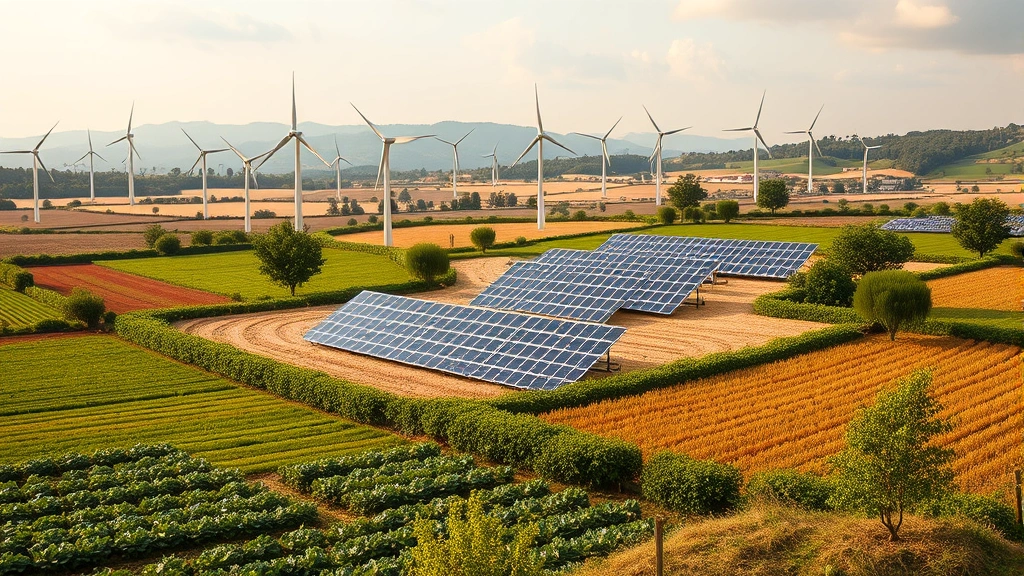
Policymakers frequently invoke “decoupling” as the solution to sustainability concerns—the notion that economies can continue growing while reducing environmental impact. Relative decoupling (reducing environmental impact per unit of GDP) has occurred in some wealthy nations through efficiency improvements and shifting to service economies. However, absolute decoupling (reducing total environmental impact while expanding GDP) remains largely theoretical at the global scale.
Analysis from the United Nations Environment Programme demonstrates that while some nations achieved temporary absolute decoupling, global resource extraction, material consumption, and waste generation continue accelerating. Wealthy nations appear to decouple domestically by outsourcing material-intensive production to developing economies. Global supply chains obscure true environmental costs through accounting frameworks that ignore embodied emissions and resource depletion in imported goods.
The rebound effect further undermines decoupling narratives. When efficiency improvements reduce the effective cost of consuming a resource, demand typically increases, negating environmental gains. More fuel-efficient vehicles encourage additional driving. Energy-efficient appliances enable increased electricity consumption. This fundamental economic principle suggests that technological efficiency alone cannot achieve absolute decoupling without demand-side changes.
Thermodynamic constraints also limit decoupling potential. Every economic activity requires energy and material throughput. Efficiency improvements face physical limits governed by the laws of thermodynamics. Information economy growth still depends on resource-intensive infrastructure—data centers consume enormous electricity quantities. Renewable energy transitions require massive material inputs for infrastructure construction. Complete decoupling would require violating physical laws, making it impossible rather than merely difficult.
Circular Economy and Resource Efficiency
The circular economy framework proposes redesigning production and consumption systems to minimize waste and maximize resource cycling. Rather than linear take-make-dispose models, circular approaches aim for closed-loop systems where materials cycle continuously. This represents genuine progress toward sustainability compared to current linear extraction models.
However, circular economy advocates sometimes overstate its capacity to support unlimited growth. Complete circularity remains technically impossible—every recycling cycle degrades material quality, requires energy inputs, and generates some waste. Thermodynamic limitations mean that circular systems function best at smaller scales with lower throughput. A truly circular global economy supporting 10 billion people at wealthy-world consumption levels remains physically impossible.
Effective circular economy implementation does provide real environmental benefits. Reducing carbon footprint through circular design principles, extending product lifecycles, and minimizing virgin resource extraction can substantially decrease environmental impact. Yet circular economy alone cannot justify unlimited economic expansion. Rather, it functions as a necessary but insufficient component of sustainable economic transformation.
The most promising applications combine circular principles with reduced overall throughput. Manufacturing fewer products with longer lifespans, designed for repair and material recovery, represents genuine progress. However, this model contradicts growth-dependent economic structures that require perpetually expanding consumption. Reconciling circular economy with growth models requires confronting fundamental tensions between expansion and sustainability.
Alternative Economic Indicators Beyond GDP
Recognition of GDP’s inadequacies has spawned numerous alternative metrics attempting to measure genuine progress. The Genuine Progress Indicator (GPI) adjusts GDP for environmental degradation, social costs, and non-market benefits. Bhutan’s Gross National Happiness framework prioritizes wellbeing and environmental conservation over economic expansion. The OECD’s Better Life Index enables citizens to weight diverse wellbeing dimensions according to personal values.
New Zealand, Scotland, and Finland have adopted wellbeing frameworks as central policy guides, moving beyond GDP fixation. These approaches measure progress through health outcomes, educational attainment, environmental quality, social cohesion, and subjective wellbeing alongside economic indicators. Early evidence suggests these frameworks better correlate with actual human flourishing than GDP growth alone.
Ecological economics journals increasingly publish research demonstrating that beyond moderate income thresholds (approximately $75,000-$95,000 annually for individuals in wealthy nations), additional GDP growth correlates poorly with wellbeing improvements. Meanwhile, environmental degradation from growth acceleration continues unabated. This empirical reality suggests that wealthy economies have already exceeded optimal growth thresholds from both ecological and wellbeing perspectives.
The World Bank’s Wealth of Nations framework incorporates natural capital, human capital, and social capital alongside financial capital in comprehensive wealth accounting. This approach reveals that many developing nations have experienced apparent GDP growth while their true wealth declined due to natural capital depletion. Comprehensive wealth accounting provides more honest assessment of long-term economic sustainability.
Policy Frameworks for Sustainable Prosperity
Transitioning to sustainable economic models requires comprehensive policy transformation across multiple domains. Carbon pricing mechanisms, whether through taxation or cap-and-trade systems, can incorporate environmental costs into economic decision-making. However, carbon prices must reflect genuine climate damages—currently estimated at $100-$200+ per ton of CO2—to effectively redirect investment.
Regenerative agriculture and forestry represent economic activities that simultaneously improve environmental conditions while generating income. Supporting these sectors through subsidy reallocation and procurement policies can redirect economic activity toward genuine sustainability. Reducing greenhouse gas emissions through agricultural transformation creates multiple co-benefits including soil health, water retention, biodiversity, and rural livelihoods.
Wealth redistribution policies address the reality that growth-dependent models concentrate wealth while externalizing environmental costs onto vulnerable populations. Progressive taxation, strengthened labor protections, and universal basic services ensure that economic transitions don’t deepen inequality. Wealthy nations have sufficient resources to provide high living standards for all citizens at substantially lower environmental impact than current consumption patterns.
Renewable energy infrastructure represents essential investment requiring massive capital reallocation from fossil fuel systems. However, renewable transition alone cannot support current consumption trajectories in wealthy nations. Energy descent—reducing total energy consumption while transitioning to renewable sources—represents a more realistic pathway than maintaining growth while switching fuels.
Regulatory frameworks must establish ecological red lines that cannot be transgressed regardless of economic benefits. Protecting critical ecosystems, limiting resource extraction rates to regeneration speeds, and establishing strict pollution limits represent non-negotiable constraints within which economic activity occurs. This inversion of current frameworks—where environmental protection bends to economic demands—places ecological stability as foundational to economic viability.

Corporate and Individual Action
While systemic policy change remains essential, corporate and individual actions contribute meaningfully to sustainability transitions. Effective ways to save energy at home reduce personal environmental impact while decreasing household expenses. Behavioral shifts toward lower-consumption lifestyles in wealthy nations represent both environmental necessity and often improved wellbeing through reduced stress, enhanced community connection, and alignment between values and actions.
Corporate sustainability reporting and science-based targets increasingly embed environmental constraints into business planning. Companies recognizing that long-term viability requires operating within planetary boundaries implement genuine decoupling strategies through efficiency, circular design, and reduced throughput. However, individual corporate action cannot substitute for systemic transformation—greenwashing remains prevalent, and competitive pressures reward cost-cutting over sustainability absent regulatory frameworks.
Sustainable fashion brands demonstrate that consumer preferences can shift toward lower-impact options, though scaling these models requires addressing fundamental production economics. Similarly, community gardens and local food systems build resilience while reducing transportation emissions and reconnecting people with food production realities.
Investment redirection toward regenerative enterprises, renewable energy, and circular economy businesses creates economic opportunities aligned with sustainability. Divestment from fossil fuels, deforestation, and extractive industries removes capital from unsustainable sectors. These financial flows, multiplied across millions of individual and institutional investors, can accelerate economic restructuring toward sustainability.
FAQ
Can economies grow indefinitely within planetary boundaries?
No. Physical laws governing closed systems preclude infinite expansion of material throughput. Wealthy economies have already exceeded sustainable resource consumption levels. Future growth in wealthy nations must come from improved wellbeing and quality of life rather than material expansion—what economists call “qualitative growth” versus quantitative expansion.
Won’t sustainable economics harm employment and livelihoods?
Transition challenges require proactive management, but sustainable economics generates substantial employment opportunities in renewable energy, restoration ecology, regenerative agriculture, healthcare, education, and local services. Just transition policies ensuring worker support, retraining, and income security during economic restructuring are essential. Research suggests that green economy transitions can create more jobs than fossil fuel systems while improving working conditions.
How do developing nations balance growth and sustainability?
Developing economies face genuine dilemmas: populations need improved living standards and infrastructure, yet replicating wealthy nations’ consumption patterns would exceed planetary boundaries catastrophically. The solution involves “leapfrogging” to sustainable technologies, building renewable infrastructure directly rather than replacing fossil systems, supporting regenerative agriculture, and pursuing prosperity models emphasizing wellbeing and equity rather than pure GDP expansion. Wealthy nations must support this transition through technology transfer, climate finance, and debt cancellation.
What role does technology play in sustainable growth?
Technology enables efficiency improvements and renewable transitions but cannot overcome thermodynamic limits or substitute for consumption reduction. Efficiency gains alone historically trigger rebound effects increasing total consumption. Technology must combine with demand-side changes—reduced consumption in wealthy nations, equitable distribution of resources, and economic structures not dependent on perpetual growth.
Are alternative economic indicators ready to replace GDP?
Multiple comprehensive frameworks exist and have been implemented by forward-thinking governments. However, replacing GDP requires political will to abandon growth-focused narratives and accept that wealthy nations have sufficient prosperity and should focus on wellbeing and sustainability rather than expansion. The technical frameworks exist; the primary barrier remains political and cultural commitment to transformation.


