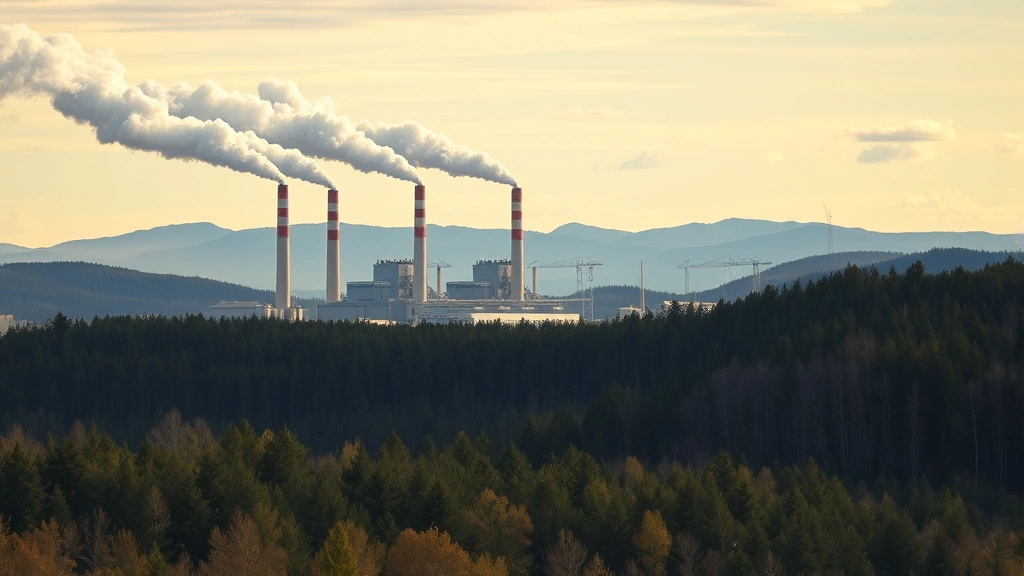
How Do Companies Impact Ecosystems? Expert Insight
Corporate operations represent one of the most significant forces shaping global ecosystems today. From extractive industries that remove finite resources to manufacturing facilities that discharge pollutants into waterways, companies directly and indirectly influence biodiversity, soil health, water quality, and atmospheric composition. Understanding these impacts requires examining the complex relationships between business activities and natural systems through an ecological economics lens.
The scale of corporate influence on ecosystems is staggering. Approximately 60% of global ecosystem services degradation can be traced to industrial and commercial activities, according to research from the United Nations Environment Programme. Yet many companies remain disconnected from the ecological costs embedded in their supply chains, production processes, and end-of-life product management. This article explores how corporate operations cascade through ecosystems and what emerging frameworks suggest about corporate accountability.
Direct Ecosystem Impacts: Extraction and Land Use
Companies engaged in extractive industries—mining, logging, and fossil fuel extraction—fundamentally alter ecosystem structure and function. A single mining operation can remove millions of tons of overburden, destroying soil profiles that took centuries to develop. This process eliminates habitat for countless species, fragments ecosystems into isolated patches, and initiates erosion cascades that degrade downstream water quality for decades.
Land use conversion by agricultural and forestry companies represents the leading driver of biodiversity loss globally. When companies clear tropical rainforests for cattle ranching or palm oil production, they eliminate the habitat of species found nowhere else on Earth. The Amazon rainforest, which contains approximately 10% of all species on the planet, loses roughly 17% of its original extent to corporate agricultural expansion and resource extraction. This isn’t merely an aesthetic loss—it represents the permanent deletion of genetic libraries that might have yielded pharmaceuticals, food crops, or ecological functions we haven’t yet discovered.
The concept of environment examples in corporate contexts includes the physical footprint of infrastructure. Dams built by hydroelectric companies flood entire valleys, destroying riparian ecosystems and disrupting fish migration patterns. Roads constructed by timber companies fragment forests, enabling poaching and invasive species colonization. Even renewable energy projects, while addressing climate impacts, can create localized ecosystem disruptions through habitat fragmentation and bird mortality.
Soil degradation through industrial agriculture deserves particular attention. Monoculture operations—where companies plant single crop species across vast areas—strip soil of microbial diversity, reduce carbon sequestration capacity, and increase vulnerability to pest outbreaks. Synthetic fertilizer runoff from these operations creates dead zones in coastal waters where rivers meet oceans, as nitrogen and phosphorus trigger algal blooms that consume dissolved oxygen.
Pollution Pathways and Bioaccumulation
Manufacturing facilities emit pollutants through three primary pathways: atmospheric releases, aquatic discharges, and terrestrial deposition. These pathways interact with ecosystem processes in ways that amplify initial impacts through bioaccumulation and biomagnification.
Persistent organic pollutants (POPs) released by chemical manufacturers exemplify this amplification. When a company discharges polychlorinated biphenyls (PCBs) into water, aquatic organisms absorb these lipophilic compounds. As small fish consume contaminated zooplankton and larger fish consume smaller fish, pollutant concentrations increase at each trophic level. Apex predators like eagles, orcas, and polar bears can accumulate concentrations millions of times higher than ambient water levels, leading to reproductive failure, neurological damage, and population collapse.
Heavy metal contamination from industrial operations follows similar bioaccumulation patterns. Mining companies extracting copper, lead, and zinc generate tailings containing these metals. Acid mine drainage—where sulfide minerals in exposed rock oxidize—creates acidic water that mobilizes metals into bioavailable forms. These metals persist in sediments for centuries, continuously contaminating benthic organisms and fish populations.
Pharmaceutical manufacturing represents an emerging pollution concern. Antibiotics and hormones released into waterways by pharmaceutical companies select for antibiotic-resistant bacteria in aquatic environments, creating reservoirs of resistance genes that can transfer to human pathogens. Estrogen-mimicking compounds feminize fish populations in receiving streams, disrupting reproductive success and population demographics.
To understand how these impacts connect to broader environmental systems, reviewing define environment and environmental science frameworks helps contextualize pollution within ecological principles. Pollution isn’t simply a localized problem—it represents a disruption of nutrient cycling, energy flow, and information transfer that characterizes all ecosystems.
Supply Chain Externalities
Many companies externalize environmental costs to suppliers and subcontractors, creating accountability gaps. A clothing manufacturer might contract with textile mills in countries with weak environmental regulations, enabling pollution that would be illegal in the company’s home nation. This geographic separation obscures corporate responsibility while concentrating environmental damage in vulnerable communities.
The concept of supply chain externalities extends to resource extraction at the beginning of production chains. Electronics manufacturers depend on rare earth element mining, which generates radioactive waste and acidic tailings. Cobalt mining for lithium-ion batteries operates under conditions where companies inadequately manage tailings, contaminating groundwater used by surrounding communities. Palm oil companies supplying food manufacturers drive orangutan habitat destruction across Southeast Asia.
Scope 3 emissions—indirect emissions from a company’s value chain—represent the largest climate impact for many corporations yet remain largely unregulated and underreported. A beverage company’s direct emissions from bottling facilities might represent only 5% of total climate impact, with the remaining 95% distributed across agriculture (water usage, pesticide manufacturing), packaging production, transportation, and consumer waste management.
Transparency failures compound these externalities. Companies often lack visibility into their own supply chains beyond tier-one suppliers. A shoe manufacturer might contract with a supplier that subcontracts to smaller factories, which themselves contract with material producers, creating chains five or more links long. At each link, environmental standards potentially degrade.
The sustainable fashion industry attempts to address these supply chain impacts, as explored in our guide to sustainable fashion brands. Companies implementing supply chain transparency and environmental standards demonstrate that alternative models exist, though they remain exceptional rather than normative.
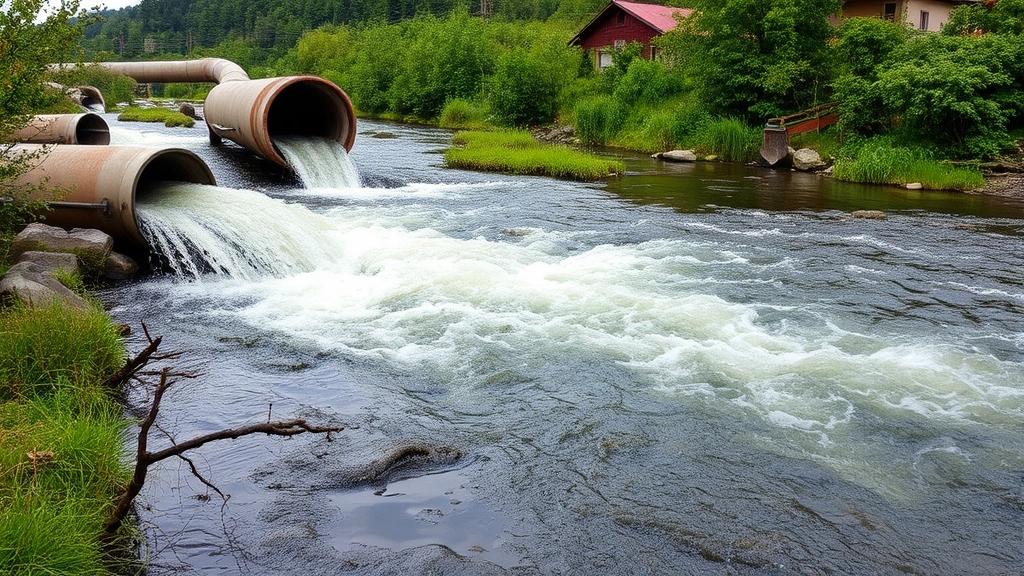
” alt=”Industrial facility with water discharge into river ecosystem”>
Factory discharge pipes releasing treated and untreated water into a flowing river, with visible ecological stress visible in surrounding vegetation and water clarity changes.
Climate Disruption and Cascading Effects
Corporate greenhouse gas emissions represent an ecosystem impact distinct in scale and complexity from localized pollution. When companies burn fossil fuels, emit methane from industrial processes, or drive land use change, they alter the planetary energy balance, triggering cascading ecosystem disruptions.
Climate change manifests in ecosystems through multiple simultaneous stressors. Rising temperatures shift species ranges, creating mismatches where pollinators emerge before flowers bloom or predators arrive before prey populations peak. Altered precipitation patterns create drought stress in some regions and flooding in others. Ocean acidification—caused by atmospheric CO2 absorption—degrades calcifying organisms from pteropods to corals, collapsing food webs that depend on these species.
The World Bank’s environmental research documents how climate impacts disproportionately affect already-stressed ecosystems. Coral reefs stressed by pollution and overfishing show reduced thermal tolerance, making them more vulnerable to bleaching. Forests already fragmented by logging show reduced capacity to migrate in response to shifting climate zones. Wetlands drained for agriculture lose their buffering capacity for extreme precipitation events.
Corporate emissions extend ecosystem impacts across multiple generations. Carbon dioxide persists in the atmosphere for centuries, committing ecosystems to warming even if emissions ceased immediately. This temporal dimension means that current corporate climate impacts will constrain ecosystem function and biodiversity for centuries, representing an intergenerational externality of unprecedented scope.
Strategies to reduce carbon footprint at corporate scales require fundamental business model transformation rather than marginal efficiency improvements. Some companies explore renewable energy adoption, though corporate-scale renewable transitions require addressing intermittency, storage, and grid integration challenges that remain technically and economically complex.
Corporate Measurement and Accountability
Quantifying corporate ecosystem impacts remains methodologically challenging, creating accountability gaps. Environmental accounting frameworks attempt to assign monetary values to ecosystem services, but these valuations remain contested and often underestimate non-substitutable services.
The Natural Capital Protocol, developed collaboratively by environmental organizations and corporations, attempts to standardize ecosystem impact assessment. Companies using this framework identify dependencies on ecosystem services (water provision, pollination, climate regulation) and assess vulnerability to degradation. However, adoption remains voluntary and concentrated among large multinational corporations.
Biodiversity impact assessment frameworks lag behind carbon accounting. While companies increasingly report carbon footprints using standardized methodologies, biodiversity impact quantification remains inconsistent. Some frameworks measure habitat loss in hectares, others track species richness changes, still others assess ecosystem function disruption. This methodological heterogeneity prevents meaningful comparison across companies and sectors.
Third-party certification systems attempt to impose environmental standards on corporate operations. Forest Stewardship Council certification for timber, Marine Stewardship Council certification for fisheries, and Fair Trade certification for agricultural products all incorporate environmental criteria. Yet these certifications cover only a fraction of global production, and their effectiveness remains debated. Some research suggests that certified operations still degrade ecosystems relative to pristine conditions, merely reducing the degradation rate.
Regulatory frameworks vary dramatically across jurisdictions, creating incentives for companies to locate operations in countries with weak environmental enforcement. The Basel Convention restricts hazardous waste trade, yet enforcement remains inconsistent. The Convention on International Trade in Endangered Species restricts trade in threatened species, yet poaching and illegal trade persist. Corporate environmental accountability remains fragmented across multiple overlapping regimes with limited enforcement capacity.
Exploring the blog literature on environmental economics reveals emerging frameworks for ecosystem impact quantification, though consensus remains elusive on methodology and valuation approaches.
Regenerative Business Models
Some companies move beyond minimizing negative impacts toward actively regenerating ecosystem function. Regenerative agriculture companies implement practices—cover cropping, reduced tillage, rotational grazing—that rebuild soil carbon, increase microbial diversity, and enhance water infiltration. These approaches can transform agricultural land from a carbon source to a carbon sink while simultaneously increasing productivity and resilience.
Regenerative forestry operations maintain forest structure and biodiversity while harvesting timber, contrasting sharply with clearcutting monocultures. By retaining diverse age structure and species composition, regenerative forestry preserves habitat connectivity, maintains hydrological function, and sustains carbon storage capacity.
Circular economy business models attempt to eliminate the concept of waste by designing products for disassembly, remanufacturing, and material recovery. Rather than extracting virgin resources, consuming them, and discarding them, circular models recirculate materials through multiple use cycles. This approach reduces extraction pressure on ecosystems while maintaining material flows through economies.
Ecosystem restoration enterprises directly address ecosystem degradation by reconstructing damaged ecosystems. Companies specializing in wetland restoration, oyster reef reconstruction, or riparian forest replanting generate ecosystem services while creating economic value. These models demonstrate that ecosystem restoration can be economically viable, though it typically requires subsidy or premium pricing for ecosystem services.
Corporate engagement with ecosystem restoration remains limited relative to extraction and degradation. The economic incentives favoring extraction over restoration—where companies capture extraction profits while externalizing restoration costs—persist despite growing environmental awareness. Transforming these incentives requires policy intervention through carbon pricing, ecosystem service payments, or regulatory mandates.

” alt=”Restored wetland ecosystem with diverse native vegetation and wildlife habitat”>
Regenerated wetland landscape showing native marsh vegetation, open water channels, and diverse bird and aquatic life, demonstrating ecosystem recovery potential.
FAQ
What are the most damaging corporate activities for ecosystems?
Extractive industries (mining, oil/gas), large-scale agriculture (especially tropical deforestation), and manufacturing with inadequate pollution controls generate the largest ecosystem impacts. Measured by habitat loss, climate forcing, and pollution magnitude, these sectors dominate global ecosystem degradation.
How do companies measure their ecosystem impacts?
Companies use multiple frameworks: carbon footprinting for climate impacts, water footprinting for freshwater depletion, and increasingly, biodiversity impact assessments using habitat loss metrics or species richness measurements. Third-party certifications attempt to standardize these measurements, though methodological inconsistency persists across sectors.
Can companies truly be sustainable?
Sustainability definitions vary widely. Companies can reduce ecosystem damage intensity (impact per unit output) through efficiency improvements and pollution controls. Achieving absolute sustainability—where corporate operations restore rather than degrade ecosystems—remains rare, though regenerative agriculture and ecosystem restoration enterprises demonstrate possibilities.
What role do consumers play in corporate ecosystem impacts?
Consumer demand drives corporate production decisions. However, individual consumer choices operate within constraints set by corporate supply chain decisions, product design, and marketing. Systemic ecosystem impact reduction requires both consumer behavior change and corporate business model transformation, not merely one or the other.
Are environmental regulations sufficient to protect ecosystems?
Current regulations remain inadequate. Many jurisdictions lack comprehensive environmental standards; enforcement capacity remains limited; and regulatory frameworks often permit degradation rather than preventing it. Emerging research suggests that regulations addressing ecosystem function rather than merely pollutant concentrations could improve effectiveness, though implementation remains challenging.


