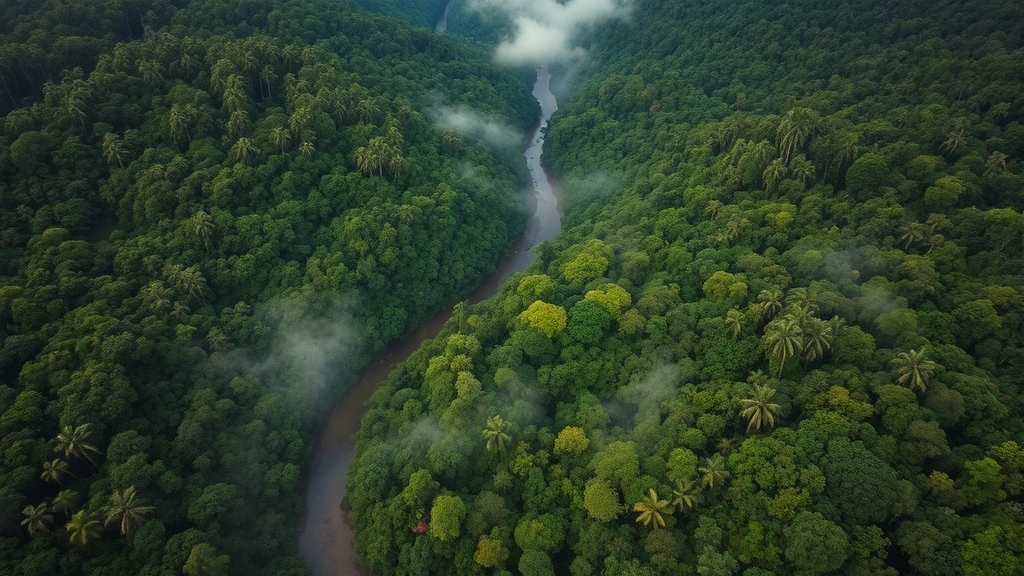
The Role of Ecosystems in Economic Growth: A Comprehensive Study
Ecosystems represent far more than natural landscapes—they are foundational economic assets that generate trillions of dollars in annual value through services we often take for granted. From pollination and water purification to climate regulation and nutrient cycling, healthy ecosystems directly underpin productivity across agriculture, fisheries, tourism, and countless other sectors. Yet conventional economic metrics have historically ignored these critical contributions, treating nature as an infinite resource rather than a finite capital stock requiring active stewardship.
Recent decades have witnessed a fundamental shift in how economists and policymakers understand the relationship between ecological health and economic prosperity. Advanced research from institutions worldwide now demonstrates that ecosystem degradation represents a measurable economic cost—one that often exceeds the short-term gains from exploitative resource extraction. This comprehensive study examines the multifaceted connections between ecosystem services and economic growth, exploring how natural capital drives sustainable development and why ignoring ecological constraints ultimately undermines long-term prosperity.

Understanding Ecosystem Services and Economic Value
Ecosystem services represent the countless benefits that human societies derive from functioning natural systems. The Millennium Ecosystem Assessment, a landmark United Nations initiative, categorized these services into four primary types: provisioning services (food, water, materials), regulating services (climate, water cycle, pollination), supporting services (nutrient cycling, soil formation), and cultural services (recreation, spiritual, educational value). Understanding these categories is essential for grasping how nature directly contributes to economic output.
Consider pollination alone: bees and other pollinators provide a service valued at approximately $15-20 billion annually in the United States, yet this contribution rarely appears in GDP calculations. Similarly, wetlands filter water at costs far below what municipal water treatment facilities require, while mangrove forests protect coastal communities from storms and erosion, reducing infrastructure damage and loss of life. When economists began quantifying these services in monetary terms, the results proved staggering—different types of environments globally provide estimated services worth $125-145 trillion annually.
The challenge lies in translating ecological function into economic language that policymakers understand. Economists employ several methodologies: replacement cost analysis (determining what it would cost to replicate a service artificially), contingent valuation (surveying willingness to pay), and hedonic pricing (inferring value from market prices of related goods). Each approach reveals that ecosystem services represent genuine economic assets—forms of natural capital that generate returns when maintained but impose costs when degraded.

The Economics of Natural Capital
Traditional economics treated economic growth as a function of three factors: labor, manufactured capital, and human capital. This framework overlooked a fourth crucial element: natural capital. Natural capital encompasses all renewable and non-renewable natural resources—forests, fisheries, minerals, fossil fuels, and the ecosystem services these systems provide. Accounting for natural capital fundamentally changes how we evaluate economic performance and sustainability.
The World Bank has pioneered comprehensive natural capital accounting, developing frameworks to measure genuine progress beyond GDP. Their research reveals that many countries reporting GDP growth simultaneously experience declining natural capital stocks—effectively mining their environmental assets for short-term economic gains. A nation harvesting timber faster than forests regenerate, depleting fisheries beyond sustainable yields, or extracting groundwater beyond recharge rates is experiencing economic growth that is fundamentally unsustainable.
Understanding human environment interaction through an economic lens reveals that ecosystem degradation imposes real economic costs. Agricultural productivity declines as soil fertility diminishes from erosion and chemical runoff. Fisheries collapse when overharvesting exceeds reproduction rates. Water scarcity emerges when aquifer depletion outpaces natural recharge. These are not abstract environmental concerns—they represent measurable reductions in productive capacity and future economic potential.
Leading ecological economists argue for valuing natural capital at replacement cost, particularly for ecosystem services without obvious market prices. If a forest provides carbon sequestration worth $500 per hectare annually, clearcutting that forest imposes an economic loss equal to the present value of all future carbon services foregone. When governments subsidize resource extraction without accounting for these opportunity costs, they systematically undervalue ecosystem preservation and overstimulate destructive activities.
Case Studies: Ecosystems Driving Economic Growth
Examining real-world examples demonstrates how ecosystem health directly enables economic prosperity across diverse sectors and geographies.
Costa Rica’s Payment for Ecosystem Services Model: Costa Rica implemented pioneering policies recognizing ecosystem value, offering payments to landowners who maintain forests rather than converting them to pasture. This program simultaneously preserved biodiversity, protected water sources serving millions, maintained carbon sinks, and preserved ecosystem services worth billions annually. The nation now generates substantial tourism revenue—approximately $4 billion annually—from its intact rainforests, far exceeding short-term returns from timber extraction. Costa Rica demonstrates that intact ecosystems can be more economically valuable alive than dead.
Coral Reef Economics: Coral reef ecosystems provide $375 billion in annual economic services through fisheries, tourism, and coastal protection. Yet reefs face degradation from warming oceans, acidification, and pollution. The economic calculation is straightforward: investing in reef protection generates higher returns than alternatives. Tourism revenue from healthy reefs exceeds fishing revenue by orders of magnitude, while reef protection services reduce coastal infrastructure damage costs substantially. Degradation of coral reefs represents direct economic loss to communities dependent on these ecosystems.
Agricultural Productivity and Soil Health: Agricultural systems depend entirely on ecosystem services—pollination, water cycling, soil formation, and pest regulation. Industrial agriculture that degrades these services through chemical monocultures achieves short-term yield increases while undermining long-term productivity. Regenerative agricultural approaches that work with ecosystem processes achieve sustainable yields while maintaining or enhancing natural capital. Research increasingly demonstrates that ecosystem-aligned agriculture outperforms degradative approaches over multi-decade timeframes.
Watershed Protection and Water Security: Cities from New York to Tokyo recognize that protecting forested watersheds costs far less than building water treatment infrastructure. New York’s watershed protection program, investing in upstate forest and wetland preservation, saves the city billions compared to alternative filtration systems. This represents straightforward economic logic: ecosystem services are cheaper than technological substitutes.
Biodiversity Loss and Economic Consequences
Biodiversity represents insurance against ecosystem collapse and ensures resilience in productive systems. Yet global biodiversity declines at unprecedented rates—species extinction occurs 100-1000 times faster than background rates, while populations of wild vertebrates have declined 70% since 1970. This ecological crisis translates directly into economic consequences.
The Dasgupta Review, commissioned by the UK government, quantified that biodiversity loss imposes substantial economic costs through reduced agricultural productivity, increased disease transmission, and compromised ecosystem resilience. As species disappear, ecosystems lose functional redundancy—the ability to maintain services when individual species decline. A forest with 100 tree species can maintain productivity when one species faces pressure; a monoculture cannot. Biodiversity loss reduces ecosystem resilience, increasing vulnerability to climate shocks, pests, and other disturbances.
Agricultural systems face particular vulnerability. Industrial agriculture’s dependence on narrow genetic bases and chemical inputs creates fragility. Crop failures from pest outbreaks, disease, or climate variability impose substantial economic costs. Maintaining diverse crop varieties, wild relatives providing genetic resources, and natural pest control through biodiversity represents economic insurance—protection against agricultural collapse. The economic value of genetic diversity in crops exceeds billions annually, yet receives minimal protection or valuation.
Pollinator decline exemplifies how biodiversity loss translates to economic damage. Honeybee colony collapse disorder and declining wild pollinator populations directly reduce agricultural productivity. Crops dependent on pollination face yield reductions and increased production costs as pollination services degrade. Restoring pollinator populations through ecosystem protection and restoration represents economically rational investment, yet receives inadequate support compared to chemical subsidies encouraging pollinator-hostile practices.
Integration of Ecological Economics in Policy
Translating ecosystem service valuation into effective policy requires institutional innovation and political will. Several approaches show promise for mainstreaming ecological economics in decision-making.
Natural Capital Accounting: Nations increasingly adopt natural capital accounting frameworks parallel to financial accounting. These systems track ecosystem asset stocks and flows, revealing whether countries are building or depleting natural wealth. When integrated into national accounting, natural capital accounting reveals that many countries’ reported economic growth masks environmental decline—the equivalent of a business reporting profits while liquidating assets.
Environmental Impact Assessment: Requiring ecosystem impact assessment before major projects forces explicit consideration of ecosystem service losses. When projects must quantify carbon emissions, water contamination, habitat destruction, and other impacts, decision-makers face clear information about true costs. This transforms ecosystem considerations from abstract environmental concerns into concrete economic factors affecting project viability.
Carbon Pricing and Markets: Carbon pricing mechanisms—whether taxes or cap-and-trade systems—attempt to internalize the climate regulation service provided by forests, wetlands, and other carbon sinks. When carbon has a price, forest preservation becomes economically competitive with conversion, and renewable energy becomes cost-competitive with fossil fuels. The UNEP notes that carbon pricing remains far below levels reflecting true climate costs, yet even modest pricing shifts economic incentives toward ecosystem protection.
Payments for Ecosystem Services: Programs paying landowners to maintain ecosystem services—like Costa Rica’s model—align economic incentives with ecosystem protection. Rather than assuming conservation happens through regulation, these programs create markets where ecosystem services have explicit prices. Effectiveness depends on payment levels reflecting true service values and robust monitoring ensuring services actually persist.
Green National Accounting: Leading economists advocate for replacing GDP with measures like Adjusted Net Savings or Genuine Progress Indicator that account for natural capital changes. These measures reveal whether economies achieve genuine improvement in wellbeing or merely convert environmental assets into consumption. UNEP research demonstrates that many nations’ true economic progress trails reported GDP growth when environmental degradation is properly accounted.
Future Pathways for Sustainable Economic Development
Integrating ecosystem economics into development strategy requires recognizing that sustainable prosperity depends on ecosystem health, not despite it. Several pathways offer promise for aligning economic growth with ecological integrity.
Circular Economy Principles: Moving beyond linear take-make-dispose models toward circular systems that minimize waste and maximize resource efficiency reduces pressure on ecosystems. When manufacturing systems are designed for material recovery and reuse, resource extraction requirements decline substantially. Sustainable production approaches demonstrate that circular design often reduces costs while improving environmental performance—a rare win-win alignment of economic and ecological interests.
Regenerative Development: Rather than merely minimizing harm, regenerative approaches aim to restore ecosystem health while meeting human needs. Regenerative agriculture builds soil while producing food. Restoration forestry creates employment while rebuilding carbon sinks and biodiversity. Wetland restoration provides water purification, flood protection, and habitat while supporting local economies. These approaches recognize that humans can be ecosystem partners rather than merely extractors.
Nature-Based Solutions to Climate Change: Protecting and restoring forests, wetlands, mangroves, and other ecosystems provides climate mitigation at costs far below technological alternatives. Renewable energy transition remains essential, yet nature-based solutions offer complementary climate action. Mangrove restoration in Southeast Asia simultaneously protects communities, supports fisheries, and sequesters carbon at minimal cost—demonstrating how ecosystem restoration aligns multiple economic and environmental objectives.
Indigenous Land Management: Indigenous peoples steward approximately 80% of remaining biodiversity on 22% of global land area, despite comprising small population percentages. This disparity reflects that traditional land management practices maintain ecosystem health while supporting human communities. Supporting indigenous land rights and incorporating traditional ecological knowledge into development strategy offers pathways for prosperity aligned with ecosystem integrity.
Ecosystem Restoration Investment: Restoring degraded ecosystems represents high-return investment. Tropical forest restoration costs approximately $300-500 per hectare yet generates ecosystem services worth thousands annually. Wetland restoration costs similarly modest amounts while providing water purification, flood protection, and carbon sequestration. Scaling ecosystem restoration from current minimal levels to ambitious targets would create millions of jobs while rebuilding natural capital stocks.
FAQ
How much economic value do ecosystems provide globally?
Research from the Millennium Ecosystem Assessment and subsequent studies estimates global ecosystem services at $125-145 trillion annually. This encompasses provisioning services like food and water, regulating services like climate and pollination, and cultural services like recreation and spiritual value. These estimates likely undervalue ecosystem services since many defy easy monetization.
Why don’t traditional economic models account for ecosystem services?
Historically, economists treated nature as an infinite resource outside economic systems rather than recognizing it as productive capital. Ecosystem services often lack clear market prices, making quantification difficult. Additionally, many services provide benefits across generations and geographies, complicating attribution. Modern ecological economics addresses these limitations through valuation methodologies and natural capital accounting frameworks.
Can economic growth continue indefinitely within ecosystem constraints?
Physical limits exist—Earth’s productive capacity is finite. However, economic growth can decouple from resource consumption through efficiency improvements, circular design, and shifting toward services with lower ecosystem impacts. Wealthy nations have achieved modest decoupling, though global decoupling remains insufficient to offset population growth and rising consumption. True sustainability likely requires restructuring economies away from endless growth toward optimization of wellbeing within ecological limits.
How does ecosystem degradation affect different economic sectors?
Agriculture faces declining productivity from soil degradation and pollinator loss. Fisheries collapse from overharvesting. Tourism declines with biodiversity loss and ecosystem degradation. Water-dependent industries face scarcity. Coastal communities experience increased damage from storms as mangroves and coral reefs degrade. Insurance and disaster recovery costs rise. Essentially, all economic sectors depend on ecosystem services; degradation imposes costs across the entire economy.
What role should government play in ecosystem economics?
Governments can establish natural capital accounting to track ecosystem asset changes, implement environmental impact assessment requirements, establish payments for ecosystem services, and invest in ecosystem restoration. Removing subsidies that encourage ecosystem degradation while redirecting them toward protection and restoration aligns economic incentives with ecological integrity. International coordination becomes essential since ecosystem services cross political boundaries.
How can developing nations balance ecosystem protection with economic development needs?
Evidence increasingly demonstrates that ecosystem-based development outperforms extractive approaches over medium to long timeframes. Costa Rica’s experience shows that tourism based on intact ecosystems generates more revenue than timber extraction. Payment for ecosystem services programs can compensate communities for preservation. Regenerative agriculture and sustainable forestry create employment while maintaining ecosystem health. International support for ecosystem protection in developing nations represents investment in global ecosystem services rather than charity.


