Northwest Economy & Ecosystems: A Critical Look at the Built Environment
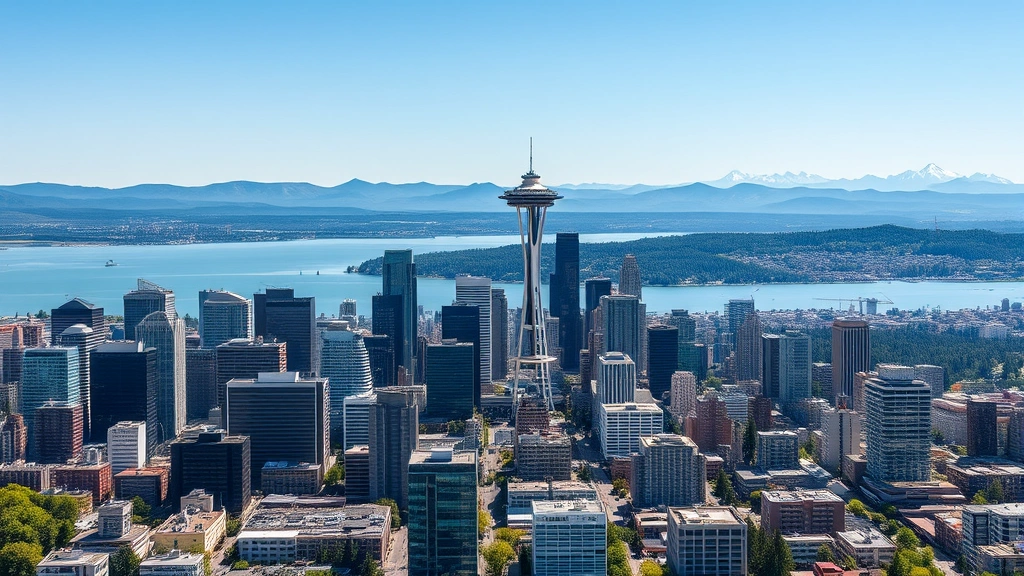
The Pacific Northwest represents one of North America’s most economically dynamic and ecologically significant regions. Yet this prosperity masks fundamental tensions between economic development and environmental preservation. The built environment of the Northwest—spanning from British Columbia through Washington, Oregon, and into Northern California—has undergone dramatic transformation over the past two decades, reshaping both regional GDP and critical ecosystems. Understanding these interconnections requires examining how urban expansion, infrastructure development, and resource extraction drive economic growth while simultaneously degrading natural capital that underpins long-term prosperity.
This critical analysis explores the paradox of Northwest development: how the region’s economic success increasingly depends on the very ecosystems it continues to degrade. From Seattle’s explosive tech boom to Portland’s urban expansion and the forestry-dependent economies of rural areas, the built environment expansion reflects broader patterns of economic prioritization that systematically undervalue ecological services. By integrating perspectives from ecological economics and environmental science, we can better understand the true costs of development and identify pathways toward genuine sustainability.
The Built Environment and Regional Economic Structure
The Northwest economy has historically centered on natural resource extraction—timber, salmon, minerals, and hydroelectric power. However, the built environment expansion has fundamentally restructured this foundation. Seattle’s emergence as a global technology hub, Portland’s designation as a sustainable city leader, and Vancouver’s position as a major Pacific trade gateway have created sophisticated urban economies that paradoxically depend on continued resource consumption and land conversion.
According to the World Bank, the Pacific Northwest generates approximately $1.2 trillion in annual economic output, with urban centers accounting for roughly 78% of this value. Yet this economic concentration in built environments has created a false impression of decoupling from natural systems. In reality, the region’s tech companies, financial institutions, and service sectors depend entirely on ecosystem services: water from mountain watersheds, salmon populations supporting cultural and recreational economies, and forest carbon sequestration that moderates regional climate. The built environment consumes these services at accelerating rates while remaining economically disconnected from their provision and maintenance.
Urban development patterns reflect classic economic externalization. Between 2000 and 2020, the Seattle metropolitan area expanded by approximately 1.2 million residents, with corresponding land-use conversion of roughly 340,000 acres. This expansion generated substantial real estate wealth and tax revenues—measurable in GDP accounting. Conversely, the loss of 340,000 acres of forest, wetland, and agricultural land eliminated ecological productivity worth billions in unpriced ecosystem services. These tradeoffs remain invisible in standard economic metrics because human environment interaction costs are systematically externalized rather than internalized into market prices.
The Oregon and Washington housing markets exemplify this dynamic. Home values have appreciated dramatically—Portland median home prices increased 287% between 2000 and 2023—reflecting speculative demand and limited housing supply. However, this appreciation depends partly on amenity values derived from proximity to natural features: views of forests, mountains, and water bodies. These natural amenities are treated as free public goods despite their scarcity and the degradation caused by development itself. Ecological economics principles suggest that if true scarcity values were incorporated into property markets, housing costs would reflect actual environmental carrying capacity rather than speculative expectations.
Urban Expansion and Habitat Fragmentation
Habitat fragmentation represents one of the most significant ecological consequences of Northwest built environment expansion, yet remains largely invisible in regional economic accounting. The region supports exceptional biodiversity: endangered salmon species, northern spotted owls, gray wolves, and complex riparian ecosystems. Urban sprawl and associated infrastructure directly threaten these populations through direct habitat loss and fragmentation that prevents population connectivity.
Research from the United Nations Environment Programme indicates that habitat fragmentation reduces species survival rates by 30-60% depending on species mobility and habitat specialization. In the Northwest, sprawling development patterns—characterized by low-density suburban expansion rather than concentrated urban cores—create particularly severe fragmentation. The Portland metropolitan area’s urban growth boundary, though lauded as a planning innovation, has actually intensified development pressure on remaining habitat within the boundary while creating sharp ecosystem discontinuities.
Salmon populations provide a quantifiable example of fragmentation impacts. Pacific Northwest salmon generate approximately $3.2 billion annually in commercial, recreational, and subsistence fisheries. However, dam construction (part of the region’s human activities that affect the environment), habitat degradation, and river fragmentation have reduced salmon populations by 90% from historical levels. The Columbia River system alone contains 14 major dams that fragment migration corridors. Economic analyses treating salmon as renewable resources often fail to account for critical population thresholds below which recovery becomes impossible—a classic example of how standard economic models ignore ecological tipping points.
Urban heat island effects amplify fragmentation impacts. Built environments increase regional temperatures by 2-5°C compared to surrounding areas, creating thermal barriers that prevent species migration and alter phenological timing. Warmer urban streams reduce salmon survival rates; altered flowering times disrupt pollinator relationships. These cascading ecological effects have indirect economic consequences—reduced pollination services, decreased forest productivity, and increased pest pressure—that manifest as agricultural losses and increased land management costs.
The environmental awareness movement in the Northwest has generated policy responses like the Endangered Species Act and Northwest Forest Plan. However, these regulatory approaches treat ecosystem protection as an external constraint on economic development rather than as fundamental to economic viability. This framing perpetuates conflicts between conservation and development when integrated economic models would recognize that sustainable ecosystem function represents the prerequisite for long-term prosperity.
Infrastructure Development and Watershed Impacts
The built environment’s infrastructure systems—transportation networks, utilities, stormwater systems—fundamentally alter watershed hydrology and water quality. The Pacific Northwest contains 11 major river systems and thousands of tributary streams supporting diverse aquatic ecosystems. Infrastructure development has disrupted natural hydrological patterns with profound economic and ecological consequences.
Urban stormwater systems exemplify infrastructure-ecosystem interactions. Traditional gray infrastructure (pipes and treatment facilities) treats stormwater as waste to be rapidly removed from urban areas. This approach increases peak flows in receiving streams, causing erosion and habitat degradation. Quantitative studies from the University of Washington indicate that urbanized watersheds experience 3-5 times greater peak flows than forested watersheds, directly correlating with increased salmonid mortality during high-flow periods.
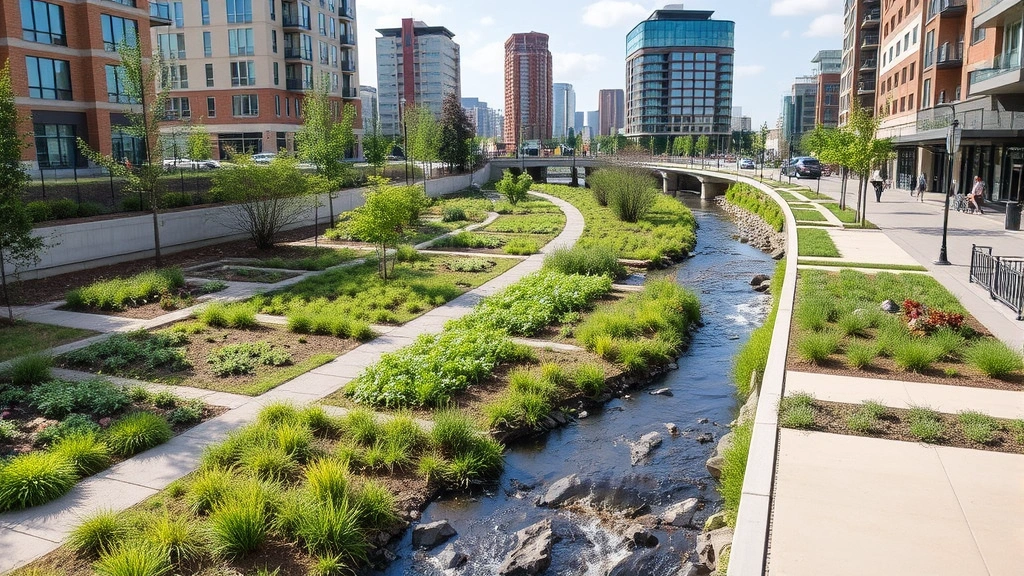
Green infrastructure alternatives—permeable pavements, rain gardens, restored wetlands—provide superior ecosystem function while reducing infrastructure costs. A comprehensive analysis of Seattle’s Green Infrastructure Program found that distributed green infrastructure approaches cost 25-40% less than expanded gray infrastructure while providing additional ecosystem services including stormwater treatment, urban cooling, and habitat provision. Yet capital budgeting systems systematically favor large-scale gray infrastructure projects because they generate concentrated economic benefits (construction contracts, engineering fees) rather than distributed ecosystem benefits.
Hydroelectric development represents the Northwest’s most economically significant infrastructure system. Dams generate approximately 65% of the region’s electricity, creating $8-12 billion in annual energy value. However, this economic benefit depends on completely altered river systems with fragmented fish populations, disrupted sediment transport, and altered thermal regimes. The true cost of hydroelectric development—calculated as lost salmon productivity, ecosystem service disruption, and foregone recreational opportunities—likely exceeds $2-4 billion annually by conservative estimates.
Water extraction for urban and agricultural use further stresses Northwest watersheds. The region contains abundant precipitation (40-100+ inches annually in many areas), yet climate change is shifting precipitation patterns toward more winter/spring concentration and less summer flow. Urban demand for summer water has intensified conflicts between ecosystem needs and human consumption. The Columbia River Compact, governing water allocation between Washington and Oregon, was established in 1961 based on precipitation patterns that no longer hold—a classic example of how economic institutions become maladaptive as ecological conditions change.
Resource Extraction Economics and Forest Degradation
Timber represents the Northwest’s most historically significant resource, yet forest management remains deeply influenced by short-term economic incentives that conflict with long-term ecosystem viability. The region contains approximately 24 million acres of commercial forest, generating roughly $20 billion annually in timber products and related economic activity. However, the manner in which this value is extracted has fundamentally altered forest structure and function.
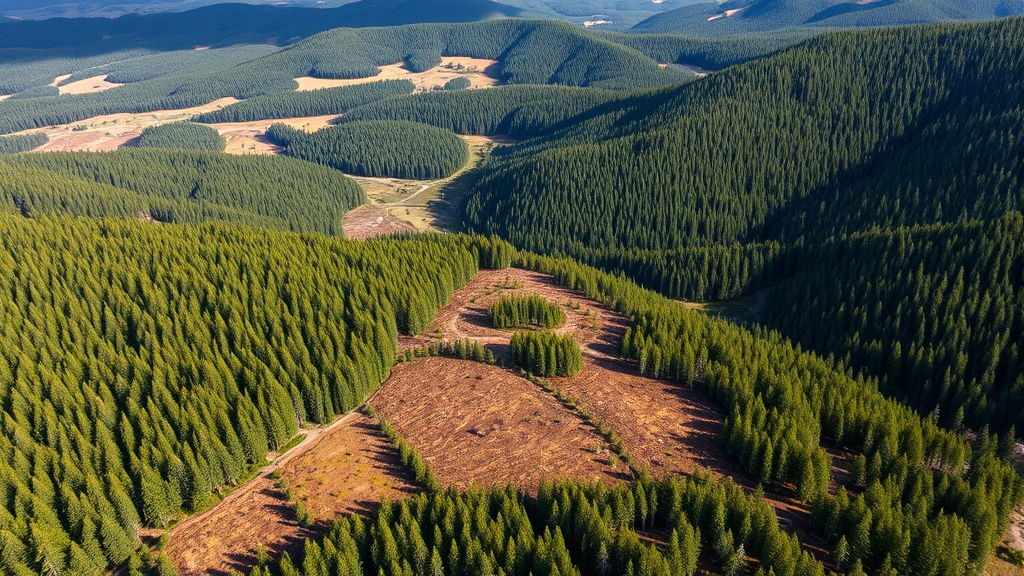
Industrial forestry in the Pacific Northwest has converted complex old-growth forests—characterized by structural diversity, multi-layered canopies, and high biodiversity—into simplified plantation systems optimized for rapid timber production. While these plantations generate higher short-term economic returns per acre, they provide dramatically reduced ecosystem services: lower carbon sequestration rates (due to frequent harvest cycles), reduced water infiltration and storage, diminished habitat value, and increased vulnerability to pests and disease.
The economic logic driving this conversion reflects standard cost-benefit analysis: timber harvest generates immediate, measurable revenue, while ecosystem service losses are diffuse, delayed, and difficult to quantify. An old-growth forest provides carbon sequestration, watershed protection, biodiversity habitat, and cultural values worth an estimated $4,000-8,000 per acre annually (based on ecological economics valuation methods). A timber plantation provides $200-400 per acre annually in timber value. Standard economic analysis recommends conversion to plantations because measured benefits exceed measured costs—yet this analysis systematically excludes unpriced ecosystem services.
Forest degradation also increases wildfire risk, generating cascading economic costs. The 2020 Labor Day fires burned approximately 1 million acres across Oregon and Washington, causing $5+ billion in damage and creating severe air quality impacts affecting 10+ million people. Economic analyses of these fires typically treat them as exogenous shocks rather than consequences of forest management choices. Ecological economics perspectives suggest that fire risk represents an endogenous cost of simplified forest structure—a cost that should be incorporated into timber valuation and forest management decisions.
Climate change amplifies forest-economy interactions. Warmer temperatures are shifting forest type distributions northward and upslope, favoring species like Douglas-fir and ponderosa pine while reducing suitable habitat for hemlock and western red cedar. These shifts alter timber supply and economic viability across regions. Simultaneously, warmer temperatures increase pest pressure (bark beetles) and drought stress, reducing forest productivity. The World Bank’s forest economics research indicates that climate-driven forest productivity losses could reduce global timber supply by 15-25% by 2050, with particularly severe impacts in regions like the Pacific Northwest where climate change is proceeding rapidly.
The Hidden Costs of Development
A comprehensive accounting of Northwest built environment costs reveals substantial hidden expenses systematically excluded from regional economic metrics. These costs include ecological externalities, public health impacts, and foregone ecosystem services that reduce actual net economic benefit from development.
Air quality degradation represents a quantifiable hidden cost. Urban expansion increases vehicle miles traveled, industrial activity, and emissions from heating systems. The Pacific Northwest, despite its environmental reputation, experiences air quality that violates EPA standards on 10-30 days annually in major metropolitan areas. Public health costs from air pollution—respiratory disease, cardiovascular impacts, reduced cognitive function in children—total approximately $2-4 billion annually across the region. These health costs are borne by households and public health systems rather than internalized into development economics, creating systematic underpricing of urban expansion.
Water quality degradation imposes additional hidden costs. Urban stormwater runoff, combined sewer overflows, and agricultural runoff have degraded water quality throughout Northwest waterways. The Puget Sound, which supports major salmon fisheries and recreational economies, shows persistent pollution from urban runoff including heavy metals, persistent organic pollutants, and microplastics. Remediation costs for contaminated sites and water treatment infrastructure expansion exceed $1 billion annually, representing a cost of development that reduces net economic benefit.
Biodiversity loss imposes long-term economic costs through reduced ecosystem resilience and foregone option values. Species extinction is essentially permanent—once lost, evolutionary and genetic diversity cannot be recovered. The Pacific Northwest contains exceptional endemism (species found nowhere else), particularly in isolated mountain ranges and river systems. Development-driven extinction of endemic species eliminates potential pharmaceutical compounds, agricultural germplasm, and genetic resources with unknown but potentially substantial value. Standard economic analysis assigns zero value to these foregone options, systematically underestimating development costs.
Soil degradation represents another hidden cost. Urban expansion converts productive agricultural and forest soils into impervious surfaces. Soil carbon storage, nutrient cycling, and water infiltration capacity are permanently lost. Regional agricultural productivity has declined as prime farmland has been converted to urban and suburban uses. The Willamette Valley, historically one of the most productive agricultural regions in North America, has lost approximately 40% of its prime farmland to urban expansion since 1970. This represents a permanent loss of productive capacity with long-term food security implications.
Pathways Toward Integrated Economics
Transitioning toward genuine sustainability in the Pacific Northwest requires fundamentally restructuring economic institutions and decision-making frameworks to incorporate ecological limits and ecosystem service values. Several pathways offer promise for achieving more integrated economy-ecology relationships.
Natural capital accounting represents a foundational reform. The UNEP Natural Capital Protocol provides frameworks for quantifying ecosystem service values and incorporating them into corporate and regional accounting systems. Oregon and Washington have initiated natural capital accounting pilots that value forest carbon sequestration, salmon productivity, watershed function, and other ecosystem services. Integrating these values into GDP calculations would reveal that apparent economic growth often represents natural capital depletion—a situation analogous to mining companies counting mineral extraction as income rather than capital depletion.
Ecosystem service valuation methodologies continue advancing. Ecological Economics journal publishes sophisticated valuation approaches including contingent valuation, hedonic pricing, benefit transfer, and integrated modeling. Application of these methods to Northwest ecosystems reveals that ecosystem service values often exceed extractive economic values. A comprehensive valuation of Northwest salmon ecosystems suggests total annual value (commercial fisheries, recreational value, cultural significance, ecosystem function) of $8-15 billion annually—substantially exceeding the $3.2 billion in measurable fishery revenues and suggesting that conservation investments have positive economic returns.
Payment for ecosystem services (PES) schemes create economic incentives for conservation. Carbon markets, water quality trading, and habitat conservation banking represent emerging mechanisms that monetize ecosystem services and create revenue streams for conservation. The Pacific Northwest has developed sophisticated carbon markets; Oregon’s carbon offset program has generated hundreds of millions of dollars for forest conservation and restoration. Expanding these mechanisms to encompass broader ecosystem services could create economic incentives aligned with conservation objectives.
Regenerative development approaches offer alternatives to extractive models. Rather than treating development as a one-time conversion of natural systems to built environments, regenerative approaches seek to enhance ecosystem function through development. Examples include riparian restoration integrated with urban development, green infrastructure systems that improve watershed function, and agroforestry systems that combine timber production with ecosystem service provision. These approaches often require higher initial investment but generate superior long-term returns by maintaining or enhancing natural capital stocks.
Policy reforms must address fundamental misalignments between economic incentives and ecological sustainability. Carbon pricing, resource rent taxation, and ecosystem service fees would internalize environmental costs into market prices, aligning economic incentives with ecological limits. Land-use planning reforms that prioritize compact development, habitat connectivity, and watershed protection could reduce fragmentation and infrastructure impacts. Public investment in green infrastructure, ecosystem restoration, and sustainable transportation would shift capital allocation toward regenerative systems.
Education and institutional change represent critical but often-overlooked requirements. Ecological economics perspectives remain marginal in mainstream economic training and policy institutions. Expanding education in human environment interaction dynamics, ecosystem service valuation, and integrated resource management could shift institutional cultures toward sustainability. Professional societies, universities, and policy organizations must prioritize research and training in ecological economics to build constituencies for systemic reform.
FAQ
What is the built environment and why does it matter for the Northwest economy?
The built environment encompasses all human-constructed infrastructure—buildings, roads, utilities, and modified landscapes. It matters for the Northwest because it has fundamentally restructured the region’s economic base from resource extraction to service and technology sectors, while simultaneously degrading the natural systems that support long-term prosperity. Understanding built environment impacts is essential for identifying sustainable development pathways.
How does habitat fragmentation affect Northwest economic systems?
Habitat fragmentation reduces species survival rates and disrupts ecosystem services like salmon production and pollination. Since the Northwest economy depends substantially on natural resource-based industries and amenity values associated with natural landscapes, fragmentation reduces economic productivity. For example, salmon population declines directly reduce commercial fishery revenues and increase pressure on public budgets for restoration spending.
Why don’t standard economic metrics capture ecosystem degradation costs?
Standard GDP accounting treats natural resources as free goods and ecosystem service losses as external to the economy. This reflects methodological limitations rather than economic reality. Ecological economics frameworks incorporate ecosystem services and natural capital depletion into accounts, revealing that apparent economic growth often masks natural capital degradation.
What are the most promising solutions for Northwest sustainability?
Integrated approaches combining natural capital accounting, ecosystem service valuation, payment for ecosystem services schemes, regenerative development practices, and policy reforms offer the most promise. These solutions require aligning economic incentives with ecological limits through carbon pricing, resource rent taxation, and green infrastructure investment while building institutional capacity for ecological economics perspectives.
How does climate change complicate Northwest economy-ecosystem relationships?
Climate change is shifting precipitation patterns, altering forest type distributions, increasing wildfire risk, and reducing water availability during critical summer periods. These changes interact with existing development pressures to create compound stresses on ecosystems and economic systems. Adaptation requires proactive ecosystem management and economic restructuring rather than reactive crisis response.
Can the Pacific Northwest achieve economic growth while restoring ecosystems?
Yes, but only through fundamental restructuring toward regenerative development models. Growth measured in natural capital stocks and ecosystem service provision is compatible with reduced material throughput. The Northwest’s competitive advantages in technology, education, and quality of life could support prosperity based on knowledge and ecosystem stewardship rather than resource extraction and land conversion.


