
Impact of GDP on Ecosystems: Expert Insights
Gross Domestic Product (GDP) has long served as the primary metric for measuring economic success and national prosperity. However, the relationship between GDP growth and ecosystem health reveals a complex paradox that economists and environmental scientists increasingly recognize as unsustainable. While GDP captures the monetary value of goods and services produced, it fundamentally fails to account for the ecological costs of that production—including resource depletion, biodiversity loss, pollution, and climate change. This disconnect has created a critical gap in how we evaluate economic performance and environmental well-being.
The conventional economic model treats ecosystems as infinite sources of raw materials and infinite sinks for waste, assumptions that collapse under scrutiny when confronted with planetary boundaries and finite natural resources. Expert analysis from ecological economists reveals that pursuing GDP growth without ecological constraints has externalized massive environmental costs onto future generations. Understanding this relationship is essential for policymakers, businesses, and citizens seeking to build an economy that operates within planetary boundaries while maintaining human prosperity.
The GDP Paradox: Economic Growth vs. Ecological Reality
The fundamental tension between GDP growth and ecosystem preservation stems from how GDP measures economic activity. Any transaction that generates money counts toward GDP—whether it represents genuine improvement in human welfare or environmental destruction. A forest fire that destroys ecosystems contributes to GDP through reconstruction spending. Medical treatments for pollution-related illnesses increase GDP despite representing a decline in actual health. This metric, designed in the 1930s and 1940s, predates our understanding of planetary boundaries and ecological limits.
Research from ecological economists demonstrates that in many developed nations, GDP growth has decoupled from material and energy consumption in accounting terms, but this decoupling is largely statistical, achieved through outsourcing resource-intensive production to developing nations. When consumption-based accounting methods are applied—measuring environmental impact where goods are actually consumed rather than produced—the decoupling disappears. The scientific definition of environment encompasses all living organisms and their physical surroundings, yet GDP calculations ignore this integrated system entirely.
Expert analysis reveals that pursuing GDP growth as an end goal has created perverse incentives throughout economic systems. Companies maximize short-term profits by externalizing environmental costs. Governments pursue growth metrics that ignore long-term ecological stability. Investors prioritize quarterly returns over generational sustainability. This structural misalignment between economic incentives and ecological outcomes represents one of the most significant challenges facing contemporary civilization.
How GDP Growth Drives Ecosystem Degradation
The mechanisms through which GDP growth degrades ecosystems operate across multiple pathways. Increased production requires expanded resource extraction, converting natural habitats into mines, agricultural land, and timber operations. Manufacturing processes generate pollution that contaminates air, water, and soil. Transportation systems built to support economic activity fragment ecosystems and increase greenhouse gas emissions. Consumption patterns drive unsustainable fishing, hunting, and wildlife trade.
Industrial agriculture, a significant contributor to GDP in many nations, exemplifies this dynamic. While agricultural output increases GDP measurements, the practices driving that output—monoculture farming, chemical pesticide and fertilizer use, deforestation for pasture—systematically destroy soil health, pollinate insect populations, and watershed integrity. The human environment interaction within agricultural systems demonstrates how economic growth metrics ignore ecological degradation that undermines long-term productivity.
Coastal economies illustrate another critical pathway. Fishing industries contribute significantly to GDP while driving fish stocks toward collapse. Tourism development generates economic activity while destroying coral reefs and marine ecosystems. Aquaculture operations increase seafood production for GDP calculations while creating dead zones through pollution and escaped farmed species. Energy production represents perhaps the most consequential example: fossil fuel extraction and combustion generate approximately 75% of global greenhouse gas emissions while contributing substantially to global GDP.
Water systems face particular pressure from GDP-driven economic expansion. Hydroelectric dams increase energy production and GDP while fragmenting rivers and destroying fisheries. Agricultural irrigation for export crops depletes aquifers and reduces water availability for local ecosystems and communities. Industrial water pollution from manufacturing operations degrades aquatic ecosystems while representing profitable economic activity. These patterns repeat across sectors and geographies, creating a systematic bias toward ecosystem destruction within GDP-growth-focused economic systems.
The True Cost of Externalities
Environmental externalities represent costs imposed on ecosystems and society that do not appear in market prices or GDP calculations. When a coal power plant emits sulfur dioxide causing respiratory disease, the health costs represent a genuine reduction in human welfare but do not reduce GDP—instead, the medical treatment increases it. When agricultural runoff creates oceanic dead zones, the loss of fisheries represents real economic damage, yet the initial agricultural production still counts as positive GDP contribution.
Quantifying these externalities reveals staggering economic costs. Research published through United Nations Environment Programme initiatives estimates that ecosystem service destruction costs the global economy 5-14% of annual GDP. Biodiversity loss alone carries estimated costs of $2-5 trillion annually in lost ecosystem services. Climate change impacts already impose costs exceeding 1% of global GDP annually, with projections suggesting 5-20% of GDP by 2100 under high-warming scenarios if mitigation efforts fail.
Carbon emissions exemplify how externalities distort economic signals. Fossil fuel prices do not reflect the climate damages their combustion causes—estimated at $50-200 per ton of CO2 depending on methodology. This pricing failure means every coal-fired power plant, gasoline-powered vehicle, and fossil fuel heating system appears artificially economical compared to cleaner alternatives. Markets systematically underprice carbon-intensive activities, driving overproduction of emissions while underproducing clean energy alternatives.
Water pollution externalities similarly distort economic incentives. Industries that dump waste into rivers avoid treatment costs that would reduce profitability, while downstream communities bear the burden through contaminated drinking water and destroyed fisheries. Without pricing these externalities, polluting industries appear more profitable than they genuinely are, leading to overproduction of polluting goods and underinvestment in pollution prevention. The same logic applies across mining, manufacturing, agriculture, and energy sectors.
Temporal externalities compound these problems. Short-term GDP growth often comes at the expense of long-term ecosystem stability. Logging operations maximize immediate revenue while destroying the forest capital that generates sustainable yield indefinitely. Overfishing increases current catches while collapsing future fish stocks. Aquifer depletion for irrigation increases agricultural GDP today while eliminating water availability for future generations. These intergenerational externalities represent perhaps the most ethically troubling aspect of GDP-focused economics.
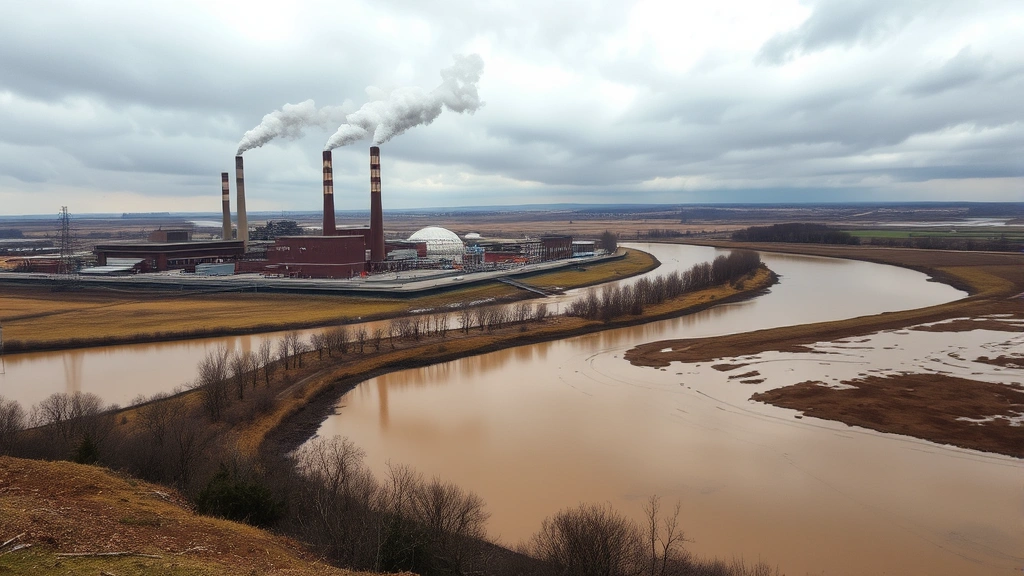
Biodiversity Loss and Economic Metrics
Biodiversity loss represents one of the most significant ecosystem impacts of GDP-growth-focused economics, yet it barely registers in conventional economic metrics. Species extinction rates have accelerated to 100-1,000 times background extinction rates due to human activities, primarily driven by habitat destruction associated with economic expansion. The definition of environment and environmental science includes recognition that biodiversity underpins ecosystem function, yet economic systems treat species loss as externalities rather than capital depletion.
Pollinator decline exemplifies the economic consequences of biodiversity loss ignored by GDP metrics. Honeybees, wild bees, and other pollinators provide ecosystem services worth an estimated $15-20 billion annually to global agriculture. Intensive agricultural practices that maximize short-term production through pesticide use destroy pollinator populations, reducing long-term agricultural capacity while current GDP remains unaffected. Only when pollination services collapse does economic impact become visible—by then, the damage is difficult to reverse.
Forest ecosystems demonstrate how biodiversity loss undermines ecosystem resilience and function. Old-growth forests support thousands of species and provide carbon storage, water regulation, and soil formation services worth trillions globally. When GDP-driven logging operations convert these forests to plantations, the economic accounting shows positive production gains while ignoring the loss of biodiversity, genetic resources, and ecosystem resilience. Monoculture plantations provide wood for GDP but lose 90% of species diversity compared to natural forests.
Marine biodiversity loss follows parallel patterns. Coral reef ecosystems support 25% of marine species while occupying less than 0.1% of ocean area. Industrial fishing, coastal development, and climate change driven by GDP-generating activities destroy coral reefs, eliminating biodiversity while reducing long-term fish stocks that support food security for billions. The economic value of coral reef ecosystem services—estimated at $375,000 per hectare annually—disappears from economic accounting as reefs bleach and collapse.
Genetic diversity loss compounds these problems. Agricultural biodiversity has collapsed as industrial farming replaces thousands of crop varieties with a handful of high-yield monocultures. This reduction in genetic diversity increases vulnerability to pests, diseases, and climate variability while appearing as productivity gains in GDP metrics. Similarly, livestock diversity has declined as industrial agriculture concentrates production in a few high-yield breeds, reducing resilience and eliminating genetic resources that could prove valuable as climate conditions change.
Alternative Economic Frameworks
Recognizing the limitations of GDP has spawned development of alternative economic metrics and frameworks designed to align economic measurement with ecological reality. These approaches share common recognition that genuine economic progress must account for natural capital preservation and ecosystem service provision. Several frameworks have gained traction among policymakers and economists seeking to transition beyond GDP-focused accounting.
The Genuine Progress Indicator (GPI) adjusts GDP by accounting for environmental and social factors. GPI calculations subtract costs of environmental degradation, resource depletion, and social harm from GDP while adding value of non-market activities like household labor and volunteer work. In many wealthy nations, GPI has stagnated or declined while GDP continued growing, suggesting that conventional growth has been increasingly generated through environmental destruction and social deterioration rather than genuine welfare improvement.
Natural Capital Accounting frameworks treat ecosystems as capital assets requiring maintenance and depreciation accounting similar to manufactured capital. This approach recognizes that depleting forests, fisheries, or aquifers represents capital consumption rather than income generation. World Bank initiatives in adjusted net savings calculations demonstrate how incorporating natural capital accounting reveals that many nations with positive GDP growth are actually experiencing negative genuine savings when resource depletion is included.
The Doughnut Economics model, developed by Kate Raworth, proposes that economic activity should operate within a “safe operating space” bounded by social foundations (meeting human needs) and ecological ceilings (planetary boundaries). This framework explicitly rejects growth as an end goal, instead focusing on meeting human needs while preserving ecological function. Several cities and nations have adopted doughnut economics principles in policy development.
Degrowth and post-growth economics frameworks challenge the assumption that perpetual growth is desirable or possible. These approaches recognize planetary boundaries as fixed constraints and argue that wealthy nations must reduce material and energy throughput while improving quality of life through non-material means. Rather than pursuing growth indefinitely, these frameworks propose optimal economic scales that maintain human welfare within ecological limits.
Ecosystem Service Valuation attempts to assign monetary values to natural capital and ecosystem functions, enabling their inclusion in economic decision-making. While this approach faces methodological challenges and philosophical critique regarding commodification of nature, it has proven useful for demonstrating ecosystem value to policymakers accustomed to monetary reasoning. Valuations of pollination services, carbon sequestration, water purification, and soil formation reveal that ecosystem services often exceed the economic value of activities that destroy them.
Regenerative economics frameworks go beyond sustainability (maintaining current conditions) to propose actively improving ecosystem function through economic activity. Regenerative agriculture, for example, builds soil health and biodiversity while producing food. Restoration forestry generates economic value while rebuilding forest ecosystems. These approaches demonstrate that economic activity and ecological restoration need not be opposed when properly designed.
Policy Solutions and Transition Pathways
Transitioning from GDP-focused to ecologically-conscious economic systems requires coordinated policy changes across multiple domains. Successful transitions must address the structural incentives that drive ecosystem degradation while creating new economic opportunities aligned with ecological preservation. Expert analysis identifies several policy mechanisms with proven effectiveness or significant promise.
Carbon pricing mechanisms, whether through taxes or cap-and-trade systems, internalize climate externalities by assigning costs to greenhouse gas emissions. When carbon pricing is implemented at levels reflecting true climate damages ($50-200+ per ton), fossil fuel activities become economically uncompetitive with clean energy alternatives. Multiple nations and regions have implemented carbon pricing with measurable emissions reductions, though political resistance from fossil fuel industries has limited global adoption and pricing levels often remain below climate-damage estimates.
Natural capital accounting integration into national accounting systems represents a fundamental shift toward ecological economics. When governments measure adjusted net savings that account for resource depletion and environmental degradation, policy priorities shift toward preservation. Adjusted Net Savings methodology enables comparison of genuine economic progress across nations, revealing that many resource-dependent economies are experiencing negative genuine savings despite positive GDP growth.
Subsidy reform eliminates perverse incentives driving ecosystem destruction. Global subsidies for fossil fuels, industrial agriculture, fishing, and resource extraction total approximately $5-7 trillion annually when environmental costs are included. Redirecting these subsidies toward renewable energy, sustainable agriculture, and ecosystem restoration would fundamentally alter economic incentives. Removing fossil fuel subsidies alone would reduce global emissions by 20-30% according to International Monetary Fund analysis.
Regenerative agriculture policies promote farming practices that rebuild soil health, sequester carbon, and restore biodiversity while maintaining productivity. Payments for ecosystem services can compensate farmers for conservation practices that provide societal benefits. Carbon credit systems for agricultural sequestration create economic incentives for practices that simultaneously improve farm resilience and environmental quality. Several nations have implemented agricultural policies prioritizing regeneration over chemical-intensive monoculture.
Circular economy policies minimize resource extraction and waste generation by designing products for longevity, repair, and material recovery. Extended producer responsibility requires manufacturers to manage end-of-life products, creating incentives for durable design and material efficiency. Industrial symbiosis networks enable waste streams from one industry to become inputs for another, reducing extraction needs. These approaches maintain economic activity while dramatically reducing environmental throughput.
Renewable energy transition policies accelerate replacement of fossil fuels with clean energy sources. Feed-in tariffs guarantee renewable energy producers fair prices for electricity, enabling rapid deployment. Renewable portfolio standards require utilities to source increasing percentages of electricity from clean sources. Investment in grid modernization and energy storage enables reliable renewable-dominated systems. Multiple nations have demonstrated that rapid clean energy transitions are technically feasible and economically beneficial.
Protected area expansion and restoration programs preserve remaining ecosystems while rebuilding degraded ones. Conservation funding, whether through government budgets or payment for ecosystem services, enables protection of biodiversity hotspots and ecosystem reserves. Restoration investments in wetlands, forests, and grasslands rebuild ecological function while creating employment. Indigenous land rights recognition has proven highly effective—indigenous territories show better conservation outcomes than many protected areas.
The how to reduce carbon footprint guidance extends beyond individual action to systemic policy change. While personal consumption reduction is important, systemic transformation requires policy-level changes that alter the default options available to consumers and businesses. Policies making clean energy cheaper, sustainable products more accessible, and regenerative practices more profitable create conditions where ecological choices become economically rational.
Education and cultural shift represent essential transitions underpinning policy changes. As understanding of ecological limits and genuine economic costs spreads, political support for transformative policies increases. Universities increasingly teach ecological economics and sustainability. Business schools incorporate natural capital accounting and regenerative practices. Media coverage of biodiversity loss and climate impacts builds public concern. These cultural shifts enable political coalitions supporting systemic economic transformation.
International cooperation proves essential given ecological systems’ transnational nature. Climate change, ocean acidification, and biodiversity loss require coordinated global responses. UNEP climate change initiatives coordinate national climate policies while supporting developing nation transitions. International agreements on biodiversity protection, ocean conservation, and resource management create frameworks enabling coordinated action. Trade agreements increasingly incorporate environmental standards, aligning economic incentives with ecological preservation.
FAQ
Why doesn’t GDP account for environmental costs?
GDP was developed in the 1930s-1940s before widespread recognition of planetary boundaries and ecological limits. It measures monetary transactions without distinguishing between activities that improve welfare and those that destroy natural capital. Reforming GDP would require fundamental changes to national accounting systems and economic priorities, facing resistance from industries benefiting from current accounting methods.
Can economies grow indefinitely within planetary boundaries?
Physical scientists argue that infinite growth on a finite planet is impossible. However, economists propose that wealthy nations can decouple economic welfare from material and energy consumption through efficiency improvements, service-based economies, and non-material quality-of-life improvements. This decoupling remains contested, with evidence suggesting statistical rather than physical decoupling in most wealthy nations.
What is the relationship between GDP and human welfare?
Research shows that beyond a certain income threshold (approximately $75,000-95,000 annually in wealthy nations), additional GDP growth provides minimal welfare improvements. Beyond basic needs fulfillment, happiness correlates more strongly with relationships, community, health, and meaningful work than additional consumption. This suggests that transitioning to post-growth economics need not reduce human welfare in wealthy nations.
How can economies transition away from GDP growth?
Transition pathways include adopting alternative metrics like GPI or natural capital accounting, implementing carbon pricing and subsidy reform, investing in renewable energy and regenerative agriculture, protecting and restoring ecosystems, and shifting cultural values toward non-material quality-of-life measures. Several nations and communities have begun these transitions, demonstrating feasibility.
What role does renewable energy for homes play in economic transition?
Distributed renewable energy enables households to reduce energy costs while eliminating fossil fuel dependence. As renewable technology costs decline, home solar and wind systems become economically superior to grid electricity in many regions. This transition simultaneously reduces household expenses, decreases emissions, and supports distributed energy resilience.


