
Agriculture’s Role in Ecosystems: A Study Review
Agriculture stands as one of humanity’s most transformative interactions with the natural world, fundamentally reshaping landscapes, biodiversity patterns, and ecosystem functions across the globe. As the primary land use system covering approximately 38% of Earth’s terrestrial surface, agricultural practices profoundly influence carbon cycling, water dynamics, soil health, and species distribution. This comprehensive review examines contemporary research on agriculture’s multifaceted relationship with ecosystems, exploring both the degradative pathways and regenerative opportunities that define this critical intersection between human food production and ecological integrity.
The global agricultural system currently supports nearly 8 billion people while simultaneously driving unprecedented ecological transformation. Modern farming practices have created a paradox: while enabling food security for expanding populations, conventional agriculture has become a primary driver of biodiversity loss, greenhouse gas emissions, and ecosystem degradation. Understanding this complex relationship requires interdisciplinary analysis integrating agronomy, ecology, environmental economics, and systems science to identify pathways toward agricultural sustainability that maintain productivity while restoring ecosystem functions.
Agricultural Expansion and Habitat Loss
Agricultural land conversion represents the single largest driver of habitat destruction globally, surpassing even climate change in terms of immediate biodiversity impact. Research indicates that approximately 68% of global biodiversity loss stems directly from agricultural expansion, particularly in biodiverse regions including tropical rainforests, grasslands, and wetland ecosystems. The conversion process typically involves clearing native vegetation through deforestation, burning, or mechanical clearing, destroying complex habitat structures that have evolved over millennia to support specialized species assemblages.
The mechanisms of agricultural habitat loss operate through both direct and indirect pathways. Direct conversion involves complete replacement of natural ecosystems with monoculture croplands or pastures, eliminating structural complexity and reducing microhabitat diversity. Indirect effects emerge through fragmentation, where remaining habitat patches become isolated, preventing gene flow between populations and reducing resilience to environmental stress. Human activities affecting the environment increasingly center on agricultural intensification, with particularly severe consequences in developing nations where governance frameworks remain insufficient to regulate land use changes.
Research from the World Bank documents that agricultural expansion claims approximately 10 million hectares annually, with deforestation accounting for roughly 80% of habitat conversion in tropical regions. This expansion follows predictable economic patterns, where commodity prices and market access drive frontier agricultural development. Smallholder farmers, often lacking secure land tenure or alternative income sources, respond rationally to market incentives by converting marginal lands to agriculture, creating cascading ecosystem degradation across landscapes.
Soil Degradation and Nutrient Cycling
Soil represents agriculture’s fundamental resource foundation yet simultaneously bears disproportionate degradation burden from modern farming systems. Conventional tillage practices, monoculture cropping, and synthetic fertilizer dependence have collectively degraded approximately 33% of global soils, reducing fertility, carbon content, and biological activity. Soil organic matter depletion accelerates nutrient cycling disruption, reducing soil capacity to retain moisture and support microbial communities essential for plant health and ecosystem function.
The soil degradation cascade operates through interconnected mechanisms. Intensive tillage disrupts soil structure, exposing organic matter to oxidation and accelerating decomposition rates. Monoculture systems eliminate crop diversity that would otherwise support varied root architectures and microbial associations. Synthetic fertilizer applications suppress indigenous soil microorganism populations by providing readily available nutrients, reducing evolutionary pressure for microbial-plant mutualism. These cumulative effects reduce soil resilience while increasing chemical input dependence, creating economic and ecological lock-in effects.
Nutrient cycling disruption extends beyond individual fields to watershed and regional scales. Excess nitrogen and phosphorus from agricultural runoff trigger eutrophication in aquatic ecosystems, creating hypoxic dead zones that eliminate aerobic species. Human environment interaction through nutrient mismanagement represents one of agriculture’s most persistent ecosystem impacts, with approximately 405 dead zones documented globally as of recent assessments. The economic costs of water quality degradation, fishery collapse, and treatment expenses substantially exceed the value of the fertilizer inputs generating these externalities.
Water Resources and Agricultural Demand
Agriculture consumes approximately 70% of global freshwater withdrawals, making it the dominant water use sector across most regions. This massive water demand generates complex ecosystem consequences through aquifer depletion, river flow alteration, and wetland drainage. In arid and semi-arid regions, agricultural water extraction frequently exceeds sustainable recharge rates, leading to aquifer collapse and permanent loss of groundwater resources accumulated over millennia.
The Indus and Ganges river systems illustrate water extraction consequences at scale. Agricultural intensification has reduced downstream river flows by 80-90% during critical dry seasons, eliminating habitat for aquatic species and disrupting riparian ecosystem functions. Groundwater depletion in the Indo-Gangetic Plain exceeds 2 centimeters annually, representing unsustainable mining of fossil aquifers. These trajectories demonstrate how agricultural water demand creates irreversible ecosystem transitions when extraction rates persistently exceed natural recharge.
Water quality degradation compounds quantity constraints, further reducing ecosystem support capacity. Pesticide and fertilizer runoff contaminate remaining freshwater resources, reducing availability for downstream ecosystems and human consumption. Reducing carbon footprint through agricultural transformation includes optimizing water use efficiency, yet this remains secondary to addressing fundamental overextraction patterns. Irrigation infrastructure development, while enabling agricultural expansion, frequently destroys wetland ecosystems that provide critical water purification and biodiversity support functions.
Biodiversity Impacts and Species Conservation
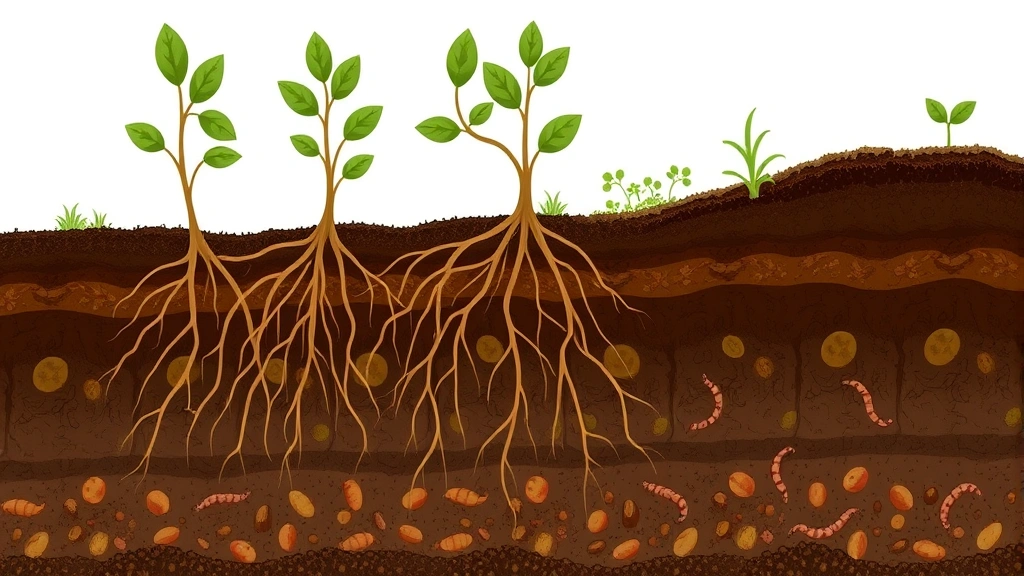
Agricultural ecosystems support substantially lower biodiversity than native habitats, typically exhibiting 50-90% species richness reduction compared to equivalent natural systems. This biodiversity loss operates across taxonomic groups, with particularly severe impacts on pollinators, soil invertebrates, and predatory arthropods essential for agricultural productivity. Paradoxically, agriculture’s dependence on pollination and natural pest control services creates economic incentives for biodiversity conservation that remain largely unrealized through current policy frameworks.
Crop genetic diversity has similarly contracted dramatically, with approximately 75% of global crop genetic variation lost during the 20th century as industrial agriculture consolidated around high-yielding varieties. This genetic narrowing reduces agricultural resilience to climate variability, pest outbreaks, and disease emergence. Wild crop relatives and traditional varieties, repositories of adaptive genetic variation, face extinction as their native habitats convert to agriculture, eliminating future breeding material for climate adaptation.
Pollinator populations have experienced particularly acute declines, with wild bee populations declining 25% globally over recent decades. Insecticide applications targeting crop pests simultaneously eliminate beneficial arthropods, disrupting natural pest control networks. Environment awareness regarding pollinator conservation remains insufficient to drive policy changes despite substantial economic risks to agriculture from pollinator decline. Studies indicate that pollination service losses could reduce global crop yields 5-15%, generating substantial economic consequences exceeding current pesticide cost savings.
Climate Change and Agricultural Emissions
Agricultural systems generate approximately 24% of global greenhouse gas emissions through multiple pathways including methane from ruminant digestion, nitrous oxide from synthetic fertilizers, and carbon dioxide from fossil fuel inputs and land use change. These emissions create bidirectional climate-agriculture linkages, where agricultural practices drive climate change while simultaneously facing climate-induced productivity threats.
Livestock production represents agriculture’s largest emission source, with ruminant animals generating methane through enteric fermentation. Beef production generates approximately 27 kilograms of CO2-equivalent per kilogram of meat, roughly five times the emission intensity of plant-based proteins. Feed production amplifies these emissions through land use change, fertilizer applications, and transportation. Dairy production similarly exhibits high emission intensity despite lower per-unit greenhouse gas production than beef.
Synthetic fertilizer production and application generate substantial nitrous oxide emissions, a greenhouse gas approximately 298 times more potent than carbon dioxide over century timescales. Excess nitrogen application rates in intensive agricultural regions generate particularly high nitrous oxide emissions, with emission factors increasing non-linearly at elevated nitrogen surplus levels. Regional studies document that 50-70% of applied nitrogen in intensive systems exceeds crop uptake capacity, representing both economic waste and substantial climate forcing.
Agricultural soil carbon depletion compounds climate impacts by reducing terrestrial carbon sequestration capacity. Conventional tillage oxidizes soil organic matter, releasing accumulated carbon stocks accumulated over centuries. Estimates suggest agricultural soils have lost 50-70% of pre-agricultural carbon content, representing a permanent reduction in terrestrial carbon sink capacity. Reversing this degradation through regenerative practices could sequester 0.4-0.8 gigatons of carbon annually, offsetting substantial portions of agricultural emissions.
Regenerative Agriculture and Ecosystem Restoration
Regenerative agriculture represents an emerging paradigm emphasizing ecosystem function restoration alongside productivity maintenance. Practices including cover cropping, reduced tillage, crop rotation, agroforestry, and integrated pest management create pathways toward agricultural sustainability by rebuilding soil health, enhancing biodiversity, and reducing chemical input dependence. Research demonstrates that regenerative systems can achieve productivity levels approaching conventional agriculture while simultaneously improving ecosystem indicators.
Soil health improvement represents regenerative agriculture’s primary mechanism for ecosystem benefit. Reduced or eliminated tillage preserves soil structure and microbial communities, enabling organic matter accumulation and enhanced water retention. Cover crops provide continuous soil protection, add nitrogen through legume-rhizobia associations, and support diverse soil invertebrate populations. These practices typically increase soil organic matter 0.1-0.5% annually in degraded systems, recovering lost carbon stocks while improving water holding capacity and nutrient cycling.
Biodiversity enhancement through regenerative practices operates through multiple pathways. Crop rotation breaks pest cycles while supporting diverse soil microbiota. Reduced pesticide applications enable beneficial arthropod population recovery. Agroforestry systems create structural complexity supporting bird populations and pollinators. Studies document that regenerative systems support 30-50% higher arthropod diversity compared to conventional monocultures, with particular benefits for natural pest control predators. These biodiversity benefits reduce pest pressure, potentially offsetting pesticide cost savings through reduced chemical input requirements.
Economic analysis of regenerative agriculture reveals complex cost-benefit patterns. Initial transition periods typically involve productivity declines and input cost increases as biological systems rebuild. However, medium-term analysis (5-10 years) generally demonstrates profitability advantages through reduced input costs, premium market prices, and improved productivity stability. Long-term studies indicate regenerative systems achieve equivalent or superior yields compared to conventional agriculture while maintaining substantially lower input costs and generating ecosystem service benefits.

Economic Instruments for Sustainable Agriculture
Economic policy frameworks fundamentally shape agricultural sustainability trajectories by establishing incentive structures that either reinforce or counteract ecological degradation. Current subsidy systems disproportionately support commodity production through price supports and input subsidies, effectively penalizing ecosystem-conscious farming practices. Agricultural subsidies globally total approximately $700 billion annually, with approximately 80% supporting commodity production at scales generating maximum ecological damage.
Payment for ecosystem services (PES) programs represent emerging policy approaches attempting to internalize agricultural externalities. These programs directly compensate farmers for conservation or regenerative practices, creating economic incentives aligned with ecosystem protection. Research from United Nations Environment Programme demonstrates that well-designed PES programs can achieve conservation outcomes equivalent to protected areas at substantially lower cost. However, current PES implementation remains limited, covering approximately 5% of agricultural land globally.
Carbon markets offer additional economic mechanisms for incentivizing agricultural emissions reduction. Soil carbon sequestration through regenerative practices can generate carbon credits valued at $10-20 per ton, providing substantial income supplementation for participating farmers. However, carbon market methodologies remain contested, with concerns regarding permanence, additionality, and measurement accuracy requiring resolution before scaling carbon-based agricultural incentives. Food and Agriculture Organization research indicates that combining carbon markets with direct payments and technical support yields superior sustainability outcomes compared to market-based instruments alone.
Subsidy reform represents perhaps the most economically efficient policy approach, redirecting existing agricultural support toward sustainability-aligned practices. Removing commodity production subsidies while implementing payments for ecosystem service provision would create economic incentives favoring regenerative agriculture without requiring additional government expenditure. Political economy barriers remain substantial, as incumbent agricultural interests fiercely resist subsidy reallocation. However, fiscal pressures and climate imperatives increasingly create political space for subsidy reform trajectories in developed nations.
Trade policy frameworks substantially influence agricultural sustainability trajectories through tariff structures and market access provisions. Tariffs protecting domestic commodity production typically favor intensive conventional agriculture, while tariff elimination for organic and sustainably-certified products creates market-based incentives for ecological improvement. Sustainable production principles applicable to agricultural systems include transparency, traceability, and third-party certification enabling consumer preference expression through market mechanisms. Research from ecological economics journals documents that consumer willingness to pay premiums for sustainably-produced foods ranges 20-50% above commodity prices, creating substantial market opportunities for regenerative farmers.
FAQ
How does agriculture affect biodiversity?
Agriculture reduces biodiversity through habitat conversion, monoculture cropping, pesticide applications, and soil degradation. Agricultural ecosystems typically support 50-90% lower species richness compared to native habitats. Pollinator populations face particular threats from insecticide applications and habitat loss, while soil invertebrate communities experience severe declines in intensive systems. These biodiversity losses reduce agricultural resilience while eliminating ecosystem services including pollination and natural pest control.
What are the main environmental impacts of conventional agriculture?
Conventional agriculture generates multiple environmental impacts including habitat loss (the largest driver of biodiversity loss), soil degradation and carbon depletion, water resource depletion and contamination, greenhouse gas emissions accounting for 24% of global total, and nutrient cycling disruption creating aquatic dead zones. These impacts create complex ecosystem cascades extending far beyond individual farm boundaries through water pollution, climate forcing, and regional biodiversity collapse.
Can agriculture be sustainable while maintaining productivity?
Yes, regenerative agriculture demonstrates that productivity maintenance is compatible with ecosystem restoration. Research documents that regenerative systems achieve productivity levels approaching conventional agriculture while simultaneously improving soil health, enhancing biodiversity, and reducing chemical input dependence. Medium and long-term analysis indicates regenerative systems achieve superior profitability through reduced input costs despite initial transition period challenges.
What role do policies play in agricultural sustainability?
Agricultural policies fundamentally shape sustainability trajectories through subsidy structures, market regulations, and ecosystem service payments. Current subsidy systems disproportionately support commodity production at scales generating maximum ecological damage. Policy reform redirecting support toward regenerative practices, combined with payments for ecosystem services and carbon markets, creates economic incentives aligned with sustainability objectives while maintaining farmer profitability.
How does agricultural water use affect ecosystems?
Agriculture consumes 70% of global freshwater withdrawals, generating aquifer depletion, river flow alteration, and wetland drainage. In arid regions, agricultural extraction frequently exceeds sustainable recharge rates, leading to permanent groundwater resource loss. Water quality degradation from agricultural runoff contaminates remaining freshwater resources, further reducing ecosystem support capacity and downstream availability for human consumption and environmental flows.


