
Eurofins Environment Testing: Tustin Lab Review and Environmental Compliance Standards
Environmental testing has become increasingly critical as industries face mounting regulatory pressures and stakeholder demands for sustainability accountability. Eurofins Scientific, a global leader in laboratory testing services, operates specialized facilities designed to help organizations understand and mitigate their environmental impact. The Tustin laboratory location represents a significant testing hub for companies seeking comprehensive environmental analysis, from water quality assessments to soil contamination studies. This facility embodies the intersection of scientific rigor and practical environmental stewardship that modern economies require.
The Tustin lab operates within a broader context of environmental economics and ecological assessment. Organizations must quantify environmental degradation to make informed decisions about remediation, compliance, and sustainability investments. Testing facilities serve as critical infrastructure for translating environmental policy into measurable outcomes, enabling companies to understand the true costs of their operations on natural systems and communities.
Environmental Testing and Economic Accountability
Environmental testing represents a fundamental mechanism through which the impacts humans have had on the environment become quantifiable and actionable. When industries discharge effluent, emit particulates, or generate contaminated waste streams, the consequences extend far beyond immediate operational sites—they propagate through watersheds, air masses, and food chains, imposing externalized costs on ecosystems and communities. Testing laboratories like Eurofins Tustin convert these abstract environmental concerns into concrete data that informs regulatory decisions, corporate strategy, and public health policy.
The economic rationale for environmental testing derives from market failure theory. Without accurate environmental data, companies and regulators cannot properly price the true costs of production. The World Bank estimates that environmental degradation costs developing economies up to 8% of GDP annually through resource depletion and pollution damage. Testing facilities bridge this information gap, enabling the internalization of environmental costs into business decision-making frameworks. This transforms environmental testing from a compliance burden into a strategic asset for competitive positioning and long-term value creation.
Eurofins operates within this economic paradigm by providing the scientific infrastructure necessary for organizations to transition from ignorance-based decision-making to evidence-based environmental management. The Tustin location specifically serves California’s complex regulatory landscape, where air quality standards, water protection regulations, and soil remediation requirements create substantial testing demand across industrial, commercial, and municipal sectors.
Eurofins Tustin Lab: Capabilities and Services
The Eurofins Tustin laboratory maintains accreditations and certifications that position it as a trusted provider for environmental testing across multiple matrices. The facility conducts analyses spanning water systems, soil composition, air quality, and biological indicators—comprehensive services reflecting the interconnected nature of environmental systems. This multidisciplinary approach acknowledges that human environment interaction occurs across multiple environmental compartments simultaneously, requiring integrated assessment strategies.
Eurofins’ service portfolio includes:
- Drinking water testing for microbial contaminants, chemical residues, and physical parameters
- Wastewater analysis evaluating treatment efficacy and discharge compliance
- Groundwater monitoring detecting contamination plumes and assessing aquifer health
- Soil characterization for contamination assessment, remediation verification, and development site evaluation
- Air quality sampling measuring particulate matter, volatile organic compounds, and criteria pollutants
- Biological testing assessing ecological health through indicator organisms and bioaccumulation analysis
- Quality assurance protocols ensuring data reliability through rigorous analytical standards
The Tustin facility leverages state-of-the-art instrumentation including gas chromatography-mass spectrometry (GC-MS), inductively coupled plasma mass spectrometry (ICP-MS), and high-performance liquid chromatography (HPLC). These technologies enable detection of contaminants at concentrations measured in parts per billion or trillion—sensitivity levels necessary for protecting human health and ecosystem function. The laboratory’s investment in advanced analytical equipment reflects the economic principle that precision in environmental measurement yields significant returns through risk reduction and regulatory confidence.
Water Quality and Contamination Analysis
Water contamination represents one of the most economically consequential environmental problems, affecting agricultural productivity, industrial operations, municipal utilities, and public health. The Tustin laboratory provides comprehensive water testing services addressing multiple contamination pathways and exposure scenarios. UNEP estimates that water pollution costs $260 billion annually in lost economic benefits across developing regions through reduced agricultural yields, increased healthcare expenses, and ecosystem service degradation.
Eurofins’ water testing protocols address:
- Inorganic contaminants: Heavy metals (lead, cadmium, arsenic), nitrates, fluoride, and other mineral compounds that accumulate in water systems through industrial discharge, mining operations, or agricultural runoff
- Organic contaminants: Pesticides, herbicides, petroleum hydrocarbons, and synthetic chemicals that persist in aquatic environments and bioaccumulate through food chains
- Microbial parameters: Bacterial indicators (E. coli, fecal coliforms), protozoan pathogens, and viral contaminants that pose immediate public health risks
- Physical parameters: Turbidity, conductivity, pH, temperature, and dissolved oxygen levels that influence ecosystem health and treatment efficacy
The economic significance of water testing emerges through multiple channels. Municipal utilities depend on accurate water quality data to optimize treatment processes and justify infrastructure investments. Agricultural operations require water quality assurance to protect crop yields and maintain soil productivity. Industrial facilities need testing data to demonstrate compliance with discharge permits, avoiding costly enforcement actions and operational shutdowns. Real estate developers require contamination assessments before property transactions, with testing data directly influencing property valuations and development feasibility.
Soil and Sediment Testing Frameworks
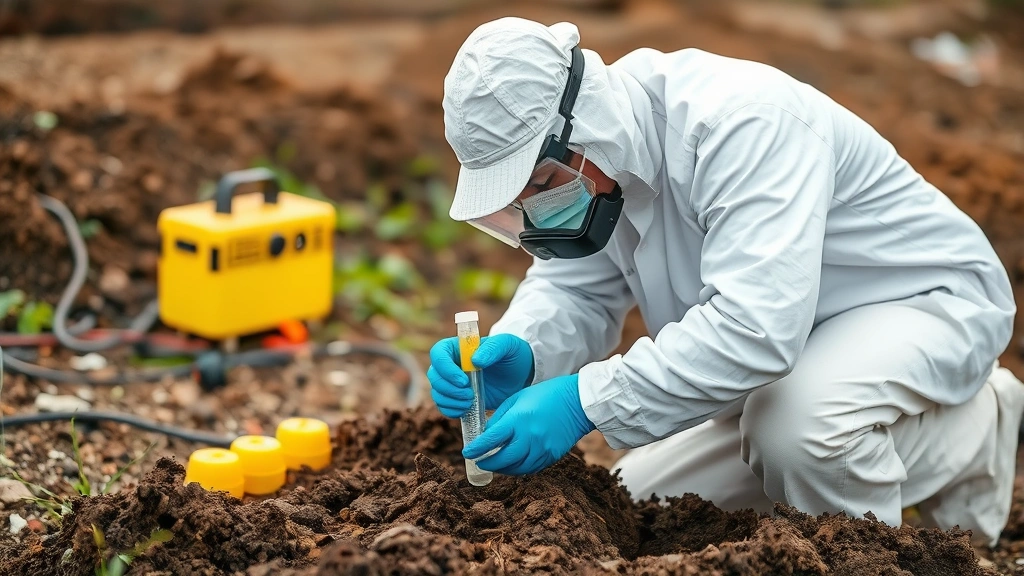
Soil contamination creates persistent environmental and economic challenges that extend across decades or centuries. Unlike water or air contamination that may disperse through environmental transport, soil contaminants remain concentrated in place, creating long-term liability exposure and restricting land use options. The Tustin laboratory provides soil characterization and remediation verification services critical for managing contaminated sites throughout Southern California’s industrial regions.
Soil testing addresses multiple contamination scenarios:
- Legacy contamination: Historical industrial activities, underground storage tanks, and improper waste disposal creating persistent chemical residues
- Current operations: Ongoing industrial discharge, agricultural chemical application, and waste management practices introducing new contaminants
- Remediation verification: Post-treatment sampling confirming that cleanup efforts have achieved regulatory standards
- Development assessment: Baseline characterization enabling risk-based remedial decisions for property redevelopment
The economic implications of soil contamination extend through multiple stakeholder groups. Property owners face diminished asset values and potential liability for cleanup costs. Developers encounter delays and increased project costs navigating remediation requirements. Communities experience restricted land use options, limiting economic development opportunities in contaminated areas. Environmental remediation represents a substantial economic sector, with testing data driving investment decisions and cleanup strategy optimization.
Air Quality and Emissions Monitoring
Air quality degradation imposes substantial health costs across exposed populations while constraining industrial operations through emissions regulations. The Tustin laboratory conducts air quality testing addressing both ambient air monitoring and facility-specific emissions assessment. California’s stringent air quality standards create significant testing demand as industries must demonstrate compliance with increasingly restrictive limits on criteria pollutants and toxic air contaminants.
Air testing services include:
- Criteria pollutants: Ozone precursors (NOx, VOCs), particulate matter (PM2.5, PM10), sulfur dioxide, and carbon monoxide affecting regional air quality attainment status
- Toxic air contaminants: Benzene, formaldehyde, heavy metal compounds, and other substances presenting cancer or non-cancer health risks
- Greenhouse gases: Carbon dioxide, methane, and other climate-forcing compounds increasingly subject to regulatory scrutiny and voluntary disclosure requirements
- Source characterization: Industrial emissions testing identifying pollution sources and quantifying contribution to regional air quality problems
The economic costs of air pollution represent one of environmental degradation’s most substantial impact categories. World Health Organization estimates attribute 7 million annual deaths to air pollution exposure, with economic costs exceeding $5 trillion annually through healthcare expenditures, productivity losses, and ecosystem damage. Accurate emissions testing enables industries to optimize pollution control investments, demonstrating that environmental protection and economic efficiency often align rather than conflict.
Regulatory Compliance and Standards
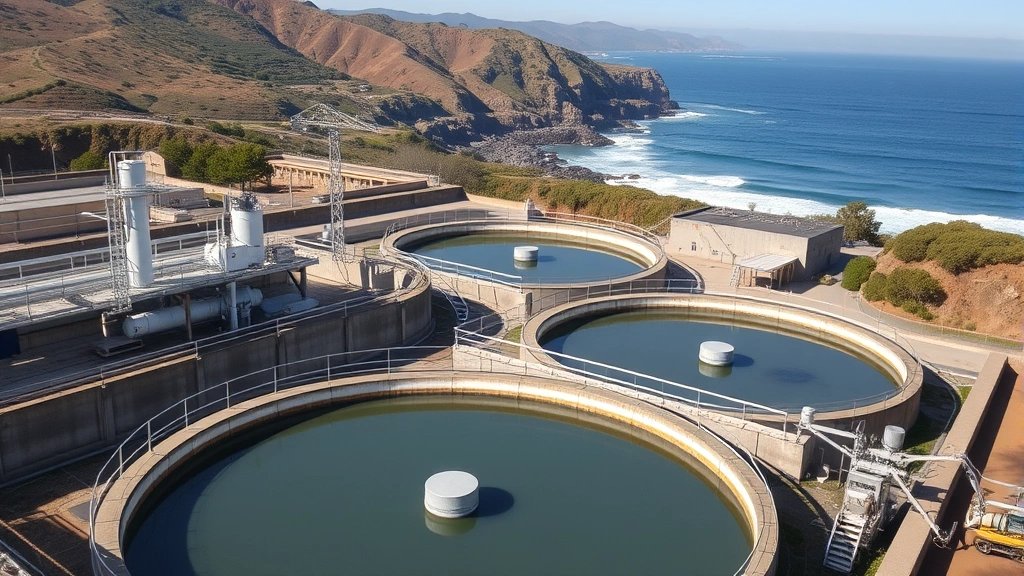
Environmental regulations establish mandatory testing requirements that create the economic foundation for laboratory services. Eurofins Tustin operates within a complex regulatory framework encompassing federal standards (Clean Water Act, Clean Air Act, Resource Conservation and Recovery Act), California-specific regulations (often more stringent than federal requirements), and local ordinances addressing regional environmental concerns.
Key regulatory frameworks requiring Eurofins services:
- National Pollutant Discharge Elimination System (NPDES): Requiring wastewater treatment facilities and industrial operations to monitor effluent quality, with Eurofins providing testing data documenting compliance with permit limits
- Safe Drinking Water Act: Mandating water quality testing at municipal utilities and private water systems, creating sustained demand for drinking water analysis services
- California Environmental Quality Act (CEQA): Requiring environmental impact assessment for development projects, generating demand for baseline environmental characterization and contamination screening
- Remedial Action Plans (RAPs): Requiring contaminated site cleanup under state and federal oversight, with Eurofins providing remediation verification testing
- Air Quality Management Plans: Requiring emissions monitoring and source characterization as regions work toward air quality attainment, generating demand for industrial emissions testing
Regulatory compliance creates what economists call derived demand—industries must purchase testing services not because they directly value environmental information, but because regulations mandate testing as a condition of operation. This regulatory foundation ensures stable demand for laboratory services while creating incentives for testing quality and reliability. Companies that produce inaccurate environmental data face enforcement actions, operational shutdowns, and liability exposure—consequences that drive demand for accredited, reliable testing providers like Eurofins.
Cost-Benefit Analysis of Environmental Testing
The economic justification for environmental testing extends beyond regulatory compliance to encompass risk management, operational optimization, and strategic positioning. Organizations conducting comprehensive environmental testing gain competitive advantages through multiple channels:
Risk Mitigation: Environmental testing identifies contamination before it becomes a public health crisis or regulatory enforcement issue. Early detection enables remediation under controlled conditions, avoiding catastrophic liability exposure. A single environmental enforcement action can cost millions in cleanup, penalties, and operational disruption—investments in preventive testing represent highly cost-effective insurance against these scenarios.
Operational Efficiency: Testing data enables process optimization that reduces both environmental impact and operational costs. Wastewater treatment facilities use water quality testing to optimize chemical dosing, reducing treatment costs while improving discharge quality. Industrial facilities use emissions testing to identify efficiency improvements reducing fuel consumption and emissions simultaneously. These win-win scenarios demonstrate that environmental protection and economic efficiency often align.
Market Access: Supply chain pressures increasingly require environmental testing documentation. Large retailers, automotive manufacturers, and consumer goods companies demand environmental compliance evidence from suppliers, creating market access requirements for smaller companies. Eurofins’ testing services enable suppliers to document compliance, accessing premium market segments willing to pay for verified environmental performance.
Stakeholder Confidence: Transparent environmental testing builds stakeholder trust with communities, investors, and regulators. Companies demonstrating commitment to environmental monitoring gain social license to operate, reducing conflict with environmental organizations and community groups. This intangible benefit often translates into tangible value through smoother permitting processes, reduced litigation risk, and enhanced corporate reputation.
The cost of environmental testing typically ranges from hundreds to thousands of dollars per analysis, with comprehensive environmental assessments potentially reaching tens of thousands. However, these costs pale against potential liability exposure. A single contaminated site can require millions in remediation costs, with liability potentially extending across multiple parties and decades. Testing costs represent rational risk management investments for organizations with significant environmental exposure.
Integration with Sustainability Strategies
Leading organizations increasingly integrate environmental testing into comprehensive sustainability strategies that extend beyond regulatory compliance. This represents a fundamental shift in how businesses approach environmental management—from viewing testing as a compliance burden to recognizing it as strategic intelligence supporting competitive advantage and long-term value creation.
Companies pursuing carbon neutrality goals rely on testing data quantifying greenhouse gas emissions across operations. The International Carbon Disclosure Standards Board increasingly requires companies to provide verified emissions data, creating demand for testing services documenting carbon footprint reduction progress. Organizations can implement strategies to reduce carbon footprint more effectively when environmental testing provides baseline data and tracks progress toward reduction targets.
Similarly, companies investing in renewable energy and sustainable operations benefit from testing data demonstrating environmental benefits. Solar installations, wind facilities, and energy efficiency projects generate measurable emissions reductions that testing can quantify, supporting investment justification and performance documentation.
Organizations addressing water pollution through pollution prevention programs rely on water quality testing to document improvement. Industrial facilities implementing pollution prevention measures use Eurofins testing to demonstrate that interventions achieve intended environmental benefits, building internal support for continued investment in environmental protection.
Supply chain transparency initiatives increasingly require environmental testing documentation. Companies pursuing sustainable supply chain practices demand that suppliers provide testing evidence of environmental compliance, creating cascading demand for testing services throughout production networks. Eurofins’ distributed laboratory network enables suppliers across geographic regions to access consistent, comparable testing services supporting supply chain transparency.
This integration of testing into sustainability strategy represents a maturing approach to environmental management. Rather than treating testing as a cost center focused on regulatory compliance, forward-thinking organizations recognize environmental testing as a strategic asset generating competitive intelligence, risk mitigation, and stakeholder confidence. The Tustin facility participates in this evolution by supporting organizations pursuing comprehensive environmental stewardship aligned with economic sustainability.
FAQ
What types of environmental samples does Eurofins Tustin accept?
The Tustin laboratory accepts water samples (drinking water, wastewater, groundwater, surface water), soil and sediment samples, air samples collected through specialized equipment, and biological samples for ecological assessment. Sample handling procedures vary by analysis type, and laboratory staff provide guidance on proper collection and preservation methods.
How long do environmental test results typically require?
Turnaround time varies substantially based on analysis complexity. Standard drinking water testing may require 5-10 business days, while complex contaminant analyses or microbial culture methods may require 2-4 weeks. Rush analysis services are available for urgent situations, though expedited testing typically incurs additional costs.
What accreditations and certifications does the Tustin laboratory hold?
Eurofins maintains accreditation through the American Association for Laboratory Accreditation (A2LA) and holds state certification for environmental testing. These accreditations ensure the laboratory meets rigorous quality standards, maintains proper equipment calibration, and employs qualified analytical personnel. Accreditation status provides confidence in test result reliability for regulatory and legal applications.
How do environmental testing costs compare across different analysis types?
Testing costs vary dramatically based on analysis complexity and detection limits required. Basic water chemistry testing may cost $100-300, while comprehensive contamination screening for multiple organic compounds could reach $1,000-2,000 per sample. Soil and air testing typically falls within similar ranges, with costs reflecting analytical complexity and instrumentation requirements.
Can Eurofins Tustin provide expert testimony regarding environmental testing results?
Yes, Eurofins maintains qualified experts available for regulatory hearings, litigation support, and administrative proceedings. Laboratory scientists can explain testing methodologies, discuss result interpretation, and address technical questions regarding environmental data. This expert support adds substantial value for organizations navigating complex environmental disputes or regulatory challenges.
How does environmental testing support environmental justice concerns?
Environmental testing provides objective data documenting pollution exposure in communities disproportionately affected by industrial activities. Communities experiencing elevated ambient pollution or contaminated water supplies can commission independent testing through Eurofins, generating scientific evidence supporting environmental justice claims. This testing capability represents an important accountability mechanism for communities seeking remediation of historical environmental inequities.


