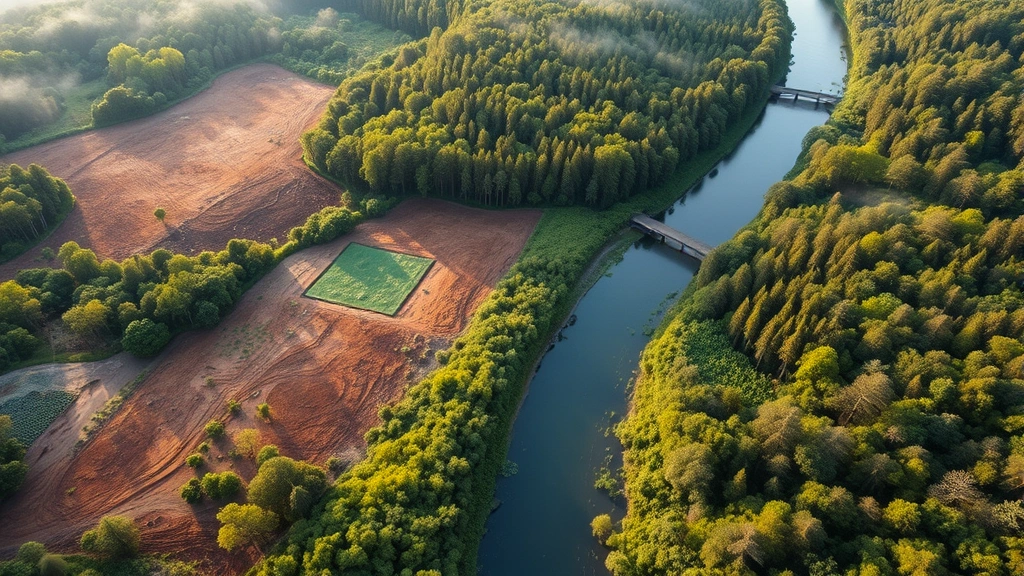
Economy vs Ecosystems: Can Balance Be Achieved?
The tension between economic growth and ecological preservation represents one of the most pressing challenges of our time. For decades, policymakers have treated these objectives as mutually exclusive, assuming that environmental protection inevitably constrains economic development. However, emerging research in ecological economics suggests that this binary framing fundamentally misunderstands the relationship between human prosperity and natural systems. The question is no longer whether balance is possible, but rather how we can restructure our economic frameworks to recognize that ecosystem health is not a constraint on growth—it is the foundation of it.
Global economic systems currently operate on assumptions developed during an era of apparent resource abundance. We have extracted, consumed, and discarded at rates that far exceed planetary regeneration capacity. Meanwhile, ecosystem degradation costs the global economy an estimated $125 trillion annually in lost natural capital and services. This paradox reveals a critical accounting failure: our GDP measurements ignore the depletion of the natural assets upon which all economic activity depends. Understanding this relationship is essential for anyone seeking to comprehend modern environmental policy, corporate sustainability initiatives, and the future of global commerce.
The False Choice: Understanding Economic-Ecological Separation
The modern economy emerged from industrial frameworks that treated nature as an infinite externality—a free resource available for unlimited exploitation. This conceptual separation created what ecological economists call the “empty world to full world” transition. For most of human history, natural capital was abundant relative to human-made capital. Forests, fisheries, and freshwater aquifers seemed inexhaustible. Economic theory developed accordingly, prioritizing the scarcity of manufactured goods and labor while ignoring ecological limits.
Today, we inhabit a fundamentally different reality. We have transitioned to a full world where natural capital is the limiting factor. Yet our economic institutions have not evolved to reflect this shift. The result is systematic overexploitation of human environment interaction patterns that undermine long-term prosperity. Fisheries collapse despite growing demand. Agricultural soils degrade as productivity increases. Atmospheric carbon accumulates despite renewable energy deployment. These apparent contradictions dissolve when we recognize that we are attempting to operate a full-world economy using empty-world assumptions.
The World Bank estimates that natural capital accounts for approximately 26% of total wealth in developing countries and 13% in developed nations. Yet most economic policy ignores this asset entirely. National accounting systems record the harvest of timber as income rather than capital depletion. Oil extraction appears as profit rather than asset liquidation. This accounting error creates systematic incentives for overexploitation. A government maximizing measured GDP faces pressure to cut forests, drain aquifers, and deplete fisheries—activities that register as economic gains while representing catastrophic capital losses.
Understanding this framework is crucial for grasping why conventional economic growth has become increasingly decoupled from genuine welfare improvements. Nations reporting strong GDP growth often experience deteriorating environmental conditions, public health outcomes, and social cohesion. The disconnect reflects our failure to account for natural capital depletion in our primary measure of progress.

Natural Capital and Ecosystem Services: Reframing Value
The ecosystem services framework represents a crucial intellectual bridge between ecological and economic thinking. This approach quantifies the economic value of benefits that natural systems provide: carbon sequestration, water purification, pollination, flood regulation, and nutrient cycling. Research from the United Nations Environment Programme indicates that ecosystem services worth trillions of dollars annually remain unpriced in market transactions.
Consider pollination services. Approximately 75% of global food crops depend partially or entirely on animal pollination, predominantly from wild bees. The economic value of this service exceeds $15 billion annually in the United States alone. Yet agricultural economics typically treats pollination as free, creating perverse incentives to deploy pesticides that destroy pollinator populations while reducing labor costs. Only when we recognize pollination as valuable natural capital do rational economic policies emerge—such as maintaining wildflower corridors and reducing agrochemical use.
The natural capital approach reveals that ecosystem degradation represents not environmental failure but economic loss. Wetland destruction eliminates flood regulation services that would otherwise require expensive infrastructure. Mangrove clearing removes nurseries for commercial fish species while increasing coastal vulnerability to storms. Forest loss accelerates climate change while reducing water cycle regulation that supports agriculture. Each of these ecological changes has measurable economic consequences that conventional accounting ignores.
However, the ecosystem services framework has limitations. Translating all natural values into monetary terms risks reducing nature to commodities and enabling offsetting logic that permits destruction in one location if compensated elsewhere. A more sophisticated approach recognizes critical thresholds—ecosystem functions that cannot be substituted or replaced beyond certain degradation points. Tropical rainforests, for instance, generate rainfall patterns essential for regional agriculture and global climate regulation. No economic compensation justifies their conversion to pastureland below critical forest coverage thresholds.
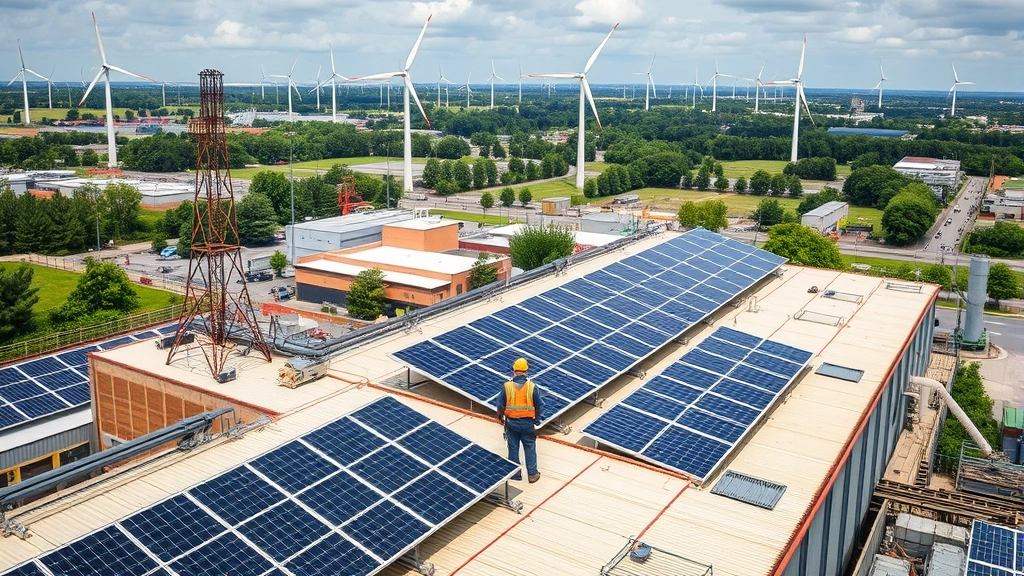
This reframing connects directly to broader discussions about how to reduce carbon footprint at systemic levels. When we recognize carbon sequestration as valuable natural capital, the economic logic for renewable energy for homes and infrastructure becomes irrefutable. The cost of renewable infrastructure is justified not merely by energy independence but by the avoided cost of climate damage and the preserved value of atmospheric carbon absorption capacity.
Mechanisms for Integration: Policy and Market Solutions
Achieving genuine balance between economic activity and ecosystem health requires institutional innovations that embed ecological constraints into economic decision-making. Multiple policy mechanisms have emerged, each with distinct advantages and limitations.
Carbon pricing represents the most extensively implemented mechanism. By assigning monetary value to greenhouse gas emissions, carbon taxes and cap-and-trade systems create economic incentives to reduce atmospheric damage. The World Bank’s Carbon Pricing Dashboard tracks over 60 carbon pricing initiatives covering approximately 23% of global greenhouse gas emissions. These mechanisms demonstrate that market-based approaches can align economic incentives with ecological necessity. However, current carbon prices remain too low to reflect the true cost of climate damage, typically ranging from $1 to $50 per ton while economic models suggest optimal prices exceed $100 per ton.
Payment for ecosystem services programs compensate landowners for maintaining natural capital. Costa Rica’s pioneering program pays farmers to preserve forests, achieving remarkable success in reversing deforestation while maintaining rural livelihoods. These mechanisms work by converting ecosystem services from unpriced externalities into revenue streams, making conservation economically competitive with extractive industries. However, scale remains limited, and effectiveness depends on accurate valuation of ecosystem services—a technically challenging and politically contested process.
Regulatory approaches including environmental impact assessments, protected areas, and pollution standards represent mandatory integration of ecological constraints into economic activity. These mechanisms avoid the complexity of valuation by establishing non-negotiable ecological minimums. The challenge lies in setting appropriate standards and preventing regulatory capture by industries seeking to weaken protections. When effectively implemented, however, regulations prove remarkably effective at achieving conservation goals.
Circular economy frameworks represent a structural approach to economic-ecological integration. Rather than linear extraction-production-waste systems, circular models emphasize material recovery, reuse, and regeneration. Sustainable fashion brands and comprehensive guides exemplify this transition, demonstrating that consumer industries can operate on circular principles while remaining economically viable. Circular systems reduce natural capital extraction while often improving economic efficiency through waste reduction and material recovery.
Corporate Innovation and Circular Economy Models
Leading corporations increasingly recognize that ecological integration enhances rather than constrains profitability. This shift reflects both genuine sustainability commitments and hard-nosed economic calculation. Companies reducing material intensity improve cost efficiency. Organizations managing supply chain environmental risks avoid disruption from resource scarcity. Firms addressing consumer demand for sustainability access premium markets.
Patagonia’s business model demonstrates that environmental commitment can drive commercial success. By using recycled materials, supporting environmental activism, and designing durable products, Patagonia attracts environmentally conscious consumers willing to pay premium prices. The company’s transparency about environmental impact builds brand loyalty while driving operational improvements. This model proves that ecological responsibility and profitability can align—though it requires viewing environmental investment as brand value creation rather than cost minimization.
Interface, a carpet manufacturer, pioneered industrial circular economy principles. Facing pressure from environmental concerns, the company shifted from selling carpet to leasing floor covering services. This structural change aligned economic incentives with environmental responsibility: Interface profits from carpet longevity and material recovery rather than volume sales. Customers benefit from simplified maintenance and disposal. Ecosystems benefit from reduced material extraction and waste. The model demonstrates that business model innovation can resolve apparent conflicts between economic and ecological interests.
However, corporate sustainability initiatives face persistent critiques. Greenwashing—presenting environmental improvements while maintaining fundamentally extractive business models—remains common. Carbon offset programs sometimes fund projects that would have occurred anyway, failing to achieve genuine emissions reductions. Circular economy claims often mask continued high material throughput. These limitations suggest that corporate innovation, while necessary, cannot substitute for systemic policy changes that align economic incentives with ecological necessity.
Measuring Progress: Beyond GDP
Genuine economic-ecological balance requires accounting systems that measure what matters. GDP, measuring total monetary transactions, cannot distinguish between activities that enhance welfare and those that merely compensate for environmental damage. A hurricane followed by reconstruction-driven spending increases GDP despite reducing genuine prosperity. Forest harvest counts as income rather than capital depletion. Healthcare spending treating pollution-induced illness registers as economic growth.
Alternative accounting frameworks address these failures. Genuine Progress Indicator (GPI) adjusts GDP for environmental degradation, resource depletion, income inequality, and non-market activities including household work and volunteering. Adjusted Net Savings measures national wealth accounting for human capital, manufactured capital, natural capital, and environmental damage. These frameworks reveal that many high-GDP nations have experienced stagnant or declining genuine wealth for decades despite reported economic growth.
The World Bank’s Wealth Accounting and Valuation of Ecosystem Services initiative implements comprehensive natural capital accounting across nations. Results demonstrate that countries with stable or declining natural capital face long-term economic vulnerability despite short-term GDP growth. Nations investing in natural capital preservation, conversely, demonstrate more resilient economic trajectories.
Shifting measurement frameworks creates political pressure for policy change. When natural capital depletion becomes visible in official statistics, continued extraction becomes indefensible. When genuine welfare improvements diverge from GDP growth, policymakers face pressure to pursue genuine progress. New Zealand, Scotland, and Finland have adopted wellbeing frameworks in budget allocation, explicitly prioritizing genuine welfare over GDP maximization. These initiatives remain exceptions, but they demonstrate institutional feasibility of measurement-driven policy reform.
Understanding these measurement challenges connects to broader environmental awareness discussed in our exploration of environmental challenges and solutions. When we measure economic progress accurately, the urgency of ecological investment becomes undeniable.
FAQ
Can economies grow while reducing environmental impact?
Absolute decoupling—economic growth with declining environmental impact—has occurred in some wealthy nations. Germany, Denmark, and the United Kingdom have reduced emissions while maintaining or growing GDP, primarily through efficiency improvements and sectoral shifts toward services. However, global decoupling remains elusive. High-income nations often achieve domestic decoupling by outsourcing production to lower-income countries with weaker environmental regulations. When accounting for consumption-based emissions, most wealthy nations continue increasing their environmental footprints. Genuine global decoupling requires structural economic transformation beyond current policy trajectories.
What role should governments play versus markets?
Both mechanisms prove necessary. Markets excel at allocating resources efficiently when prices reflect true costs, but markets systematically fail to price environmental externalities. Governments must establish frameworks ensuring prices incorporate ecological costs through carbon pricing, pollution regulations, and natural capital accounting. However, government regulation alone cannot achieve efficient resource allocation without market mechanisms enabling flexible adaptation. Optimal policy combines regulatory minimums with economic incentives aligning market outcomes with ecological necessity.
How do developing nations balance growth with environmental protection?
This represents perhaps the most challenging policy question. Wealthy nations industrialized by exploiting natural resources and externalizing environmental costs. Asking developing nations to constrain growth for environmental protection appears inequitable. However, development pathways followed by wealthy nations prove increasingly impossible—atmospheric carbon limits and biodiversity loss create hard constraints. Developing nations benefit from leapfrogging directly to clean technologies, supported by international finance and technology transfer. Green bonds, climate finance, and intellectual property reforms can enable development without repeating the environmentally destructive trajectories of wealthy nations.
What are the biggest barriers to economic-ecological integration?
Institutional inertia represents perhaps the largest barrier. Existing regulations, tax structures, accounting systems, and supply chains evolved assuming environmental externalities. Transforming these systems requires political will, technical expertise, and capital investment. Short-term economic costs of transition create political opposition despite long-term benefits. Additionally, power concentrations in extractive industries generate political pressure against policies threatening profit models. International coordination challenges persist—nations fear competitive disadvantage from unilateral environmental policies. Overcoming these barriers requires coordinated policy reform, technological innovation, and evolving public understanding of economic-ecological relationships.
What individual actions most effectively promote economic-ecological balance?
Individual consumption choices matter but cannot substitute for systemic change. Reducing material consumption, choosing sustainable products, and supporting environmental organizations all contribute. However, systemic transformation requires policy change that individual action cannot achieve. The most effective individual contribution involves political engagement: supporting candidates and policies promoting natural capital accounting, carbon pricing, and circular economy frameworks. Workplace advocacy, professional expertise application to sustainability challenges, and community organizing often yield greater impact than personal consumption optimization alone.


