
AI’s Environmental Impact: In-Depth Study
Artificial intelligence has emerged as one of the most transformative technologies of our era, revolutionizing industries from healthcare to finance. Yet beneath the promise of innovation lies a critical environmental paradox: the infrastructure powering AI systems consumes staggering amounts of energy and water, generating carbon emissions that rival entire nations. As organizations worldwide race to deploy large language models and machine learning systems, understanding how bad AI is for the environment has become essential for policymakers, technologists, and conscious consumers alike.
The environmental cost of artificial intelligence extends far beyond electricity consumption. Data centers hosting AI models require cooling systems, rare earth minerals for hardware, and vast quantities of freshwater. Manufacturing semiconductors produces toxic waste, while the disposal of obsolete computing equipment contributes to global e-waste streams. This comprehensive examination explores the multifaceted environmental consequences of AI development and deployment, examining both the direct impacts and systemic challenges that demand urgent attention.
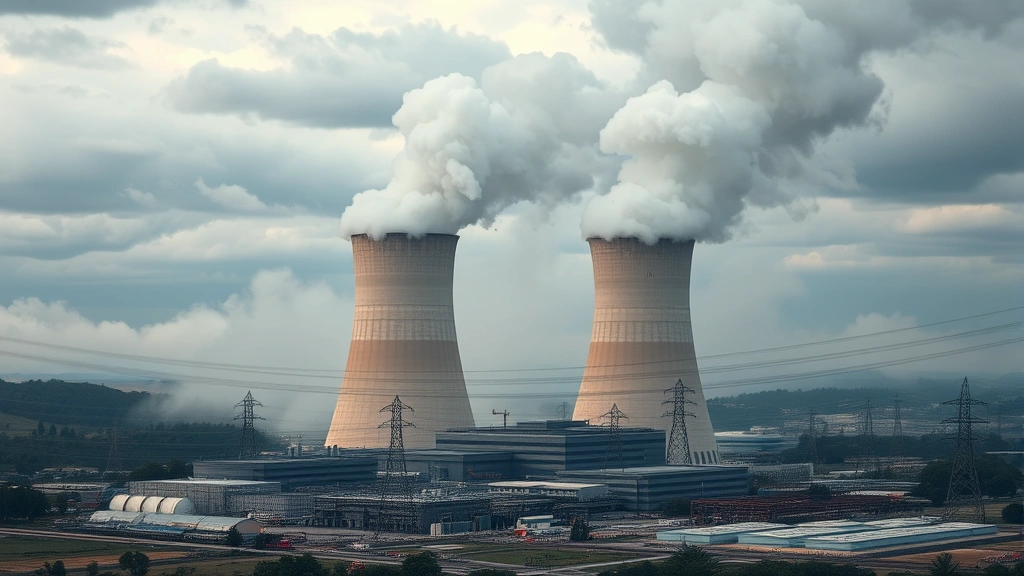
Energy Consumption and Carbon Emissions
Training a single large language model can consume between 1,300 to 1,500 megawatt-hours of electricity, equivalent to the annual energy usage of approximately 130 average American homes. OpenAI’s GPT-3, one of the most widely discussed AI models, generated an estimated 552 metric tons of carbon dioxide equivalent during its training phase alone. These figures represent only the initial training stage; inference—the ongoing process of running trained models for user queries—multiplies these energy demands exponentially across millions of daily interactions.
The carbon intensity of AI operations varies significantly based on regional electricity grids. Data centers powered by renewable energy sources emit substantially fewer greenhouse gases than those relying on fossil fuels. A facility operating in a region with 80% renewable electricity might produce one-tenth the emissions of an identical facility in a coal-dependent region. This geographic disparity has prompted major technology companies to establish data centers in areas with abundant hydroelectric or wind power, yet this strategy remains limited by infrastructure availability and economic constraints.
Hyperscale data centers—the massive facilities required for modern AI systems—consume between 1 to 2.3 megawatts of power per 100 square meters, far exceeding typical commercial buildings. The International Energy Agency projects that data center electricity consumption could increase by 50% by 2026, with AI training and inference contributing disproportionately to this growth. This trajectory poses significant challenges for global climate commitments, as the technology sector must simultaneously scale operations while reducing carbon intensity.

Water Usage and Data Center Operations
Water consumption represents an often-overlooked dimension of AI’s environmental footprint. Data centers require enormous quantities of water for cooling systems that prevent server overheating. A single data center can consume between 300,000 to 750,000 gallons of water daily, depending on cooling efficiency and local climate conditions. In water-scarce regions, this demand creates direct competition with agricultural irrigation, municipal drinking water supplies, and ecosystem health.
The relationship between AI infrastructure and water scarcity has intensified as companies expand operations in arid regions. Taiwan Semiconductor Manufacturing Company’s operations and similar semiconductor facilities have faced criticism for their water consumption in drought-affected areas. Google’s data centers in the United States consume approximately 4.3 liters of water per kilowatt-hour of energy produced, translating to billions of gallons annually across their global infrastructure. The water withdrawal footprint extends beyond cooling; semiconductor manufacturing requires ultra-pure water for silicon processing, intensifying demand in already stressed water systems.
Emerging cooling technologies—including immersion cooling, liquid cooling systems, and AI-optimized thermal management—show promise for reducing water consumption by 30-50% compared to traditional air-cooling methods. However, widespread adoption remains limited by capital investment requirements and technical barriers. Understanding the connection between human environment interaction and technological infrastructure reveals how AI development affects vulnerable populations dependent on local water resources.
Hardware Manufacturing and Supply Chains
The production of AI-specific hardware—GPUs, TPUs, and specialized processors—generates substantial environmental impacts before devices ever reach data centers. Manufacturing a single semiconductor requires approximately 72,000 liters of water and produces significant chemical waste streams. The extraction of rare earth elements, essential for modern electronics, involves environmentally destructive mining practices that contaminate soil and water supplies across Asia, Africa, and Latin America.
Global semiconductor production generates hazardous waste including hydrofluoric acid, phosphoric acid, and various organic solvents. Improper handling and disposal of these substances has created environmental disasters in manufacturing regions, with documented cases of groundwater contamination affecting millions of people. The concentration of semiconductor manufacturing in a few geographic regions—particularly Taiwan, South Korea, and China—has created environmental sacrifice zones where local ecosystems and human health bear disproportionate costs.
Supply chain complexity amplifies environmental consequences. Extracting cobalt for batteries powering AI infrastructure involves labor exploitation and ecosystem destruction in the Democratic Republic of Congo. Aluminum smelting for computer frames consumes 15,000 kilowatt-hours of electricity per ton, predominantly powered by fossil fuels in major producing nations. The cumulative environmental burden of assembling a single AI processor encompasses mining, chemical processing, manufacturing, transportation, and packaging—each stage generating emissions and waste.
The push for shorter model development cycles encourages rapid hardware iteration, shortening the useful lifespan of expensive equipment. This accelerated obsolescence cycle directly contradicts principles of circular economy and resource efficiency, driving continuous extraction and manufacturing demands.
E-Waste and Electronic Recycling Challenges
Electronic waste from discarded AI infrastructure represents one of the fastest-growing waste streams globally. Approximately 57 million metric tons of e-waste are generated annually worldwide, with only 17-20% receiving proper recycling treatment. The remainder ends up in landfills or informal recycling operations, where toxic materials leach into soil and groundwater. Obsolete AI hardware—including GPUs, processors, and server components—comprises an increasing portion of this waste stream.
Extracting valuable materials from e-waste through informal recycling operations exposes workers to hazardous conditions. In regions including Ghana, India, and Nigeria, informal recyclers burn circuit boards to access gold, copper, and aluminum, inhaling toxic fumes and handling lead-containing solder without protective equipment. This practice generates severe health consequences while recovering only a fraction of valuable materials compared to industrial recycling processes.
Formal e-waste recycling infrastructure remains inadequate to handle current volumes, let alone projected increases from accelerating AI deployment. Building sufficient recycling capacity requires substantial capital investment and regulatory frameworks that currently exist in only a handful of countries. The economics of e-waste recycling remain challenging; labor costs in developed nations often exceed the value of recovered materials, creating disincentives for proper processing.
Comparative Analysis with Other Industries
Contextualizing AI’s environmental impact requires comparison with other technology sectors and industries. Cloud computing infrastructure as a whole accounts for approximately 2-3% of global greenhouse gas emissions, comparable to the aviation industry. Within this sector, AI and machine learning represent the fastest-growing segment, with energy consumption doubling approximately every 3.5 months according to recent research trajectories.
Bitcoin and cryptocurrency mining operations, frequently cited as environmental villains, consume approximately 120 terawatt-hours annually. AI training and inference operations are approaching comparable scales, with projections suggesting AI could match or exceed cryptocurrency energy consumption within five years. However, AI provides productive applications across healthcare, scientific research, and business operations, whereas cryptocurrency’s environmental cost is concentrated in speculative value creation.
The semiconductor industry’s water consumption exceeds that of many agricultural sectors in water-intensive regions. A single semiconductor fabrication plant consumes more water than a city of 500,000 residents. As AI demand drives semiconductor expansion, competition for water resources in critical regions will intensify, potentially displacing agricultural production and exacerbating food security challenges. Understanding these trade-offs requires examining how to reduce carbon footprint across all technology infrastructure investments.
Mitigation Strategies and Green AI Solutions
Several promising approaches aim to reduce AI’s environmental footprint. Model efficiency improvements represent the most impactful strategy; developing smaller models that achieve comparable performance to larger systems could reduce training energy requirements by 80-90%. Techniques including knowledge distillation, pruning, and quantization enable deployment of capable AI systems using substantially fewer computational resources.
Transitioning data center power supplies to renewable energy sources provides immediate emissions reductions. Companies including Google, Microsoft, and Amazon have committed to 100% renewable energy operations, though achieving this goal requires substantial infrastructure investment and geographic flexibility. Renewable energy for homes and data centers represents a critical pathway toward decarbonizing AI infrastructure, requiring policy support and technological advancement in grid management and energy storage.
Circular economy principles applied to hardware manufacturing could reduce extraction demands and e-waste generation. Extended producer responsibility policies requiring manufacturers to manage end-of-life products incentivize design for recyclability and durability. Modular hardware architectures enabling component upgrades rather than complete replacement could significantly extend device lifespans and reduce manufacturing impacts.
Geographical optimization of data center placement near renewable energy sources and cold-water resources can reduce both carbon emissions and water consumption. Additionally, implementing advanced cooling technologies and AI-optimized power management systems can improve operational efficiency by 20-40%. These technical solutions require investment and policy frameworks supporting their deployment.
Economic Perspectives on Environmental Costs
From ecological economics perspectives, AI’s environmental impacts represent externalized costs not reflected in market prices or corporate financial statements. The World Bank estimates that environmental externalities in technology sectors may reach 5-15% of industry revenues when accounting for carbon, water, mining impacts, and e-waste management costs. These hidden costs ultimately transfer to society through climate change damages, water scarcity, ecosystem degradation, and public health burdens.
Carbon pricing mechanisms, including cap-and-trade systems and carbon taxes, could incentivize emissions reductions in AI infrastructure. However, current carbon prices ($5-50 per ton in most systems) remain too low to substantially alter investment decisions favoring energy-intensive AI systems. Implementing carbon prices reflecting true climate damages ($100-200+ per ton according to environmental economic analyses) would fundamentally shift the economics of AI development toward efficiency-focused approaches.
The United Nations Environment Programme has called for comprehensive environmental impact assessments of AI systems prior to deployment, similar to environmental review processes for large infrastructure projects. Such requirements would force consideration of water consumption, carbon emissions, and e-waste generation during development stages, enabling more sustainable design choices.
Economic analyses reveal that investing in AI efficiency improvements and renewable energy transitions generates superior long-term returns compared to business-as-usual approaches. A study in Nature Climate Change found that implementing efficiency improvements and renewable energy transitions could reduce AI sector emissions by 80% while maintaining computational capacity growth. These investments require upfront capital but generate returns through reduced operational costs and avoided climate damages.
The economic case for sustainable AI strengthens when considering ecosystem services and resource scarcity. As water becomes increasingly scarce and climate change impacts accelerate, the true economic cost of water-intensive data centers and carbon-heavy operations will rise substantially. Early investment in sustainable infrastructure positions companies to manage future costs while capturing competitive advantages in resource-constrained environments.
Labor economics in AI development also merit consideration. Hostile work environment conditions in semiconductor manufacturing and e-waste recycling reflect the human dimensions of AI’s environmental footprint. Fair labor practices, workplace safety standards, and living wages for workers in supply chains represent essential components of truly sustainable AI systems.
Policy frameworks supporting sustainable AI development require coordination across multiple governance levels. National governments can establish carbon pricing, renewable energy mandates, and e-waste regulations. International agreements like the UNEP’s Digital Transformation and Sustainable Development initiatives can harmonize standards and facilitate technology transfer. Corporate commitments, while valuable, require regulatory backing to ensure genuine environmental improvements.
FAQ
How much electricity does training a large AI model consume?
Training major language models like GPT-3 consumes approximately 1,300-1,500 megawatt-hours of electricity, equivalent to the annual energy usage of 130 American households. This represents only the initial training phase; ongoing inference operations multiply energy consumption significantly.
What percentage of global emissions does AI contribute?
AI and machine learning currently account for approximately 0.5-1% of global greenhouse gas emissions, though this share is growing rapidly. Projections suggest AI could reach 2-3% of global emissions by 2030 without substantial efficiency improvements and renewable energy transitions.
Why do AI data centers require so much water?
Data centers require enormous water quantities for cooling systems that prevent server overheating. A single facility consumes 300,000-750,000 gallons daily depending on cooling technology and climate. Water cooling efficiency remains superior to air cooling but generates substantial consumption in water-scarce regions.
Can renewable energy fully power AI infrastructure?
While renewable energy can technically power AI systems, practical challenges remain substantial. Geographic limitations, seasonal variability, and storage requirements complicate 100% renewable transitions. However, increasing renewable energy penetration to 80-90% is technically and economically feasible with current technology and policy support.
What are the most effective ways to reduce AI’s environmental impact?
The most impactful strategies include: developing more efficient AI models requiring fewer computational resources; transitioning data centers to renewable energy; implementing advanced cooling technologies; establishing circular economy practices for hardware; and establishing regulatory frameworks requiring environmental impact assessments for AI systems.
How does AI’s environmental impact compare to cryptocurrency mining?
Both sectors consume comparable energy volumes, with AI potentially exceeding cryptocurrency within five years. However, AI provides productive applications across healthcare, research, and business, while cryptocurrency’s environmental costs concentrate in speculative value creation. Both sectors require urgent efficiency improvements and renewable energy transitions.


