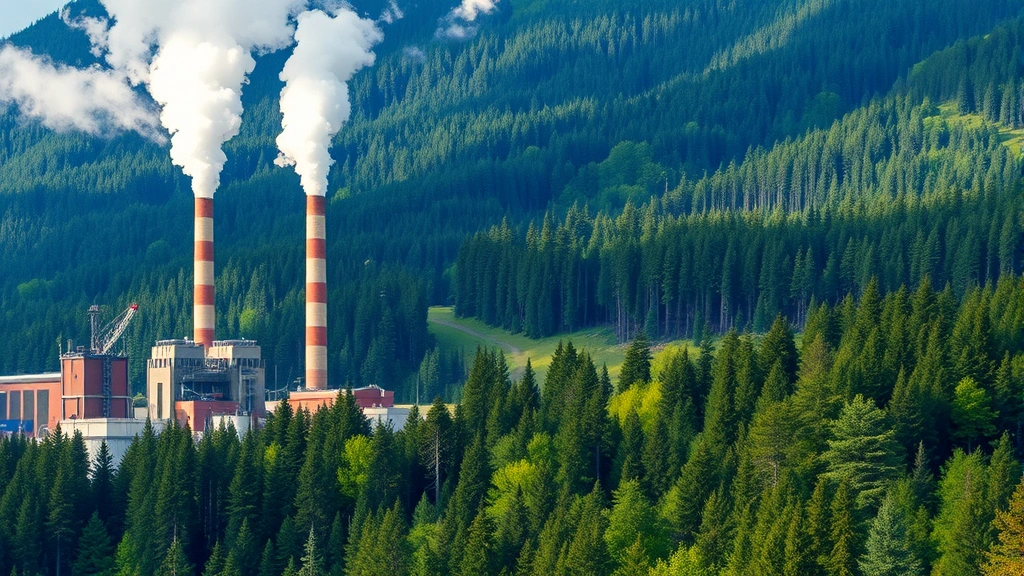
How Economy Impacts Ecosystems: An Economist’s View
The relationship between economic systems and ecological health represents one of the most critical challenges facing contemporary civilization. Economic activities—from industrial production to resource extraction, agriculture to energy generation—fundamentally reshape natural systems at local, regional, and global scales. Understanding this dynamic requires moving beyond traditional economic frameworks that externalize environmental costs, instead adopting an integrated perspective that recognizes ecosystems as both economic inputs and irreplaceable life-support systems.
An economist’s view of how the economy impacts ecosystems must acknowledge a paradox: while economic activity depends entirely on ecosystem services, conventional accounting methods systematically undervalue or ignore these dependencies. This analytical gap has contributed to decades of environmental degradation, resource depletion, and ecological collapse. By examining the mechanisms through which economic decisions cascade through natural systems, we can identify intervention points for creating more sustainable economic structures that align human prosperity with ecological integrity.

Economic Externalities and Environmental Costs
Economic externalities represent the foundation of ecosystem degradation from an economist’s perspective. Externalities occur when production or consumption activities impose costs on third parties—in this case, natural systems and future generations—without these costs being reflected in market prices. When a manufacturing facility pollutes a river, the true cost of production includes both direct expenses and environmental damage, yet only the former appears in financial accounting.
This divergence between private costs and social costs creates systematic incentives for environmental destruction. A factory operator faces market pressures to minimize costs, and since pollution costs are externalized, the rational economic actor has no financial motivation to reduce emissions. The hostile work environment that sometimes develops in high-pressure industrial settings mirrors the broader “hostility” that economic systems create within ecosystems when profit maximization overrides ecological constraints.
Quantifying these externalities remains methodologically challenging but essential for accurate economic analysis. Research indicates that environmental externalities represent 20-30% of global GDP in many sectors, with agriculture, energy, and transportation showing the highest unaccounted costs. The World Bank estimates that natural capital degradation costs developing nations approximately 4-6% of annual GDP, yet these losses barely register in conventional economic indicators.

Market Failures in Ecosystem Valuation
Ecosystems provide critical services—water purification, pollination, carbon sequestration, nutrient cycling, climate regulation—that economists classify as public goods. Public goods share two characteristics: non-excludability (preventing use is difficult or impossible) and non-rivalry (one person’s use doesn’t diminish availability for others). Because markets cannot efficiently price public goods, ecosystem services are systematically undervalued.
Consider pollination services provided by wild bee populations. Agricultural production depends entirely on these services, yet farmers pay nothing for them. When habitat loss reduces bee populations, crop yields decline and agricultural costs rise, yet the economic system attributes this to bad luck rather than recognizing it as a market failure rooted in ecosystem undervaluation. Understanding human environment interaction requires grasping how economic institutions systematically fail to capture ecosystem value.
The Stern Review on the Economics of Climate Change, commissioned by the UK government, demonstrated that accounting for climate externalities fundamentally changes cost-benefit analyses. The review found that climate change imposes costs equivalent to 5-20% of global consumption if left unmitigated, yet markets treat greenhouse gases as free waste disposal. This massive market failure has cascading effects throughout ecosystems, from coral bleaching to species range shifts to altered precipitation patterns.
Ecological economics journals increasingly document the magnitude of these valuation failures. Research from the University of Vermont found that ecosystem service values in the United States alone exceed $125 trillion annually, dwarfing measured GDP of approximately $25 trillion. Yet standard national accounting systems completely omit these values, creating the illusion that economic growth is possible while ecosystems collapse.
Industrial Systems and Biodiversity Loss
Industrial economic systems generate biodiversity loss through multiple mechanisms operating simultaneously. Habitat conversion for industrial agriculture, urban development, and resource extraction directly eliminates species. Pollution from industrial processes—heavy metals, persistent organic pollutants, microplastics—accumulates in organisms and bioaccumulates through food webs, causing population-level impacts invisible to standard economic analysis.
The economic logic of industrial agriculture exemplifies how profit maximization incentives drive ecological destruction. Monoculture farming maximizes short-term yields and mechanization efficiency, yet eliminates habitat complexity that supports biodiversity. Chemical inputs (fertilizers, pesticides) increase immediate productivity but degrade soil structure, reduce microbial diversity, and contaminate groundwater. From a conventional economic perspective, these costs are externalized; from an ecological economics perspective, they represent capital depletion of natural assets.
Global biodiversity loss now occurs at rates 100-1,000 times higher than background extinction rates documented in fossil records. The primary driver—habitat loss from economic land use—directly reflects how economic systems allocate resources. When rainforests are economically valued only for timber extraction, conversion to cattle ranching, or agricultural clearing, their preservation value as irreplaceable genetic repositories and carbon stores remains economically invisible. Learning to reduce carbon footprint requires understanding how industrial systems generate these impacts.
IMAGE_2
Resource Extraction Economics
Resource extraction industries exemplify how economic systems can treat irreplaceable natural capital as disposable commodities. Mining, logging, and fossil fuel extraction operate under economic models that ignore depletion rates, ecosystem disruption, and restoration costs. A mine operator extracts ore profitably, yet leaves behind depleted landscapes, contaminated water systems, and ecological wastelands that society bears costs for indefinitely.
The Hotelling Rule, formulated by economist Harold Hotelling in 1931, theorizes optimal extraction rates for non-renewable resources. The rule suggests resources should be extracted at rates where the price increase equals the discount rate, maximizing present value. However, this framework completely ignores ecological thresholds, ecosystem service losses, and the impossibility of substituting manufactured capital for depleted natural capital at certain scales. An economist’s view must incorporate biophysical constraints that standard economic models exclude.
Oil extraction exemplifies these dynamics. The economic value of petroleum reflects only extraction, refining, and transportation costs plus market demand, yet ignores climate impacts, ecosystem disruption at extraction sites, and pollution from consumption. When a barrel of oil sells for $70, the price reflects perhaps $10-15 of production costs and profit, but externalizes $50+ of climate and ecological costs. This systematic underpricing creates incentives for excessive extraction and consumption.
Restoration economics reveals the magnitude of externalized costs. Reclaiming mined landscapes costs $5,000-50,000 per acre depending on ecosystem type and damage severity, yet mining companies often pay reclamation bonds covering only 10-20% of actual restoration costs. When restoration bonds prove insufficient, taxpayers and future generations bear the remaining costs—a massive intergenerational transfer of wealth from society to extractive industries.
Agricultural Systems and Soil Degradation
Agriculture represents humanity’s largest land use, occupying approximately 40% of terrestrial surface area. Agricultural economics fundamentally shapes ecosystem health through soil management decisions. Industrial agriculture maximizes short-term yield through practices that degrade long-term soil health: monoculture cropping, heavy mechanization, synthetic chemical inputs, and bare soil periods.
Soil represents a critical natural capital asset that conventional economics largely ignores. A hectare of healthy agricultural soil contains 10-20 tons of living biomass per year—bacteria, fungi, arthropods, and other organisms providing nutrient cycling, water infiltration, carbon storage, and disease suppression. Industrial agriculture reduces this biological activity by 50-90%, converting living soil into inert growing medium dependent on external chemical inputs.
The economics of this transition appear profitable in standard accounting: yields increase while labor costs decline, boosting short-term farm profitability. However, ecological economics recognizes this as capital depletion. Soil carbon stocks decline 20-40% under conventional agriculture, representing carbon release to the atmosphere plus loss of soil carbon storage capacity. Erosion removes 24 billion tons of topsoil annually from agricultural lands, with replacement requiring centuries of natural soil formation.
The true cost of soil degradation becomes apparent when calculating food production costs over multi-generational timescales. Research from agricultural economics programs indicates that conventional agriculture’s soil degradation costs—lost productivity, increased input requirements, environmental cleanup—total $40-50 per ton of grain produced. Adding this cost to market prices would roughly double food prices, revealing that industrial agriculture’s apparent profitability depends entirely on externalizing soil capital depletion.
Climate Economics and Carbon Markets
Climate change represents perhaps the largest externality in economic history—the costs of greenhouse gas emissions imposed on global ecosystems and future human populations without compensation. Climate economics attempts to quantify these costs, translating physical climate impacts into economic terms.
The social cost of carbon (SCC) represents the present value of climate damages caused by one additional ton of CO2 emissions. Estimates range from $50-$250 per ton depending on discount rates, damage functions, and assumptions about climate sensitivity. This enormous range reflects deep uncertainties about future climate impacts, yet also reveals how economic valuation choices fundamentally shape climate policy. A low SCC estimate ($50/ton) suggests modest climate action is economically justified, while a high estimate ($200/ton) justifies aggressive emissions reduction.
Carbon markets attempt to address climate externalities by creating prices for greenhouse gas emissions. The logic is sound: if carbon has a price, economic actors face incentives to reduce emissions. However, carbon market implementation reveals limitations of market-based environmental solutions. Most carbon markets underprice emissions relative to actual climate damages, creating insufficient incentive for transformation. Additionally, carbon markets enable developed nations to purchase emissions reductions in developing nations rather than reducing domestic consumption, perpetuating unsustainable economic structures while providing developing nations minimal sustainable development benefits.
An economist’s view must recognize that carbon pricing alone cannot solve climate change. The required transformation—decarbonizing energy systems, agriculture, transportation, and industry—exceeds what price signals alone can accomplish. Structural economic changes in consumption patterns, production technologies, and resource allocation require complementary policy interventions beyond market mechanisms.
Policy Solutions and Economic Instruments
Addressing how economies impact ecosystems requires moving beyond market-based solutions to fundamental restructuring of economic incentives and institutions. Several policy approaches show promise from an ecological economics perspective.
Natural Capital Accounting: Incorporating ecosystem services into national accounting systems would transform economic decision-making. If countries measured genuine progress—GDP adjusted for natural capital depletion and environmental degradation—policy priorities would shift dramatically. Nations currently celebrating GDP growth while degrading natural capital would recognize this as economic decline. The environment synonyms debate aside, treating ecosystems as capital assets requiring maintenance represents a fundamental accounting reform.
Ecosystem Service Payments: Programs compensating landowners for ecosystem service provision create market incentives for conservation. Payments for ecosystem services (PES) programs compensate farmers for maintaining forest cover, wetlands, or pollinator habitat. While imperfect—PES programs often underpay for services and struggle with additionality verification—they demonstrate that economic instruments can redirect incentives toward ecosystem protection.
Circular Economy Transitions: Restructuring production and consumption toward circular systems where waste becomes input reduces both resource extraction and pollution. Circular economy principles—design for durability, reuse, remanufacturing, and recycling—reduce the throughput of virgin materials and associated ecosystem impacts. Economic analysis increasingly demonstrates that circular economy transitions offer profitability opportunities while reducing ecological pressure.
Regenerative Agriculture Economics: Agricultural systems can transition toward regenerative practices that rebuild soil carbon, increase biodiversity, and enhance productivity. While requiring upfront investment and accepting short-term yield reductions, regenerative systems demonstrate long-term economic advantages through reduced input costs, increased resilience, and premium market prices. An economist’s view must recognize that optimal agriculture maximizes ecosystem services alongside food production.
International policy frameworks increasingly acknowledge economy-ecosystem relationships. The World Bank now incorporates environmental considerations into project evaluation, though implementation remains inconsistent. The United Nations Environment Programme promotes ecosystem accounting integration into national statistics, while the UN’s Sustainable Development Goals explicitly recognize ecosystem-economy interdependencies.
However, policy implementation faces substantial obstacles. Economic interests benefiting from current externalization resist reforms that would internalize costs. Discount rates used in cost-benefit analysis systematically undervalue future ecosystem services relative to present extraction profits. Political economy dynamics often prevent economically rational environmental policies from implementation.
IMAGE_3
Toward Regenerative Economics
An economist’s comprehensive view of how economies impact ecosystems must ultimately recognize that current economic systems operate within biophysical constraints they systematically ignore. The economy is not an isolated system generating value through labor and capital; it is a subsystem of Earth’s ecosystems, entirely dependent on ecosystem services and constrained by planetary boundaries.
Regenerative economics—an emerging framework within ecological economics—proposes restructuring economic systems to actively enhance ecosystem health rather than merely reducing damage. Rather than asking “how can we minimize environmental harm?” regenerative economics asks “how can economic activities rebuild natural capital?” This represents a fundamental shift from damage mitigation to restoration.
Implementing regenerative economics requires transforming how we measure progress, allocate resources, and structure incentives. It demands integrating ecological science into economic decision-making, valuing future ecosystem services as highly as present consumption, and recognizing that human wellbeing ultimately depends on ecosystem health. The renewable energy for homes movement represents one manifestation of this transition, though comprehensive regeneration requires transformation across all economic sectors.
Economic theory increasingly acknowledges these requirements. Leading ecological economics research from institutions like the International Society for Ecological Economics and journals focused on ecological economics demonstrates that sustainable economies are economically superior to extractive systems when environmental costs are properly accounted. The question is not whether regenerative economics is possible, but whether economic and political institutions can transform rapidly enough to implement it before ecological tipping points eliminate options.
Understanding how economies impact ecosystems from an economist’s view ultimately means recognizing that conventional economics has been a partial science, omitting the most critical variables. Integrating ecosystem dynamics into economic analysis, valuing natural capital appropriately, and restructuring incentive systems represents not a radical departure from economics but rather completing the discipline by incorporating the biophysical reality on which all economies depend.
FAQ
What are the main economic mechanisms through which economies damage ecosystems?
Economic systems damage ecosystems primarily through: (1) externalization of environmental costs, making destructive activities artificially profitable; (2) undervaluation of ecosystem services, treating irreplaceable natural capital as worthless; (3) short-term profit maximization that ignores long-term ecological thresholds; (4) resource extraction rates exceeding regeneration capacity; and (5) pollution from production and consumption exceeding ecosystem absorption capacity. These mechanisms operate through market failures where prices don’t reflect true costs.
How do economists measure ecosystem damage in monetary terms?
Economists use several valuation approaches: (1) market price methods, using actual market transactions for ecosystem services; (2) replacement cost methods, estimating costs of replacing ecosystem services with technological alternatives; (3) contingent valuation, surveying willingness to pay for ecosystem protection; (4) hedonic pricing, extracting environmental values from real estate prices; and (5) damage cost avoided methods, estimating costs of ecosystem service loss. Each approach has limitations, and combining multiple methods provides more robust estimates.
Can market-based solutions like carbon pricing solve economy-ecosystem problems?
Market-based solutions provide useful tools but cannot independently solve economy-ecosystem problems. Carbon pricing, cap-and-trade systems, and payments for ecosystem services create incentives for environmental protection, yet typically underprice environmental damages relative to actual ecological costs. Additionally, market mechanisms alone cannot drive the technological and structural transformations required for genuine sustainability. Effective solutions require combining market mechanisms with regulatory standards, investment in alternative technologies, and institutional reforms that restructure economic incentives fundamentally.
What is the relationship between economic growth and ecosystem health?
Conventional economic growth—measured by GDP expansion—has historically correlated with ecosystem degradation as growth increases resource extraction, energy consumption, and pollution. However, economists increasingly distinguish between quantitative growth and qualitative development. Decoupling economic wellbeing from material throughput through efficiency improvements, circular economy transitions, and regenerative practices could theoretically enable continued development while reducing ecological impact. The challenge is achieving this decoupling at the scale and speed required before ecological tipping points eliminate options.
How do discount rates affect ecosystem valuation in economic analysis?
Discount rates represent the assumed preference for present value over future value in economic analysis. High discount rates (5-7%) make future ecosystem services worth very little in present value terms, justifying present extraction over preservation. Low discount rates (1-2%) value future ecosystem services more highly, supporting conservation. Since ecosystem services often matter most in distant futures, discount rate selection fundamentally shapes whether preservation or exploitation appears economically justified. This represents a critical ethical choice often presented as technical economic methodology.


