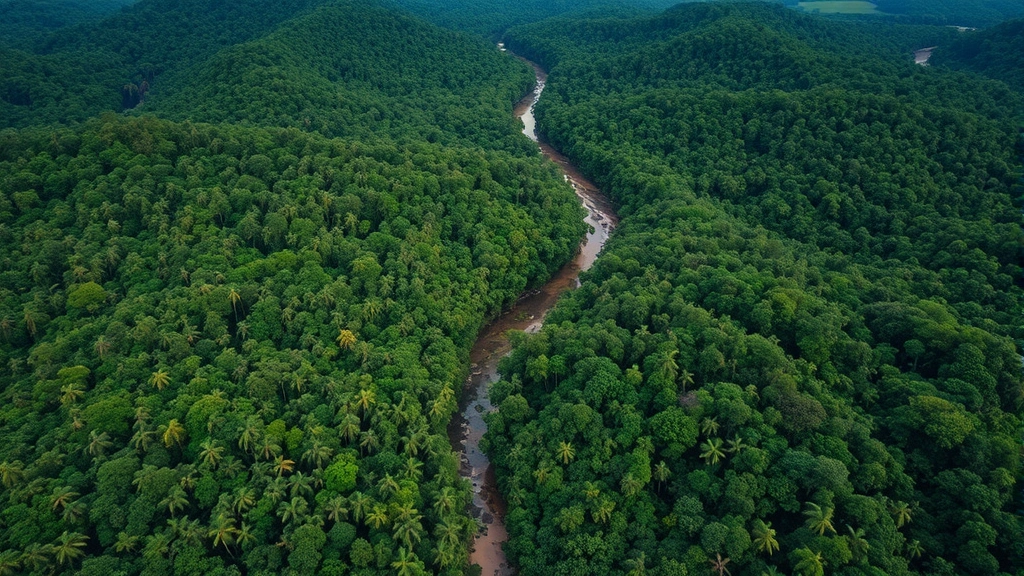
Impact of Ecosystems on Economy: A Deep Dive
The relationship between ecosystems and economic systems represents one of the most critical intersections in modern policy discourse. While ecosystems provide the foundational services upon which all economic activity depends, this fundamental dependency remains largely invisible in traditional economic accounting. Understanding how natural capital—forests, wetlands, coral reefs, and soil systems—directly translates into economic value is essential for policymakers, businesses, and investors navigating the complexities of sustainable development.
Ecosystem services generate trillions of dollars in annual economic value through mechanisms ranging from pollination and water purification to climate regulation and cultural benefits. Yet conventional GDP measurements fail to account for the depletion or degradation of these critical assets. This analytical gap has created a paradoxical situation where economies can appear to be growing while their underlying ecological foundations deteriorate. The following analysis explores the multifaceted ways ecosystems shape economic outcomes, the economic costs of ecosystem degradation, and the emerging frameworks for integrating ecological value into economic decision-making.
Ecosystem Services and Economic Valuation
Ecosystem services represent the direct and indirect contributions of ecosystems to human well-being and economic prosperity. The Millennium Ecosystem Assessment, a comprehensive global study, categorized these services into four types: provisioning services (food, water, raw materials), regulating services (climate control, flood regulation, disease control), supporting services (nutrient cycling, soil formation, habitat provision), and cultural services (recreation, spiritual value, educational benefits).
The economic valuation of these services requires sophisticated methodologies that translate ecological functions into monetary terms. Pollination services alone, primarily provided by wild and managed bee populations, contribute approximately $15-20 billion annually to global agriculture. Similarly, mangrove ecosystems protect coastal communities from storms while supporting fisheries that sustain millions of livelihoods—services valued at thousands of dollars per hectare annually. When we examine environment and society interactions, the economic dimension becomes impossible to ignore.
Wetland ecosystems demonstrate the complexity of ecosystem valuation. Beyond their provisioning services (fish, game, and plant materials), wetlands filter pollutants, recharge groundwater aquifers, and provide crucial carbon storage capacity. A single hectare of wetland can provide water purification services equivalent to expensive artificial treatment facilities, yet this value remains external to market transactions. The challenge of making these human environment interaction values visible in economic systems drives contemporary ecological economics research.
Researchers employing contingent valuation methods, hedonic pricing, and benefit transfer techniques estimate that global ecosystem services are worth approximately $125-145 trillion annually—roughly equivalent to global GDP. This staggering figure underscores the economic magnitude of natural systems, yet conventional accounting treats ecosystem degradation as economically costless. The methodological debates surrounding these valuations reflect deeper tensions between ecological and economic worldviews, but the directional finding—that ecosystems provide enormous economic value—remains robust across different valuation approaches.
The Economics of Biodiversity Loss
Biodiversity loss represents a fundamental erosion of natural capital that carries severe economic consequences. The Intergovernmental Science-Policy Platform on Biodiversity and Ecosystem Services (IPBES) estimates that approximately one million species face extinction, with habitat destruction, overexploitation, and climate change as primary drivers. From an economic perspective, this biodiversity loss translates into reduced ecosystem resilience, diminished productivity, and increased vulnerability to environmental shocks.
The economic case for biodiversity conservation rests on multiple pillars. First, genetic diversity within species populations maintains the productive capacity of agricultural and fishery systems. Second, species diversity ensures ecosystem functional redundancy—multiple species performing similar ecological roles reduces the risk that single species loss will cascade into system-wide collapse. Third, biodiversity supports pharmaceutical development, with approximately 25% of modern medicines derived from plants found primarily in biodiverse regions. The economic value of pharmaceutical discoveries dependent on tropical biodiversity exceeds $100 billion annually.
Pollinator decline illustrates the concrete economic impacts of biodiversity loss. Agricultural systems dependent on pollination face increasing costs as wild pollinator populations decline. Some regions have experienced yield reductions of 20-30% for crops requiring insect pollination, necessitating expensive supplementary inputs or manual pollination. These direct costs pale in comparison to the broader systemic risks: reduced pollinator diversity increases ecosystem vulnerability to disease outbreaks, parasites, and environmental stresses, potentially triggering production collapses in critical food crops.
The economic analysis of biodiversity loss must also account for irreversibility. Unlike manufactured capital, which can be rebuilt or replaced, extinct species represent permanent loss of genetic information and evolutionary potential. This irreversibility creates an economic argument for precautionary conservation: the cost of preserving species and habitats today is typically far lower than the cost of attempting to restore ecosystem functions after species extinction. Understanding how humans affect the environment through biodiversity destruction reveals the economic logic of prevention-focused environmental policy.
Natural Capital Accounting and GDP Alternatives
Traditional GDP measurement treats natural capital depletion as income rather than asset loss, creating perverse economic incentives. When a country harvests its forests unsustainably, the timber value is counted as economic growth, while the loss of forest capital—with its water purification, carbon storage, and biodiversity support functions—remains unaccounted. This accounting error makes economically destructive activities appear beneficial, distorting policy decisions at every scale.
Natural capital accounting attempts to correct this fundamental flaw by measuring ecosystem assets and their changes in monetary terms parallel to conventional national accounts. Countries implementing natural capital accounting, including Botswana, Costa Rica, and several European nations, have discovered that their true economic growth rates differ substantially from conventional GDP figures. Some nations reporting strong GDP growth simultaneously experienced significant natural capital depreciation, indicating that measured prosperity masked underlying economic decline when ecosystem degradation is properly accounted.
The System of Environmental-Economic Accounting (SEEA), developed by the United Nations, provides a standardized framework for natural capital accounting. SEEA integrates environmental data with economic statistics, enabling policymakers to understand how economic activity affects natural assets and how ecosystem changes impact economic well-being. Implementation of SEEA-based accounting has revealed that in many developing economies, annual natural capital depreciation ranges from 4-10% of GDP, fundamentally altering assessments of sustainable development progress.
Beyond natural capital accounting, alternative economic indicators attempt to measure genuine progress more comprehensively. The Genuine Progress Indicator (GPI) adjusts GDP for environmental degradation, resource depletion, income inequality, and non-market benefits like leisure time and household work. In numerous developed economies, GPI has stagnated or declined while GDP continued expanding, suggesting that conventional growth metrics mask deteriorating overall well-being. These alternative frameworks challenge the assumption that economic growth automatically improves human welfare and provide tools for evaluating whether growth is genuinely sustainable.

” alt=”Natural capital accounting framework showing ecosystem assets, services valuation, and integration with economic accounts”>
Climate Regulation and Economic Resilience
Ecosystems provide climate regulation services of unprecedented economic importance, particularly as anthropogenic climate change accelerates. Forests, wetlands, grasslands, and ocean systems absorb approximately half of anthropogenic carbon dioxide emissions annually—a service that would cost trillions of dollars to replicate through technological carbon capture. The economic value of this climate regulation service depends on the social cost of carbon, which most economic analyses place between $50-200 per ton of CO2, implying that ecosystem carbon storage services provide $2-6 trillion in annual climate regulation benefits.
Forest ecosystems exemplify the climate-economy nexus. Tropical rainforests store approximately 150-250 tons of carbon per hectare, while providing water cycle regulation, biodiversity habitat, and livelihood support for indigenous communities. When forests are converted to agricultural land or cleared for timber, the immediate economic gain from resource extraction is typically $1,000-3,000 per hectare, while the lost climate regulation service alone—valued at $4,000-8,000 per hectare in carbon storage value—exceeds the short-term extraction benefit. This economic myopia, where immediate gains are prioritized over long-term ecosystem services, drives deforestation despite its net economic irrationality.
The economic resilience benefits of intact ecosystems extend beyond climate regulation. Diverse, healthy ecosystems demonstrate greater resistance to environmental shocks including droughts, pest outbreaks, and extreme weather events. Agricultural systems dependent on ecosystem services from surrounding natural areas show greater yield stability and lower input costs compared to intensively managed monocultures. Insurance value from ecosystem-provided resilience—the economic benefit of reduced vulnerability to environmental disruption—remains largely unpriced in market transactions, creating systematic undervaluation of ecosystem preservation.
Coastal ecosystems illustrate the economic value of climate-related resilience services. Mangroves, salt marshes, and seagrass meadows attenuate wave energy, reducing storm surge impacts and protecting coastal infrastructure. The economic value of wave attenuation provided by mangrove forests can exceed $1 million per kilometer of coastline annually, equivalent to expensive engineered breakwaters but provided naturally. As climate change increases extreme weather frequency and intensity, the economic value of ecosystem-provided protection escalates dramatically, yet many regions continue converting these protective ecosystems to aquaculture or development.
Agricultural Productivity and Soil Economics
Soil represents one of the most economically valuable yet undervalued ecosystems. Agricultural productivity depends entirely on soil quality—a product of complex ecological processes including microbial activity, organic matter decomposition, and nutrient cycling. The economic value of soil ecosystem services to global agriculture exceeds $2 trillion annually, yet conventional agricultural accounting treats soil as a static input rather than a dynamic ecological asset requiring management and investment.
Soil degradation imposes enormous economic costs through reduced productivity, increased input requirements, and catastrophic failures. Global soil loss rates exceed 24 billion tons annually, with particular severity in regions practicing industrial agriculture. Erosion reduces soil depth and fertility, necessitating increasing chemical fertilizer applications to maintain productivity. In some regions, fertilizer costs have increased 300-400% over two decades as soil degradation requires higher application rates to achieve equivalent yields. This represents a hidden economic cost of unsustainable farming practices—productivity appears maintained through chemical inputs, but underlying soil capital is being depleted.
The economic analysis of soil conservation reveals substantial returns on investment in ecosystem-based approaches. Techniques including cover cropping, reduced tillage, crop rotation, and agroforestry integration maintain or restore soil health while reducing input costs and providing additional ecosystem services. Farmers implementing these practices often reduce fertilizer expenses by 30-50% while improving long-term productivity and resilience. The economic case for soil conservation is compelling, yet adoption remains limited due to short-term cash flow constraints, knowledge gaps, and policy structures that subsidize chemical inputs rather than rewarding ecosystem service provision.
Microbial ecosystems within soil provide crucial but invisible economic services. Mycorrhizal fungi enhance nutrient uptake efficiency, reducing plant fertilizer requirements while improving drought tolerance. Nitrogen-fixing bacteria reduce synthetic fertilizer dependency, with economic value approaching $200 billion annually in global agriculture. These microbial ecosystem services remain largely invisible in economic accounts, yet their disruption through excessive chemical use, soil compaction, or monoculture farming carries substantial economic consequences. Understanding definition of environment science in economic contexts reveals how ecological complexity translates into economic value.
Water Systems and Economic Security
Freshwater ecosystems provide some of the most economically critical services, yet face unprecedented pressure from overexploitation and pollution. Watershed ecosystems regulate water flow, maintain quality, and support aquatic biodiversity that underpins fisheries and food security. The economic value of freshwater ecosystem services—water provisioning, water purification, flood regulation, and drought mitigation—exceeds $2.5 trillion annually globally.
Water scarcity imposes escalating economic costs as freshwater depletion accelerates. Agricultural water scarcity reduces crop yields, with some regions experiencing 20-40% productivity declines during drought periods. Industrial sectors dependent on freshwater—including thermal power generation, beverage production, and manufacturing—face production constraints and escalating water acquisition costs. Municipal water systems in water-stressed regions now allocate 5-15% of budgets to water acquisition, compared to 1-3% in water-abundant regions, demonstrating the economic burden of water scarcity.
Ecosystem-based water management approaches provide cost-effective alternatives to engineered solutions. Wetland restoration provides water filtration at costs 80-90% lower than artificial treatment facilities while simultaneously providing habitat and carbon storage benefits. Forest watershed management maintains water quality and flow regulation, reducing treatment costs and improving reliability. The economic case for ecosystem-based water management is compelling: a single hectare of restored wetland provides water purification services worth $3,000-5,000 annually, while requiring minimal ongoing investment.
Groundwater depletion represents a particularly severe economic threat where surface water proves insufficient for demand. Aquifer depletion reduces water availability for irrigation, forcing agricultural contraction or expensive water importation. Several regions including parts of the Indian subcontinent, the Middle East, and the American Great Plains face economic crises as aquifer depletion accelerates beyond recharge rates. The economic cost of groundwater depletion extends beyond immediate water scarcity to encompass agricultural collapse, rural economic decline, and potential geopolitical conflict over remaining water resources.
Market-Based Conservation Mechanisms
Economic theory suggests that market-based mechanisms can align conservation incentives with economic self-interest, potentially achieving environmental protection through price signals rather than regulation. Payment for ecosystem services (PES) programs compensate landowners for maintaining or restoring ecosystem functions, creating direct economic incentives for conservation. Carbon markets, water quality trading, and biodiversity offset programs represent attempts to monetize ecosystem services and integrate them into economic decision-making.
Carbon markets have achieved substantial scale, with global carbon trading volumes exceeding $700 billion annually by 2023. These markets create economic value for forest conservation, reforestation, and renewable energy projects by monetizing carbon storage and emissions reduction services. Successful carbon market programs have generated conservation funding in regions where alternative economic opportunities were limited, enabling forest protection that would otherwise prove economically uncompetitive with extractive land uses. However, carbon market effectiveness remains contested, with concerns about permanence, additionality, and unequal benefit distribution.
Payment for ecosystem services programs have demonstrated effectiveness in protecting critical ecosystems while providing income for rural communities. Costa Rica’s PES program, operating since 1997, has conserved approximately 2 million hectares through payments to private landowners for forest conservation. Economic analysis indicates that PES payments, typically $50-300 per hectare annually, prove cost-effective compared to alternative conservation approaches while generating rural employment and maintaining ecosystem services. Similar programs in Mexico, Brazil, and Southeast Asia have achieved significant conservation outcomes through economic incentives.
However, market-based conservation mechanisms face fundamental limitations. Ecosystem services with diffuse beneficiaries and difficult valuation—including biodiversity preservation and cultural heritage—prove challenging to price through markets. Wealthy regions can outbid developing nations for conservation services, potentially directing conservation investment toward less critical ecosystems in wealthy areas rather than maximizing global conservation impact. Additionally, commodification of nature raises ethical concerns about treating intrinsic ecosystem value as purely economic, potentially undermining non-economic conservation rationales. These limitations suggest that market-based mechanisms should complement rather than replace regulatory and community-based conservation approaches.
Challenges in Ecosystem Economic Integration
Integrating ecosystem economics into policy and investment decisions faces substantial challenges spanning methodological, institutional, and political dimensions. Valuation methodologies remain contested, with different approaches producing valuations varying by orders of magnitude for identical ecosystem services. Non-market valuation techniques including contingent valuation and hedonic pricing rely on assumptions about human preferences that may not accurately reflect revealed behavior or incorporate cultural and spiritual values inadequately captured by monetary metrics.
Temporal mismatches between ecosystem service provision and economic benefit realization create policy challenges. Ecosystem restoration requires years or decades to generate full service benefits, while economic returns accrue gradually over extended periods. This temporal profile conflicts with investment decision-making frameworks emphasizing near-term returns, creating systematic bias toward short-term extractive activities over long-term ecosystem maintenance. Discount rate selection—the rate at which future benefits are valued relative to present costs—dramatically affects cost-benefit analysis conclusions, with standard economic discount rates (5-10% annually) rendering ecosystem preservation economically irrational compared to immediate resource extraction.
Distributional equity concerns complicate ecosystem economics. Ecosystem services provide greatest benefits to populations dependent on natural resources—typically lower-income communities in developing regions—while costs of ecosystem preservation are often distributed globally. This creates economic tensions where communities reliant on extractive activities face pressure to forgo immediate income for ecosystem preservation benefiting distant populations. Equitable ecosystem economics requires benefit-sharing mechanisms ensuring that communities bearing conservation costs receive proportional economic benefits, yet such mechanisms remain underdeveloped.
Institutional fragmentation impedes ecosystem economic integration. Ecosystem services cross jurisdictional boundaries—watersheds, atmospheric circulation patterns, and migratory species routes ignore political borders—yet economic and environmental governance remains organized within territorial frameworks. Upstream water pollution imposes economic costs on downstream communities lacking mechanisms to demand compensation or enforce remediation. This institutional misalignment between ecosystem boundaries and governance structures creates systematic undervaluation of ecosystem services crossing jurisdictional lines.
Scientific uncertainty regarding ecosystem thresholds and tipping points complicates economic analysis. Many ecosystems exhibit non-linear responses to stress, with gradual degradation suddenly triggering catastrophic collapse once critical thresholds are exceeded. Predicting these thresholds with precision remains challenging, yet economic decision-making requires specific estimates of ecosystem service values and collapse probabilities. This scientific uncertainty argues for precautionary approaches valuing ecosystem preservation, yet precaution conflicts with economic frameworks emphasizing risk quantification and expected value optimization.
Exploring types of environment and their economic characteristics reveals the diversity of ecosystem-economy relationships. Different ecosystem types provide distinct service portfolios, require different management approaches, and face different economic incentives for preservation or conversion. Generalizations about ecosystem economics often mask important heterogeneity, requiring context-specific analysis that economic frameworks sometimes inadequately provide.
FAQ
How much economic value do ecosystems provide annually?
Global ecosystem services are valued at approximately $125-145 trillion annually according to comprehensive ecological economics studies, though valuations vary substantially depending on methodology and service categorization. This figure represents roughly equivalent value to global GDP, underscoring the economic magnitude of natural systems. Specific valuations depend heavily on discount rates, valuation methods, and assumptions about ecosystem service substitutability.
What is the economic cost of biodiversity loss?
Economic losses from biodiversity loss include reduced agricultural productivity (estimated at $5.7 trillion annually), diminished pharmaceutical potential, reduced ecosystem resilience, and increased vulnerability to environmental shocks. The cumulative economic cost likely exceeds $2-3 trillion annually, though precise estimation proves methodologically challenging. Irreversibility of extinction creates additional economic costs by eliminating future option values.
Can markets effectively protect ecosystems?
Market-based mechanisms including carbon markets and payment for ecosystem services programs have generated significant conservation outcomes in specific contexts, with global carbon markets exceeding $700 billion annually. However, markets face limitations with ecosystem services lacking clear markets (biodiversity, cultural services) and may distribute conservation benefits unequally. Markets function most effectively complementing rather than replacing regulatory and community-based conservation approaches.
How does soil degradation affect economic productivity?
Soil degradation reduces agricultural productivity by 20-40% in severely affected regions, necessitating increased chemical inputs that raise production costs and create additional environmental damage. Global soil loss imposes estimated economic costs exceeding $400 billion annually through productivity losses and remediation expenses. Ecosystem-based soil management approaches can restore productivity while reducing input costs by 30-50%.
What is natural capital accounting?
Natural capital accounting measures ecosystem assets and their changes in monetary terms parallel to conventional economic accounts, enabling comprehensive assessment of whether economic growth represents genuine progress or masks natural capital depletion. The UN System of Environmental-Economic Accounting (SEEA) provides standardized frameworks for implementation. Countries implementing natural capital accounting often discover that measured economic growth significantly overstates sustainable development progress.
How do ecosystems provide climate regulation services?
Ecosystems provide climate regulation primarily through carbon sequestration, with forests, wetlands, and ocean systems absorbing approximately half of anthropogenic CO2 emissions annually. The economic value of this service, calculated using social cost of carbon estimates ($50-200 per ton CO2), ranges from $2-6 trillion annually. Ecosystem carbon storage also provides co-benefits including habitat provision, water regulation, and livelihood support.
What economic barriers prevent ecosystem conservation?
Primary barriers include temporal mismatches (short-term extraction returns exceed long-term ecosystem service benefits under standard discount rates), distributional inequity (conservation costs concentrated on resource-dependent communities while benefits dispersed globally), institutional fragmentation (ecosystem services crossing jurisdictional boundaries lack governance mechanisms), and scientific uncertainty regarding ecosystem thresholds and service values. Addressing these barriers requires policy innovations beyond conventional market mechanisms.


