
Is Economic Growth Hurting Ecosystems? Study Insights
The relationship between economic growth and environmental degradation has become one of the most pressing questions in contemporary economics and ecology. As global GDP continues to expand, mounting evidence suggests that traditional models of economic development come at a significant cost to natural systems. Recent studies reveal a troubling pattern: while economies flourish, biodiversity declines, carbon emissions accelerate, and ecosystem services deteriorate at alarming rates. This paradox challenges the fundamental assumptions underlying decades of development policy.
Understanding this tension requires examining empirical data, economic theory, and real-world case studies that demonstrate how growth mechanisms directly conflict with ecological preservation. The evidence is increasingly clear that business-as-usual economic expansion cannot coexist indefinitely with planetary boundaries. Yet the conversation remains dominated by debates about whether growth itself is the problem, or whether the type and structure of growth determines environmental outcomes.
The Growth-Degradation Nexus: What Research Shows
Recent comprehensive studies from the World Bank and environmental research institutions document a consistent correlation between GDP expansion and ecological decline across multiple metrics. Between 1990 and 2020, global economic output increased by approximately 150%, while global biodiversity declined by roughly 68% according to the Living Planet Index. This temporal alignment is not coincidental but reflects structural features of growth-dependent economies.
The United Nations Environment Programme reports that resource extraction has tripled since 1970, directly corresponding with accelerated economic growth in developing nations. Forests shrink, fisheries collapse, and soil degrades as economies prioritize short-term output expansion over long-term ecological stability. The data demonstrates that even in nations with environmental regulations, growth trajectories consistently overwhelm conservation efforts.
Research in ecological economics journals reveals that true environmental costs—externalities—rarely factor into GDP calculations. When economists measure growth, they count timber harvesting as income without subtracting forest loss. Oil extraction appears as profit without accounting for climate damage. This accounting gap means economic growth figures systematically overstate actual welfare improvements while concealing ecological deterioration.

Mechanisms of Ecological Damage in Growth-Based Economies
Economic growth operates through several interconnected mechanisms that inherently generate ecological stress. The first involves how humans affect the environment through increased consumption. Growth requires expanding markets, which means more products sold, more resources extracted, and more waste generated. Consumption patterns in wealthy nations demonstrate this clearly: the average American generates 4.5 pounds of waste daily, and this multiplies across billions of consumers in growing economies.
The second mechanism involves technological lock-in. Once economies develop around fossil fuels and resource-intensive infrastructure, growth becomes dependent on these systems. Switching to sustainable alternatives requires fundamental restructuring that contradicts growth imperatives. A manufacturing economy optimized for volume and speed cannot easily transition to circular, low-impact production without reducing output—which appears as recession rather than progress.
Third, growth economies require continuous market expansion into previously unexploited territories and resources. This drives agricultural frontier expansion into rainforests, deep-sea mining, and extraction from indigenous lands. The pressure to grow creates systematic incentives to exploit remaining untouched ecosystems, as these represent the last frontiers for profit extraction.
Understanding human environment interaction through this economic lens reveals how individual consumer choices aggregate into systemic ecological damage. When millions of growth-dependent decisions compound, they overwhelm local ecosystem regeneration capacity, creating cascading failures across interconnected natural systems.
Resource Extraction and Ecosystem Collapse
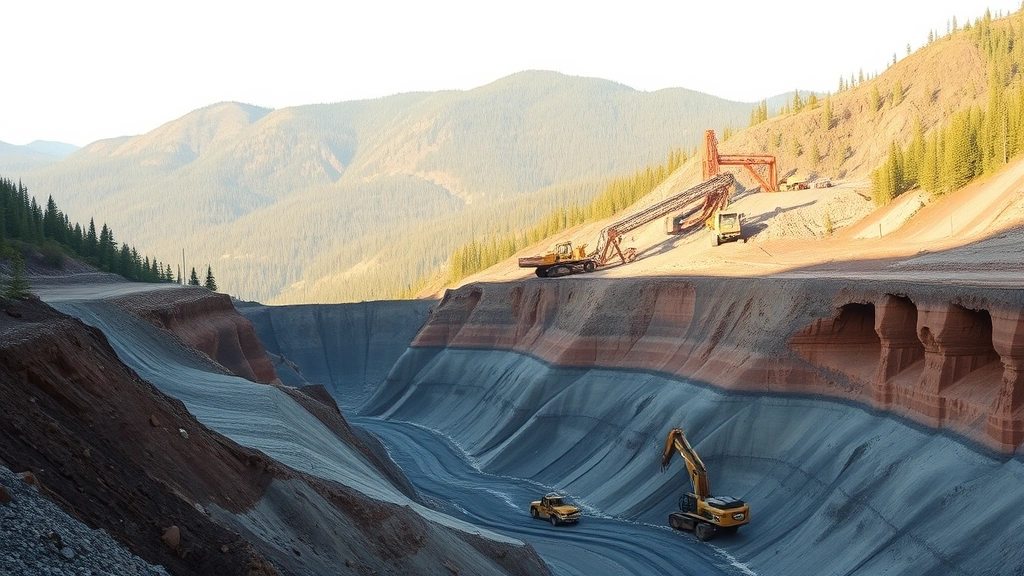
The extraction sector exemplifies growth’s ecological cost most dramatically. Mining operations destroy landscapes, contaminate water supplies, and generate toxic waste that persists for centuries. Yet mining contributes only 1-2% of global GDP while causing environmental damage valued in the hundreds of billions annually. This asymmetry reveals how growth metrics fail to capture true economic value.
Fisheries demonstrate similarly catastrophic patterns. Global fish stocks have declined 90% since industrial fishing began. Economic growth in fishing industries coincided precisely with stock depletion—the more successful the industry became economically, the closer it drove target species toward extinction. When growth exhausts the resource base, the economy collapses regardless of previous profitability figures.
Agricultural expansion for commodity crops drives deforestation across tropical regions. Palm oil, soy, and cattle ranching generate impressive GDP contributions while destroying carbon sinks and biodiversity hotspots. The environment and society relationship deteriorates as economic gains accrue to distant corporations while ecological costs concentrate in vulnerable communities.
Plastic production exemplifies growth’s waste problem. Global plastic production increased from 1.5 million tons in 1950 to 368 million tons in 2019. Most enters landfills or oceans, creating persistent pollution. Yet this expansion appears entirely positive in GDP accounting—production growth without corresponding environmental adjustment represents pure economic gain in conventional metrics, despite obvious ecological harm.
Carbon Emissions and Climate Impact
Climate change represents perhaps the clearest manifestation of growth’s ecological cost. Global carbon emissions correlate almost perfectly with GDP expansion across decades. While some wealthy nations achieved relative decoupling through efficiency improvements, global emissions continue rising as growth spreads to developing economies. Absolute global carbon emissions have never declined during periods of economic growth.
The energy sector drives this pattern. Growth requires energy, and despite renewable expansion, fossil fuels still provide 82% of global energy. Every percentage point of GDP growth typically generates proportional emissions increases. Even aggressive climate policies in wealthy nations prove insufficient because growth in consumption offsets efficiency gains—a phenomenon called the rebound effect.
Carbon budgets for limiting warming to 1.5°C require immediate emissions reductions of 45% by 2030. Yet global economies pursue 2-3% annual growth targets that increase emissions. This mathematical incompatibility reveals a fundamental conflict: achieving climate targets likely requires constraining growth in wealthy nations while allowing development in poor ones, a politically difficult redistribution.
The World Bank and IPCC analyses confirm that meeting climate goals under continued growth assumptions requires technological transformations not yet demonstrated at scale. Carbon capture, renewable transition, and efficiency improvements show promise but cannot overcome growth’s expanding resource demands within realistic timeframes.
Decoupling Myth: Can We Grow Without Harming Nature
Policymakers frequently invoke “decoupling”—the idea that economies can expand indefinitely while reducing environmental impact. Some wealthy nations achieved relative decoupling where GDP grew while domestic resource extraction declined. However, this success masks a critical reality: these nations outsourced production to countries with weaker regulations. When accounting for consumption-based emissions and imported resource extraction, wealthy nations’ environmental footprints continued expanding.
Furthermore, relative decoupling differs fundamentally from absolute decoupling. Emissions per dollar of GDP may improve while total emissions increase—growth overwhelms efficiency gains. Global data shows absolute decoupling remains rare and typically temporary, occurring only during recessions or deindustrialization, not sustainable development.
The rebound effect further undermines decoupling hopes. Efficiency improvements reduce costs, stimulating consumption that erases savings. More fuel-efficient cars encourage more driving. More efficient lighting enables more illumination. These behavioral responses mean technological improvements deliver smaller environmental benefits than engineering calculations suggest. In some cases, rebound effects completely eliminate environmental gains.
Renewable energy expansion illustrates decoupling limitations. Solar and wind growth accelerates, yet total energy consumption continues increasing. Rather than replacing fossil fuels, renewables primarily serve growing demand. Without constraining energy growth, renewable expansion simply adds capacity without achieving decoupling. True decoupling requires absolute reductions in resource throughput, not just efficiency improvements.
Case Studies: Growth at Ecosystem Cost
Indonesia’s economic development trajectory demonstrates growth’s ecological consequences vividly. Rapid GDP expansion from 1970-2010 coincided with forest cover declining from 84% to 50% of land area. Palm oil expansion, logging, and agricultural clearing generated substantial GDP contributions while destroying orangutan habitat, carbon sinks, and indigenous territories. Economic gains concentrated among wealthy elites while ecological costs distributed across all inhabitants.
China’s growth miracle—achieving 10% annual GDP expansion for three decades—came through coal-powered industrialization that created severe air and water pollution. The economic gains proved substantial, lifting hundreds of millions from poverty. Yet environmental costs included acid rain, contaminated rivers, and respiratory disease epidemics affecting millions. Recent data shows China’s growth has begun decelerating as environmental constraints tighten, suggesting growth’s environmental limits eventually constrain economic expansion.
The Amazon rainforest case exemplifies how types of environment interact with economic systems. Cattle ranching and soy cultivation drive deforestation, generating substantial GDP for Brazil and Argentina. However, forest loss reduces rainfall regionally, threatening agricultural productivity. The economic growth from forest destruction may ultimately undermine the agriculture it enabled—a tragedy of the commons where rational individual decisions produce collectively catastrophic outcomes.
Bangladesh’s garment industry demonstrates growth’s social-ecological nexus. Rapid expansion generated GDP growth and employment, lifting millions into the working class. However, factory construction consumed agricultural land, industrial pollution contaminated water supplies, and worker safety standards remained minimal. The growth appeared economically successful while generating substantial environmental and human costs concentrated among vulnerable populations.
Alternative Economic Models
Ecological economics proposes fundamentally different frameworks for understanding economic activity. Rather than treating the economy as a self-contained system, ecological economics embeds economics within definition of environment science principles. Natural capital stocks—forests, fisheries, mineral deposits—represent the actual basis for economic activity. When natural capital depletes, true economic wealth declines regardless of GDP growth.
Steady-state economics advocates for economies that maintain stable material throughput at sustainable levels while allowing qualitative improvement. This model distinguishes between growth (quantitative expansion) and development (qualitative improvement). Wealthy nations could experience development—better education, healthcare, culture, technology—without growth, while poor nations would grow toward sustainable levels before stabilizing.
Degrowth movements propose more radical transformation, arguing that wealthy nations must intentionally reduce material consumption to create ecological space for poor nations’ development. This challenges growth’s centrality to contemporary capitalism but aligns with planetary boundaries and climate targets. Critics worry about employment and inequality implications, while advocates argue current growth trajectories guarantee worse outcomes.
Circular economy frameworks attempt to maintain growth through closed-loop production where waste becomes input. Products designed for disassembly and reuse could theoretically sustain economic activity with minimal resource extraction. However, implementing circular systems at scale requires infrastructure investments and behavioral changes that remain largely theoretical. Most circular economy proposals underestimate rebound effects and growth’s expansion beyond recycling capacity.
Policy Solutions and Market Mechanisms
Carbon pricing represents the market-based approach to growth’s climate cost. By assigning prices to emissions, carbon taxes or cap-and-trade systems theoretically incentivize emissions reduction while maintaining growth. However, carbon prices remain below levels needed for substantial behavioral change, and political resistance to adequate pricing persists. Early carbon markets also enabled wealthy nations to purchase offsets rather than reducing domestic emissions.
Biodiversity markets attempt similar approaches, creating financial value for conservation. Payments for ecosystem services compensate landowners for maintaining forests or wetlands rather than converting them. While expanding, these mechanisms struggle with additionality questions—determining whether conservation would have occurred anyway—and with pricing ecosystems’ true value. Markets also fail to address growth’s fundamental resource demands.
Green growth policies combine efficiency standards, renewable investments, and environmental regulations to decouple growth from environmental impact. Wealthy nations have implemented these approaches with modest success—relative decoupling in some sectors, though absolute decoupling remains elusive. The approach’s limitation involves requiring technological transformation faster than growth-driven consumption expansion, an increasingly unlikely scenario.
Regulatory approaches including protected areas, extraction bans, and production standards directly constrain growth in specific sectors. Effective environmental protection often requires constraining economic activity—no-extraction zones in rainforests, fishing restrictions, agricultural limits. These regulations represent growth constraints, not growth-compatible solutions, revealing the fundamental tension between environmental protection and growth imperatives.
International frameworks including the Sustainable Development Goals attempt balancing development with environmental protection. However, these frameworks ultimately prioritize growth, seeking sustainable growth rather than questioning growth itself. The tension between SDG goals for poverty reduction (requiring growth) and environmental protection (requiring constraint) remains unresolved in policy frameworks.
FAQ
Can economic growth and ecosystem protection coexist?
Current evidence suggests not indefinitely at global scale. Wealthy nations achieved temporary relative decoupling through outsourcing production, but global resource use and emissions continue rising with growth. Technological improvements show promise but have never overcome growth’s expanding material demands. Coexistence requires either constraining growth or achieving unprecedented technological transformation simultaneously across all sectors—neither currently occurring.
What percentage of economic growth comes from depleting natural capital?
Estimates vary, but research suggests 10-30% of measured GDP growth in resource-dependent nations represents depletion of natural capital stocks. When accounting for externalities like pollution and climate damage, the percentage increases substantially. Adjusting GDP for environmental costs typically shows substantially slower growth than conventional metrics, sometimes revealing negative growth in wealthy nations.
How do developing nations balance growth with environmental protection?
Most developing nations face pressure to prioritize growth for poverty reduction, creating genuine conflicts with environmental protection. However, evidence increasingly shows that environmental degradation ultimately undermines development by destroying resource bases and generating health costs. The optimal path likely involves controlled growth toward sustainable levels while avoiding the worst environmental mistakes wealthy nations made.
What would an economy without growth look like?
Steady-state or degrowth economies would maintain stable material and energy throughput while allowing qualitative improvements in technology, education, and wellbeing. Employment would shift toward care work, education, and maintenance rather than production expansion. Income would require redistribution to prevent inequality without growth. Most proposals suggest gradual transition rather than abrupt contraction, with wealthy nations reducing throughput while poor nations develop toward sustainable levels.
Are there successful examples of economies decoupling from environmental impact?
Costa Rica and Denmark achieved notable relative decoupling through renewable energy expansion and forest regeneration, though both continue consuming resources from other nations. No large economy has achieved absolute decoupling—simultaneous growth and emissions reduction—for sustained periods. Most examples involve temporary improvements during deindustrialization, not sustainable development models.


