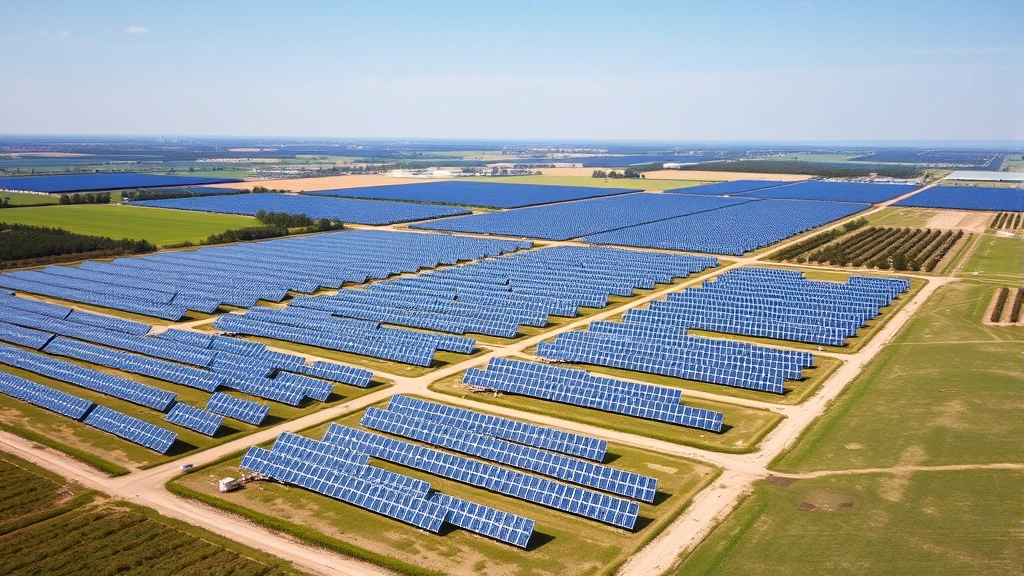
How Green Bonds Boost Economy: Economist Insights
Green bonds represent one of the most significant financial innovations in environmental economics over the past two decades. These debt instruments, specifically earmarked for funding environmentally sustainable projects, have grown from a niche market of $11 billion in 2013 to over $500 billion annually by 2023. This exponential growth reflects a fundamental shift in how capital markets recognize the intersection between environmental sustainability and economic returns. Leading economists argue that green bonds do far more than finance renewable energy projects—they fundamentally reshape investment behavior, reduce the cost of climate-friendly infrastructure, and create measurable pathways toward decoupling economic growth from environmental degradation.
The economic case for green bonds extends beyond simple environmental compliance. When institutional investors allocate capital toward green projects, they simultaneously reduce funding costs for sustainable infrastructure, accelerate technological innovation, and generate positive externalities that traditional cost-benefit analyses often undervalue. This article explores how green bonds function as economic catalysts, examining evidence from leading research institutions, World Bank initiatives, and empirical studies across diverse economies.
Understanding Green Bonds: Definition and Market Evolution
Green bonds are fixed-income securities issued by governments, corporations, or multilateral development banks with proceeds explicitly allocated to environmental projects. Unlike conventional bonds, green bonds undergo rigorous verification processes through independent auditors and frameworks such as the Green Bond Principles (GBP), established by the International Capital Market Association. This standardization creates transparency that appeals to socially conscious investors while maintaining the financial rigor required by institutional capital.
The market’s trajectory reveals crucial economic insights. The World Bank first issued green bonds in 2008, pioneering the instrument’s institutional credibility. By 2015, annual issuance reached $41 billion. The 2020-2023 period witnessed acceleration driven by corporate net-zero commitments, regulatory pressure from the European Union, and increasing evidence that green projects generate competitive financial returns. This growth trajectory demonstrates that environmental sustainability and financial performance need not be mutually exclusive—a proposition that fundamentally challenges earlier assumptions about the cost of environmental protection.
Understanding the science of total environment informs how green bonds allocate resources. Eligible projects span renewable energy infrastructure, energy efficiency retrofitting, sustainable transportation, water management, circular economy initiatives, and ecosystem restoration. Each category addresses specific environmental challenges while generating measurable economic benefits through job creation, operational cost reduction, and long-term asset value preservation.
Economic Mechanisms: How Green Bonds Drive Growth
Green bonds operate through multiple economic channels that amplify their impact beyond simple project financing. The first mechanism involves cost reduction through market expansion. As green bond markets mature, increased demand from institutional investors—pension funds, insurance companies, sovereign wealth funds—creates competitive pricing dynamics. This expanded investor base reduces borrowing costs for green projects relative to conventional financing. Research from ecological economics journals demonstrates that green bonds issued by established entities now command spreads equivalent to, or occasionally lower than, traditional bonds, despite their specialized focus. This convergence represents a significant economic achievement: environmental projects are no longer penalized by capital markets.
The second mechanism centers on technological acceleration and innovation spillovers. Green bond financing for renewable energy, battery storage, and sustainable agriculture creates demand signals that incentivize research and development investments. The resultant technological improvements reduce production costs—solar photovoltaic costs have declined 90% since 2010, partly through green bond-funded capacity expansion—generating positive externalities across entire sectors. These cost reductions benefit not only green bond investors but society broadly, as renewable energy becomes economically competitive with fossil fuels independent of policy support.
Third, green bonds facilitate systemic risk reduction and financial stability enhancement. By channeling capital toward climate-resilient infrastructure, green bonds reduce exposure to stranded assets—fossil fuel infrastructure that becomes economically obsolete as energy systems transition. Institutional investors increasingly recognize that portfolios heavily weighted toward carbon-intensive assets face long-term value erosion. Green bonds provide an allocation mechanism that simultaneously improves financial returns and reduces systemic climate risk. This alignment between financial stability and environmental outcomes represents a fundamental economic reorientation.
The relationship between green bonds and human environment interaction becomes clearer when examining economic behavior change. Green bonds make environmental protection visible to capital markets, transforming abstract sustainability commitments into concrete investment decisions. When a pension fund allocates $500 million to green bonds, that decision reflects thousands of individual investors expressing preference for sustainable economic structures. This aggregated preference signal influences corporate behavior, pushing non-green competitors to improve environmental performance to attract capital.
Capital Mobilization and Infrastructure Investment
The infrastructure investment gap represents one of the most pressing economic challenges in climate mitigation. The United Nations Environment Programme estimates that developing nations require $2.4 trillion annually in climate and sustainable infrastructure investment through 2035. Traditional public finance mechanisms prove insufficient; governments cannot fund this scale of investment through taxation alone. Green bonds address this mobilization challenge by attracting private institutional capital to long-term infrastructure projects.
Consider renewable energy infrastructure specifically. A utility company seeking to finance a $500 million wind farm faces several financing options. Traditional bank loans typically require collateral guarantees and impose higher interest rates due to perceived technology risk. Green bonds, by contrast, access a global investor base specifically seeking environmental returns. The issuance process demonstrates this advantage: a major European utility’s 2023 green bond offering for renewable energy expansion achieved oversubscription rates exceeding 3x, allowing the issuer to tighten spreads below conventional debt rates. This capital efficiency directly translates into lower operating costs for renewable energy, improving competitive positioning against fossil fuel alternatives.
Infrastructure investment multiplier effects amplify green bond economic impact. When green bonds finance wind farm construction, they generate immediate employment in manufacturing, installation, and project management. Subsequent operational phases create sustained employment in maintenance and grid management. These direct employment effects trigger secondary economic activity: workers spend wages in local economies, supply chains develop around renewable infrastructure, and tax revenues increase. Economic models suggest infrastructure multipliers of 1.5-2.5x, meaning each dollar of green bond-financed infrastructure generates $1.50-$2.50 in total economic activity.
The blog content on environmental economics increasingly emphasizes how green bonds reduce capital constraints for developing economies. Many nations face borrowing costs exceeding 8-10% due to sovereign risk assessments, making climate infrastructure investment economically challenging. Green bonds, by ring-fencing capital for environmental projects, can access lower-cost funding than general sovereign debt. This financing advantage enables developing nations to accelerate renewable energy deployment, water system improvements, and sustainable agriculture adoption—investments that simultaneously reduce environmental degradation and improve long-term economic competitiveness.

Risk Mitigation and Market Stability
Modern financial economics increasingly recognizes environmental risk as material financial risk. Climate change creates physical risks (infrastructure damage from extreme weather) and transition risks (asset value decline as energy systems shift). Green bonds represent a market mechanism for pricing and managing these systemic risks. By directing capital toward climate-resilient infrastructure and away from carbon-intensive assets, green bonds reduce portfolio exposure to climate-related financial shocks.
Institutional investors managing trillions in assets have begun stress-testing portfolios against climate scenarios. A major pension fund holding significant fossil fuel equity faces potential value erosion as energy transitions accelerate. Green bond allocation provides both financial diversification and risk mitigation. Research from environmental economics research institutions demonstrates that portfolios incorporating green bonds show lower volatility in climate-stress scenarios while maintaining comparable long-term returns to conventional portfolios. This risk-adjusted performance improvement explains institutional investors’ growing green bond demand.
The pricing of climate risk through green bonds creates beneficial feedback loops. As green bonds demonstrate stable returns while financing climate solutions, their market share expands. This expansion raises the cost of capital for brown (non-environmental) projects, incentivizing corporate transition toward sustainability. The mechanism operates through capital reallocation rather than regulatory mandate, suggesting that market forces can internalize environmental externalities without heavy-handed intervention. This insight challenges traditional environmental economics assumptions that market failures require government correction.
Sectoral Impact: Renewable Energy to Sustainable Agriculture
Green bonds finance diverse environmental projects, each generating distinct economic benefits. Renewable energy represents the largest green bond allocation category (approximately 40% of cumulative issuance). The economic case is compelling: renewable energy plants operate with minimal variable costs once constructed, creating long-term price stability for consumers and insulating energy systems from fossil fuel price volatility. Green bond financing accelerates renewable deployment, reducing energy costs and improving air quality with associated health benefits. Studies estimate that air quality improvements from renewable energy expansion generate health benefits worth 2-5% of project costs—unpriced externalities that green bonds help internalize.
Energy efficiency retrofitting represents another major allocation category. Upgrading building insulation, heating systems, and electrical infrastructure reduces operational energy consumption by 20-40%. Green bonds finance these improvements, generating immediate cost savings that exceed financing costs. Building owners achieve positive cash flows from day one, creating economic incentives for widespread adoption. The employment impact proves substantial: retrofit work is labor-intensive and location-specific, generating local employment that cannot be outsourced. Economic multiplier effects from retrofit employment exceed manufacturing job creation, making energy efficiency a particularly economically beneficial green bond application.
Sustainable agriculture and land management represent emerging green bond applications with significant economic potential. Regenerative agriculture practices—cover cropping, reduced tillage, rotational grazing—improve soil health, increase carbon sequestration, and enhance crop resilience to climate variability. Green bonds financing these transitions enable farmers to absorb short-term productivity changes during conversion periods. The long-term benefits prove substantial: improved soil health increases yields, reduces fertilizer requirements, and improves water retention. These productivity gains compound over decades, generating returns that rival conventional agricultural investments while simultaneously reducing environmental degradation.
Water and sanitation infrastructure financed through green bonds generates particularly high economic returns in developing regions. Clean water access improves public health, increases labor productivity, and reduces healthcare costs. Economic analyses consistently find benefit-cost ratios exceeding 4:1 for water infrastructure in low-income regions. Green bonds enable accelerated infrastructure deployment, generating immediate health and economic benefits. Understanding definition of environment science helps clarify how these water projects address both environmental and economic dimensions simultaneously.
Circular economy initiatives represent an emerging green bond category with transformative economic potential. Circular economy business models—product-as-service arrangements, material recovery systems, remanufacturing infrastructure—generate value by extending product lifespans and recovering embedded material value. Green bonds financing circular economy transitions reduce resource extraction requirements, lower raw material costs, and create employment in collection, sorting, and remanufacturing activities. These models often generate superior returns to linear (take-make-waste) alternatives while simultaneously reducing environmental impact.
Global Evidence and Case Studies
Empirical evidence increasingly validates green bonds’ economic benefits. The World Bank’s sustainability initiatives document that green bond-financed projects consistently achieve projected environmental and economic outcomes. A comprehensive 2022 analysis of World Bank green bonds found that renewable energy projects achieved 98% of target capacity additions, energy efficiency projects exceeded savings targets by 12%, and water projects reached 96% of beneficiary targets. These execution rates exceed conventional development project averages, suggesting that green bond discipline and accountability mechanisms improve project implementation quality.
European Union case studies provide particularly relevant evidence for developed economies. The EU’s green bond issuance to finance the €1.8 trillion Recovery and Resilience Facility demonstrates scale and scope. Early data indicates that EU green bonds financed renewable energy capacity additions of 45 GW annually (2021-2023), exceeding non-green-financed renewable deployment. The employment impact proved significant: renewable energy jobs grew 18% annually in green-bond-supported regions versus 8% nationally. This differential suggests that green bond financing accelerates sectoral transition and concentrates economic benefits in regions with strong environmental policy frameworks.
Emerging market examples illustrate green bonds’ particular value in capital-constrained contexts. Brazil’s green bond market, despite sovereign risk premiums, grew from $2 billion (2017) to $15 billion (2023) annual issuance. Brazilian companies financed Amazon reforestation, sustainable cattle ranching, and renewable energy through green bonds at costs 2-3% below conventional corporate debt rates. This financing advantage enabled transition investments that otherwise would have faced prohibitive costs. The economic case for Brazilian green bonds becomes especially compelling when considering avoided deforestation costs—preserving Amazon carbon stocks provides global climate benefits worth thousands of dollars per hectare, making reforestation financing through green bonds economically rational from global perspective.
Asian development context reveals green bonds’ role in addressing infrastructure deficits. China’s green bond market, the world’s second-largest, finances renewable energy deployment at scales unmatched globally. Annual issuance exceeding $200 billion enables rapid capacity additions—China deployed 140 GW of renewable capacity in 2023, financed substantially through green bonds. While Chinese green bond standards face criticism regarding environmental rigor, the scale of capital mobilization demonstrates the instrument’s capacity to finance energy system transformation in capital-abundant but policy-directed contexts.

Challenges and Future Perspectives
Despite compelling economic evidence, green bonds face several challenges that economists and policymakers must address. Greenwashing concerns represent the primary market integrity risk. Absent rigorous standards, issuers might label marginally-green projects as fully green, misleading investors about environmental impact. This definitional ambiguity creates adverse selection dynamics: investors cannot confidently assess which bonds truly finance environmental solutions. The market addresses this through standards like the Climate Bonds Initiative certification, but universal adoption remains incomplete. Strengthening international green bond standards requires coordination across regulatory jurisdictions—a challenge given varying national environmental priorities and financial regulations.
The additionality question represents another critical economic consideration. Green bonds create economic value only if they finance projects that would not occur under conventional financing. If corporations use green bonds to refinance existing renewable energy projects, the environmental impact occurs regardless of green bond issuance. While some evidence suggests additionality (green bonds enable smaller companies and developing nations to access renewable financing), quantifying additionality remains challenging. Future green bond market development requires improved additionality verification mechanisms, potentially incorporating blockchain technologies for transparent project tracking.
Scaling challenges emerge as green bond markets mature. The current $500 billion annual issuance represents only 2-3% of global bond markets, insufficient to finance the $2.4 trillion annual infrastructure investment required. Expanding green bond markets requires continued investor education, regulatory clarity, and demonstrated performance. The relationship between how do humans affect the environment and financial markets increasingly suggests that green bonds represent essential mechanisms for reorienting capital flows toward sustainability.
Taxonomy development constitutes an ongoing challenge. Different jurisdictions employ varying environmental classifications—the EU’s taxonomy differs from China’s green bond catalog, creating confusion for international investors. Harmonizing global taxonomies would reduce transaction costs, improve capital allocation efficiency, and accelerate green finance scaling. International bodies like the International Platform on Sustainable Finance work toward convergence, but full alignment remains years away.
The interest rate environment affects green bond economics. In high-interest-rate regimes, green bond financing costs increase, potentially rendering some projects uneconomical. Policymakers increasingly discuss using monetary policy to support green finance—potentially through central bank green quantitative easing or preferential discount rates for green collateral. These policy innovations would strengthen green bonds’ economic advantages, though they raise questions about central banks’ appropriate roles in directing capital allocation.
Future perspectives for green bonds appear increasingly optimistic despite challenges. Leading International Institute for Sustainable Development research projects that green bonds could reach 10-15% of global bond markets by 2030, contingent on continued investor demand and regulatory support. This expansion would mobilize $500 billion-$1 trillion annually for environmental infrastructure, fundamentally reshaping capital allocation patterns. The economic implications prove substantial: accelerated environmental infrastructure deployment would reduce long-term climate costs by an estimated 10-20%, according to economic modeling from leading research institutions. This cost reduction reflects avoided climate damages, improved public health, and enhanced long-term productivity from environmental infrastructure investment.
FAQ
What makes green bonds economically attractive to investors?
Green bonds offer multiple economic advantages: access to growing investor pools seeking environmental returns, competitive or superior risk-adjusted returns, portfolio diversification benefits, and reduced exposure to climate-related financial risks. Additionally, issuing costs have declined as markets matured, improving project economics.
How do green bonds differ from conventional bonds?
Green bonds allocate proceeds exclusively to environmental projects and undergo independent verification. Otherwise, they function identically to conventional bonds—same maturity structures, coupon mechanisms, and legal protections. The distinction lies in use-of-proceeds accountability and environmental impact verification.
What environmental projects qualify for green bond financing?
Eligible projects include renewable energy, energy efficiency, sustainable transportation, water management, pollution control, circular economy, and ecosystem restoration. Specific eligibility criteria vary by issuer and verifying organization, but the Green Bond Principles provide international guidance.
Can green bonds help developing economies?
Yes, green bonds provide developing nations access to lower-cost capital for environmental infrastructure, reducing sovereign borrowing costs through environmental project ring-fencing. This financing advantage enables climate infrastructure investment that might otherwise face prohibitive costs.
What is greenwashing in green bonds?
Greenwashing occurs when issuers label projects as environmental despite limited environmental benefit. Examples include refinancing existing renewable projects or including marginally-green activities. Rigorous standards and independent verification minimize greenwashing risk, though market maturation requires continued vigilance.
How large is the green bond market?
Annual green bond issuance reached approximately $500 billion in 2023, with cumulative outstanding green bonds exceeding $1.5 trillion. This represents roughly 2-3% of global bond markets, with growth rates of 15-20% annually.
Do green bonds generate superior returns?
Green bonds typically generate returns comparable to conventional bonds with similar credit ratings and maturities. Economic advantage derives from risk reduction and project-level economics (renewable energy cost savings, efficiency improvements) rather than higher bond yields.


