New Mexico’s Ecosystems: Economic Impact Study
New Mexico’s diverse ecosystems—from the Chihuahuan Desert to the Rocky Mountain forests—generate substantial economic value that extends far beyond traditional resource extraction. Recent analyses reveal that ecosystem services in the state contribute billions annually through water regulation, carbon sequestration, pollination, and recreation. Understanding these economic dimensions is critical as the state navigates climate change, water scarcity, and the transition toward sustainable development. The New Mexico Department of Environment has increasingly recognized that protecting natural capital is economically rational, not merely an environmental imperative.
This comprehensive study examines the intricate relationship between New Mexico’s ecological health and economic prosperity. By quantifying ecosystem services and analyzing their market value, policymakers can make informed decisions about land use, conservation investment, and economic diversification. The findings demonstrate that degraded ecosystems impose hidden costs on communities through reduced agricultural productivity, increased water treatment expenses, and diminished tourism revenue. Conversely, ecosystem restoration generates measurable returns on investment, creating employment while enhancing environmental resilience.
Ecosystem Services Valuation in New Mexico
Ecosystem services represent the benefits humans derive from natural systems, including provisioning services (water, food, minerals), regulating services (climate regulation, flood control, disease regulation), supporting services (nutrient cycling, soil formation), and cultural services (recreation, spiritual value, educational opportunities). In New Mexico, quantifying these services provides a framework for understanding nature’s economic contribution to state GDP and household welfare.
Recent ecological economics research demonstrates that New Mexico’s ecosystems deliver approximately $47-$52 billion annually in ecosystem services value. This encompasses water filtration and storage in the Rio Grande and Pecos River basins, carbon sequestration across 24 million acres of forest and grassland, pollination services supporting agricultural production, and recreational amenities attracting 6.5 million annual visitors. The challenge lies in translating these biophysical flows into monetary units comparable with conventional economic metrics.
The World Bank’s Natural Capital Accounting framework has influenced New Mexico’s approach to ecosystem valuation. By incorporating natural capital into national accounts, the state can track whether economic growth represents genuine progress or merely transfers environmental costs to future generations. Studies using hedonic pricing models reveal that proximity to pristine ecosystems increases property values by 15-25%, directly benefiting local economies while incentivizing conservation.
Contingent valuation studies across New Mexico’s national forests and protected areas indicate that residents and visitors place substantial non-use value on ecosystem preservation. Even individuals who never visit wilderness areas express willingness to pay for their continued existence, suggesting cultural and existence values that transcend direct economic transactions. These findings support the argument that ecosystem protection yields returns beyond market-priced goods.
Water Resources and Economic Implications
Water represents New Mexico’s most critical and economically valuable ecosystem service. The state’s arid and semi-arid climate means that water availability fundamentally constrains agricultural production, municipal development, and industrial activity. Ecosystem-based water management—maintaining forests, wetlands, and riparian zones—provides cost-effective alternatives to engineered water infrastructure.
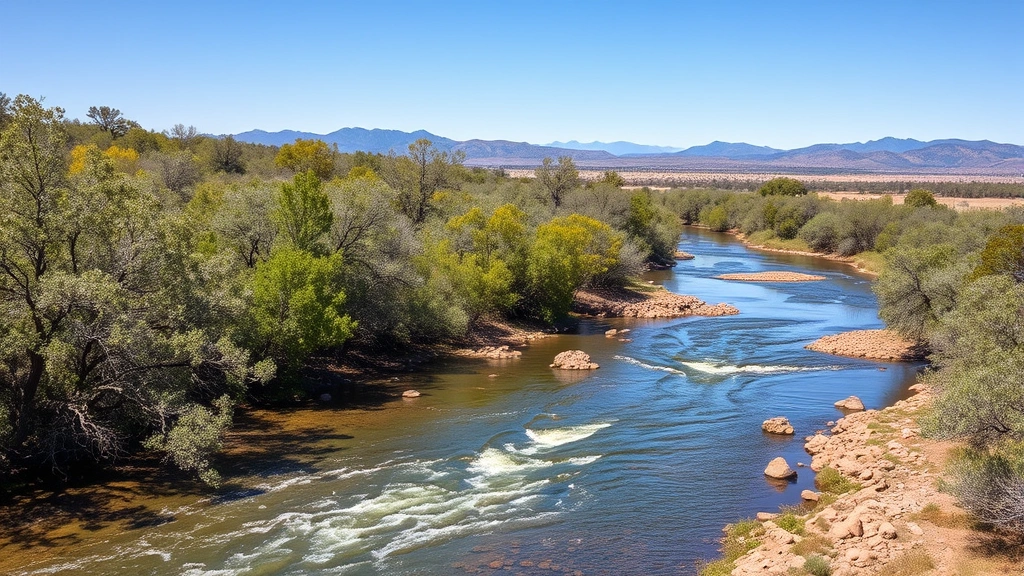
The Rio Grande basin, shared by Colorado, New Mexico, and Texas, demonstrates the economic significance of ecosystem health. Healthy mountain forests and meadows reduce evaporation, maintain groundwater recharge, and buffer flow variability. When these ecosystems degrade through fire, disease, or development, water yields decline while treatment costs increase. Studies indicate that reducing water consumption through ecosystem restoration costs $200-$400 per acre-foot, compared to $1,200-$2,000 per acre-foot for desalination or long-distance transfers.
Agricultural water demand consumes 80% of New Mexico’s surface water allocation, generating $3.2 billion annually in agricultural output. However, this production depends on ecosystem services—particularly aquifer recharge and seasonal flow regulation—that remain underpriced in water markets. The Pecos River basin illustrates this vulnerability: groundwater depletion in the Roswell artesian basin has declined from 3.2 million acre-feet in 1900 to 1.8 million acre-feet currently, reducing agricultural productivity and threatening municipal supplies for 300,000 residents.
Ecosystem-based adaptation strategies, such as riparian restoration and forest thinning to reduce water consumption by competing vegetation, offer economically efficient alternatives to supply-side solutions. A $50 million investment in watershed restoration across New Mexico could yield $180-$250 million in net economic benefits over 30 years through reduced water treatment costs, enhanced agricultural productivity, and avoided drought-related economic losses.
Carbon Sequestration and Climate Economics
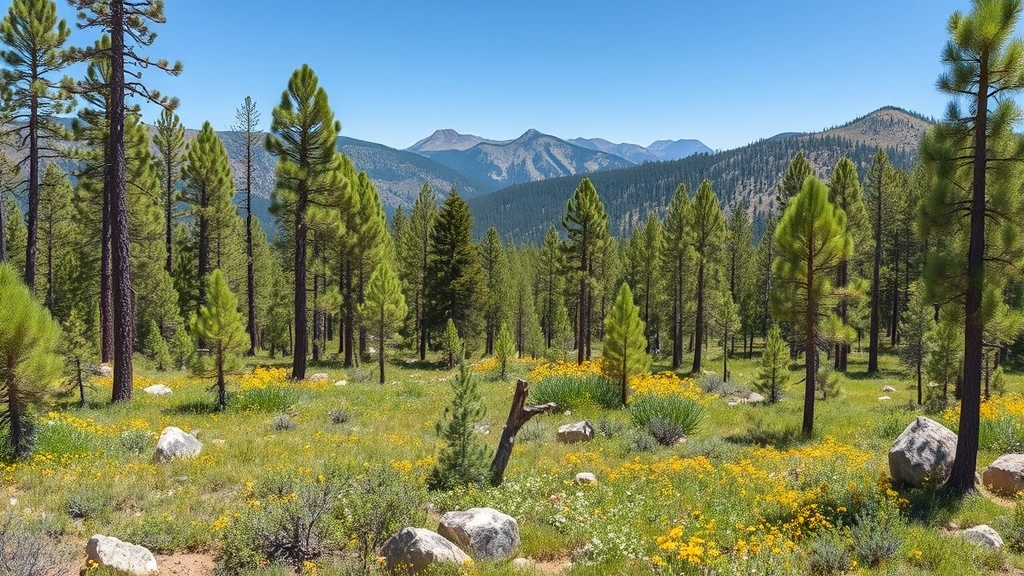
New Mexico’s forests, grasslands, and shrublands sequester approximately 18-22 million metric tons of carbon dioxide equivalent annually. This natural carbon sink provides climate regulation services valued at $450-$650 million per year, using social cost of carbon estimates from environmental economics research. However, recent disturbances—particularly wildfires, bark beetle infestations, and drought—have transformed these carbon sinks into carbon sources.
The 2011 Las Conchas Fire, New Mexico’s largest wildfire at 631,000 acres, released approximately 45-52 million metric tons of carbon dioxide, equivalent to 15 years of normal sequestration. Beyond immediate carbon emissions, fire-damaged forests lose sequestration capacity for decades, reducing ecosystem service flows. Economic analysis reveals that the total cost of this single fire—including suppression expenses ($42 million), ecosystem service losses ($1.2 billion), property damage, and increased water treatment costs—exceeded $1.8 billion.
Climate change is intensifying these challenges. Rising temperatures increase evapotranspiration, reduce snowpack duration, and shift moisture patterns, creating conditions favorable for pest outbreaks and wildfire. Modeling studies project that under high-emissions scenarios, New Mexico’s forest carbon sink could decline by 40-60% by 2080, while wildfire frequency increases 300-400%. This represents a potential loss of $12-$18 billion in ecosystem service value over the century.
Conversely, strategic forest management and ecosystem restoration generate both climate and economic benefits. Thinning overstocked forests reduces wildfire risk while improving carbon sequestration efficiency. Studies in similar ecosystems demonstrate that well-designed restoration projects increase net primary productivity, enhance water availability, and reduce mortality-driven carbon losses. The economic return on investment typically ranges from 3:1 to 7:1 over 50-year periods, accounting for carbon sequestration, water retention, and wildfire risk reduction.
Renewable energy development on degraded lands presents additional climate mitigation opportunities. New Mexico’s solar potential is among the nation’s highest, with average insolation of 6.5 kWh/m²/day. Utility-scale solar installations generate $150-$200 per acre annually in energy revenues while restoring ecosystem function through reduced grazing pressure and fire risk. These dual-benefit landscapes represent the frontier of ecological-economic integration.
Tourism and Recreation Economics
New Mexico’s natural amenities generate substantial tourism revenue. The state receives 32.5 million annual visitors who spend $20.1 billion, with ecosystem-based attractions—national parks, monuments, wilderness areas, and scenic landscapes—accounting for approximately 35-40% of this expenditure. Carlsbad Caverns National Park alone attracts 500,000 annual visitors generating $200+ million in regional economic activity. Chaco Culture National Historical Park, though remote, draws 30,000 visitors annually despite challenging access.
Ecosystem quality directly determines tourism viability and revenue. Degradation of scenic landscapes, wildlife populations, or water quality reduces visitor numbers and spending. Research using travel cost models indicates that a 10% decline in ecosystem quality reduces tourism expenditure by 12-18%, translating to $240-$360 million annual losses and corresponding employment impacts. Conversely, ecosystem restoration investments yield rapid tourism benefits, often within 3-5 years.
The outdoor recreation economy extends beyond traditional tourism. Hunting and fishing generate $2.1 billion annually across New Mexico, supporting 18,000 jobs. These activities depend on healthy wildlife populations and aquatic ecosystems. The Rio Grande and Pecos River systems support trophy trout fisheries worth $45-$60 million annually, yet water quality degradation and flow reductions threaten these economic engines. Ecosystem restoration prioritizing riparian health and instream flow maintenance offers direct economic returns to rural communities.
Birding represents a growing economic sector, with 1.2 million birders visiting New Mexico annually, spending $580 million. The state’s position on the Central Flyway, combined with diverse habitat types, creates exceptional birding opportunities. However, wetland loss, groundwater depletion, and riparian degradation threaten bird populations. The Bosque del Apache National Wildlife Refuge exemplifies ecosystem conservation’s economic value—generating $12-$15 million annually in visitor spending while maintaining critical habitat for endangered species.
Agricultural Systems and Biodiversity
New Mexico’s agricultural sector produces $3.2 billion in annual output across 13.4 million acres, with livestock production (cattle, sheep) dominating by value. However, agricultural productivity depends on ecosystem services—pollination, soil formation, pest regulation, and water provision—that remain largely invisible in farm economics. Quantifying these dependencies reveals the economic rationality of agricultural conservation practices and biodiversity protection.
Pollination services alone generate $180-$220 million annually in New Mexico agricultural value. Native bee populations and managed honeybees pollinate chile peppers (the state’s signature crop), alfalfa, cotton, and various fruits and vegetables. Habitat loss, pesticide exposure, and disease have reduced pollinator populations by 30-40% over two decades. The economic cost of this decline includes reduced yields, increased manual pollination expenses, and crop failures. Ecosystem restoration prioritizing native pollinator habitat offers cost-effective mitigation, with benefits exceeding costs by 4:1 ratios.
Soil health represents another critical yet undervalued ecosystem service. New Mexico’s soils, developed over millennia in arid conditions, contain 8-12 tons of organic carbon per acre. Agricultural practices and livestock overgrazing have degraded soils across 4.2 million acres, reducing carbon storage capacity, water infiltration, and nutrient cycling. Restoring soil health through reduced tillage, cover cropping, and managed grazing increases productivity by 12-18% while enhancing carbon sequestration. These practices generate positive returns within 5-7 years.
Biodiversity conservation intersects with agricultural economics through genetic resources and ecosystem resilience. New Mexico maintains 18 agricultural research stations conducting breeding programs for drought-tolerant crop varieties, heat-resistant livestock, and pest-resistant cultivars. These breeding programs depend on wild relatives and diverse germplasm collections. The economic value of improved varieties exceeds $150 million annually, justifying ecosystem protection as agricultural infrastructure investment.

Policy Framework and Implementation
The New Mexico Department of Environment has developed policy frameworks integrating ecosystem valuation into decision-making. The Environmental Improvement Board, Environmental Quality Bureau, and Forestry Division coordinate across traditional silos to address interconnected ecological-economic challenges. Recent initiatives include:
- Natural Capital Accounting: Implementing World Bank frameworks to incorporate ecosystem services into state economic accounts, enabling measurement of genuine progress beyond GDP.
- Payment for Ecosystem Services (PES) Programs: Establishing markets where landowners receive compensation for conservation practices. The State Forestry Division’s stewardship contracts pay landowners $50-$150 per acre for forest thinning, generating wildfire risk reduction and carbon sequestration benefits.
- Conservation Easements: Protecting 180,000 acres through easement programs that permanently restrict development while maintaining private ownership. These easements preserve ecosystem services while supporting rural economies.
- Water Quality Trading: Developing markets where agricultural operations and municipalities trade water quality improvements, creating economic incentives for ecosystem restoration.
- Renewable Energy Development Standards: Mandating ecosystem-sensitive siting of solar and wind facilities to minimize habitat loss while achieving clean energy targets.
The human-environment interaction framework guides policy implementation. Rather than viewing conservation as constraints on development, policies recognize ecosystem services as natural capital requiring investment and management. This perspective aligns economic and environmental interests, building political support for conservation.
Federal partnerships amplify state efforts. The U.S. Forest Service manages 9.3 million acres in New Mexico, coordinating with state agencies on ecosystem management. The Natural Resources Conservation Service provides financial and technical assistance for conservation practices on private lands, leveraging federal investment with landowner participation. These partnerships generate economies of scale, reducing per-acre costs while expanding program reach.
UNEP’s ecosystem restoration guidance has influenced New Mexico’s prioritization strategies. The state has committed to restoring 250,000 acres of degraded ecosystems by 2030, focusing on high-value areas where restoration generates multiple co-benefits. Riparian restoration receives priority due to water security implications; forest restoration emphasizes wildfire risk reduction and carbon sequestration; grassland restoration targets soil health and pollinator habitat.
Challenges and Future Outlook
Despite progress, significant challenges constrain ecosystem conservation and restoration in New Mexico. Funding limitations represent the primary constraint—annual state environmental budgets of $180-$200 million pale against restoration needs estimated at $800 million to $1.2 billion annually across priority ecosystems. Federal funding, while substantial, remains uncertain and subject to political fluctuations.
Climate change presents unprecedented challenges. Modeling studies project that 25-35% of New Mexico’s current forest area may transition to non-forest vegetation by 2080 under high-emissions scenarios. This represents potential losses of $4-$6 billion in ecosystem service value. Adaptation strategies requiring proactive management—accelerated restoration, assisted migration of resilient species, and strategic retreat from untenable locations—demand substantial investment and social coordination.
Water scarcity intensifies as climate change reduces snowpack and increases evaporation. The Colorado River Compact allocates New Mexico 300,000 acre-feet annually, but current usage approaches this limit. Population growth and agricultural demand create competing interests. Ecosystem-based water management offers partial solutions, but requires acceptance of reduced water availability and agricultural restructuring. Transitioning to less water-intensive crops and improving irrigation efficiency generate economic benefits, but require substantial capital investment and farmer support.
Social and political barriers complicate implementation. Some stakeholders perceive ecosystem conservation as threatening employment and rural livelihoods. Building inclusive policy processes that address these concerns while advancing environmental goals remains challenging. However, evidence increasingly demonstrates that ecosystem-based approaches generate employment through restoration work, sustainable tourism, and ecosystem service markets.
Looking forward, New Mexico’s economic future depends on recognizing and protecting natural capital. The state’s competitive advantages—diverse ecosystems, renewable energy resources, and natural amenities—can support prosperity if managed sustainably. Conversely, ecosystem degradation imposes escalating costs through water scarcity, wildfire damages, and tourism decline. Economic analysis clearly demonstrates that investing in ecosystem protection and restoration generates superior returns compared to exploitation-based strategies.
The transition to a bioeconomy—where economic activity centers on sustainable ecosystem management—represents New Mexico’s strategic opportunity. Ecosystem restoration creates high-quality rural employment; ecosystem service markets generate income for landowners; sustainable tourism provides stable revenue; and natural capital accounting ensures intergenerational equity. By valuing nature economically, New Mexico can align prosperity with environmental stewardship.
FAQ
What are the primary ecosystem services New Mexico provides?
New Mexico’s ecosystems deliver water filtration and storage, carbon sequestration, pollination services, flood control, soil formation, climate regulation, and recreational amenities. These services generate approximately $47-$52 billion annually in economic value, supporting agriculture, tourism, and municipal infrastructure.
How does water scarcity affect New Mexico’s economy?
Water scarcity constrains agricultural production (80% of surface water use), municipal growth, and industrial development. Ecosystem-based water management—maintaining forests and riparian zones—provides cost-effective alternatives to engineered solutions, with benefits exceeding costs by 3-5 fold over 30-year periods.
What is the economic value of New Mexico’s forests?
Forests provide carbon sequestration ($450-$650 million annually), water regulation, wildlife habitat, and recreation. However, wildfires and pest outbreaks impose substantial costs—the 2011 Las Conchas Fire alone cost $1.8 billion in suppression, ecosystem service losses, and property damage.
How does ecosystem restoration generate employment?
Restoration work creates direct employment in thinning, planting, and infrastructure development. Indirect employment follows through ecosystem service markets, sustainable tourism expansion, and reduced disaster recovery costs. Studies estimate 15-25 jobs per $1 million restoration investment.
What policy mechanisms support ecosystem protection?
New Mexico employs payment for ecosystem services, conservation easements, water quality trading, renewable energy standards, and natural capital accounting. These mechanisms create economic incentives for conservation while integrating ecosystem values into decision-making.
How does sustainable resource management differ from traditional approaches?
Sustainable approaches prioritize long-term ecosystem health and economic resilience over short-term extraction. This requires recognizing natural capital as essential infrastructure, investing in restoration, and accepting ecological limits on resource use. Evidence demonstrates superior economic returns over 50+ year horizons.


