
How Green Bonds Impact Economies: Analyst Insights
Green bonds represent one of the most significant financial innovations in the past decade, fundamentally reshaping how capital flows toward environmental projects. These debt securities, specifically earmarked for climate and environmental initiatives, have grown from a niche market instrument to a mainstream investment vehicle commanding hundreds of billions in annual issuance. Understanding their economic impact requires examining the intricate relationship between financial markets, environmental outcomes, and macroeconomic indicators that define modern sustainable development.
The emergence of green bonds reflects a broader recognition that traditional finance mechanisms inadequately address environmental externalities. By creating dedicated funding channels for renewable energy, energy efficiency, sustainable agriculture, and ecosystem restoration, green bonds bridge the gap between investor demand for responsible capital allocation and the urgent need for climate action. This article explores how these instruments reshape economies, influence investment patterns, and contribute to long-term environmental and economic resilience.
Understanding Green Bonds and Market Growth
Green bonds are fixed-income securities whose proceeds finance environmental and climate projects. Since their inception in 2007, the market has experienced exponential growth, with annual issuance exceeding $500 billion globally by 2021. This expansion reflects institutional investors’ recognition that environmental risks constitute material financial risks, necessitating portfolio adjustments toward sustainable assets.
The market structure comprises various instruments: corporate green bonds issued by multinational enterprises, sovereign green bonds from national governments, and green municipal bonds funding local infrastructure projects. Each category serves distinct economic functions while contributing to broader climate mitigation and adaptation goals. The diversification of issuers and instruments has enhanced market liquidity, reduced borrowing costs for environmental projects, and attracted diverse investor demographics ranging from pension funds to retail investors.
According to the World Bank, green bonds have facilitated the mobilization of capital that would otherwise remain unavailable for environmental investments. This capital redirection creates measurable economic effects including job creation, technology advancement, and systemic risk reduction. The standardization of green bond frameworks through initiatives like the Green Bond Principles has enhanced market transparency and investor confidence, establishing green bonds as a legitimate asset class rather than a niche sustainable finance product.

Capital Mobilization and Investment Flows
The primary economic impact of green bonds operates through capital mobilization mechanisms. By creating dedicated funding streams for environmental projects, green bonds redirect investment capital toward sectors that address climate change and environmental degradation. This reallocation fundamentally alters the composition of capital investments across economies, with implications for long-term growth patterns and sectoral competitiveness.
Green bond proceeds have financed approximately $2 trillion in environmental projects since market inception, addressing critical infrastructure gaps in renewable energy, sustainable transportation, water management, and ecosystem protection. These investments might not materialize through conventional financing channels due to perceived risks, longer payback periods, and environmental externalities that traditional financial models fail to price adequately. Green bonds overcome these market failures by explicitly linking financial returns to environmental outcomes, creating alignment between investor interests and sustainability objectives.
The capital mobilization effect extends beyond direct project financing. By demonstrating investor appetite for environmental assets, green bonds have encouraged traditional financial institutions to develop sustainable finance expertise, establishing dedicated green finance divisions and recruiting specialized personnel. This institutional evolution creates persistent infrastructure supporting continued capital flows toward environmental sectors, independent of individual bond issuances. Furthermore, green bond markets generate price signals that inform broader investment decisions, with green bond yield curves influencing cost-of-capital calculations for environmental projects across financing markets.
Understanding human environment interaction through financial mechanisms reveals how market instruments reshape environmental outcomes. Green bonds exemplify this interaction by translating environmental priorities into economic incentives that mobilize private capital at scales matching climate investment requirements.
Economic Efficiency and Cost Reduction
Green bonds generate economic efficiency gains through multiple mechanisms operating simultaneously across financial and real economies. First, they reduce capital costs for environmental projects by expanding the investor base willing to finance climate initiatives. As green bond markets mature and liquidity increases, borrowing spreads narrow relative to conventional bonds, lowering project financing costs. This cost reduction translates directly into improved project economics, enabling investments that would be marginally uneconomical under higher discount rates to proceed.
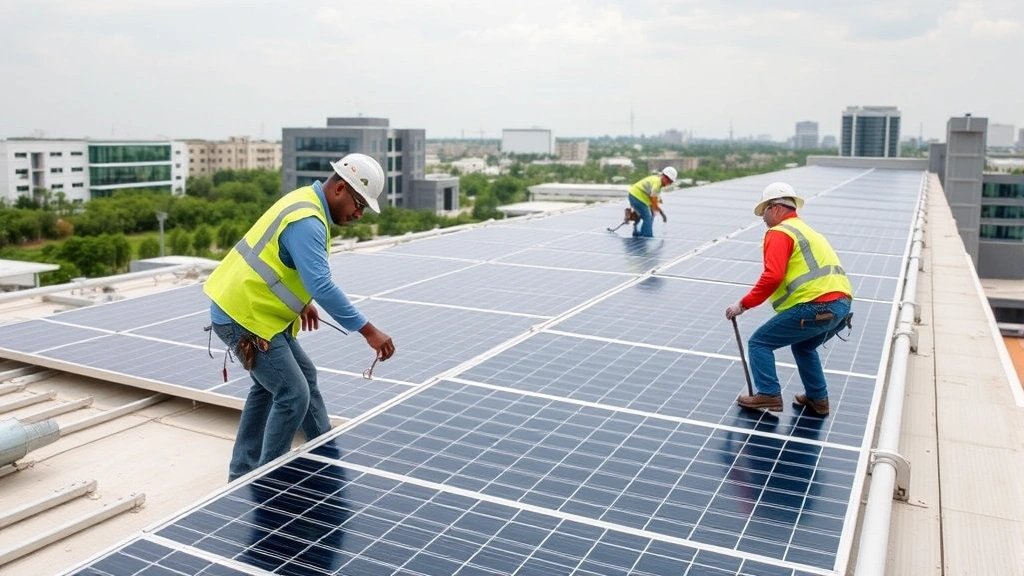
Second, green bonds facilitate technology cost reduction through scale economies. By aggregating demand for renewable energy, energy efficiency technologies, and sustainable infrastructure, green bond financing enables manufacturers to achieve production economies of scale that reduce unit costs. This dynamic has been particularly pronounced in solar photovoltaic and wind energy sectors, where green bond financing has supported deployment volumes sufficient to drive dramatic cost reductions. Over the past decade, solar photovoltaic costs declined by approximately 90 percent, while wind energy costs fell by 70 percent, with green bond market development contributing meaningfully to these trajectories through volume expansion.
Third, green bonds enable operational efficiency improvements through performance-based financing structures. Many green bond frameworks incorporate sustainability-linked features that adjust coupon rates based on achievement of environmental targets. These mechanisms create financial incentives for project operators to optimize performance, reduce operational costs, and maximize environmental benefits. This performance orientation contrasts with traditional project financing that emphasizes debt service regardless of environmental outcomes.
The built environment represents a significant sector benefiting from green bond financing efficiency improvements. Green bonds have financed energy-efficient building retrofits, sustainable construction technologies, and integrated urban infrastructure that reduces operational carbon and improves resource efficiency. These investments generate measurable economic returns through reduced energy consumption, lower maintenance costs, and improved asset values, demonstrating that environmental investments create genuine economic value rather than representing pure cost burdens.
Employment and Sectoral Transformation
Green bond financing catalyzes employment creation across multiple economic sectors, generating both direct and indirect employment effects. Direct employment emerges in project development, construction, and operations of financed environmental infrastructure. The renewable energy sector alone has generated millions of jobs globally, with green bond financing supporting rapid sector expansion. These positions typically offer above-average wages, skill development opportunities, and stable long-term employment prospects, contributing to economic resilience and human capital accumulation.
Indirect employment effects arise through supply chain development and supporting services. Green bond-financed renewable energy projects require manufacturing facilities, installation services, maintenance operations, and specialized technical expertise. This demand stimulates employment across upstream and downstream industries, creating multiplier effects that extend throughout regional economies. Studies examining green bond impacts on employment typically find multiplier coefficients between 1.5 and 2.5, indicating that each dollar of green bond financing generates between $1.50 and $2.50 in total economic activity.
Beyond employment quantity, green bonds facilitate sectoral transformation by shifting labor demand toward higher-skill, higher-wage positions. Renewable energy and energy efficiency sectors require specialized technical expertise, engineering knowledge, and advanced manufacturing capabilities. Green bond financing supports workforce development, vocational training, and educational programs that prepare workers for emerging green economy positions. This skills-oriented transformation enhances labor productivity and human capital quality across financed economies.
The sectoral transformation enabled by green bonds addresses critical vulnerabilities in fossil fuel-dependent economies. By financing economic diversification toward renewable energy, sustainable agriculture, and environmental services, green bonds help economies reduce dependence on volatile commodity prices and finite resource bases. This diversification enhances macroeconomic stability, reduces vulnerability to external shocks, and creates more resilient growth patterns less susceptible to energy price fluctuations.
Risk Mitigation and Economic Resilience
Green bonds generate significant economic value through risk mitigation mechanisms operating across multiple timescales and risk categories. Climate change imposes escalating physical and transition risks on economic systems, with impacts including asset stranding, infrastructure damage, agricultural disruption, and supply chain vulnerability. By financing climate adaptation and mitigation projects, green bonds reduce exposure to these risks while creating economic assets that generate positive returns independent of climate outcomes.
Physical climate risks manifest through extreme weather events, changing precipitation patterns, rising sea levels, and ecosystem disruption. Green bond financing for adaptation infrastructure—including flood management systems, drought-resistant agriculture, coastal protection, and climate-resilient water systems—reduces vulnerability to these impacts while generating measurable economic benefits. Adaptation projects typically exhibit favorable benefit-cost ratios exceeding 4:1, indicating substantial economic value creation beyond risk reduction.
Transition risks emerge as carbon-intensive industries face regulatory pressure, technological displacement, and market contraction. Green bonds finance alternative economic activities that position economies advantageously within decarbonizing global markets. This proactive transition reduces stranded asset risks, avoids costly economic disruption, and preserves competitive positioning in carbon-constrained futures. Economies that successfully transition through green bond-financed structural change maintain growth momentum while reducing long-term economic vulnerability.
How humans affect the environment through industrial and economic activities creates financial risks that green bonds help mitigate. By financing environmental restoration and pollution reduction, green bonds address root causes of environmental degradation while generating economic co-benefits including improved public health, reduced healthcare costs, enhanced property values, and improved labor productivity.
Economic resilience enhancement through green bonds operates through ecosystem service preservation and natural capital maintenance. Green bonds financing ecosystem restoration, reforestation, wetland protection, and marine conservation preserve ecosystem services—including pollination, water filtration, carbon sequestration, and climate regulation—that underpin economic productivity. The economic value of ecosystem services often exceeds direct market values by multiples, making green bond financing for conservation economically rational from purely financial perspectives.
Challenges and Market Limitations
Despite substantial benefits, green bond markets face significant challenges limiting their economic impact. Definitional ambiguity regarding “green” projects creates greenwashing risks, where issuers misrepresent conventional projects as environmental investments. This misclassification dilutes green bond impact, diverts capital from genuine environmental projects, and undermines investor confidence. Addressing this challenge requires robust verification frameworks, independent auditing, and standardized environmental metrics that enable rigorous impact assessment.
Market concentration represents another significant limitation. Green bond issuance concentrates among large corporations and developed-country governments capable of accessing capital markets efficiently. Smaller enterprises, developing-country governments, and community-based organizations face substantial barriers to green bond market access, limiting capital mobilization for environmental projects in regions with highest development and climate needs. This concentration pattern reproduces existing capital market inequalities, potentially exacerbating global economic disparities despite green bonds’ sustainability objectives.
Additionality questions challenge green bond economic impact claims. When green bond proceeds finance projects that would proceed regardless of green bond availability, green bonds merely redistribute financing rather than enabling additional investment. Rigorous additionality assessment requires counterfactual analysis determining whether projects depend on green bond financing, a challenging determination complicated by overlapping financing options and uncertain alternative scenarios. Analysts debate whether observed green bond market growth represents genuine additional financing or primarily refinancing of projects that would finance through conventional channels.
Price discovery limitations emerge from green bond market segmentation. By creating distinct investor categories willing to accept lower returns for environmental benefits, green bonds potentially reduce price competition and market efficiency. This segmentation may enable issuers to capture excessive returns while reducing capital cost benefits that should accrue to environmental projects. Understanding these dynamics requires examining positive human impact on the environment through more efficient capital allocation mechanisms that maximize environmental outcomes per investment dollar.
Scale limitations present fundamental challenges to green bond contributions toward climate financing requirements. Annual climate investment needs exceed $1 trillion, while green bond issuance remains below $500 billion annually. This financing gap requires complementary instruments including public financing, development finance, philanthropic capital, and policy mechanisms that reduce capital requirements through efficiency improvements and regulatory frameworks. Green bonds alone cannot address climate financing requirements, necessitating integrated financing strategies combining multiple instruments and mechanisms.
Future Trajectories and Policy Implications
Green bond market evolution will likely follow several trajectories reshaping their economic impact. Standardization initiatives including taxonomy development, impact measurement frameworks, and verification standards will enhance market integrity and investor confidence. The European Union’s sustainable finance taxonomy establishes precedents for systematic environmental classification that other jurisdictions increasingly adopt, creating convergence toward globally consistent green bond definitions.
Integration with broader sustainable finance mechanisms will embed green bonds within comprehensive sustainable investing frameworks. Transition bonds financing decarbonization of high-emission sectors, sustainability-linked bonds linking financial terms to environmental outcomes, and biodiversity bonds addressing ecosystem protection represent emerging categories expanding green finance beyond renewable energy and energy efficiency. This diversification addresses broader environmental challenges while creating financing mechanisms for harder-to-abate sectors.
Policy mechanisms will increasingly leverage green bonds as climate policy instruments. Carbon pricing frameworks, renewable energy mandates, and building efficiency standards create investment requirements that green bonds can finance efficiently. Governments can reduce policy implementation costs while accelerating environmental transitions by explicitly channeling green bonds toward policy-mandated investments. This integration aligns market mechanisms with regulatory frameworks, creating synergistic policy effects exceeding what either mechanism achieves independently.
Developing country green bond market development represents critical future trajectory. Enhanced technical capacity, institutional infrastructure, and investor base development will enable emerging economies to access green bond markets for climate adaptation and mitigation financing. Development finance institutions can catalyze this development through capacity building, co-investment arrangements, and currency risk management mechanisms that reduce barriers to green bond issuance from developing countries.
The relationship between green bonds and types of environment influenced by economic activity will become increasingly explicit as green bonds finance comprehensive environmental restoration beyond climate focus. Bonds financing water quality improvement, air pollution reduction, soil conservation, and biodiversity protection will expand green bond applications toward holistic environmental management rather than narrowly focused climate investments.
Research from the United Nations Environment Programme emphasizes that green bonds must evolve toward greater impact orientation, moving beyond financing metrics toward environmental outcome measurement. Future green bond frameworks will increasingly incorporate rigorous environmental impact assessment, outcome verification, and adaptive management protocols ensuring that capital mobilization translates into measurable environmental improvements.
Policy implications suggest governments should: establish green bond market infrastructure including taxonomy frameworks and impact measurement standards; create fiscal incentives encouraging institutional investor participation; develop capacity for green bond issuance among sub-national governments and development finance institutions; implement policies creating investment demand for green bond-financed projects; and establish international coordination mechanisms harmonizing green bond standards across jurisdictions.
The Ecorise Daily Blog provides ongoing analysis of green bond market developments and sustainable finance innovations shaping economic-environmental interactions. Monitoring these emerging trends enables stakeholders to anticipate market evolution and position portfolios, policies, and institutions advantageously within transitioning financial landscapes.
FAQ
What exactly are green bonds and how do they differ from conventional bonds?
Green bonds are debt securities whose proceeds specifically finance environmental and climate projects. Unlike conventional bonds financing general corporate or government activities, green bonds legally restrict capital use to eligible environmental projects. This specification creates accountability for environmental outcomes and enables impact measurement, distinguishing green bonds from traditional financing instruments.
How much capital have green bonds mobilized for environmental projects?
Green bonds have facilitated approximately $2 trillion in environmental project financing since market inception in 2007. Annual issuance exceeded $500 billion by 2021, with continuing growth trajectories. This capital mobilization represents significant contribution toward climate investment requirements, though remains insufficient to address total climate financing needs exceeding $1 trillion annually.
Do green bonds actually reduce borrowing costs for environmental projects?
Yes, evidence indicates green bonds reduce borrowing costs through multiple mechanisms. Market expansion increases investor demand for environmental assets, narrowing yield spreads. Institutional investor participation and market liquidity improvements reduce capital costs. Studies document green bond yield advantages ranging from 5 to 100 basis points relative to conventional bonds, translating directly into lower project financing costs.
What economic sectors benefit most from green bond financing?
Renewable energy, energy efficiency, sustainable transportation, water management, and waste management sectors represent primary green bond recipients. More recently, green bonds have increasingly financed sustainable agriculture, ecosystem restoration, and climate adaptation infrastructure. Sectoral distribution reflects investor preferences and issuer capacity, with concentration in developed-country renewable energy projects.
How do green bonds contribute to employment creation?
Green bonds finance projects generating direct employment in construction, operations, and maintenance, plus indirect employment through supply chain development and supporting services. Multiplier effects typically range between 1.5 and 2.5, indicating substantial broader economic activity stimulation. Employment tends toward higher-skill, higher-wage positions in technical and engineering fields.
What challenges limit green bond market growth and impact?
Definitional ambiguity enabling greenwashing, market concentration among large corporations and developed countries, additionality questions regarding whether bonds enable additional investment, scale limitations relative to climate financing requirements, and price discovery concerns represent primary challenges. Addressing these limitations requires standardization, verification mechanisms, and complementary financing instruments.
How will green bond markets evolve in coming years?
Future evolution will likely involve standardization through taxonomy development, integration with broader sustainable finance mechanisms, policy leverage for climate objectives, developing country market expansion, and enhanced environmental impact orientation. Emerging bond categories including transition bonds and biodiversity bonds will expand green finance applications beyond current renewable energy focus.
Can green bonds alone address climate financing requirements?
No, green bonds represent important but insufficient climate financing component. With annual climate investment needs exceeding $1 trillion while green bond issuance remains below $500 billion, complementary financing mechanisms including public investment, development finance, policy mechanisms, and philanthropic capital are essential. Integrated financing strategies combining multiple instruments are necessary for adequate climate finance mobilization.


