Built Environment’s Role in Economy: A Comprehensive Study
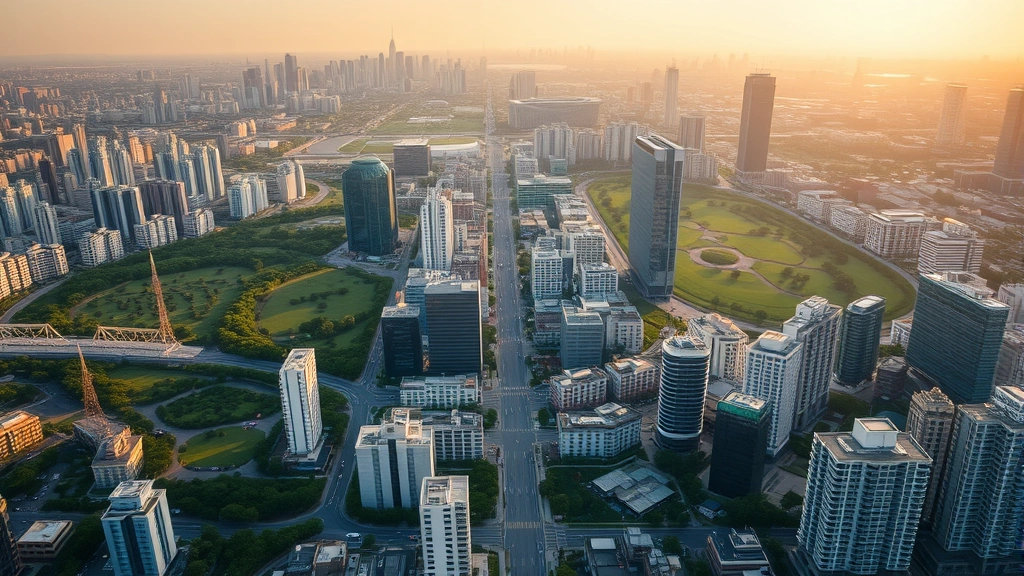
The built environment—comprising buildings, infrastructure, transportation networks, and public spaces—fundamentally shapes economic activity, productivity, and human wellbeing. Understanding what is the built environment and its economic dimensions reveals how urban design, real estate development, and infrastructure investment create cascading effects throughout regional and global economies.
This intersection of physical infrastructure and economic systems represents one of the most significant yet often overlooked drivers of sustainable development. From commercial real estate valuations to labor productivity metrics, the built environment generates trillions in economic value while simultaneously presenting challenges for environmental sustainability and equitable growth.
Defining the Built Environment and Its Economic Scope
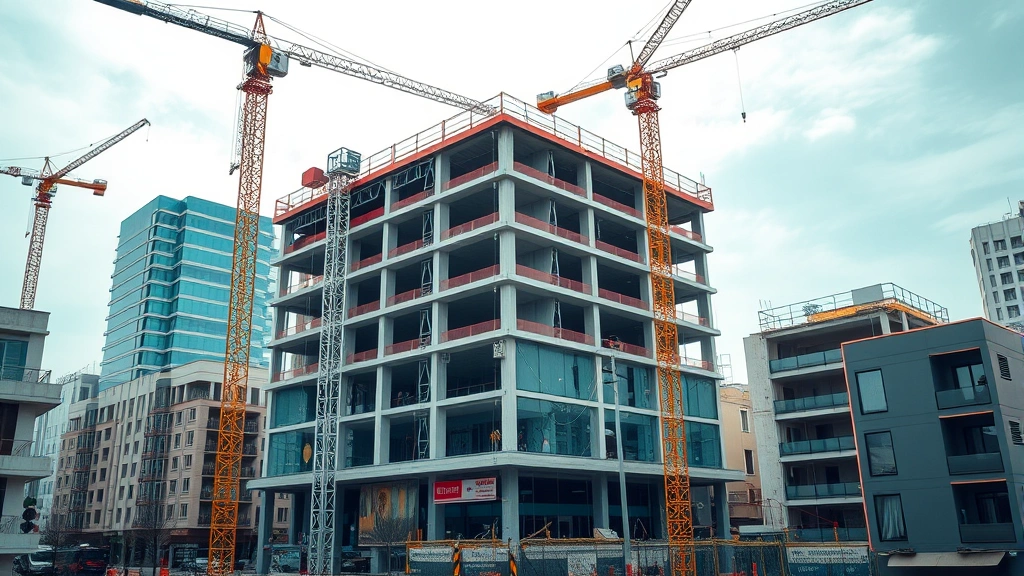
The built environment encompasses all human-made physical structures and systems that comprise our cities, towns, and infrastructure networks. This includes residential buildings, commercial properties, industrial facilities, transportation systems, water and energy infrastructure, and public amenities. Understanding human environment interaction provides context for how these structures mediate economic relationships between people and resources.
Economically, the built environment represents approximately 6-9% of global GDP in direct construction and real estate activities, with indirect contributions reaching 25-30% when accounting for supply chains, maintenance, and service industries. The sector employs over 110 million workers globally, making it one of the largest employment sources. This vast economic footprint influences inflation rates, interest rates, labor availability, and capital allocation across entire economies.
The built environment functions as both a stock of accumulated capital and a flow of ongoing economic activity. Buildings and infrastructure represent fixed assets that generate returns through rental income, service provision, and productivity enhancement. Simultaneously, construction and renovation activities create immediate demand for materials, labor, and financing, stimulating economic growth through multiplier effects.
To grasp the full scope, one must consider types of environment and how built structures interact with natural and social systems. The built environment mediates human-nature relationships, determining resource consumption patterns and environmental impact trajectories.
Capital Formation and Investment Dynamics
Real estate and construction represent the largest asset class globally, valued at approximately $327 trillion as of recent assessments. This staggering figure demonstrates how the built environment serves as a primary vehicle for capital accumulation and wealth storage across households, corporations, and sovereign wealth funds.
Capital formation through built environment development follows distinct patterns. Residential real estate comprises approximately 75% of total real estate value, functioning as the primary wealth-building mechanism for middle-class households in developed economies. Commercial and industrial properties, though smaller in aggregate value, generate higher returns and drive economic agglomeration effects that concentrate businesses in specific locations.
Investment dynamics reflect both rational economic calculations and speculative behavior. Developers assess demographic trends, employment growth, transportation accessibility, and regulatory environments when determining where to build. These decisions create self-reinforcing cycles: successful locations attract further investment, increasing property values and encouraging density, which improves infrastructure viability and economic returns.
However, this capital allocation mechanism often creates inefficiencies. Economic analyses from Ecorise Daily and academic research highlight how speculative bubbles in real estate markets can distort resource allocation, leading to overbuilding in some regions while others face chronic undersupply. The 2008 financial crisis demonstrated how built environment asset bubbles can cascade into systemic economic collapse.
International capital flows increasingly target built environment assets, with foreign direct investment in real estate reaching $500+ billion annually. This globalization of real estate investment creates new economic interdependencies while potentially destabilizing local housing markets in receiving countries.
Labor Markets and Productivity Effects
The built environment profoundly influences labor market outcomes through multiple mechanisms. Physical location determines commute times, which directly affect worker productivity, health, and retention. Research demonstrates that workers in well-designed office environments show 15-25% higher productivity compared to poorly designed spaces, translating into hundreds of billions in annual productivity gains globally.
Urban agglomeration—the clustering of firms and workers in dense built environments—generates significant economic benefits. Firms locate near each other to access specialized labor pools, reduce supply chain costs, and benefit from knowledge spillovers. This agglomeration effect explains why metropolitan areas with 1-2% of national population often generate 10-15% of GDP.
Transportation infrastructure within the built environment determines labor market accessibility. Effective public transit and road networks expand the geographic radius within which workers can reasonably commute, increasing labor supply to employers and employment opportunities for workers. Conversely, poor transportation infrastructure creates labor market fragmentation, reducing efficiency and perpetuating geographic inequality.
The construction sector itself represents a major employment source, though with distinct characteristics. Construction jobs typically offer middle-class wages without requiring tertiary education, serving as crucial pathways for economic mobility. However, the sector experiences high volatility, with employment fluctuating dramatically with real estate cycles. This volatility creates macroeconomic instability, particularly in countries where construction represents large GDP shares.
Real Estate as Economic Engine
Real estate transactions, development, and management generate substantial economic activity beyond the underlying asset values. The real estate industry encompasses property management, brokerage, financing, legal services, appraisal, and maintenance—collectively employing millions and generating trillions in annual transactions.
Property taxation represents a crucial municipal revenue source, with real estate taxes funding approximately 40% of local government budgets in developed economies. This fiscal dependence creates incentives for local governments to pursue real estate-driven development strategies, sometimes at the expense of other economic sectors or environmental sustainability.
Mortgage markets—where real estate serves as collateral—represent fundamental financial infrastructure. The mortgage market channels household savings into built environment investment while enabling leverage that amplifies both returns and risks. In many economies, residential mortgages constitute the largest component of household debt, making real estate prices critical to financial stability.
Commercial real estate performance serves as a leading economic indicator, with vacancy rates, rental growth, and capital flows reflecting broader economic health. During recessions, commercial real estate typically experiences sharper value declines than residential property, as business investment proves more discretionary than housing consumption.
Understanding job environment factors reveals how real estate markets influence employment quality and availability. Office location decisions, retail site selection, and industrial facility placement all reflect and reinforce labor market structures.
Infrastructure Investment and Regional Development
Infrastructure—roads, railways, airports, ports, water systems, and energy networks—represents the connective tissue enabling economic activity across the built environment. Infrastructure investment yields returns exceeding 15% in many developing economies, making it among the highest-return investments available.
The World Bank estimates that developing countries require $1.4 trillion annually in infrastructure investment to achieve sustainable development goals. This massive capital requirement reflects how infrastructure underpins all economic activity. Inadequate infrastructure constrains growth, while strategic infrastructure investment can unlock regional development potential.
Transportation infrastructure particularly influences economic geography. Highway systems, rail networks, and port facilities determine which regions can efficiently access markets and supply chains. Strategic infrastructure placement can shift economic advantage between regions, explaining why infrastructure investment becomes intensely political.
Infrastructure exhibits increasing returns characteristics: initial investment costs prove high, but marginal costs decline as utilization increases. This creates natural monopoly conditions and path dependency—once infrastructure develops in one location, subsequent development tends to concentrate there, reinforcing initial advantages.
Water and energy infrastructure directly constrains economic activity. Regions lacking reliable electricity cannot support manufacturing or technology sectors. Water scarcity limits agricultural productivity and industrial capacity. These infrastructure constraints explain much geographic variation in development levels and economic specialization.
Environmental Economics and Hidden Costs
The built environment generates substantial environmental costs often excluded from market prices. Construction consumes approximately 40% of global raw materials and generates 35% of waste streams. Building operations account for 30-40% of global energy consumption and equivalent carbon dioxide emissions.
Environmental economics frameworks reveal how market failures distort built environment development. Developers and property owners typically bear only private costs while environmental costs—air pollution, water contamination, habitat loss, greenhouse gas emissions—fall on society broadly. This divergence between private and social costs encourages overbuilding and inefficient resource allocation.
The World Bank’s urban development research documents how rapid urbanization without proper environmental management creates severe externalities. Unplanned built environment expansion in developing countries often involves deforestation, wetland destruction, and agricultural land conversion—imposing environmental costs exceeding economic benefits.
Carbon emissions from the built environment represent approximately 28-30% of global total, making it a critical climate change mitigation target. UNEP’s environmental assessments emphasize how built environment decarbonization through energy efficiency, renewable energy integration, and sustainable materials represents essential climate action.
Urban heat island effects—where built environments experience temperatures 2-7°C higher than surrounding areas—impose health costs, increase cooling energy demands, and accelerate infrastructure deterioration. These climate adaptation costs grow as temperatures rise, creating fiscal pressures on municipalities.
Sustainable Built Environment Strategies
Addressing built environment economic-environmental tensions requires integrated strategies spanning design, regulation, investment, and governance. Green building certification systems like LEED and Passivhaus demonstrate that sustainable construction need not increase costs significantly while reducing lifetime operating expenses.
Compact, mixed-use development patterns reduce transportation energy demands while increasing housing affordability through land-use efficiency. Research from ecological economics journals shows that high-density urban development generates 50-80% lower per-capita carbon emissions compared to sprawling suburban patterns.
Circular economy principles applied to built environment sectors could substantially reduce material extraction and waste. Modular design, material reuse, and adaptive reuse of existing buildings represent economically viable alternatives to demolition and new construction.
Sustainable infrastructure investment—prioritizing public transit, cycling infrastructure, and walkable neighborhoods—yields co-benefits including improved public health, enhanced social cohesion, and reduced transportation costs. UNEP resource efficiency programs document how sustainable built environment development creates economic opportunities while reducing environmental impact.
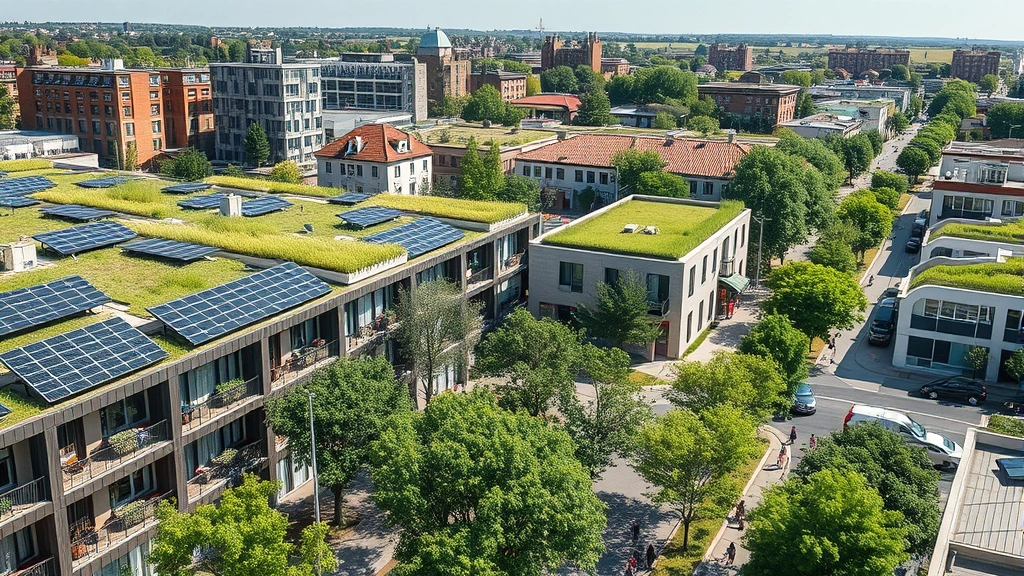
Nature-based solutions—green roofs, urban forests, restored wetlands, and permeable surfaces—provide ecosystem services including stormwater management, air quality improvement, and biodiversity habitat while enhancing property values and community wellbeing.
Policy instruments including carbon pricing, building performance standards, and sustainable finance mechanisms align private incentives with social objectives. Progressive jurisdictions increasingly mandate net-zero energy buildings and incorporate climate resilience into building codes.
Understanding how humans affect the environment through built environment development underscores the urgency of transitioning toward sustainable practices.
FAQ
What exactly comprises the built environment?
The built environment includes all human-made physical structures and infrastructure: buildings (residential, commercial, industrial), transportation networks, water and energy systems, public spaces, and utilities. It represents the constructed human habitat within which economic and social activity occurs.
How significantly does the built environment impact GDP?
Direct contributions through construction and real estate represent 6-9% of global GDP, with indirect contributions through supply chains and services reaching 25-30%. Real estate comprises the largest global asset class at approximately $327 trillion, dwarfing other investment categories.
Why do built environment investments generate high economic returns?
Built environment assets generate returns through rental income, property appreciation, productivity enhancement, and agglomeration effects. Strategic location captures value from surrounding development, while infrastructure improvements can dramatically increase property values and economic activity.
What environmental costs does the built environment impose?
The sector consumes 40% of global raw materials, generates 35% of waste, and accounts for 30-40% of global energy consumption and equivalent carbon emissions. Construction and building operations represent the single largest source of anthropogenic climate impacts.
Can sustainable built environment development remain economically competitive?
Yes. Evidence demonstrates that green buildings often achieve lower lifecycle costs through energy savings, command rental premiums, and experience better occupancy rates. Sustainable development creates economic opportunities in retrofitting, renewable energy integration, and innovative design.
How does built environment design influence labor productivity?
Well-designed spaces enhance worker productivity by 15-25% through improved lighting, temperature control, acoustics, and spatial organization. Urban agglomeration in built environments generates knowledge spillovers and labor market efficiency gains worth hundreds of billions annually.


