
Integrating Economy & Ecosystems: Key Insights for Sustainable Development
The relationship between economic systems and natural ecosystems has long been treated as separate domains, with economists focusing on growth metrics and environmentalists prioritizing conservation. However, mounting evidence demonstrates that this artificial separation undermines both prosperity and planetary health. Integrated development represents a paradigm shift—one where economic activities are fundamentally redesigned to regenerate rather than deplete ecological assets, recognizing that long-term economic stability depends entirely on ecosystem resilience.
Modern integrated development frameworks acknowledge a critical truth: ecosystems provide the foundational services upon which all economic activity depends. From pollination and water purification to climate regulation and nutrient cycling, these services are worth trillions annually yet remain largely invisible in traditional economic accounting. When we fail to price environmental degradation, we create perverse incentives that accelerate ecological collapse while appearing economically rational on spreadsheets.
Understanding Integrated Development Economics
Integrated development economics diverges fundamentally from conventional approaches by treating ecological and economic systems as interdependent rather than competing priorities. This framework emerged from decades of research in environmental science combined with advances in ecological economics—a discipline that examines how economic activity operates within biophysical constraints.
At its core, integrated development recognizes three capital stocks essential for human wellbeing: manufactured capital (factories, infrastructure), human capital (skills, knowledge), and natural capital (forests, fisheries, mineral deposits, atmosphere). Traditional economics treats natural capital as infinite and substitutable with manufactured capital, a demonstrably false assumption. Unlike factory equipment, ecosystems cannot be replaced once degraded beyond critical thresholds. A depleted aquifer cannot be manufactured; an extinct species cannot be engineered back into existence.
The World Bank and similar institutions have increasingly adopted integrated approaches, acknowledging that different environmental systems require different economic treatments. Renewable resources (forests, fisheries) demand sustainable yield management. Non-renewable resources (fossil fuels, minerals) require wealth transfers to future generations. Critical ecosystems (wetlands, coral reefs) may be economically invaluable yet economically priceless—meaning no substitution is acceptable.
This perspective reframes development questions entirely. Rather than asking “how much economic growth can we extract,” integrated economics asks “what level of economic activity can we sustain indefinitely within ecological boundaries?” The distinction is profound and reshapes policy priorities.
Ecosystem Services and Economic Valuation
Ecosystem services represent the tangible benefits humans derive from natural systems. Researchers have identified and categorized thousands of these services, organizing them into provisioning services (food, water, raw materials), regulating services (climate, flood control, disease regulation), supporting services (nutrient cycling, soil formation), and cultural services (recreation, spiritual fulfillment, aesthetic value).
The 2005 Millennium Ecosystem Assessment estimated that ecosystem services globally were worth approximately $125 trillion annually—nearly double the world’s gross domestic product at that time. Yet most of these services were economically invisible, treated as free goods with no market price. When services lack prices, economic actors have no incentive to conserve them, leading to systematic overexploitation.
Valuation methodologies vary depending on service characteristics. Direct market valuation applies to provisioning services where commercial markets exist—timber prices, fishery yields, agricultural productivity. Replacement cost methods estimate what it would cost to artificially replace lost services; cleaning water polluted by industrial discharge costs far more than protecting the wetland that naturally filtered it. Contingent valuation surveys ask what people would pay to preserve specific ecosystems, revealing substantial non-market values.
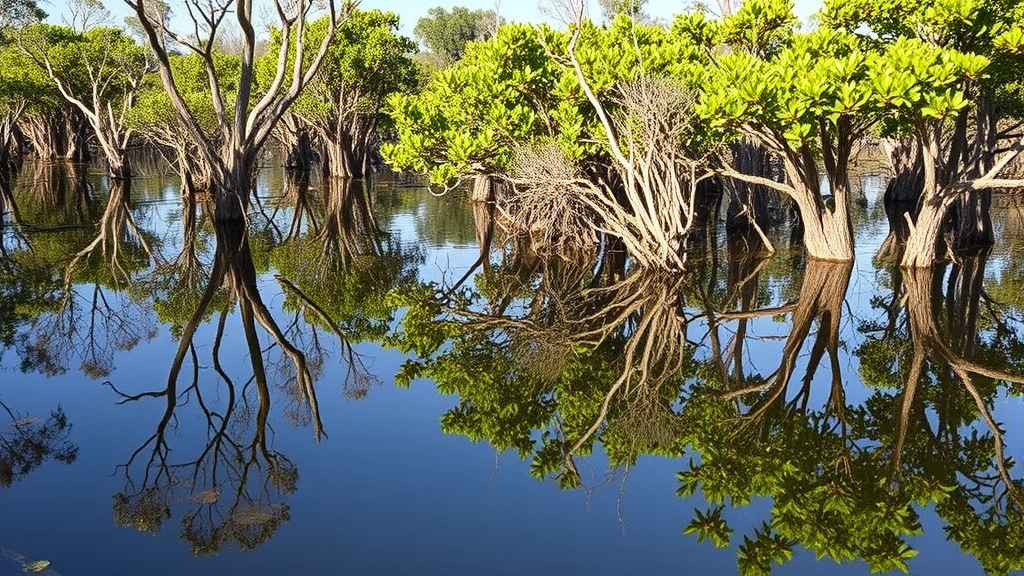
Consider mangrove forests, often cleared for aquaculture development. Market analysis of cleared land shows profitable shrimp farms. Yet comprehensive ecosystem service valuation reveals that mangroves provide fish nurseries (supporting commercial fisheries), storm surge protection (reducing disaster losses), carbon sequestration (climate mitigation), and water filtration. The net economic value of intact mangroves typically exceeds development alternatives by 30-50%, yet this value remains invisible without deliberate valuation efforts. This represents a classic market failure where private incentives diverge from social welfare.
Understanding human environment interaction through this economic lens reveals why conservation often serves human interests better than exploitation, when all values are properly accounted.
Natural Capital Accounting Systems
If ecosystems provide trillions in economic value, why don’t standard national accounts reflect this? Traditional GDP measures only marketed transactions, excluding non-market values entirely. A country can clearcut its forests, deplete its fisheries, and degrade its soil while GDP increases, because timber sales are counted but ecosystem loss is not.
Natural capital accounting systems attempt to correct this by measuring environmental assets and their changes alongside traditional economic accounts. The UN System of Environmental-Economic Accounting (SEEA) provides standardized methodologies for integrating environmental data with national accounts. Countries adopting SEEA can calculate adjusted GDP figures that subtract resource depletion and environmental degradation.
Results from countries implementing these systems reveal startling discrepancies. Botswana’s adjusted net national income was substantially lower than conventional GDP when accounting for diamond depletion and land degradation. Indonesia’s forest loss was valued at billions annually—losses invisible in standard accounts. These adjustments don’t eliminate growth but reveal its true cost, enabling more informed policy decisions.
Natural capital accounting includes several measurement approaches. Physical accounts track quantities of natural assets (forest area, fish stocks, water reserves) year-to-year. Monetary accounts assign economic values to these assets and changes. Combined accounts present both physical and monetary information, revealing where quantity declines despite monetary values appearing stable.
Implementation challenges are substantial. Valuation methodologies remain contested for ecosystem services lacking clear markets. Data collection requires significant technical capacity. Political resistance emerges when adjusted accounts reveal that apparent prosperity masks environmental deterioration. Yet countries from Costa Rica to Australia persist in developing these systems, recognizing that invisible losses cannot be managed effectively.
Policy Mechanisms for Integration
Theoretical frameworks mean little without policy mechanisms translating them into practice. Integrated development requires multiple policy approaches addressing different market failures and incentive structures.
Environmental taxation and pricing represents perhaps the most direct mechanism. Carbon taxes, pollution fees, and resource extraction taxes make environmental costs visible in market prices. When fossil fuel combustion costs reflect climate damage, renewable energy becomes economically competitive without subsidies. When water extraction costs reflect ecosystem impacts, agricultural water use becomes more efficient. These mechanisms harness market forces for environmental objectives.
Cap-and-trade systems establish environmental limits while allowing market flexibility. Carbon markets, fishery quota systems, and pollution permit trading create property rights in environmental assets, incentivizing conservation. When fishing quotas become tradeable, fishers managing sustainable stocks can profit from restraint rather than facing bankruptcy from overfishing competitors.
Subsidy reform addresses perverse incentives where governments actively pay for environmental destruction. Agricultural subsidies encouraging monoculture farming, fossil fuel subsidies underpricing carbon-intensive energy, and fishing fleet subsidies enabling industrial overfishing all distort markets against sustainability. Removing these subsidies—estimated at $500 billion annually in environmentally harmful spending—would dramatically reshape economic incentives.
Protected area systems acknowledge that some ecosystems have non-substitutable values requiring preservation rather than optimization. National parks, marine reserves, and wilderness areas restrict extractive activities to maintain critical functions. Economic analysis of protected areas reveals substantial values from tourism, scientific research, and existence value that justify protection despite foregone extraction revenues.
Understanding how humans affect the environment through consumption and production enables targeted policy interventions. Extended producer responsibility policies require manufacturers to manage end-of-life product impacts, internalizing disposal costs. Sustainable public procurement policies use government purchasing power to shift markets toward ecological products.
Payment for ecosystem services programs directly compensate landowners for maintaining or restoring ecological functions. Costa Rica’s payment scheme compensates landowners for forest conservation, reducing deforestation while generating rural income. Water companies in several countries pay upstream landowners for watershed protection, recognizing that maintaining forest cover costs less than building water treatment infrastructure.
Real-World Implementation Examples
Integrated development principles have moved from theory to practice across diverse contexts, revealing both possibilities and challenges.
Costa Rica’s Green Economy Transition demonstrates sustained commitment to integration. The country established payment for ecosystem services in 1997, directing tax revenue and international payments to forest conservation. Forest cover, which had declined to 21% by 1987, rebounded to over 52% by 2020. Simultaneously, the country developed renewable energy capacity (now exceeding 99% of electricity generation) and ecological tourism industries. Economic growth has continued while environmental metrics improved—demonstrating that integration need not sacrifice prosperity.
Bangladesh’s Integrated Water Resources Management addresses complex tradeoffs between agricultural development, hydropower generation, and ecosystem health. The Ganges-Brahmaputra-Meghna system supports hundreds of millions yet faces competing demands from upstream dam development in India and Nepal. Integrated approaches incorporate ecosystem flow requirements into dam operations, maintain flood plains for fish breeding, and integrate agricultural water needs with environmental constraints. Results show improved fishery productivity and reduced downstream flood damages compared to purely engineered approaches.
Australia’s Natural Capital Accounting Initiative represents systematic integration at national scale. The Australian Bureau of Statistics publishes natural capital accounts tracking forest, mineral, energy, and water asset changes. These accounts revealed that measured progress masked substantial resource depletion, informing policy adjustments. The system enables state-level comparisons, identifying where development models are sustainable versus extractive.
The Ecorise Daily blog documents numerous integration projects demonstrating that ecological and economic objectives need not conflict when properly designed.
Challenges and Barriers to Integration
Despite growing evidence supporting integrated approaches, significant barriers persist to widespread adoption.
Measurement and valuation uncertainty remains substantial. How should we value existence value—people’s willingness to preserve species they’ll never encounter? Should ecosystem services be valued at replacement cost, market price, or willingness-to-pay? Different methodologies yield vastly different results, creating political opportunities for opponents to dismiss inconvenient findings. Yet uncertainty should not paralyze action; precautionary approaches suggest that when ecosystem damages risk irreversibility, conservative valuations favoring preservation are justified.
Distributional conflicts emerge because integration often requires losers. Fossil fuel companies face declining demand if carbon pricing reflects climate costs. Agricultural operations require input restrictions if water pricing reflects ecosystem needs. Industrial fishing fleets face quota reductions if fishing restrictions reflect stock sustainability. These actors possess substantial political power, funding campaigns against integration policies. Addressing distributional concerns requires just transition programs assisting affected workers and communities—politically difficult but economically necessary.
Short-term versus long-term horizons create persistent conflicts. Markets and political cycles operate on quarterly and election timescales; ecosystem recovery operates on decadal and centennial timescales. Policymakers face pressure to demonstrate immediate benefits, yet environmental investments often yield returns only after years or decades. This temporal mismatch favors extraction over conservation unless institutions deliberately extend time horizons through long-term commitments and intergenerational accounting.
Implementation capacity constraints particularly affect developing countries. Natural capital accounting requires technical expertise, data systems, and institutional capacity that many countries lack. International support for capacity building remains insufficient relative to needs. Yet delaying implementation until perfect capacity exists means continuing current extraction patterns, perpetuating unsustainability.
Understanding environment awareness and its role in overcoming barriers reveals that public understanding remains limited. Surveys show most people recognize environmental importance but few understand connections between their consumption and ecosystem impacts, or between ecosystem health and economic stability.
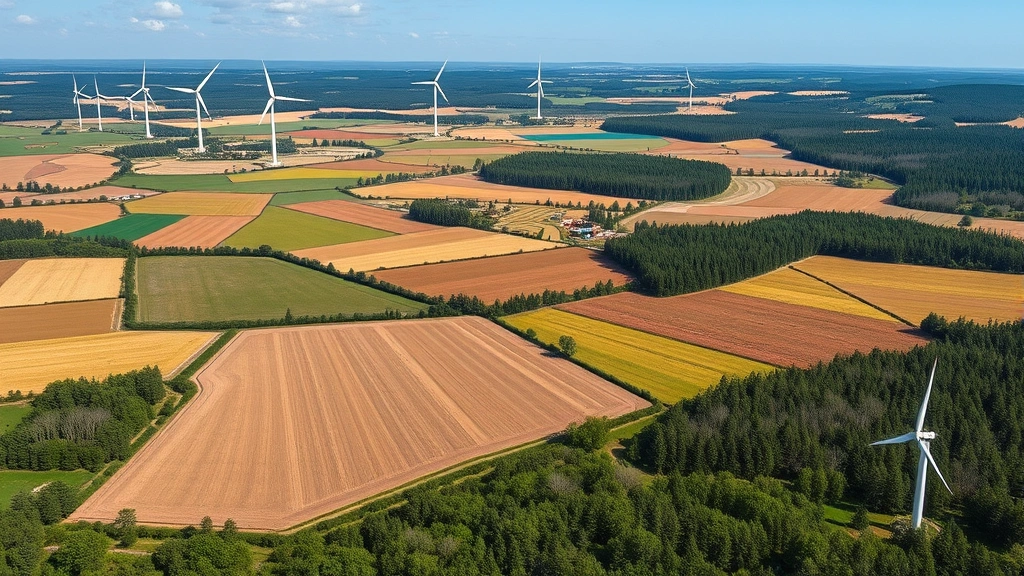
Institutional fragmentation divides environmental and economic policy into separate bureaucracies with different objectives, funding, and constituencies. Environment ministries often lack authority over energy, agriculture, or infrastructure decisions where major ecological impacts occur. Integrating policy requires reorganizing institutions, a politically difficult undertaking that threatens existing power structures. Yet without institutional integration, policy integration remains impossible.
Frequently Asked Questions
How does integrated development differ from sustainable development?
Sustainable development broadly aims to meet present needs without compromising future generations’ ability to meet theirs. Integrated development is a specific approach to sustainability emphasizing that economic and ecological systems are inseparable and must be managed as integrated wholes rather than optimizing each separately. All integrated development is sustainable development, but not all sustainable development approaches emphasize integration with the same rigor.
Can ecosystems provide infinite economic growth?
No. Ecosystems operate within biophysical limits; infinite growth on a finite planet is physically impossible. Integrated economics distinguishes between quantitative growth (expanding physical throughput) and qualitative development (improving wellbeing efficiency). The goal shifts from maximizing growth to optimizing wellbeing within ecological constraints—a fundamentally different objective requiring different metrics and policies.
What happens to poor communities dependent on resource extraction?
This represents the central justice challenge in integration. Restrictions on logging, mining, or fishing harm workers and communities dependent on these activities. Ethical integration requires just transition programs including job retraining, income support, economic diversification, and community reinvestment. Costa Rica’s success partly reflects substantial international payments for forest conservation, enabling alternative development. Global justice demands that wealthy nations funding conservation also fund equitable transitions for affected communities.
How should we value non-monetary ecosystem services like cultural or spiritual values?
Valuation methods exist—contingent valuation surveys, choice experiments, and benefit transfer from other studies—but they involve judgment calls and methodological debates. Rather than seeking a single “correct” value, integrated approaches often use multiple valuation methods, revealing value ranges and sensitivities. Political processes then decide what weight to assign different values, incorporating diverse perspectives rather than pretending technical methods can eliminate value judgments.
Which countries are leading in integrated development implementation?
Costa Rica, Bhutan, and New Zealand have made the most systematic commitments, incorporating natural capital accounting, ecosystem service payments, and green accounting into policy. Several European nations including Germany and Nordic countries have integrated environmental costs into economic planning. However, implementation remains incomplete everywhere; no country has fully achieved integration. Most developing countries lack resources for comprehensive systems, though international support is gradually increasing.
How can individual consumers support integrated development?
Individual actions matter through both direct impacts (reduced consumption, sustainable choices) and political pressure (supporting policies, voting for integration-oriented candidates, funding conservation). However, individual responsibility cannot substitute for systemic change; the vast majority of environmental impacts flow from production and infrastructure systems beyond individual control. Integration requires policy change, not just personal virtue.


