
Human Impact on Ecosystems: Key Economic Insights
The relationship between human activity and ecosystem health has emerged as one of the most pressing challenges in contemporary economics and environmental science. Human-environment interaction represents far more than a simple cause-and-effect dynamic; it encompasses complex feedback loops, market failures, and externalities that traditional economic models have historically failed to capture. Understanding these dynamics requires an interdisciplinary approach that bridges ecological science, economics, and policy analysis to reveal how human economic systems fundamentally depend upon the services that healthy ecosystems provide.
The economic costs of ecosystem degradation are staggering. According to recent assessments, the global economy loses approximately 5 trillion dollars annually due to natural capital depletion and environmental degradation. This figure dwarfs many national GDPs and represents a systemic failure of conventional accounting methods that treat natural resources as infinite inputs rather than finite capital stocks. When we examine what impacts humans have had on the environment, the economic dimension becomes impossible to ignore, as these impacts directly translate into reduced productivity, increased healthcare costs, and diminished human well-being across all economic sectors.
Understanding Ecosystem Services and Economic Valuation
Ecosystem services represent the tangible benefits that human populations derive from functioning natural systems. These services fall into four primary categories: provisioning services such as food, water, and raw materials; regulating services including climate regulation, water purification, and pest control; supporting services like nutrient cycling and soil formation; and cultural services encompassing recreation, spiritual value, and aesthetic appreciation. The economic challenge lies in assigning monetary values to services that markets have traditionally treated as free goods.
The Millennium Ecosystem Assessment, a comprehensive global study completed in 2005, estimated that ecosystem services were worth approximately 125 trillion dollars annually—a figure that represents roughly 1.5 times the global gross domestic product at that time. However, this valuation methodology remains contested among economists and ecologists. Some argue that certain ecosystem services possess intrinsic value that transcends economic quantification, while others contend that incomplete valuation perpetuates the underpricing of natural capital. The debate reflects a fundamental tension between ecological economics, which emphasizes biophysical limits and sustainability constraints, and neoclassical environmental economics, which seeks to internalize environmental values within market frameworks.
Wetland ecosystems exemplify the valuation challenge. A hectare of intact wetland provides water filtration, flood regulation, carbon sequestration, and wildlife habitat—services collectively worth thousands of dollars annually. Yet developers face incentives to convert wetlands to agricultural or urban uses, generating immediate private profits while externalizing long-term environmental costs. This disconnect between private incentives and social welfare represents a fundamental market failure that requires policy intervention. When stakeholders reduce carbon footprint through conservation practices, they often generate ecosystem service benefits that far exceed their private costs, yet these positive externalities remain uncompensated in most economic systems.

Market Failures and Environmental Externalities
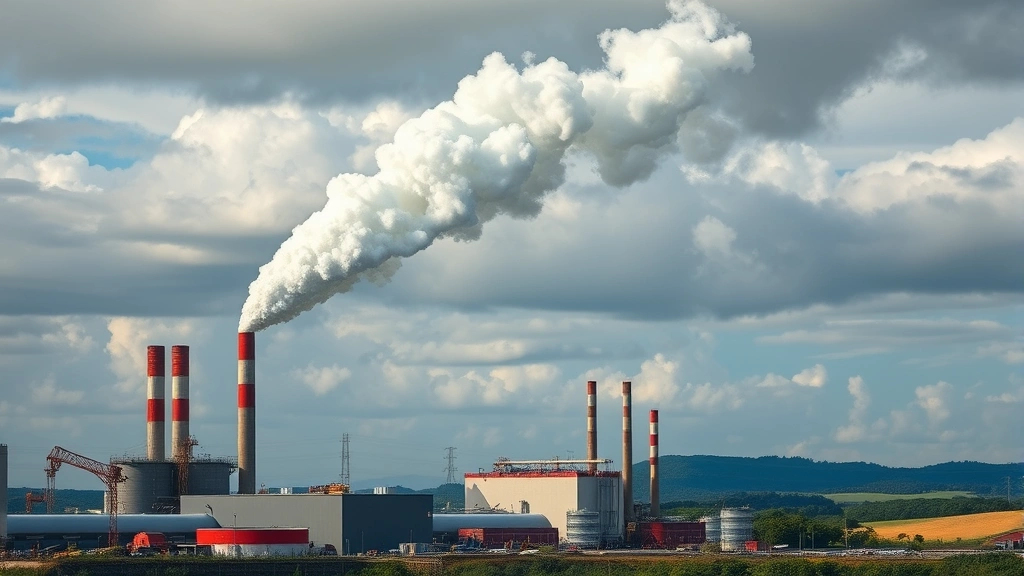
Environmental externalities occur when economic activities impose costs or benefits on third parties without compensation or reward. Air pollution from industrial facilities represents a classic negative externality: production costs appear lower than they actually are because polluters do not bear the full health and environmental costs their activities generate. This creates systematic underpricing of polluting goods and overproduction of environmentally damaging products.
The Coase theorem suggests that under conditions of zero transaction costs and well-defined property rights, parties could negotiate efficient environmental outcomes regardless of initial liability assignments. However, real-world conditions rarely approximate these idealized assumptions. Transaction costs for negotiating environmental compensation are substantial, property rights over diffuse resources like atmosphere and ocean commons remain contested, and information asymmetries prevent rational decision-making. When millions of individuals suffer minor health impacts from air pollution, organizing collective compensation from polluters becomes practically impossible.
Industrial agriculture demonstrates how externalities compound across production systems. Synthetic fertilizer runoff creates hypoxic dead zones in coastal waters, reducing fish populations and devastating fishing communities. These ecosystem service losses—estimated at billions of dollars annually in lost fishery productivity—never appear on agricultural balance sheets. Farmers face no incentive to reduce fertilizer application even when social costs vastly exceed private benefits. The comprehensive analysis of environmental economics reveals that such misalignments between private and social costs represent endemic features of current economic systems rather than exceptional cases.
Positive externalities create complementary distortions. Forest conservation generates carbon sequestration benefits worth thousands of dollars per hectare annually, yet forest owners capture virtually none of this value through current market mechanisms. This creates perverse incentives for forest conversion to agriculture or development, even when conservation would generate greater total economic value. Addressing these market failures requires deliberate policy instruments that either price externalities directly or create compensation mechanisms for those generating positive environmental benefits.
Biodiversity Loss as an Economic Crisis
The current extinction rate exceeds natural background rates by factors of 100 to 1,000, with species disappearing before scientific documentation. This biodiversity loss represents not merely an ecological tragedy but an economic catastrophe of unprecedented scale. Genetic diversity within agricultural crop species provides insurance against pest outbreaks and climate variability; wild species contain pharmaceutical compounds worth billions in drug development; and ecosystem diversity generates resilience that buffers against environmental shocks.
The economic value of pollination services alone—dependent on bee populations whose numbers are declining precipitously—exceeds 15 billion dollars annually globally. Colony collapse disorder and neonicotinoid pesticide impacts have reduced pollinator populations by 30 to 50 percent in many regions, directly threatening food security and agricultural productivity. Yet pesticide manufacturers have faced minimal liability for these ecosystem service losses, and farmers applying pesticides capture immediate pest control benefits while externalizing pollination costs onto wild bee populations and future agricultural productivity.
Pharmaceutical prospecting in biodiverse regions reveals the economic value of genetic diversity. Approximately 25 percent of modern pharmaceutical drugs derive from tropical plant species, yet pharmaceutical companies have historically compensated source countries minimally for this genetic wealth. Biopiracy—the extraction of genetic resources without compensation—represents a transfer of economic value from biodiversity-rich developing nations to pharmaceutical firms in developed countries. This inequitable distribution of benefits from biodiversity conservation perpetuates underfunding of tropical forest protection and encourages land conversion to less biodiverse agricultural systems.
The economic logic of species conservation becomes compelling when considering ecosystem resilience. Diverse ecosystems demonstrate greater resistance to pest outbreaks, diseases, and climate variability. Agricultural monocultures, while maximizing short-term yields, create vulnerability to catastrophic failure. The Irish Potato Famine and contemporary wheat stem rust outbreaks illustrate how genetic uniformity generates systemic economic risk. Maintaining genetic and species diversity functions as insurance against future agricultural shocks, yet current agricultural subsidies actively encourage monoculture expansion at the expense of crop diversity.
Climate Change and Macroeconomic Implications
Climate change represents the ultimate ecosystem service failure—the atmosphere’s capacity to absorb greenhouse gases without triggering dangerous warming has been treated as an infinite free good. Fossil fuel combustion generates energy benefits captured by producers and consumers while externalizing climate costs onto global populations and future generations. The Stern Review on the Economics of Climate Change estimated that unmitigated climate change would reduce global GDP by 5 to 20 percent permanently, with costs concentrated among the world’s poorest populations.
The economic impacts of climate change manifest through multiple pathways. Rising temperatures reduce agricultural productivity in tropical and subtropical regions, threatening food security for billions. Sea level rise threatens coastal infrastructure and displaces populations, imposing adaptation costs estimated at hundreds of billions annually. Changing precipitation patterns increase drought and flood frequency, destabilizing water supplies and hydroelectric power generation. These impacts generate cascading economic disruptions as supply chains fragment and resource conflicts intensify.
The insurance industry recognizes climate change as an existential threat to its business model. Catastrophic weather events have increased in frequency and severity, with annual insured losses rising from an average of 10 billion dollars in the 1980s to over 50 billion dollars currently. Reinsurance markets are pricing in climate risk premiums that accelerate the economic costs of unmitigated warming. Yet markets continue to underprice climate risk because the temporal lag between emissions and damages, combined with uncertainty about specific impacts, creates systematic underestimation of present-value climate costs.
Mitigation economics reveals that transitioning to renewable energy systems costs substantially less than adapting to unmitigated climate change. renewable energy for homes has achieved cost parity with fossil fuels in many regions, yet transition rates remain slow due to infrastructure lock-in and incumbent industry resistance. This represents a massive economic inefficiency where technologies that would reduce long-term costs face adoption barriers. The World Bank has documented that delaying climate action increases cumulative mitigation costs exponentially, yet political economy barriers prevent optimal climate policy implementation.
The Role of Natural Capital Accounting
Conventional GDP accounting treats natural resource extraction as income rather than capital depletion. When a nation harvests timber or depletes fisheries at unsustainable rates, GDP increases, suggesting improved economic conditions despite declining natural capital stocks. This accounting framework creates systematic incentives for overexploitation of natural resources. A country could liquidate all its natural capital, record massive GDP growth, and appear economically successful while actually impoverishing itself.
Natural capital accounting adjusts national accounts for environmental depreciation, treating ecosystem degradation as negative economic value. When properly implemented, natural capital accounting reveals that many developing nations have experienced negative net savings—their economic growth has been accompanied by natural capital depletion greater than manufactured capital accumulation. This indicates that apparent development has actually reduced long-term economic capacity and welfare.
The World Bank’s adjusted net savings methodology incorporates natural capital depreciation into savings calculations, revealing that countries heavily dependent on resource extraction often save less than conventional accounts suggest. Nigeria, despite oil revenues exceeding 300 billion dollars over recent decades, has accumulated minimal net wealth because petroleum extraction depletion exceeded savings from oil revenues. This accounting framework demonstrates that resource-dependent economies face declining wealth unless they diversify and convert resource rents into sustainable productive capital.
Implementation of natural capital accounting faces substantial methodological challenges. Valuing non-market ecosystem services requires assumptions about discount rates, substitution possibilities, and damage thresholds that significantly influence results. Different valuation approaches can yield vastly different estimates of natural capital depreciation. Furthermore, natural capital accounting alone does not address fundamental sustainability questions about whether economies can maintain welfare with declining natural capital stocks. Strong sustainability frameworks argue that certain natural capital stocks—biodiversity, climate stability, ocean chemistry—cannot be substituted by manufactured capital and must be maintained above critical thresholds.
Economic Instruments for Ecosystem Protection
Market-based environmental policy instruments attempt to harness economic incentives for ecosystem protection by pricing environmental goods and services. Carbon pricing through taxes or cap-and-trade systems creates financial incentives to reduce emissions. Payment for ecosystem services compensate landowners for conservation activities that generate public benefits. Water quality trading allows polluters to purchase water quality improvements elsewhere rather than implementing costly local pollution controls. These instruments theoretically achieve environmental goals at minimum economic cost by allowing flexibility in how objectives are met.
Carbon pricing has emerged as the leading climate policy instrument, with over 60 carbon pricing initiatives implemented globally covering approximately 23 percent of global emissions. However, most carbon prices remain below levels necessary to drive rapid decarbonization. European Union emissions trading prices have fluctuated between 5 and 100 euros per ton, while economic analyses suggest climate-stabilizing carbon prices require 50 to 200 euros per ton. This pricing gap reflects political economy constraints where incumbent fossil fuel interests resist carbon prices that would undermine their competitive positions.
Payment for ecosystem services programs have expanded globally, with developing countries implementing conservation programs that compensate farmers and forest owners for environmental stewardship. Costa Rica’s payment for hydrological services program has protected forests while improving rural livelihoods. Indonesia’s forest conservation payments have reduced deforestation rates in participating regions. However, payment programs often suffer from insufficient funding, high administrative costs, and difficulty verifying that conservation activities would not have occurred anyway (additionality). When payment levels fall below opportunity costs of agricultural conversion, participants lack incentive to maintain conservation commitments.
Regulatory approaches establish environmental standards and require compliance regardless of cost. Clean air and water regulations have driven substantial pollution reductions but often at higher cost than market-based instruments. However, regulatory approaches can address market failures that pricing instruments miss. Endangered species protection, for example, involves non-substitutable losses that markets cannot adequately price. Furthermore, regulations provide certainty about environmental outcomes, whereas market-based instruments’ effectiveness depends on price elasticity of demand and supply responses that may prove inadequate.
Integrated policy approaches combining regulatory standards with market-based instruments often prove most effective. Setting environmental quality standards establishes necessary ecological thresholds, while pricing mechanisms and tradable permits allow economically efficient achievement of those standards. This approach recognizes that ecosystem protection involves both non-negotiable ecological limits and flexibility in how those limits are achieved. sustainable fashion brands exemplify how market mechanisms can drive environmental improvements when consumer demand aligns with ecosystem protection.
The effectiveness of economic instruments depends critically on institutional capacity, political will, and addressing distributional impacts. Carbon pricing generates substantial fiscal revenues that governments must allocate carefully to avoid regressive impacts on low-income populations. Payment for ecosystem services programs must ensure that compensation reaches actual land managers rather than being captured by intermediaries. Tradable permit systems require robust monitoring and enforcement to prevent fraud and ensure environmental integrity. Without adequate institutional implementation, market-based instruments can fail to achieve environmental objectives while generating new forms of inequality.
FAQ
What exactly is human-environment interaction in economic terms?
Human-environment interaction encompasses all economic activities that utilize natural resources, generate pollution, or modify ecosystems. It includes extraction of raw materials, energy production, agriculture, manufacturing, waste disposal, and all consumption activities. The economic dimension examines how market prices, property rights, and incentive structures determine the intensity and nature of these interactions, often revealing systematic misalignments between private incentives and social welfare.
How do ecosystem services translate into measurable economic value?
Ecosystem services are valued using multiple methodologies including market price approaches for traded goods like timber and fish, replacement cost methods estimating expenses to replace natural functions artificially, contingent valuation capturing consumer willingness to pay for environmental quality, and hedonic pricing extracting environmental values from real estate and labor markets. Each approach generates different estimates, and aggregating services across entire ecosystems involves substantial methodological uncertainty. The World Bank’s environmental economics research provides comprehensive frameworks for these valuation approaches.
Why do markets fail to protect ecosystems adequately?
Markets fail to protect ecosystems because environmental goods often lack property rights, generating tragedy-of-the-commons dynamics where individuals benefit from extraction while externalizing environmental costs. Information asymmetries prevent consumers from making environmentally informed choices. Temporal mismatches between immediate extraction benefits and delayed ecosystem service losses create systematic undervaluation of future environmental impacts. Discount rates applied to future environmental costs effectively treat distant ecological damages as economically insignificant. These market failures require policy intervention to align private incentives with ecological sustainability.
What role do developing countries play in global ecosystem protection?
Developing countries contain the majority of global biodiversity and carbon-sequestering forests, yet face economic pressures to exploit these resources for immediate development. International negotiations attempt to compensate developing nations for conservation through climate finance and biodiversity payments, yet compensation levels remain insufficient relative to opportunity costs of foregone resource extraction. This creates equity challenges where conservation costs are borne disproportionately by developing nations while environmental benefits accrue globally. The United Nations Environment Programme coordinates international efforts to equitably distribute conservation costs and benefits.
Can economic growth and ecosystem protection coexist?
Decoupling economic growth from environmental impact requires transitioning to renewable resource bases, improving efficiency, and shifting toward less material-intensive consumption patterns. Some developed nations have achieved relative decoupling where economic growth outpaces environmental impact growth, though absolute environmental impacts often remain excessive for global sustainability. Absolute decoupling—where economic growth occurs alongside declining absolute environmental impacts—remains rare and typically limited to specific sectors like renewable energy. True sustainability likely requires transforming growth paradigms rather than simply improving efficiency within existing consumption-focused economic systems.
How do carbon pricing and other market mechanisms actually work?
Carbon pricing assigns financial costs to greenhouse gas emissions through either carbon taxes (direct per-unit charges) or cap-and-trade systems (fixed emission limits with tradeable allowances). These mechanisms create financial incentives for emissions reductions by making climate damages visible in production and consumption decisions. Firms facing carbon costs invest in efficiency improvements and technology transition. Consumers purchasing carbon-priced goods internalize climate costs in purchasing decisions. However, effectiveness depends on carbon price levels being sufficiently high to drive behavior change, which political economy barriers often prevent. The journal Ecological Economics publishes rigorous research on market mechanism effectiveness.


