

Can Economic Growth Harm Ecosystems? Expert Insights
The relationship between economic growth and environmental degradation represents one of the most pressing questions in contemporary policy discourse. For decades, policymakers have pursued gross domestic product (GDP) expansion as a primary measure of national success, yet mounting scientific evidence suggests this growth model often comes at profound ecological costs. This tension between economic expansion and ecosystem health challenges fundamental assumptions about development and prosperity, forcing economists, ecologists, and policymakers to reconsider what sustainable progress truly means.
The traditional growth paradigm treats natural resources as infinite inputs to economic production, with ecosystem services valued only through market mechanisms. However, emerging ecological economics research demonstrates that physical environment degradation creates cascading costs that undermine long-term economic stability. Understanding this complex relationship requires examining empirical evidence, theoretical frameworks, and real-world case studies that illuminate how economic activities reshape our planet’s biological and chemical systems.
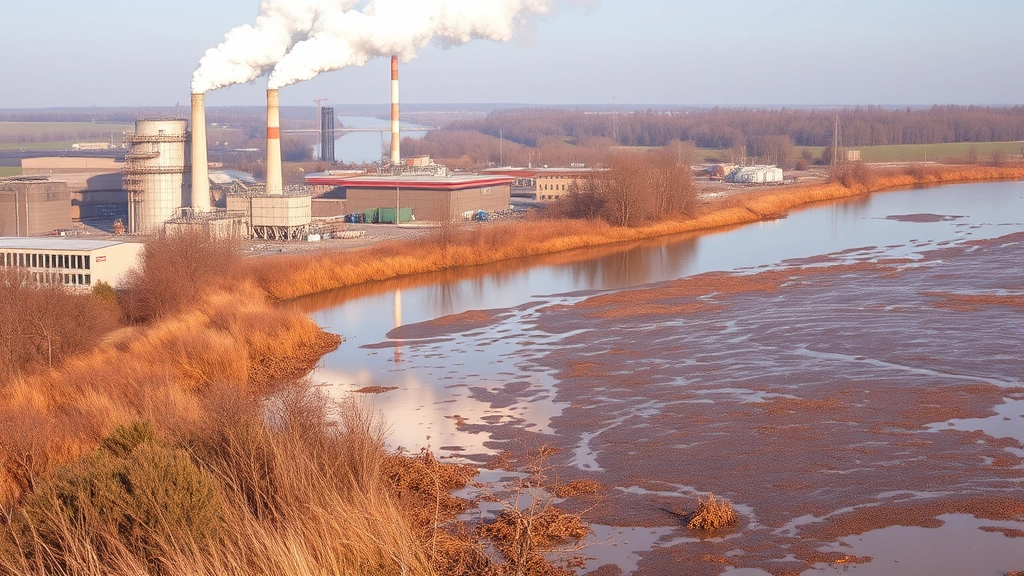
The Economic Growth Paradox and Ecological Limits
Conventional economic theory posits that growth automatically improves human welfare and environmental conditions through technological innovation and efficiency gains. This perspective, rooted in neoclassical economics, assumes that market mechanisms will eventually price environmental scarcity, triggering substitution away from depleted resources. Yet empirical data contradicts this optimistic scenario. Global carbon emissions correlate strongly with GDP growth across most economies, while biodiversity loss accelerates in regions experiencing rapid economic expansion.
The decoupling hypothesis—the idea that economic growth can be separated from resource consumption and environmental impact—remains largely theoretical. Research from the World Bank indicates that absolute decoupling (where GDP grows while total environmental impact shrinks) occurs in only narrow circumstances, typically involving wealthy nations that externalize production to developing countries. This represents apparent rather than genuine decoupling, masking rather than solving ecological problems.
The fundamental issue stems from what ecological economists term biophysical limits. Earth’s ecosystems possess finite regenerative capacities and absorption thresholds. Planetary boundaries research identifies nine critical thresholds—including climate change, biodiversity loss, and nutrient cycling disruption—already exceeded by human economic activity. When economic growth exceeds these boundaries, it generates negative externalities that markets fail to internalize, creating what economists call unpriced environmental costs.
Consider the relationship between human environment interaction and economic productivity. Industrial agriculture, a primary driver of GDP growth in developing nations, simultaneously triggers soil degradation, freshwater depletion, and pollinator population collapse. These ecosystem services—valued at trillions annually—depreciate as growth accelerates, yet GDP accounting treats them as externalities rather than capital assets requiring maintenance.
Resource Extraction and Habitat Destruction
The extractive industries—mining, logging, and fossil fuel production—exemplify how economic growth mechanisms directly destroy ecosystems. These sectors contribute substantially to global GDP while generating irreversible ecological damage. Mining operations alone disturb approximately 30 million hectares annually, fragmenting habitats and contaminating water supplies across developing economies heavily dependent on extractive exports.
The economic logic driving extraction is straightforward: resource-rich nations capitalize on comparative advantage by exporting raw materials to capital-intensive manufacturers. This generates immediate GDP growth and government revenue, yet leaves long-term ecological and economic degradation in affected regions. Communities dependent on ecosystem services—fisheries, agriculture, freshwater access—experience diminished productive capacity as resource extraction proceeds.
Tropical deforestation exemplifies this dynamic. Forests cleared for agriculture, logging, and development contribute approximately 10-15% of global greenhouse gas emissions while destroying irreplaceable biodiversity repositories. Economic accounting treats forest conversion as income rather than capital depletion. If forests were valued as natural capital assets—considering carbon storage, water filtration, pharmaceutical compounds, and genetic resources—clear-cutting would appear economically irrational. Yet conventional GDP metrics classify forest destruction as economic gain.
The carbon footprint of resource extraction extends beyond direct emissions. Supply chain fragmentation, global shipping networks, and processing infrastructure multiply environmental impacts. A single smartphone requires mining rare earth elements across multiple continents, generating ecosystem disruption in each location while contributing to GDP growth in each jurisdiction separately, obscuring cumulative ecological costs.
Habitat fragmentation from infrastructure development—roads, dams, power lines—disrupts ecosystem connectivity essential for species migration and genetic diversity. These projects generate immediate economic growth through construction spending and resource access, yet trigger long-term biodiversity collapse with cascading ecosystem function losses. The economic value of ecosystem services lost often exceeds the discounted value of infrastructure benefits, yet market mechanisms fail to capture these calculations.
Climate Change as Economic-Ecological Feedback
Climate change represents perhaps the clearest mechanism through which economic growth harms ecosystems, with feedback loops amplifying ecological damage and economic costs simultaneously. The relationship between fossil fuel combustion and atmospheric carbon concentration is direct and measurable: approximately 90% of greenhouse gas emissions derive from energy systems powering economic growth.
The economic growth model built on fossil fuels generates what ecological economists term negative feedback loops. As growth accelerates emissions, climate destabilization increases, reducing agricultural productivity, increasing disaster costs, and degrading natural capital stocks essential for future economic activity. These climate damages reduce potential GDP growth in subsequent periods, yet current economic incentives discount these future costs at rates that minimize present-day action.
Developing economies face particular vulnerability to this dynamic. Nations pursuing rapid growth through industrial expansion and energy-intensive manufacturing inherit climate liabilities they did not create. Agricultural economies dependent on stable precipitation patterns experience production shocks from altered weather systems, reducing incomes and food security despite nominal GDP expansion in other sectors.
The United Nations Environment Programme estimates climate change will reduce global GDP by 10-23% by 2100 without mitigation, with impacts concentrated in developing regions. This represents an enormous negative externality completely absent from current growth calculations, effectively requiring unprecedented wealth transfers to compensate climate-damaged economies for growth-generated harms.
Ecosystem tipping points amplify these dynamics. Arctic permafrost thaw releases methane, accelerating warming independent of future emissions. Coral reef bleaching collapses fisheries supporting millions. Amazon forest dieback triggers drought cascades across agricultural regions. Each represents an ecological threshold where incremental growth crosses into accelerating ecosystem collapse, generating exponential economic damage.
Pollution, Biodiversity Loss, and Market Failure
Economic growth concentrates production in developing regions with weak environmental regulations, externalizing pollution costs onto ecosystems and vulnerable populations. This pollution arbitrage artificially inflates growth statistics by avoiding internalized environmental costs, yet generates real ecological and health damage in host countries.
Biodiversity loss represents perhaps the most irreversible ecological harm from growth-oriented development. Current extinction rates exceed background rates by 100-1000 times, driven primarily by habitat loss from agricultural expansion, urban development, and resource extraction. The economic value of biodiversity—through genetic resources, ecosystem resilience, and option value of undiscovered compounds—remains incalculable, yet species loss is permanent and uncompensable.
Market failure mechanisms explain why growth systematically generates pollution and biodiversity loss. Polluters bear none of pollution costs; communities downstream or downwind absorb damages. Developers profit from habitat conversion while ecosystem service losses distribute across diffuse populations unable to collectively bargain. These asymmetric cost distributions create economic incentives for ecosystem destruction despite negative total welfare impacts.
The tragedy of the commons illustrates this dynamic across fisheries, aquifers, and atmosphere. Individual economic actors rationally maximize personal benefit by exploiting shared resources, yet collective exploitation exceeds sustainable levels, degrading the resource and reducing long-term aggregate welfare. This occurs not from irrational behavior but from rational response to misaligned incentive structures that fail to price resource scarcity.
Water pollution exemplifies growth-generated externalities. Industrial production generates wastewater containing heavy metals, organic pollutants, and nutrients creating dead zones in aquatic ecosystems. These costs—measured in lost fisheries, contaminated drinking water, and reduced agricultural productivity—never appear in industrial profit calculations or GDP accounting, yet represent real economic damage to affected communities.
Alternative Economic Models and Ecosystem Protection
Recognizing these contradictions, ecological economists and sustainability researchers propose alternative frameworks valuing ecosystem integrity alongside material expansion. These approaches share recognition that unlimited growth is impossible on a finite planet and that ecosystem services constitute irreplaceable economic foundations.
Natural capital accounting integrates environmental assets into economic measurement, treating ecosystem services as productive assets requiring maintenance investment. This framework reveals that many high-growth economies actually experience declining total capital (natural plus manufactured plus human) when ecosystem depreciation is subtracted from GDP growth. A nation could experience 5% GDP growth while experiencing 3% total wealth decline if natural capital depreciates faster than manufactured capital accumulates.
The circular economy model emphasizes material cycling rather than linear extraction-production-disposal patterns. By designing products for reuse, repair, and recycling, circular approaches reduce both resource extraction and waste generation, decoupling production from virgin material consumption. This requires different economic incentives—producer responsibility for product lifecycles, taxation of virgin materials, and subsidies for recycled content—yet maintains production and employment without growth-driven ecological destruction.
Regenerative agriculture demonstrates how food production can enhance rather than degrade ecosystem services. By rebuilding soil carbon, restoring water infiltration, and supporting biodiversity, regenerative practices increase long-term productivity while sequestering atmospheric carbon. These approaches sacrifice short-term yield maximization for long-term resilience and ecosystem health, prioritizing ecosystem stability over growth maximization.
The concept of doughnut economics reframes development goals around meeting human needs within ecological boundaries rather than pursuing unlimited growth. This model identifies a safe and just space where human welfare is maximized while remaining within planetary boundaries. Development policy would focus on raising living standards in underdeveloped regions to meet basic needs while wealthy economies reduce material throughput to sustainable levels.
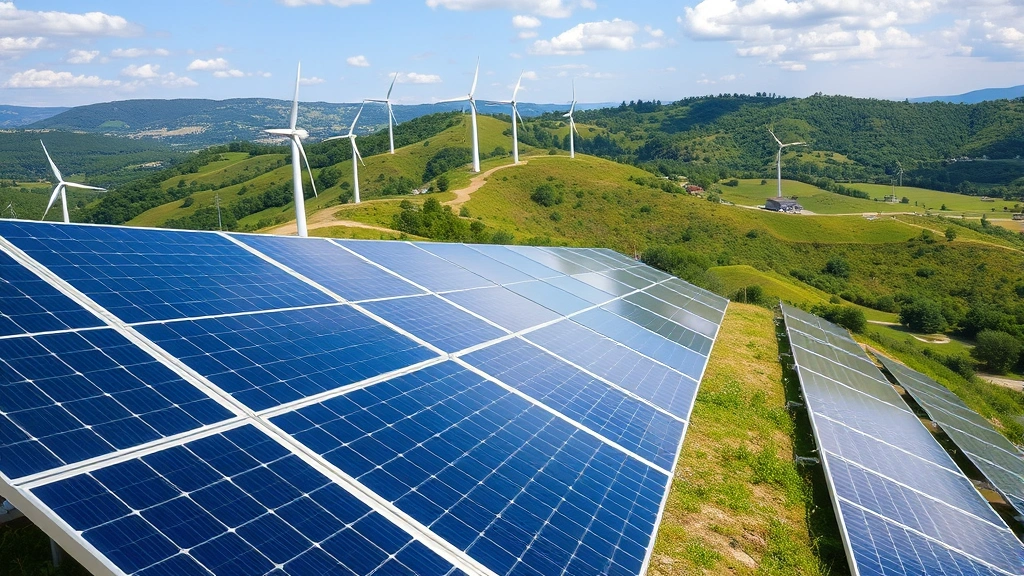
Explore renewable energy for homes as one pathway toward reducing growth-driven emissions while maintaining energy access. Similarly, sustainable fashion brands demonstrate how consumption sectors can reduce ecological footprints through material innovation and production redesign.
Policy Solutions and Transition Strategies
Addressing growth-driven ecosystem harm requires policy interventions that internalize environmental costs, establish ecological boundaries as constraints on economic activity, and redistribute costs and benefits more equitably across populations and time periods.
Carbon pricing mechanisms—carbon taxes or cap-and-trade systems—represent the most extensively implemented approach to internalizing climate externalities. By assigning prices to emissions, these systems incentivize emissions reduction and renewable energy transition. However, current carbon prices remain far below social cost estimates, limiting effectiveness. Scaling carbon pricing to levels reflecting true climate damages requires political will to impose substantial cost increases on energy-intensive industries.
Biodiversity protection requires establishing ecological constraints on economic activity through protected area networks, habitat restoration mandates, and species protection regulations. These policies prioritize ecosystem integrity over growth maximization in specific contexts. Evidence from protected area networks demonstrates that well-managed reserves maintain biodiversity and ecosystem services while generating tourism revenue and supporting sustainable livelihoods.
Subsidy reform targeting agricultural, energy, and resource extraction subsidies could dramatically reduce growth-driven ecological destruction. These subsidies—estimated at $5-7 trillion annually when including environmental externalities—artificially cheapen resource extraction and polluting production, encouraging excessive consumption. Redirecting these resources toward renewable energy, ecosystem restoration, and sustainable agriculture would simultaneously reduce environmental damage and improve economic efficiency.
International policy coordination through mechanisms like the UNEP Climate Change initiatives addresses transboundary pollution and climate change requiring collective action. However, coordination remains insufficient; national governments prioritize domestic growth over global ecological stability, creating prisoner’s dilemma dynamics where individual rational action produces collectively irrational outcomes.
The transition toward sustainable economies requires acknowledging that some growth must cease while other dimensions expand. Wealthy economies must reduce material and energy consumption to sustainable levels—what researchers term degrowth or planned contraction. Simultaneously, developing economies require growth to lift populations from poverty to adequate living standards. This asymmetric transition requires wealthy nations to transfer technology, finance, and intellectual property enabling developing economies to achieve development with lower ecological footprints than historically wealthy nations.
Just transition policies must ensure workers and communities dependent on extractive industries and high-emission sectors receive support during economic restructuring. Without explicit justice mechanisms, environmental policies generate concentrated costs on vulnerable populations while benefits distribute diffusely, generating political opposition and perpetuating inequity.
Return to Blog Home for additional perspectives on physical environment challenges and solutions.
FAQ
Does all economic growth harm ecosystems?
Not necessarily, but growth in material and energy throughput—the dominant form in current economies—inherently stresses ecosystems. Growth in services, knowledge, and non-material sectors can occur with reduced environmental impact. However, even these sectors depend on underlying material systems; efficiency improvements consistently fail to offset consumption increases through rebound effects where cost reductions increase consumption.
Can technology solve growth-driven environmental problems?
Technology provides essential tools for reducing environmental intensity of production, yet cannot overcome biophysical limits if consumption continues expanding. Renewable energy enables decarbonization but requires material extraction for solar panels and batteries. Precision agriculture reduces chemical inputs yet increases electronic device production. Technology shifts environmental impact distribution rather than eliminating growth constraints.
What is the relationship between economic growth and poverty reduction?
Growth has historically reduced poverty, yet increasingly generates poverty through ecosystem degradation, resource depletion, and wealth concentration. Direct poverty reduction through redistribution and social investment could occur without growth in total material throughput. Wealthy economies could reduce consumption while maintaining living standards through improved efficiency and equity.
How do developing economies balance growth and environmental protection?
Developing economies face genuine dilemmas: growth generates resources for poverty reduction and development, yet growth pathways inherited from wealthy nations guarantee ecological damage. Solutions require technology transfer, climate finance, and debt cancellation enabling development with lower ecological footprints, plus international agreements allowing developing economies growth space while wealthy economies contract.
Can circular economy models eliminate growth-driven environmental harm?
Circular economy approaches significantly reduce environmental impact per unit of production, yet cannot eliminate harm if consumption levels remain constant or increase. A truly circular economy at current consumption levels would require renewable energy, non-toxic materials, and perfect recycling—technological and logistical challenges preventing complete implementation. Circular economy must combine with consumption reduction in wealthy economies.
What alternative economic metrics could replace GDP?
The Genuine Progress Indicator (GPI), Inclusive Wealth Index, and Natural Capital Accounting provide alternatives accounting for environmental and social factors. The OECD has developed frameworks for green growth measurement. However, metrics alone cannot overcome fundamental growth contradictions; measurement reform must combine with policy changes establishing ecological boundaries as hard constraints on economic activity.