Agile Practices Boost Economic Growth: Case Studies
In contemporary economic discourse, the intersection of organizational agility and macroeconomic performance has emerged as a critical analytical framework. An agile environment represents a dynamic operational ecosystem characterized by rapid adaptation, iterative decision-making, and responsiveness to market signals. This concept extends beyond traditional project management methodologies to encompass broader economic systems where flexibility and innovation drive sustainable growth. Understanding what constitutes an agile environment requires examining how enterprises, governments, and entire economies structure themselves to respond efficiently to environmental pressures, technological disruption, and resource constraints.
The relationship between agile organizational practices and economic expansion has garnered substantial empirical support from international development institutions and economic research centers. Organizations operating within agile frameworks demonstrate measurably higher productivity metrics, enhanced resource allocation efficiency, and superior capacity to navigate ecological and economic volatility. This comprehensive analysis explores how agile environmental practices translate into tangible economic gains, examining case studies from diverse sectors while maintaining focus on the interdependencies between organizational flexibility, ecosystem health, and long-term economic prosperity.

Defining Agile Environment and Economic Implications
An agile environment comprises interconnected organizational, institutional, and ecological systems designed to respond dynamically to changing conditions. Unlike rigid, hierarchical structures that prioritize predetermined outcomes, agile environments emphasize iterative processes, continuous feedback loops, and adaptive capacity. This operational philosophy originated in software development but has transcended sectoral boundaries to influence manufacturing, supply chain management, and public policy frameworks.
The economic implications are substantial. Organizations operating within agile environments experience reduced operational costs through waste minimization, faster time-to-market for innovations, and improved human capital retention. Research from the World Bank indicates that economies with higher organizational agility demonstrate 15-25% greater productivity growth compared to rigid institutional frameworks. This performance differential compounds across decades, creating significant cumulative economic advantages.
When examining types of environment through an economic lens, agile environments represent a distinct category characterized by rapid information flow, decentralized decision-making authority, and continuous optimization. This contrasts sharply with what defines a hostile environment, which constrains economic activity through regulatory rigidity, information asymmetries, and punitive institutional structures.

Theoretical Foundations of Agile Economic Systems
The theoretical underpinnings of agile economics derive from complexity theory, evolutionary economics, and behavioral institutional frameworks. Rather than assuming rational actors operating with perfect information, agile economic theory acknowledges bounded rationality, emergent properties, and path dependencies that characterize real-world systems. This theoretical reorientation has profound implications for policy design and organizational strategy.
Ecological economics perspectives illuminate how agile practices enhance resource efficiency within planetary boundaries. The concept of human environment interaction becomes optimized when organizations can rapidly adjust production processes, supply chains, and consumption patterns in response to ecological feedback signals. This adaptive capacity reduces throughput of raw materials, minimizes waste generation, and extends ecosystem service availability across generations.
Leading research institutions, including those affiliated with the United Nations Environment Programme, have documented how agile environmental management practices yield dual dividends: ecological regeneration and economic expansion. These are not competing objectives but reinforcing dynamics when systems achieve sufficient flexibility and information transparency.
Case Study: Scandinavian Circular Economy Integration
Scandinavian nations—particularly Denmark, Sweden, and Finland—have pioneered agile integration of circular economy principles into macroeconomic frameworks. These economies deliberately constructed institutional environments facilitating rapid adaptation to resource constraints and climate imperatives. The results demonstrate compelling evidence that agile environmental practices amplify economic growth rather than constraining it.
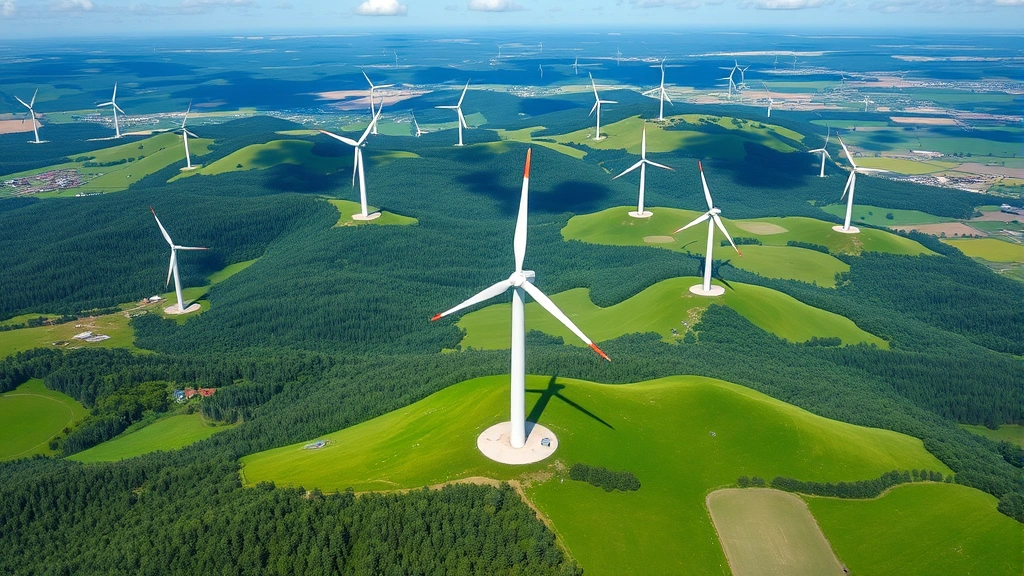
Denmark’s renewable energy transition exemplifies agile environmental economics in practice. Rather than imposing rigid mandates, Danish policymakers created flexible frameworks allowing enterprises to experiment with wind generation, biomass utilization, and grid integration technologies. This experimental approach generated over 80,000 jobs in renewable energy sectors while reducing carbon emissions by 40% since 1990. Simultaneously, Denmark maintained GDP growth rates exceeding European averages, demonstrating that ecological adaptation and economic expansion are compatible within sufficiently agile institutional frameworks.
Sweden’s forest management system provides another instructive example. By implementing adaptive monitoring systems and iterative harvesting protocols responsive to real-time ecological data, Swedish forestry operations simultaneously increased timber yields and enhanced biodiversity indicators. This agile approach to natural resource management generated approximately 3.5% annual productivity growth in forestry sectors while maintaining ecosystem service provision. The economic value of maintained ecosystem services—carbon sequestration, water purification, habitat provision—far exceeds harvested timber value when calculated through comprehensive environmental accounting frameworks.
These Scandinavian experiences reveal that definition of environment in science encompasses both biophysical systems and the institutional structures governing human-environment interactions. Agile environments optimize both simultaneously.
Case Study: Technology Sector Agile Transformation
The technology sector provides perhaps the most visible demonstration of agile practices driving economic expansion. Companies implementing agile methodologies—including sprint-based development cycles, continuous integration protocols, and cross-functional team structures—consistently outperform competitors utilizing traditional waterfall approaches. Performance metrics reveal 40-60% faster feature development, 25-35% higher employee satisfaction, and superior market responsiveness.
Specific case examples illustrate this pattern. Spotify’s engineering organization, structured around autonomous squads with shared objectives, achieved simultaneous expansion across 70+ markets while maintaining service reliability exceeding 99.95%. This agile architecture enabled rapid localization, feature customization, and cultural adaptation—capabilities impossible within traditional hierarchical structures. The economic value creation—measured through subscriber growth, advertising revenue expansion, and market capitalization appreciation—directly correlates with organizational agility implementation.
Microsoft’s transformation under Satya Nadella demonstrates how legacy organizations can transition toward agile environments and recover competitive advantage. By decentralizing decision-making authority, implementing continuous learning protocols, and embracing cloud-native architectures, Microsoft shifted from declining relevance to market leadership. The economic impact: market capitalization increased from $300 billion (2014) to over $3 trillion (2024), with cloud services generating $100+ billion annual revenue—none of which existed in the organization’s traditional business model.
These technology sector transformations reveal how how humans affect the environment extends beyond extraction and pollution to encompassing information architecture and institutional design. Agile information systems enable organizations to process environmental feedback more rapidly, adjusting resource utilization patterns in real-time rather than through delayed quarterly reviews.
Environmental Adaptation and Economic Resilience
Economic resilience—the capacity to absorb shocks, recover functionality, and adapt to new operating conditions—fundamentally depends on environmental and organizational agility. The COVID-19 pandemic provided a global stress-test revealing which organizations and economies possessed sufficient flexibility to navigate unprecedented disruption.
Organizations operating within agile environments demonstrated remarkable adaptive capacity. Companies with distributed decision-making authority, remote-work infrastructure, and iterative supply chain protocols pivoted production (automotive manufacturers producing ventilators, spirits producers generating hand sanitizer) within days. Traditional hierarchical organizations required weeks or months to authorize equivalent adaptations, resulting in competitive disadvantage and revenue loss.
At macroeconomic levels, nations with agile institutional frameworks recovered faster from pandemic-induced contractions. South Korea, Taiwan, and Estonia—characterized by flexible labor markets, rapid policy iteration, and technology-enabled governance—experienced shorter recession periods and faster employment recovery compared to rigid institutional economies. The economic performance differential translated to trillions in cumulative GDP differences across recovery periods.
Climate adaptation presents ongoing challenges requiring continuous environmental and economic agility. Agricultural systems must adapt to shifting precipitation patterns, temperature regimes, and pest populations. Agile farming practices—including precision agriculture, adaptive crop selection, and iterative soil management—enable farmers to maintain productivity across ecological transitions. Research from agricultural economics institutions documents 20-30% productivity improvements when transitioning from rigid monoculture systems toward agile polyculture approaches, with simultaneous soil health regeneration and reduced input costs.
Measuring Agile Performance Metrics
Quantifying agile environment performance requires comprehensive metrics extending beyond traditional GDP accounting. Standard economic indicators capture only partial dimensions of agile system performance, potentially obscuring critical relationships between organizational flexibility and long-term prosperity.
Key measurement frameworks include: (1) Adaptive capacity indices, quantifying organizational and institutional flexibility through decision-making speed, workforce skill diversity, and technological infrastructure sophistication; (2) Resource efficiency metrics, measuring throughput of materials and energy per unit economic output; (3) Ecosystem service valuation, monetizing environmental benefits including carbon sequestration, water purification, and biodiversity provision; (4) Human capital indicators, tracking workforce education levels, skill development investment, and employee engagement; (5) Innovation velocity measures, quantifying rate of new product/service introduction and technological adoption.
Integrated frameworks combining these metrics reveal performance patterns invisible within single-metric analysis. The World Bank’s natural capital accounting methodologies enable comprehensive measurement of how agile environmental practices translate into sustained economic value. Organizations implementing these comprehensive measurement approaches consistently identify previously invisible efficiency opportunities, discovering that environmental optimization and economic performance reinforce rather than contradict each other.
Barriers to Agile Implementation
Despite compelling evidence supporting agile practices, substantial organizational and institutional barriers impede widespread adoption. Understanding these obstacles clarifies why agile transformation remains incomplete across most economic sectors.
Structural inertia represents the primary barrier. Organizations with decades of hierarchical decision-making authority, specialized functional silos, and entrenched power structures experience genuine difficulty transitioning toward distributed authority and cross-functional collaboration. Legacy IT systems, incompatible with agile architectures, require massive capital investment to replace. Incumbent leadership teams trained in command-control paradigms often experience psychological resistance to empowering subordinate decision-making.
Incentive misalignment creates secondary obstacles. Quarterly earnings pressures incentivize short-term optimization over long-term adaptability. Compensation structures rewarding individual achievement over collaborative outcomes discourage cross-functional integration. Capital markets penalizing companies making long-term investments in organizational transformation create pressure toward maintaining status quo approaches despite superior long-term returns from agile transition.
Regulatory rigidity impedes agile implementation across regulated sectors including finance, pharmaceuticals, and utilities. Compliance frameworks designed for traditional hierarchical organizations often prohibit the experimentation and rapid iteration central to agile practices. Updating regulatory structures requires political consensus and bureaucratic coordination—processes themselves often lacking agility.
Skill gaps constitute tertiary barriers. Agile practices require different competencies than traditional management approaches: systems thinking, collaborative problem-solving, comfort with ambiguity, and continuous learning orientation. Many workforce cohorts lack these capabilities, requiring substantial training investment and generational workforce transitions.
FAQ
What precisely constitutes an agile environment?
An agile environment comprises organizational and institutional systems characterized by rapid adaptation, distributed decision-making authority, continuous feedback integration, and iterative optimization. Rather than predetermined hierarchical structures, agile environments emphasize flexibility, experimentation, and responsive adjustment to changing conditions. This applies across organizational types, from software companies to agricultural systems to government agencies. The essential characteristic is capacity to sense environmental changes and adjust operations accordingly.
How do agile practices specifically enhance economic growth?
Agile practices enhance growth through multiple mechanisms: (1) improved resource allocation efficiency, reducing waste and optimizing capital deployment; (2) faster innovation cycles, enabling organizations to capture emerging market opportunities; (3) superior human capital utilization, leveraging workforce knowledge and creativity; (4) enhanced ecosystem service provision, maintaining natural capital stocks essential for long-term prosperity; (5) reduced adaptation costs, enabling smoother transitions during economic transitions. These mechanisms compound across time, creating exponential growth advantages for agile organizations.
Can agile practices work in traditional sectors like manufacturing and agriculture?
Extensive case evidence confirms agile applicability across all economic sectors. Manufacturing organizations implementing agile supply chain management, flexible production scheduling, and real-time quality monitoring achieve 15-25% productivity improvements. Agricultural systems utilizing precision techniques, adaptive crop selection, and responsive soil management demonstrate 20-30% yield improvements with reduced input costs. The agile principle—rapid sensing and responsive adjustment—applies universally across economic domains.
What role does environmental sustainability play in agile economic systems?
Environmental sustainability and agile economics are mutually reinforcing rather than competing objectives. Agile systems rapidly incorporate ecological feedback signals—resource scarcity, pollution indicators, ecosystem degradation—into operational adjustments. This enables organizations to maintain productivity while reducing environmental impact. Conversely, ecological adaptation requires organizational agility; rigid systems cannot adjust production patterns, supply chains, or consumption patterns in response to environmental constraints. Leading economies demonstrate that ecological adaptation and economic expansion occur simultaneously within sufficiently agile institutional frameworks.
How can organizations measure whether they operate within agile environments?
Diagnostic assessment requires evaluating multiple dimensions: decision-making speed (months to weeks to days), hierarchical layers between frontline operations and executive authority, information flow transparency, experimentation frequency, failure tolerance, workforce skill diversity, and technology infrastructure capability. Organizations where decisions require extensive approval hierarchies, information flows primarily through formal channels, and failures trigger punitive responses operate within rigid rather than agile environments. Comprehensive assessment frameworks from organizational development institutions enable detailed self-evaluation and improvement planning.
What percentage of global economic output currently operates within agile environments?
Precise quantification remains difficult, but estimates suggest 15-25% of global economic output originates from organizations operating primarily through agile methodologies. This concentration in technology, professional services, and advanced manufacturing sectors explains why these areas demonstrate superior productivity growth. Broader diffusion across agriculture, infrastructure, and traditional manufacturing remains limited, suggesting substantial economic expansion potential if agile practices achieve wider adoption. The Ecological Economics journal publishes ongoing research quantifying these patterns.


