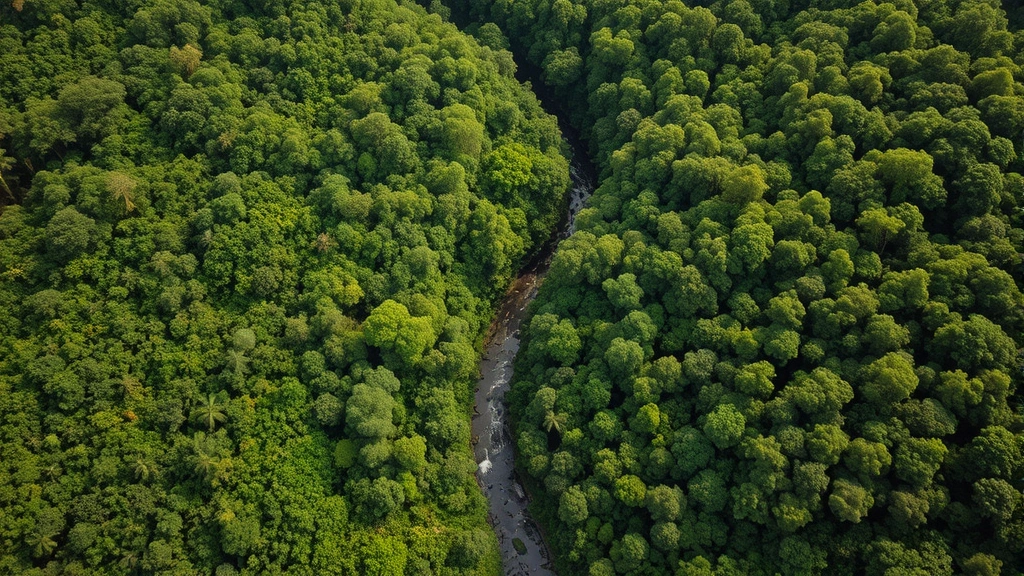
How Ecosystems Drive Economic Growth: Study Insight
Ecosystems represent far more than collections of plants, animals, and natural processes. They function as sophisticated economic engines that generate trillions of dollars in value annually through services we often take for granted. From pollination networks that sustain global agriculture to carbon sequestration that mitigates climate impacts, natural systems provide the foundational infrastructure upon which modern economies depend. Recent research demonstrates that ecosystem health correlates directly with economic resilience, productivity, and long-term prosperity across multiple sectors and geographies.
The relationship between environmental integrity and economic performance has moved beyond theoretical debate into empirical territory. Scientists, economists, and policymakers increasingly recognize that degraded ecosystems impose substantial costs on human societies, while intact natural systems deliver measurable economic benefits. Understanding this nexus requires examining how specific ecosystem services translate into quantifiable economic value, how their loss creates cascading economic consequences, and why ecosystem restoration represents rational economic investment rather than environmental charity.

Ecosystem Services and Economic Valuation
Ecosystem services represent the tangible and intangible benefits that natural systems provide to human populations and economic activities. These services operate across four primary categories: provisioning services (food, water, raw materials), regulating services (climate control, water purification, disease regulation), supporting services (nutrient cycling, soil formation, photosynthesis), and cultural services (recreation, spiritual value, aesthetic appreciation). Each category generates measurable economic value that can be quantified through market prices, replacement costs, or contingent valuation methods.
The economic value of global ecosystem services has been estimated at approximately $125 trillion annually, representing roughly 1.5 times global GDP. However, this figure masks significant regional variation and underestimates the true economic importance of ecosystems, as many services lack market prices and are systematically undervalued in conventional economic accounting. Forests alone provide ecosystem services valued at $2.2 trillion annually, while wetlands contribute approximately $28 trillion despite covering less than 6% of Earth’s terrestrial surface.
Valuation methodologies have evolved considerably, incorporating approaches from environmental economics, ecological science, and accounting frameworks. The System of Environmental-Economic Accounting (SEEA), endorsed by the United Nations, provides standardized approaches for integrating natural capital into national accounting systems. This framework enables policymakers to compare ecosystem service values against development projects and incorporate environmental costs into cost-benefit analyses. Countries implementing SEEA-aligned accounting have discovered that conventional GDP growth masks substantial natural capital depletion, fundamentally altering assessments of economic progress.

Natural Capital in Global Economic Systems
Natural capital—the stock of environmental assets including soil, water, minerals, forests, and biodiversity—functions as the foundation for all economic activity. Unlike human-made capital, which depends on natural inputs for production, natural capital operates with partial independence and provides baseline environmental services regardless of economic utilization. However, economic systems have historically treated natural capital as infinitely abundant and infinitely substitutable, leading to systematic overexploitation and underinvestment in ecosystem maintenance.
The World Bank’s estimates suggest that natural capital comprises approximately 25% of total wealth in developing countries and 5-10% in developed nations, yet receives negligible policy attention relative to human and financial capital. This accounting invisibility creates perverse incentives, where ecosystem conversion generates immediate economic gains while degradation costs appear elsewhere in the system or in future periods. A forest cleared for agriculture shows as positive GDP growth in forestry and agricultural sectors while ecosystem service losses appear as increased water treatment costs, reduced fishery yields, or climate damages years later.
Integrating natural capital into economic planning requires recognizing critical thresholds and tipping points within ecosystems. Beyond certain degradation levels, ecosystems lose regenerative capacity and shift into alternative stable states with radically different economic value. The Amazon rainforest approaching a tipping point toward savanna conversion represents a case where localized economic gains from deforestation could trigger cascading losses worth hundreds of billions annually in climate regulation, biodiversity, and hydrological services. This dynamic creates what economists term “natural capital underinvestment,” where rational short-term economic decisions produce economically irrational long-term outcomes.
Understanding human environment interaction patterns reveals how economic systems can align with ecosystem constraints. Regenerative agriculture, sustainable forestry, and ecosystem-based adaptation strategies demonstrate that economic productivity need not require ecosystem degradation. These approaches generate competitive returns while preserving or enhancing natural capital stocks, creating what ecological economists term “strong sustainability”—economic development that maintains natural capital alongside human-made capital.
Agricultural Productivity and Biodiversity
Global agriculture depends fundamentally on ecosystem services, yet agricultural intensification has become the primary driver of ecosystem degradation worldwide. Pollination services alone—delivered by wild bees, butterflies, birds, and other organisms—support approximately $15-20 billion in annual global crop production. Approximately 75% of global food crop varieties depend at least partially on animal pollination, making biodiversity preservation an agricultural economic imperative rather than environmental luxury.
Soil ecosystems represent perhaps the most economically undervalued natural capital stock. Soil formation through biological and geological processes requires centuries to millennia, yet agricultural practices remove topsoil at rates exceeding formation by orders of magnitude. Global soil degradation imposes estimated annual costs of $400 billion through lost productivity, increased input requirements, and water quality degradation. Simultaneously, healthy soils containing diverse microbial communities demonstrate 20-40% higher productivity and greater climate resilience than degraded soils, creating a clear economic case for soil ecosystem preservation.
Crop genetic diversity—a direct function of wild relative populations and traditional agricultural varieties—provides essential insurance against pest outbreaks, disease pressure, and climate variability. The 2016 East African drought highlighted this dependency when drought-tolerant crop varieties derived from genetic material in natural ecosystems prevented catastrophic famine. Maintaining agricultural biodiversity requires preserving wild ecosystems and traditional farming systems, investments whose economic returns manifest primarily as avoided losses rather than direct revenue generation.
Integrated pest management systems that leverage predator-prey relationships within agricultural ecosystems demonstrate productivity gains of 10-20% while reducing pesticide costs by 50-75%. These approaches exploit ecosystem services rather than replacing them with chemical inputs, generating economic benefits while reducing environmental externalities. The transition to such systems requires ecosystem knowledge, farmer training, and restructured commodity markets—investments that face adoption barriers despite compelling long-term economics.
Climate Regulation and Economic Stability
Ecosystem-based climate regulation represents perhaps the most economically consequential ecosystem service, as climate variability imposes direct costs on virtually every economic sector. Forests sequester approximately 296 gigatons of carbon in biomass, with tropical forests containing the highest per-hectare carbon stocks. Wetlands sequester carbon at rates 10-40 times higher than terrestrial ecosystems per unit area, making wetland preservation and restoration among the most economically efficient climate mitigation strategies available.
The economic value of climate regulation services has been estimated at $4-6 trillion annually when calculated using social cost of carbon methodologies. However, these figures represent avoided climate damages rather than market revenues, creating a fundamental misalignment between private incentives and social benefits. A corporation clearing forest realizes immediate timber revenues while climate damages disperse across global populations and future generations. Correcting this misalignment requires policy interventions including carbon pricing, ecosystem preservation incentives, and ecosystem restoration investment mechanisms.
Climate variability imposes substantial costs on agricultural systems, water resources, and infrastructure through increased extreme weather events, altered precipitation patterns, and extended growing season disruptions. Ecosystem-based adaptation strategies—including mangrove restoration for coastal protection, forest preservation for watershed regulation, and rangeland management for drought resilience—provide adaptation benefits at costs 5-10 times lower than engineered alternatives while generating co-benefits including biodiversity conservation and livelihood support.
Approaches to reduce carbon footprint increasingly incorporate ecosystem-based solutions, recognizing that natural carbon sequestration complements technological mitigation pathways. Payment for ecosystem services mechanisms, carbon credit markets, and green bonds now channel billions annually toward ecosystem preservation and restoration, demonstrating that climate economics increasingly incorporates ecosystem valuation.
Water Systems and Resource Security
Freshwater ecosystems provide regulatory services worth an estimated $2.7 trillion annually through water purification, storage, and delivery functions. Watershed forests regulate precipitation capture, groundwater recharge, and seasonal water distribution, generating economic benefits through hydroelectric power generation, irrigation support, and drinking water provision. The New York City watershed protection system illustrates this dynamic: investing $1.5 billion in ecosystem preservation and restoration proved economically superior to $8-10 billion in water treatment infrastructure alternatives.
Wetland ecosystems provide water purification services through biological and chemical processes that remove nutrients, pathogens, and contaminants at costs 5-10 times lower than mechanical treatment systems. Constructed wetlands now represent standard water treatment infrastructure in many jurisdictions, demonstrating that ecosystem-based solutions offer economic advantages over conventional approaches. However, natural wetland conversion to agriculture or development continues globally despite these documented economic benefits, reflecting institutional failures rather than economic irrationality.
Groundwater ecosystems—aquifers and their associated biological communities—represent critical freshwater reserves for over 2 billion people globally. These systems require decades to centuries for recharge and face degradation through pollution and overharvesting. The economic value of groundwater ecosystems extends beyond direct water provision to include agricultural support, industrial water supply, and emergency reserves during surface water drought. Protecting these ecosystems requires controlling pollution sources and managing extraction rates within regeneration capacity—investments with returns measured in centuries rather than quarterly earnings.
Integrated water resource management approaches increasingly incorporate ecosystem considerations, recognizing that sustainable water security requires maintaining ecosystem integrity across entire watersheds. These approaches generate economic benefits through improved water quality, enhanced drought resilience, and reduced infrastructure requirements compared to conventional supply-side management focusing on dam construction and water transfer projects.
Tourism and Recreation Economics
Natural ecosystems generate substantial direct economic value through tourism and recreation activities, contributing an estimated $600-800 billion annually to global GDP. Wildlife tourism alone generates $29 billion annually while supporting livelihoods for millions in developing countries. Ecosystem-based tourism demonstrates powerful economic incentives for conservation, as wildlife populations and ecosystem integrity represent income-generating assets with perpetual value streams, contrasting sharply with extractive use models generating one-time resource values.
Protected ecosystems generate tourism revenues substantially exceeding alternative land uses in many contexts. Costa Rica’s national parks system generates approximately $4 billion annually in tourism revenue while covering 25% of national territory, demonstrating that ecosystem preservation can drive economic growth. However, tourism revenue distribution often concentrates in wealthy intermediaries while local communities capture minimal benefits, creating political support for ecosystem conversion despite aggregate economic losses.
Cultural ecosystem services—including spiritual significance, aesthetic value, and recreation opportunities—contribute to human wellbeing in ways extending beyond economic measurement yet generating measurable economic value. Parks and green spaces increase property values, attract skilled workers, and reduce healthcare costs through improved mental health and physical activity. Urban ecosystem services in cities contribute an estimated $9.5 trillion annually to human wellbeing, with urban green infrastructure providing flood mitigation, temperature regulation, and air purification alongside recreation and cultural values.
Recreation-based ecosystem services depend critically on ecosystem quality and accessibility, making equity considerations economically relevant. Low-income communities systematically lack access to high-quality natural areas, reducing recreation benefits while concentrating pollution and environmental hazards in disadvantaged neighborhoods. Addressing these inequities through equitable green space provision generates economic co-benefits including improved public health, increased property values, and enhanced social cohesion.
Ecosystem Degradation Costs
Ecosystem degradation imposes substantial costs on economic systems through multiple pathways: reduced productivity of dependent sectors, increased costs for substitute services, and cascading losses through interconnected economic activities. Global ecosystem degradation costs have been estimated at $4.3-20.2 trillion annually depending on valuation methodologies, representing 5-26% of global GDP. These costs concentrate in developing countries and among low-income populations most dependent on ecosystem services and least capable of substituting with technology or purchased alternatives.
Deforestation generates immediate economic gains through timber sales and agricultural expansion while imposing delayed costs through reduced water availability, increased erosion, altered precipitation patterns, and biodiversity loss. The Amazon rainforest provides hydrological services supporting agriculture across South America worth approximately $500 billion annually, yet these services receive no compensation in market transactions. Clearing forest for pasture generates perhaps $1,000-2,000 per hectare in immediate revenue while destroying hydrological services worth $10,000-50,000 per hectare in present value terms.
Fishery collapse represents a well-documented ecosystem degradation consequence with severe economic impacts. Overfishing combined with habitat destruction has collapsed numerous fisheries historically supporting millions of people and generating billions in economic value. The collapse of the Atlantic cod fishery eliminated 40,000 jobs and cost $2 billion in government support, yet resulted from ecosystem degradation driven by economically rational individual decisions within flawed institutional frameworks lacking common property management or harvest restrictions.
Disease emergence patterns increasingly correlate with ecosystem degradation and fragmentation, creating epidemiological risks with substantial economic costs. Zoonotic disease transmission intensifies as wildlife habitat conversion brings human populations into contact with wildlife reservoirs, while reduced biodiversity eliminates dilution effects that naturally suppress pathogen transmission. The 2014-2016 Ebola outbreak, emerging from ecosystem disruption in West African forests, imposed estimated economic costs of $53 billion, dwarfing potential economic gains from forest conversion.
Pollution externalities generated by ecosystem degradation impose costs on downstream populations and sectors, creating what economists term “negative externalities.” Water pollution from agricultural runoff, industrial discharge, and urban stormwater imposes treatment costs, health impacts, and lost ecosystem services. Quantifying these externalities reveals that ecosystem-degrading activities are substantially less profitable than conventional accounting suggests, as external costs are borne by society rather than economic actors.
Investment Returns in Restoration
Ecosystem restoration and conservation represent high-return economic investments when comprehensive benefit accounting incorporates ecosystem services. The World Bank estimates that ecosystem restoration generates average returns of 7-15% annually through ecosystem service provision, comparing favorably with conventional financial investments while generating additional co-benefits including biodiversity conservation, livelihood support, and climate mitigation.
Mangrove restoration projects in Southeast Asia demonstrate this economic logic, generating returns of 9-12% annually through fishery support, storm protection, and carbon sequestration while costing approximately $1,000-5,000 per hectare to implement. Over 20-30 year timescales, these investments generate cumulative ecosystem service benefits of $200,000-500,000 per hectare, supporting strong economic cases for restoration despite requiring upfront capital investment and long payback periods.
Wetland restoration in agricultural regions generates economic returns through water quality improvement, flood mitigation, and enhanced baseflow supporting irrigation and drinking water provision. Restoring 10% of drained agricultural wetlands in the Upper Mississippi River basin would reduce nutrient loading to downstream ecosystems by 20-30%, reducing hypoxia-related economic damages estimated at $2.2 billion annually while generating ecosystem services valued at $4-6 billion annually.
Natural infrastructure investments—restoring ecosystems to provide services previously supplied by engineered infrastructure—offer economic advantages including lower maintenance costs, adaptive capacity to environmental change, and co-benefits beyond primary services. Green infrastructure for stormwater management in urban areas costs 15-50% less than conventional gray infrastructure while reducing urban heat island effects, improving air quality, and providing recreation and aesthetic values absent in engineered systems.
Payment for ecosystem services mechanisms increasingly channel investment capital toward ecosystem restoration and conservation, creating financial mechanisms aligning private incentives with ecosystem service provision. Carbon markets, water quality trading systems, and biodiversity offset programs now generate billions annually in ecosystem service investments. However, these mechanisms remain nascent and require substantial expansion to achieve ecosystem restoration at scales required for addressing global environmental degradation.
Approaches to renewable energy increasingly incorporate ecosystem considerations, recognizing that energy systems depend on ecosystem services including water provision for cooling, wind patterns driven by vegetation patterns, and biomass resources. Renewable energy transition strategies increasingly incorporate ecosystem restoration as complementary investment, recognizing synergies between climate mitigation and biodiversity conservation.
The relationship between urban design and environment quality demonstrates how restoration investments generate measurable economic returns through improved human health, enhanced property values, and reduced infrastructure costs. Cities incorporating green infrastructure, urban forests, and restored wetlands demonstrate lower mortality rates, higher property values, and reduced stormwater treatment costs compared to conventional gray infrastructure approaches.
Biodiversity conservation investments generate economic returns through ecosystem service provision alongside pharmaceutical development, agricultural genetic resources, and biotechnology applications. The global pharmaceutical industry derives approximately 25% of medicines from wild plant species, representing potential value of $1.1 trillion annually in undiscovered pharmaceutical compounds. Protecting biodiversity represents investment in future economic opportunities extending far beyond current ecosystem service valuation.
Research from the United Nations Environment Programme demonstrates that ecosystem restoration investments generate multiplier effects through employment creation, local economic development, and supply chain expansion. Restoration projects in developing countries generate employment at costs 5-10 times lower than conventional infrastructure projects while producing ecosystem services alongside livelihood benefits. These employment impacts create political constituencies supporting ecosystem conservation policies, generating governance benefits complementing direct economic returns.
The transition from ecosystem exploitation toward ecosystem stewardship requires fundamental shifts in economic incentives, accounting frameworks, and governance institutions. However, growing evidence of ecosystem service economic value, combined with technological advances enabling ecosystem monitoring and service quantification, creates expanding opportunities for aligning economic activity with ecosystem preservation. Understanding latest research and insights on ecosystem economics reveals that environmental protection increasingly represents rational economic investment rather than costly constraint on economic growth.
Sustainable fashion brands and consumption patterns represent emerging ecosystem service markets where consumer preferences increasingly incorporate environmental considerations. As sustainable fashion brands demonstrate, markets increasingly reward ecosystem-conscious production methods, creating economic incentives for ecosystem preservation throughout supply chains.
FAQ
What are the main ecosystem services driving economic growth?
Provisioning services (food, water, raw materials), regulating services (climate control, water purification), supporting services (nutrient cycling, soil formation), and cultural services (recreation, spiritual value) represent the primary ecosystem services generating economic value. These services collectively contribute approximately $125 trillion annually to global economic systems, exceeding global GDP and demonstrating fundamental economic dependence on ecosystem integrity.
How is ecosystem service value calculated?
Ecosystem service valuation employs multiple methodologies including market price approaches (valuing marketed products), replacement cost methods (calculating costs of substituting services with engineered alternatives), hedonic pricing (inferring values from property prices), and contingent valuation (surveying willingness-to-pay). The System of Environmental-Economic Accounting provides standardized frameworks enabling comparable valuation across jurisdictions and enabling integration into national accounting systems.
Why do ecosystems matter for economic stability?
Ecosystems provide foundational services including climate regulation, water provision, pollination, and disease suppression that underpin all economic activity. Ecosystem degradation increases economic volatility through disrupted water availability, crop failures, disease emergence, and climate variability. Maintaining ecosystem integrity reduces economic risks while providing co-benefits including enhanced productivity and livelihood security.
What are ecosystem restoration investment returns?
Ecosystem restoration generates average returns of 7-15% annually through ecosystem service provision, comparing favorably with conventional financial investments. Specific projects including mangrove restoration (9-12% annual returns), wetland restoration ($4-6 billion annual benefits in Upper Mississippi basin), and urban green infrastructure (15-50% cost savings versus gray infrastructure) demonstrate compelling economic cases for restoration investment.
How do payment for ecosystem services mechanisms work?
Payment for ecosystem services mechanisms create financial transfers rewarding ecosystem preservation and restoration. Carbon markets compensate forest conservation through carbon credit sales; water quality trading systems pay landowners for pollution reduction; biodiversity offset programs compensate habitat restoration. These mechanisms channel billions annually toward ecosystem service provision while creating market prices reflecting ecosystem service value.
What role do ecosystems play in climate mitigation?
Ecosystems sequester carbon through biomass accumulation and soil organic matter, with forests storing 296 gigatons of carbon and wetlands sequestering carbon at rates 10-40 times higher than terrestrial ecosystems per unit area. Ecosystem-based climate adaptation provides cost-effective resilience through mangrove protection, forest watershed regulation, and rangeland management at costs 5-10 times lower than engineered alternatives.
How do ecosystem services affect developing countries differently?
Developing countries derive proportionally greater economic value from ecosystem services, with natural capital comprising approximately 25% of total wealth compared to 5-10% in developed nations. However, developing countries experience disproportionate ecosystem degradation through resource extraction, agricultural expansion, and infrastructure development, creating substantial economic losses concentrated among low-income populations most dependent on ecosystem services.


