Roaches’ Role in Ecosystems: An Expert Insight
Cockroaches have inhabited Earth for over 300 million years, long before dinosaurs roamed the planet and certainly before humans emerged. Yet despite their evolutionary success and ecological significance, these insects remain widely misunderstood and undervalued in public discourse. When most people think of roaches, they envision household pests scurrying across kitchen floors, triggering immediate revulsion and calls for extermination. This perspective, while understandable from a human hygiene standpoint, obscures a far more nuanced ecological reality: cockroaches are fundamental components of natural ecosystems that perform critical services supporting biodiversity and nutrient cycling.
The ecological contributions of cockroaches extend far beyond their reputation as urban nuisances. In natural environments ranging from tropical rainforests to temperate woodlands, these resilient arthropods function as decomposers, nutrient recyclers, and food sources for countless predators. Understanding what roaches do for the environment requires examining their multifaceted roles through the lens of ecological economics and systems thinking. This analysis reveals how the loss or degradation of cockroach populations in natural habitats could have cascading consequences for ecosystem health, even as we simultaneously manage their presence in human spaces.
Cockroaches as Decomposers and Nutrient Recyclers
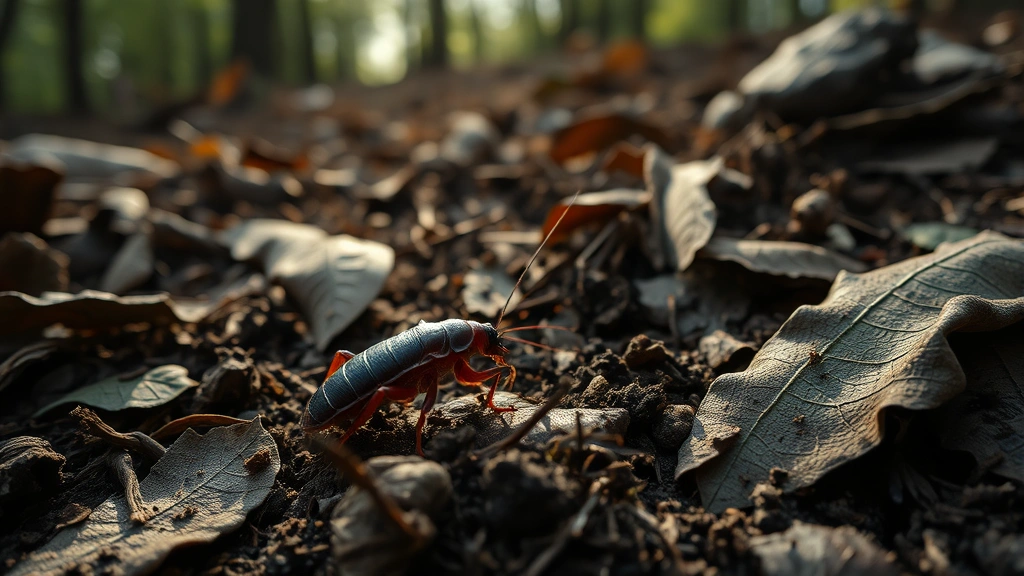
In ecological terminology, cockroaches occupy a crucial niche as primary and secondary decomposers. When organic matter—fallen leaves, dead wood, animal carcasses, and fecal material—accumulates on the forest floor, cockroaches and their larvae actively consume and fragment this material into smaller particles. This mechanical breakdown accelerates decomposition rates and increases surface area available for microbial colonization. Research from ecological decomposition studies demonstrates that cockroaches can process significant quantities of leaf litter, with some species consuming up to 50% of their body weight daily.
The nutrient cycling function performed by cockroaches operates through multiple pathways. As these insects digest organic matter, they transform complex polymers into simpler compounds that become bioavailable to plants and microorganisms. Their fecal material, known as frass, represents a concentrated package of partially decomposed organic matter enriched with microbial populations. This frass serves as an inoculum for soil microbiota, effectively distributing beneficial bacteria and fungi throughout the substrate. The economic value of this nutrient cycling service, when quantified through ecosystem service valuation frameworks, represents thousands of dollars per hectare annually in natural forests—a benefit typically taken for granted and rarely accounted for in environmental policy.
Cockroaches’ role in phosphorus and nitrogen cycling deserves particular attention. These elements, essential for plant growth and primary productivity, are often limiting factors in natural ecosystems. By fragmenting organic matter and facilitating microbial decomposition, cockroaches accelerate the mineralization of nutrients locked in dead biomass. This process has direct implications for human environment interaction when we consider how humans affect the environment by disrupting these decomposer communities through pesticide application and habitat conversion.
Food Web Integration and Trophic Dynamics
Cockroaches occupy a strategic position within food webs as prey organisms consumed by diverse predators. Insectivorous birds, reptiles, spiders, wasps, and small mammals all rely on cockroaches as significant protein sources. In some ecosystems, cockroaches comprise 10-30% of the diet for certain predator species, making them keystone prey items whose availability directly influences predator population dynamics and reproductive success. The loss or dramatic reduction of cockroach populations could trigger cascading effects through food webs, potentially affecting predator community composition and ecosystem stability.
The trophic energy transfer from cockroaches to higher-order consumers represents a critical pathway in ecosystem energy flow. Cockroaches, being relatively efficient at converting plant material into animal biomass, concentrate energy in a form readily accessible to predators. This energetic efficiency means that maintaining healthy cockroach populations supports larger predator populations than would be possible if those predators relied exclusively on other invertebrate prey. From an ecological economics perspective, this represents a form of natural capital—specifically, a provisioning service that subsidizes predator communities and maintains the predatory control mechanisms that regulate herbivorous insect populations.
Different cockroach species exhibit varying ecological roles based on their habitat preferences and dietary specializations. Wood-dwelling species facilitate nutrient transfer from dead wood into soil systems and predator communities. Leaf-litter specialists accelerate the decomposition of accumulated foliage in tropical and subtropical forests. This functional diversity means that species-specific losses in cockroach populations could have heterogeneous impacts on ecosystem function, with some habitats experiencing minimal disruption while others face significant service degradation.
Soil Health and Microbial Communities
The interactions between cockroaches and soil microbiota reveal sophisticated ecological relationships that extend far beyond simple predator-prey dynamics. Cockroach frass contains viable microbial populations, including bacteria and fungi that have colonized the insect’s digestive tract. When cockroaches deposit this material throughout soil profiles, they function as vectors for microbial dispersal, promoting the spatial distribution of beneficial decomposers and nutrient-cycling microorganisms. This process enhances soil microbial diversity and activity, which directly correlates with soil health metrics including aggregate stability, water retention, and nutrient availability.
The burrows and galleries created by cockroaches and their larvae contribute to soil structure development. These excavations improve soil porosity, facilitating water infiltration and root penetration. In compacted soils or areas with limited earthworm activity, cockroach burrowing can provide disproportionately important contributions to physical soil development. This structural improvement has cascading effects on plant establishment, microbial habitat availability, and overall ecosystem productivity. Understanding these soil engineering functions requires examining the broader context of types of environment where cockroaches operate and how their activities vary across different soil types and climatic conditions.
Laboratory studies examining cockroach-mediated changes in soil microbial communities have documented significant shifts in bacterial and fungal composition following cockroach colonization. These shifts typically favor decomposer-dominant communities and reduce pathogenic microorganism abundance. The mechanisms underlying these shifts involve both direct effects (cockroach feeding on pathogenic fungi) and indirect effects (alteration of soil chemistry and physical structure to favor beneficial microbes). These findings suggest that cockroach populations maintain ecosystem resistance to pathogenic outbreaks and promote soil biological health through multiple reinforcing mechanisms.

Forest Ecosystem Services
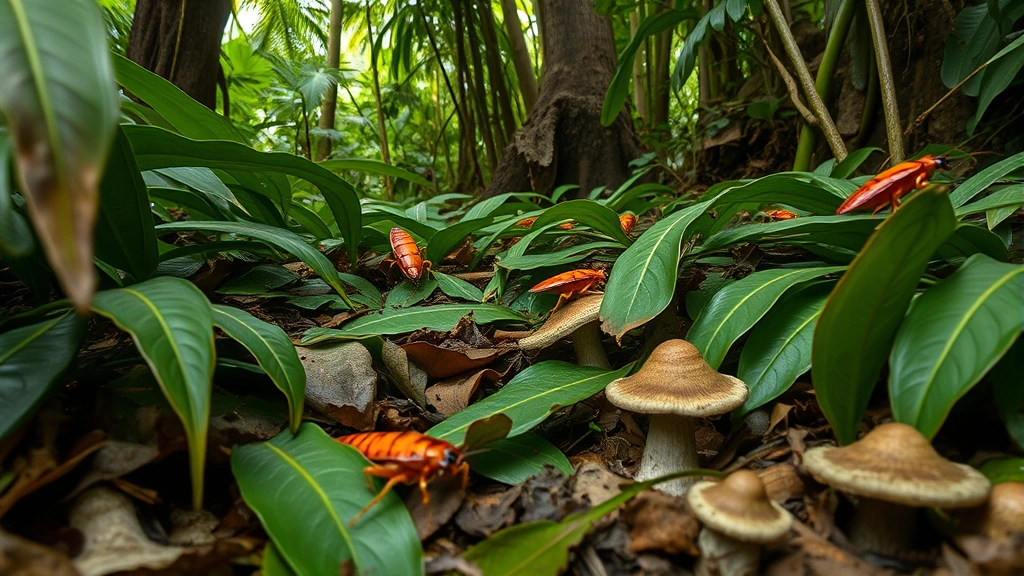
In tropical and subtropical forest ecosystems, cockroaches provide essential services that sustain forest productivity and biodiversity. The leaf-litter layer in these forests, often several centimeters thick, would accumulate to depths that suppress seedling establishment and nutrient cycling if not for active fragmentation by arthropods including cockroaches. By maintaining optimal litter depths and promoting decomposition, cockroaches indirectly support forest regeneration and long-term productivity. This service has particular significance in the context of climate change adaptation, as healthy forest soils with active decomposer communities demonstrate greater resilience to drought stress and temperature fluctuations.
The relationship between cockroach populations and forest carbon cycling has emerged as an important research frontier in ecological economics. Cockroaches accelerate the decomposition of leaf litter, which affects the residence time of carbon in forest floors and the rate of carbon dioxide release to the atmosphere. While individual cockroaches represent negligible carbon fluxes, populations numbering in the millions per hectare collectively influence carbon cycling rates. Research examining decomposition rates in cockroach-excluded versus control forest plots has documented measurably slower decomposition in the absence of these arthropods, with implications for carbon sequestration and climate regulation services.
Forest understory plant communities depend on the nutrient availability maintained through cockroach-mediated decomposition. Seedlings establishing in forest gaps require access to readily available nitrogen and phosphorus, both of which are mobilized through the decomposition processes that cockroaches accelerate. The loss of cockroach populations in managed forests or habitats degraded by human activity could reduce recruitment of shade-tolerant understory species and shift forest composition toward pioneer species with different ecological characteristics. This represents a form of ecosystem state change that, once initiated, may prove difficult to reverse even if cockroach populations subsequently recover.
Climate Resilience and Adaptation Indicators
Cockroaches demonstrate exceptional physiological plasticity and behavioral flexibility that enables them to persist across diverse environmental conditions. This adaptability makes them valuable indicator species for ecosystem resilience and climate change impacts. Populations of cockroaches in natural habitats respond sensitively to changes in temperature, humidity, and resource availability, making their presence, absence, or abundance patterns informative for ecosystem monitoring. Conservation biologists increasingly recognize that maintaining cockroach populations in natural habitats serves as a proxy for maintaining the broader ecological conditions necessary for biodiversity persistence.
The thermal tolerance of cockroaches and their ability to adjust metabolic rates across temperature gradients provides insights into ecosystem responses to climate warming. Species-specific shifts in distribution patterns, phenology, and population dynamics can serve as early warning indicators of ecosystem-level changes. Furthermore, cockroach populations demonstrate capacity for rapid evolution in response to selection pressures, suggesting that they may serve as models for understanding how arthropod communities might adapt to rapid environmental change. This understanding connects directly to the broader concept of definition of environment in science, which emphasizes dynamic interactions between organisms and their physical surroundings.
The vulnerability of cockroach populations to pesticide exposure and habitat loss makes their conservation a proxy for protecting ecosystem functions more broadly. Widespread insecticide use, particularly in agricultural and urban landscapes, has documented negative impacts on non-target cockroach populations. These population declines cascade through food webs, affecting predator populations and ecosystem stability. Conversely, protecting cockroach populations in natural habitats may provide co-benefits for other arthropod communities, creating conservation synergies that enhance overall biodiversity outcomes.
Conservation Implications for Natural Populations
The ecological significance of cockroaches in natural ecosystems demands that conservation strategies explicitly consider their role in maintaining ecosystem function. This perspective contrasts sharply with pest management paradigms that treat all cockroach populations as problematic. Distinguishing between cockroach populations in human-dominated spaces (where control may be justified) and those in natural habitats (where conservation is appropriate) requires nuanced ecological understanding and policy frameworks that reflect this distinction.
Several conservation strategies can support cockroach populations in natural ecosystems while simultaneously managing pest populations in human spaces. Maintaining intact forest understories, protecting leaf-litter layers, and reducing pesticide application in natural areas all support cockroach conservation. In agricultural landscapes, integrated pest management approaches that minimize broad-spectrum insecticide use can preserve non-target cockroach populations that provide ecosystem services. Creating buffer zones between intensively managed agricultural areas and natural habitats reduces pesticide drift and provides refugia for cockroach populations.
The economic valuation of cockroach-mediated ecosystem services remains underdeveloped compared to valuation of other ecosystem services. Applying frameworks from ecological economics, researchers could quantify the monetary value of nutrient cycling, food web support, and soil health services provided by cockroach populations. Such valuations would inform cost-benefit analyses of conservation investments and pesticide application decisions. External link: The World Bank’s environmental economics research provides frameworks for such ecosystem service valuation.
Integration of cockroach conservation into broader biodiversity protection strategies requires collaboration between entomologists, ecologists, and environmental economists. Research networks focused on decomposer arthropod ecology can generate the knowledge base necessary for informed policy decisions. Educational initiatives that improve public understanding of cockroach ecological roles could shift social attitudes and support conservation policies. Understanding how different human environment interactions affect cockroach populations enables more targeted conservation approaches.
The relationship between humans and cockroaches exemplifies broader challenges in environmental management. While pest control in human spaces remains justified on public health and economic grounds, the simultaneous protection of cockroach populations in natural ecosystems reflects an integrated approach to environmental stewardship. This dual perspective acknowledges legitimate human interests in disease prevention and food security while recognizing ecological realities that place cockroaches among the essential organisms maintaining ecosystem health and productivity.
Future research should prioritize understanding cockroach population dynamics in response to climate change, habitat fragmentation, and chemical stressors. Long-term monitoring programs in natural habitats can track population trends and correlate them with ecosystem-level changes. Experimental manipulations examining cockroach population impacts on decomposition rates, nutrient cycling, and food web structure would strengthen the evidence base for conservation recommendations. Interdisciplinary research integrating ecology, economics, and public health can develop management approaches that balance human interests with ecological sustainability.
FAQ
What specific ecosystem services do roaches provide?
Cockroaches provide multiple ecosystem services including nutrient cycling (nitrogen and phosphorus mobilization), soil structure development through burrowing, acceleration of organic matter decomposition, food web support as prey organisms, and microbial dispersal. These services collectively maintain soil health, forest productivity, and predator population dynamics across natural ecosystems.
How do roach populations affect decomposition rates?
Cockroaches fragment leaf litter and dead organic matter into smaller particles, increasing surface area for microbial colonization and accelerating decomposition. Research demonstrates that forest floors with active cockroach populations exhibit 15-30% faster decomposition rates compared to cockroach-excluded areas, with significant implications for nutrient cycling and carbon flux.
Are all cockroach species ecologically equivalent?
No. Different cockroach species occupy distinct ecological niches based on habitat preferences and dietary specializations. Wood-dwelling species contribute primarily to wood decomposition and nutrient transfer, while leaf-litter specialists accelerate forest floor decomposition. This functional diversity means that species-specific population changes have heterogeneous ecosystem impacts.
How do pesticides affect cockroach ecosystem services?
Broad-spectrum insecticides reduce cockroach populations across natural and managed habitats, diminishing decomposition rates, nutrient cycling, and food availability for predators. This represents an underappreciated cost of pesticide application that ecosystem service valuation frameworks rarely incorporate into cost-benefit analyses.
Can cockroach conservation be reconciled with pest management?
Yes. Distinguishing between cockroach populations in human spaces (where control may be appropriate) and those in natural habitats (where conservation is important) enables integrated approaches. Reduced-toxicity pest management in human areas combined with pesticide minimization in natural habitats supports both public health and ecosystem conservation objectives.
What monitoring methods assess cockroach ecosystem impacts?
Researchers employ pitfall traps for population sampling, litter bag experiments for decomposition rate quantification, soil microbial analysis for community composition assessment, and food web analysis for predator diet examination. Long-term monitoring programs track population trends and correlate them with ecosystem-level changes in productivity and diversity.


