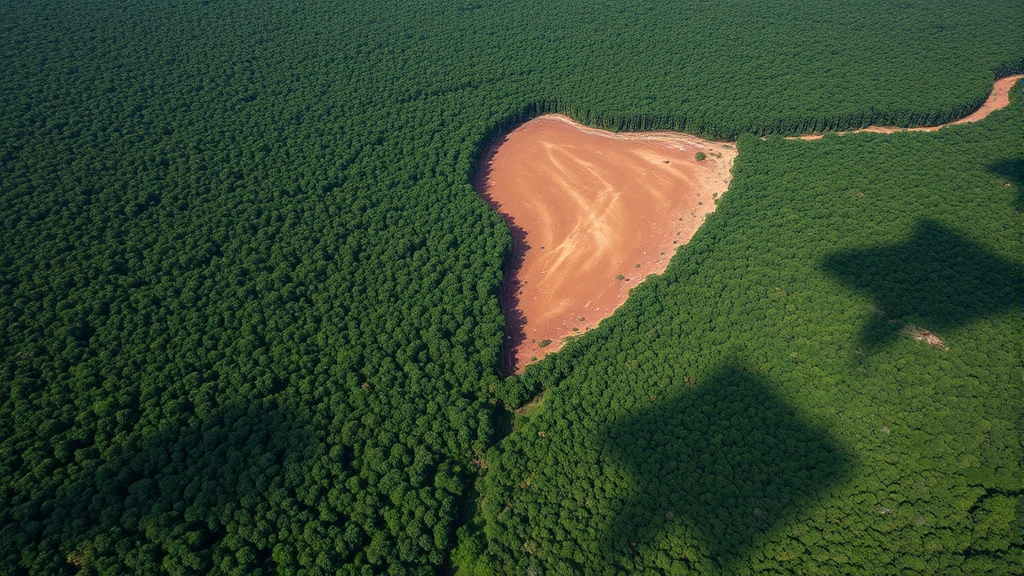
Human-Environment Interactions: Key Insights Explained
Human-environment interactions represent one of the most critical intersections in contemporary science, economics, and policy. These interactions define how societies extract resources, process materials, generate waste, and ultimately reshape the planetary systems that sustain all life. Understanding these dynamics is essential for addressing climate change, biodiversity loss, resource depletion, and the pursuit of sustainable development. The relationship between humans and their environment is not unidirectional; rather, it operates as a complex feedback system where human activities trigger environmental changes that subsequently influence human welfare, economic productivity, and social stability.
The urgency of comprehending these interactions has intensified as global environmental challenges accelerate. From atmospheric carbon concentrations reaching unprecedented levels to freshwater aquifers being depleted faster than they recharge, the evidence of significant human-environment coupling is undeniable. This article explores the multifaceted dimensions of human-environment interactions, examining how economic systems, social structures, and ecological processes intertwine to shape both environmental outcomes and human futures.
Defining Human-Environment Interactions
Human-environment interactions encompass all processes through which societies engage with natural systems to meet material, cultural, and spiritual needs. These interactions include resource extraction, energy production, agricultural practices, waste management, and modifications to landscapes and ecosystems. The term itself bridges multiple disciplines—environmental science, economics, sociology, and ecology—reflecting the inherently interdisciplinary nature of environmental challenges.
At their core, human-environment interactions involve the conversion of natural capital into economic goods and services. Forests become timber and paper; mineral deposits become metals and energy; ecosystems become agricultural land. However, these conversions frequently generate externalities—costs borne by society and ecosystems rather than by market participants. Understanding environmental science definitions provides foundational clarity for analyzing these complex relationships.
The framework of human-environment interactions also recognizes that humans are not external to nature but embedded within ecological systems. Our species depends on ecosystem services—pollination, water filtration, climate regulation, nutrient cycling—that have no market prices but enormous economic value. When human activities degrade these services, economic productivity declines even if conventional GDP metrics initially appear stable.
Economic Systems and Environmental Extraction
Modern economies operate fundamentally as systems of environmental transformation. Industrial production requires continuous extraction of raw materials: metals, fossil fuels, timber, agricultural products, and freshwater. The scale of this extraction has reached planetary boundaries. According to research from the World Bank’s environmental research division, global material extraction has tripled since 1970, reaching over 100 billion tons annually.
The economic logic underlying this extraction stems from a simplified accounting system. Traditional economics measures progress through GDP growth, which counts resource extraction as income rather than asset depletion. Extracting a forest worth $1 billion appears as $1 billion in economic gain, even though society has lost a renewable asset generating perpetual ecosystem services. This accounting error creates systematic incentives for environmental degradation.
The relationship between economic growth and environmental impact follows complex patterns. In some sectors, decoupling has occurred—economic output grows while resource consumption and emissions decline, driven by technological efficiency improvements. However, global decoupling remains partial and incomplete. For every efficiency gain in developed economies, increased consumption in developing economies and rebound effects (where efficiency improvements reduce prices and increase usage) partially offset environmental benefits.
Ecological economics, an emerging field that integrates ecological principles into economic analysis, challenges conventional growth paradigms. Research from ecological economics journals demonstrates that planetary boundaries—biophysical limits on resource extraction and waste absorption—constrain indefinite economic expansion. These boundaries include climate stability, biodiversity preservation, nitrogen and phosphorus cycling, ocean acidification, and freshwater depletion.
The Built Environment and Urban Ecology
The built environment—cities, infrastructure, and constructed landscapes—represents one of humanity’s most significant environmental modifications. More than half the global population now lives in urban areas, with urbanization accelerating in developing regions. Cities concentrate human populations, economic activities, and resource consumption into limited geographic spaces, creating distinctive environmental interactions.
Urban areas function as massive material and energy throughputs. A typical city of one million people requires continuous flows of food, water, building materials, manufactured goods, and energy while simultaneously generating wastewater, solid waste, and air pollution. These flows create environmental impacts far beyond city boundaries—agricultural land elsewhere feeds urban populations, distant forests supply timber, and atmospheric circulation carries urban pollution globally.
However, cities also enable environmental efficiency through density and infrastructure concentration. Urban residents typically consume fewer resources per capita than dispersed rural populations, particularly regarding transportation and heating. Dense urban areas can support efficient public transit, district heating systems, and waste management infrastructure that would be impractical in lower-density settlements. The challenge lies in building cities that maximize efficiency benefits while minimizing resource extraction and waste generation.
Understanding different environment types reveals how urban ecosystems differ fundamentally from natural systems. Urban environments feature fragmented habitats, heat island effects (where cities are significantly warmer than surrounding areas), contaminated soils, altered hydrology, and novel species assemblages. These changes reduce biodiversity and ecosystem service provision while increasing vulnerability to climate impacts and resource disruptions.

Resource Depletion and Regeneration
A fundamental distinction in human-environment interactions separates renewable and non-renewable resources. Renewable resources—forests, fisheries, freshwater, agricultural soils—regenerate naturally if extraction rates remain below regeneration rates. Non-renewable resources—fossil fuels, minerals, metallic ores—exist in finite quantities and deplete irreversibly with extraction. Current global patterns show unsustainable extraction across both categories.
Fisheries exemplify renewable resource overharvesting. Global fish catches peaked around 1990 and have plateaued or declined despite increased fishing effort and technological sophistication. This pattern reflects ecosystem overshoot—extraction exceeding regeneration capacity. Approximately 34% of global fish stocks are overfished, and another 60% are at maximum sustainable yield, leaving minimal margin for increased catches. The economic incentives driving this overharvesting—open access to ocean commons and subsidized industrial fishing—create a tragedy of the commons where individual economic rationality produces collective ecological irrationality.
Freshwater depletion presents similarly critical challenges. Aquifers accumulated over millennia are being drained in decades. The Ogallala Aquifer beneath the American Great Plains, which supplies irrigation for 27% of U.S. irrigated agriculture, is declining at rates suggesting depletion within 50-100 years at current extraction. The Indus River aquifer in South Asia faces even more severe depletion pressures, threatening water security for hundreds of millions of people.
Fossil fuel extraction represents perhaps the clearest case of unsustainable resource use. Hydrocarbons accumulated over hundreds of millions of years are being combusted in mere centuries, releasing carbon sequestered from the atmosphere over geological timescales. This rapid release of ancient carbon fundamentally alters atmospheric composition and climate systems, creating environmental changes that persist across millennia even after extraction ceases.
Soil degradation compounds resource depletion challenges. Agricultural intensification has reduced soil organic matter, increased erosion, and depleted nutrient stocks across vast areas. The UN estimates that 33% of global soils are already degraded, with rates accelerating. Since soil regeneration occurs at centimeter-per-century scales while erosion can remove centimeters per year, agricultural soils represent effectively non-renewable resources under current management practices.
Feedback Mechanisms and Tipping Points
Human-environment interactions operate through complex feedback loops where environmental changes trigger responses that amplify or dampen initial perturbations. Understanding these feedback mechanisms is essential for predicting environmental trajectories and identifying intervention points for sustainability.
Positive feedback loops—where changes amplify themselves—create particular risks. The ice-albedo feedback in Arctic regions exemplifies this dynamic. As Arctic sea ice declines due to warming, exposed darker ocean water absorbs more solar radiation, causing further warming and additional ice loss. This feedback mechanism accelerates Arctic warming at rates 2-3 times faster than global average warming, a phenomenon termed Arctic amplification.
Similarly, forest dieback feedbacks threaten tropical rainforests. Deforestation reduces transpiration (water vapor released by trees), decreasing atmospheric moisture and rainfall. Reduced rainfall stresses remaining forests, increasing die-off rates, further reducing rainfall in a self-reinforcing cycle. Research suggests that Amazon rainforest deforestation beyond 20-25% could trigger irreversible transition to savanna ecosystems, with catastrophic consequences for global climate regulation and biodiversity.
Methane release from thawing permafrost creates another concerning feedback. Permafrost contains vast organic carbon stocks accumulated over millennia. As warming thaws permafrost, microbial decomposition releases methane—a greenhouse gas 28-34 times more potent than CO2 over century timescales. This methane release causes additional warming, accelerating further permafrost thaw in a reinforcing cycle.
These feedback mechanisms create tipping points—thresholds beyond which systems transition to alternative stable states. The relationship between environment and society becomes particularly fragile near these thresholds, as small additional perturbations can trigger large, potentially irreversible changes. Research from the United Nations Environment Programme identifies multiple climate tipping points (Amazon dieback, Atlantic Meridional Overturning Circulation collapse, Greenland ice sheet disintegration) that could activate if warming exceeds 1.5-2°C.

Social Dimensions and Environmental Justice
Human-environment interactions are not socially neutral. Environmental burdens and benefits distribute unequally across populations, creating patterns of environmental injustice. Low-income communities and communities of color disproportionately experience exposure to pollution, toxic waste sites, industrial facilities, and other environmental hazards while enjoying fewer environmental amenities like parks and green space.
This environmental injustice reflects historical patterns of discrimination and unequal power in land-use decisions. Industrial facilities, waste sites, and highways were systematically located in communities with less political power to resist. These spatial patterns persist, creating enduring health disparities. Residents of polluted neighborhoods experience higher rates of asthma, cardiovascular disease, and cancer attributable to environmental exposures.
Similarly, environmental benefits from conservation and restoration efforts often accrue disproportionately to wealthy populations. Protected areas and green infrastructure in wealthy neighborhoods increase property values and enhance quality of life, while poor neighborhoods remain environmentally degraded. This pattern reflects broader market dynamics where environmental quality becomes a commodity accessible primarily to those with purchasing power.
Global environmental injustice operates at international scales. Wealthy nations have achieved development through fossil fuel combustion and resource extraction, now consuming resources at rates far exceeding sustainable levels. Developing nations face pressure to extract resources and emit greenhouse gases to achieve similar development while simultaneously bearing disproportionate impacts from climate change they did not cause. This inequity shapes climate negotiations and development policy, with developing nations demanding differentiated responsibilities reflecting historical emissions and development needs.
Indigenous peoples represent a crucial dimension of human-environment interactions often overlooked in mainstream analysis. Indigenous territories encompass approximately 22% of global land area yet contain 80% of remaining biodiversity. Indigenous resource management systems, developed through millennia of interaction with local ecosystems, frequently achieve sustainability outcomes superior to state-managed or private systems. Recognizing indigenous rights and incorporating indigenous knowledge into conservation and resource management represents both a justice imperative and an environmental necessity.
Pathways Toward Sustainable Interactions
Transforming human-environment interactions toward sustainability requires systemic changes across economic, technological, and social domains. No single intervention suffices; rather, complementary changes across multiple systems are necessary.
Technological innovation offers important but insufficient solutions. Renewable energy, energy efficiency, sustainable agriculture, circular economy approaches, and carbon capture technologies all reduce environmental impacts per unit of economic output. However, efficiency improvements alone cannot achieve sustainability given projected population and consumption growth. Decoupling economic growth from environmental impact requires both efficiency improvements and absolute reductions in material throughput for wealthy nations.
Economic system transformation addresses the fundamental misalignment between market prices and environmental costs. Incorporating environmental externalities into prices through carbon pricing, resource taxes, and elimination of environmentally harmful subsidies would shift economic incentives toward sustainability. The World Bank documents carbon pricing mechanisms that create price signals reflecting climate damages, though implementation remains limited and prices generally insufficient to drive necessary behavioral changes.
Natural capital accounting represents another essential reform. National accounting systems should measure natural capital depletion alongside economic output, revealing whether economic growth represents genuine improvement or unsustainable asset liquidation. UNEP natural capital accounting initiatives demonstrate feasibility of integrating environmental metrics into national accounts, though adoption remains limited.
Institutional and governance changes must accompany economic and technological reforms. Strong environmental regulations, enforcement capacity, and democratic participation in environmental decisions are essential for constraining destructive activities and directing development toward sustainability. The International Institute for Environment and Development documents how participatory governance and community-based resource management frequently achieve sustainability outcomes superior to top-down approaches.
Consumption pattern transformation in wealthy nations represents a necessary but politically challenging pathway. Current resource extraction and emissions cannot be sustained globally if developing nations achieve consumption levels of wealthy nations through conventional development paths. Wealthy nations must reduce absolute material consumption while improving quality of life through non-material dimensions—community, culture, leisure, health—rather than material accumulation.
Understanding human-environment interaction complexities reveals that sustainability is not primarily a technical challenge but a social and political one. The technologies and knowledge for sustainable human-environment interactions largely exist; the barriers are political will, economic structures that reward unsustainability, and cultural narratives equating consumption with progress. Transforming these dimensions requires sustained effort from scientists, policymakers, business leaders, and citizens.
FAQ
What are the main types of human-environment interactions?
Human-environment interactions encompass resource extraction (forests, minerals, water, fossil fuels), energy production and consumption, agricultural practices, waste generation and disposal, landscape modification, and pollution. These interactions can be classified as sustainable (maintaining resource and ecosystem regeneration) or unsustainable (depleting resources or degrading ecosystems faster than regeneration occurs).
How do human activities affect ecosystems?
Human activities affect ecosystems through habitat destruction, pollution, resource extraction, climate change, invasive species introduction, and fragmentation. These impacts reduce biodiversity, degrade ecosystem services, alter nutrient cycling, disrupt food webs, and reduce ecosystem resilience. The cumulative effects of these stressors create synergistic impacts often exceeding individual stressor effects.
What is the relationship between economics and environmental degradation?
Economic systems create incentives for environmental degradation by externalizing costs—treating ecosystem degradation and resource depletion as free inputs rather than deducting them as costs. Market prices reflect only extraction and processing costs, not environmental damages or resource scarcity. This systematic underpricing of environmental goods creates incentives for excessive extraction and pollution. Reforming economic systems to internalize environmental costs is essential for sustainability.
How can human-environment interactions become sustainable?
Sustainable interactions require technological innovation, economic reforms (carbon pricing, environmental taxation, natural capital accounting), institutional strengthening (environmental regulation, enforcement, participatory governance), consumption reduction in wealthy nations, and recognition of ecological limits. No single intervention suffices; systemic transformation across economic, technological, and social domains is necessary.
What role do feedback mechanisms play in environmental change?
Feedback mechanisms determine whether environmental changes amplify or stabilize. Positive feedbacks (ice-albedo, forest dieback, methane release) amplify initial changes, potentially triggering tipping points leading to irreversible transitions. Understanding feedback mechanisms is essential for identifying critical thresholds and intervention points where relatively small actions can prevent catastrophic changes.
How do environmental impacts differ across populations?
Environmental impacts distribute unequally across populations due to historical discrimination, unequal political power, and market dynamics. Low-income communities and communities of color disproportionately experience pollution exposure and environmental degradation while enjoying fewer environmental amenities. Globally, developing nations face disproportionate climate impacts despite minimal historical responsibility for emissions. Environmental justice requires addressing these inequities alongside environmental protection.


