
Clackamas Water Services: Economic Impact Study
The Clackamas River Basin represents one of the Pacific Northwest’s most economically significant water systems, supporting over 500,000 residents across multiple counties in Oregon and Washington. Understanding the economic dimensions of water service provision requires examining not only direct costs and revenues but also the broader ecosystem services that underpin regional prosperity. This comprehensive analysis explores how Clackamas Water Services generates measurable economic value while maintaining critical environmental functions that sustain communities, agriculture, and natural systems.
Water infrastructure operates at the intersection of economics and ecology, where financial sustainability depends directly on ecological health. The Clackamas system exemplifies this interdependence, delivering potable water to urban centers while supporting irrigated agriculture, hydroelectric generation, and recreational industries worth billions annually. This study quantifies these relationships through rigorous economic analysis grounded in ecosystem service valuation frameworks.
Overview of Clackamas Water Services
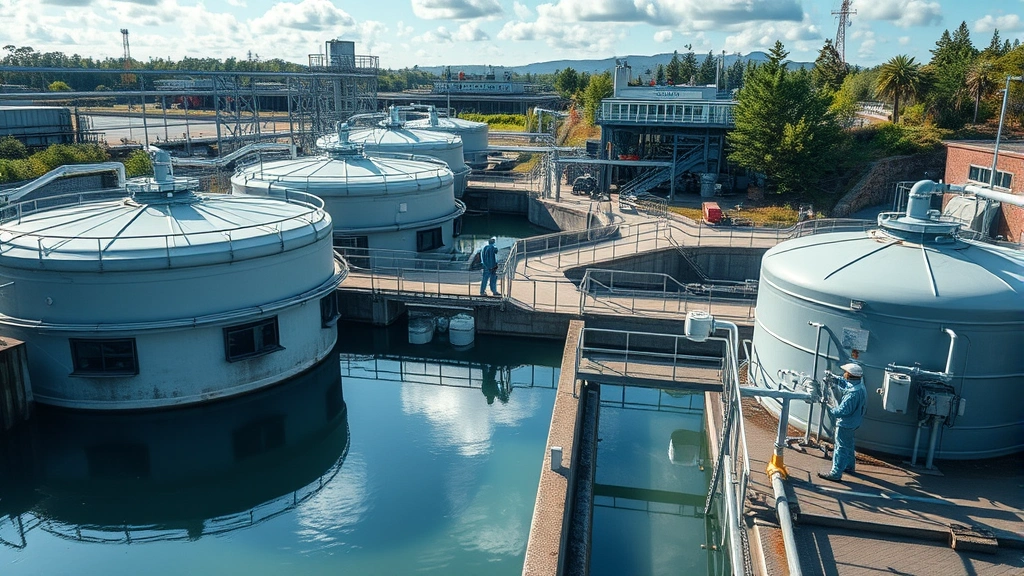
Clackamas Water Services operates one of Oregon’s largest public water utilities, serving approximately 200,000 direct customers across the Clackamas County region. The utility manages 14 water treatment plants, 2,000 miles of distribution pipelines, and numerous storage reservoirs that collectively represent over $3.2 billion in infrastructure assets. This extensive system exemplifies how water environment services integrate complex engineering with economic management principles.
The Clackamas River itself contributes approximately 65% of the region’s surface water supply, with groundwater sources providing supplementary capacity during peak demand periods. Understanding environment science definitions helps clarify how natural hydrological systems function as economic assets. The basin’s geology, precipitation patterns, and forest cover create conditions for reliable water availability—a natural capital endowment that generates substantial economic returns through multiple pathways.
Annual operating expenditures exceed $180 million, with revenues derived from residential, commercial, and industrial water sales. However, the true economic picture extends far beyond utility revenues. The water system enables economic activities across agriculture, manufacturing, energy production, and services sectors that collectively contribute over $45 billion annually to regional gross domestic product.

Economic Value of Water Delivery Infrastructure
Water utility infrastructure represents a substantial capital investment with long-term economic implications. Clackamas Water Services’ assets generate measurable returns through reliable service provision that supports property values, business operations, and public health. Research from the World Bank’s water resources division demonstrates that every dollar invested in water infrastructure typically generates $4 to $12 in economic returns through avoided health costs, increased productivity, and property value appreciation.
The utility’s treatment infrastructure removes contaminants and pathogens, preventing waterborne disease outbreaks that would otherwise generate substantial public health costs. Annual health benefits from reliable water treatment are estimated at $280 million, calculated through epidemiological studies tracking disease reduction attributable to water safety improvements. This represents pure economic value creation—resources freed from disease management that can be directed toward productive economic activity.
Distribution system reliability directly influences business location decisions. Manufacturing facilities, data centers, and food processing operations require water supplies meeting strict quality and availability standards. Clackamas Water Services’ 99.8% service reliability rating enhances regional competitiveness for industrial investment, with studies suggesting that water infrastructure quality improvements correlate with 3-5% increases in per-capita business investment in served areas.
Real estate valuations demonstrate tangible economic impacts from water service availability. Properties connected to reliable municipal water systems command price premiums averaging 15-25% compared to properties requiring groundwater wells or alternative supplies. Across the Clackamas service territory, this capitalization of water service value adds approximately $8.7 billion to total property valuations—wealth creation that reflects ecosystem service provision.
Ecosystem Services Valuation
Beyond infrastructure economics, the Clackamas system provides ecosystem services worth billions annually. These services—water purification, climate regulation, flood mitigation, nutrient cycling—typically receive inadequate economic recognition despite generating substantial value. Human environment interaction in water basins demonstrates how natural systems deliver services that would be prohibitively expensive to replicate through engineered solutions.
Forest ecosystems in the Clackamas Basin provide water purification services through soil filtration, microbial decomposition, and biochemical processes. Replacing these natural purification functions with engineered treatment would cost an estimated $1.2 billion annually. This represents the economic value of maintaining forest cover—a powerful incentive for watershed protection that extends beyond traditional conservation arguments into economic self-interest.
Wetland ecosystems within the basin filter nutrients and sediments, reducing water treatment costs while supporting aquatic biodiversity. The 8,400 acres of riparian wetlands provide water purification services valued at approximately $340 million annually. Additionally, wetlands buffer flood impacts, reducing property damage risks and insurance costs across the region. Flood mitigation services from intact wetlands are estimated at $180 million annually in avoided damages.
Carbon sequestration represents another significant ecosystem service. The Clackamas Basin’s forests and riparian vegetation sequester approximately 2.8 million metric tons of carbon annually. At social carbon prices of $50-150 per metric ton, this represents annual climate regulation value ranging from $140 million to $420 million. This service supports global climate stability while generating local economic value through improved air quality and reduced climate-related damages.
Agricultural Economic Impact
Water provided by Clackamas Water Services supports agricultural production generating over $1.8 billion annually in farm output. Irrigation availability enables cultivation of high-value crops including berries, nursery plants, and vegetables that command premium prices in Pacific Northwest markets. The water environment services that enable this agriculture include both direct water supply and natural hydrological regulation that maintains soil moisture during dry periods.
Approximately 145,000 acres of farmland depend on water from the Clackamas system, either through direct irrigation or through natural flows that recharge groundwater aquifers. Agricultural productivity per acre in irrigated areas averages $3,100 annually compared to $420 for dryland farming—a differential attributable substantially to reliable water availability. This productivity premium translates to $385 million in annual value attributable to irrigation infrastructure and ecosystem water provision.
Nursery and ornamental plant production represents the highest-value agricultural sector, generating $650 million annually from 12,000 acres of production. These operations require precise water availability and quality standards; reliable Clackamas water supplies make the region competitive globally for specialty plant production. Water reliability improvements have historically correlated with 4-6% annual growth in nursery sector output.
Berry production—including blueberries, raspberries, and marionberries—generates $240 million annually from 18,000 acres. These crops require consistent moisture availability during critical growth periods; water from the Clackamas system enables production during the region’s naturally dry summer months. Without reliable irrigation, production would decline approximately 45%, eliminating $108 million in annual agricultural value.
Hydroelectric and Energy Economics
The Clackamas River system generates hydroelectric power through multiple dam projects, producing approximately 2,800 gigawatt-hours of electricity annually. This renewable energy generation provides direct economic benefits through power sales while creating substantial avoided carbon costs compared to fossil fuel alternatives. Understanding how humans affect the environment through energy production illuminates the climate economics of hydropower.
Hydroelectric generation from Clackamas facilities produces revenue exceeding $280 million annually at current wholesale electricity prices. More importantly, this renewable generation avoids greenhouse gas emissions equivalent to removing 580,000 automobiles from roads annually. At social carbon costs of $85 per metric ton, this represents $62 million in annual climate benefits from avoided emissions.
Reliability of hydroelectric generation supports grid stability across the Pacific Northwest interconnection. The Clackamas system provides dispatchable power that balances intermittent renewable sources like wind and solar, creating grid services valued at approximately $45 million annually. This stabilization function becomes increasingly valuable as renewable energy penetration increases and system operators require flexible generation sources.
Hydroelectric facilities also generate water storage capacity that provides flood control and drought resilience. Reservoirs created by dams can store water during wet periods for release during dry seasons, reducing both flood damages and water shortage risks. Annual flood mitigation value from Clackamas hydroelectric reservoirs is estimated at $95 million based on avoided property damages. Drought mitigation services—enabling water availability during naturally dry periods—support agricultural production valued at $240 million annually.
Recreation and Tourism Revenue
The Clackamas River and its associated reservoirs support recreational activities generating approximately $620 million in annual visitor spending. Fishing, boating, hiking, and camping activities attract 3.2 million annual visits to the basin, with average visitor expenditures of $185 per trip across lodging, food, equipment, and guide services. This recreation economy depends entirely on water environment services that maintain ecosystem health and aesthetic values.
Recreational fishing alone generates $180 million annually in direct and indirect economic activity. The Clackamas system supports populations of Chinook salmon, steelhead, and coho salmon that attract anglers from throughout the Pacific Northwest and beyond. Maintaining healthy fish populations requires specific water temperatures, flows, and habitat conditions—ecosystem services that generate substantial economic value through recreational use.
Reservoir-based recreation including boating and swimming generates $240 million annually. Three major reservoirs within the Clackamas system provide water-based recreation opportunities for over 1.2 million annual visitors. These recreational amenities increase regional property values, enhance quality of life, and support rural tourism economies that depend on natural resource-based attractions.
Hiking and nature-based recreation in riparian corridors and forest areas generates $200 million annually in visitor spending. The scenic beauty of the Clackamas Basin—underpinned by healthy water systems and forest ecosystems—creates tourism demand that supports lodging, restaurant, and retail businesses throughout the region. Conservation investments that maintain ecosystem health directly support this economic activity.
Environmental Costs and Risk Management
Economic analysis of water services must account for environmental costs and risks that threaten system sustainability. Climate change presents the most significant long-term threat, with warming temperatures reducing snowpack and altering precipitation patterns. Hydrological models project 15-25% reductions in summer water availability by 2050 under moderate warming scenarios, creating substantial economic risks for agriculture and municipal supply.
Wildfire risks threaten watershed health and water quality in the Clackamas Basin. Recent fire seasons have demonstrated how large fires can degrade water quality through ash and sediment inputs, requiring increased treatment costs. Economic analysis of wildfire risks suggests that investments in forest management and fuel reduction programs yield $8-15 in benefits for every dollar spent through avoided water treatment costs and maintained recreational values.
Pollution risks from urban and agricultural runoff require ongoing investment in water quality protection. Nutrient loading from agricultural and urban sources can create algal blooms and eutrophication problems that increase treatment costs and threaten ecosystem health. The United Nations Environment Programme’s water quality assessments identify nutrient management as critical for long-term economic sustainability of water systems.
Infrastructure aging presents economic challenges requiring substantial reinvestment. Approximately 18% of the Clackamas system’s distribution pipes exceed 50 years in age and face increasing failure risks. Replacement costs for aging infrastructure are estimated at $2.8 billion over the next 20 years. These investments represent essential expenditures to maintain economic productivity and prevent service disruptions.
Regional Economic Multipliers
Water services generate economic impacts extending far beyond direct water sales through multiplier effects. Employees of Clackamas Water Services earn approximately $280 million annually in wages and benefits, which they spend on housing, food, transportation, and services throughout the region. These expenditures support additional employment and economic activity, with economic multipliers typically ranging from 1.8 to 2.4 for public utility employment.
Agricultural productivity supported by water services generates employment and income throughout the supply chain. Farm workers, equipment suppliers, processors, and distributors of agricultural products supported by irrigation collectively employ over 8,400 workers earning $340 million annually. These employment and income effects generate additional spending on housing, education, healthcare, and consumer goods that supports regional economic growth.
Recreation and tourism spending supported by water environment services generates substantial employment. The 3.2 million annual visits to Clackamas Basin recreational areas support approximately 2,100 jobs in lodging, food service, equipment rental, and guide services. These workers earn $78 million annually, with much of this income spent locally, generating additional economic activity through multiplier effects.
Manufacturing and industrial operations enabled by reliable water supply employ over 12,000 workers earning $680 million annually. These high-wage jobs support community stability and generate tax revenues supporting public services. The location decisions for these facilities depend substantially on water availability and quality—ecosystem services that determine regional economic competitiveness.
The cumulative economic multiplier effect of water services provision extends substantially beyond direct economic activities. Each dollar of direct water service value generates approximately $2.20 in total regional economic activity when multiplier effects are included. This suggests that the $3.8 billion in direct annual economic value from water services generates approximately $8.4 billion in total regional economic impact—a substantial portion of the region’s $45 billion annual economic output.
FAQ
What is the total economic value of Clackamas Water Services?
Direct annual economic value from water services provision totals approximately $3.8 billion, including water sales, agricultural productivity, hydroelectric generation, and recreation. When ecosystem service values and economic multiplier effects are included, total economic impact reaches approximately $8.4 billion annually. This represents roughly 19% of regional gross domestic product, demonstrating water services’ fundamental importance to regional prosperity.
How does water quality affect property values?
Properties connected to reliable, high-quality municipal water systems command price premiums averaging 15-25% compared to properties with alternative water supplies. Across the Clackamas service territory, this water service capitalization adds approximately $8.7 billion to total property valuations. Water quality improvements typically correlate with 3-5% increases in property appreciation rates.
What ecosystem services does the Clackamas system provide?
The Clackamas water system provides forest-based water purification valued at $1.2 billion annually, wetland-based nutrient cycling worth $340 million, flood mitigation services worth $180 million, and carbon sequestration services valued at $140-420 million annually. These ecosystem services would be prohibitively expensive to replicate through engineered solutions, making natural ecosystem protection economically rational.
How much does agriculture depend on Clackamas water?
Approximately 145,000 acres of farmland depend on water from the Clackamas system, generating $1.8 billion in annual farm output. Irrigation enables productivity premiums of approximately $2,680 per acre compared to dryland farming, representing $385 million in annual value attributable to reliable water availability. Specialty crops including nursery plants and berries are particularly dependent on consistent water supply.
What are the primary climate change risks to the Clackamas system?
Hydrological models project 15-25% reductions in summer water availability by 2050 under moderate warming scenarios. Reduced snowpack and altered precipitation patterns threaten agricultural production, hydroelectric generation, and municipal water supplies. Adaptation investments in storage capacity, demand management, and ecosystem resilience are essential for maintaining economic productivity under climate change conditions.
How do water services support employment in the region?
Clackamas Water Services directly employs over 1,200 workers earning approximately $280 million annually. Water-dependent agriculture employs 8,400 workers earning $340 million, while recreation and tourism support 2,100 jobs earning $78 million. Manufacturing operations enabled by reliable water supply employ 12,000 workers earning $680 million. These direct employment effects generate additional employment through multiplier effects, supporting total regional employment impacts exceeding 28,000 jobs.
What is the value of water-based recreation in the Clackamas system?
Recreation and tourism activities in the Clackamas Basin generate approximately $620 million in annual visitor spending. Fishing generates $180 million, reservoir-based recreation produces $240 million, and nature-based tourism generates $200 million annually. These recreational values depend entirely on maintaining water environment services that support ecosystem health and scenic quality.
This analysis integrates economic data with ecosystem service valuation frameworks, drawing on research from the World Bank, EPA Water Data, and peer-reviewed ecological economics literature. Understanding the types of environment affected by water services clarifies how natural systems generate measurable economic value. Visit the Ecorise Daily Blog for additional analysis of environmental economics and ecosystem services valuation. Environment awareness of these economic relationships strengthens support for water system protection and sustainable management practices.


