
Balancing Economy & Environment: A Vital Discussion
The tension between economic growth and environmental preservation represents one of the most pressing challenges of our time. For decades, policymakers and economists have grappled with the fundamental question: must we sacrifice environmental health to achieve prosperity, or can these objectives coexist? The answer increasingly lies not in choosing between them, but in understanding how the environment functions as critical economic infrastructure. When we recognize that the environment in a sentence describes the total of all external conditions and influences affecting organisms and human societies, we begin to see why degradation threatens both ecological and economic stability.
Contemporary economic models often fail to account for what ecological economists call “natural capital”—the finite resources and ecosystem services that underpin all human activity. From pollination and water purification to climate regulation and nutrient cycling, environmental systems provide trillions of dollars in annual benefits that traditional GDP calculations ignore. This fundamental accounting error has led to policies that appear economically rational in the short term but prove economically catastrophic over decades. Understanding this paradox requires examining the intersection of economics and ecology through multiple analytical lenses.
The Economics of Environmental Degradation
Environmental degradation imposes substantial costs on economies that remain largely invisible in standard financial accounting. When factories discharge pollutants into waterways, the costs of treating contaminated water, managing health impacts, and restoring ecosystems are borne by society rather than reflected in production costs. This market failure—where prices fail to capture true environmental costs—creates perverse incentives for overexploitation of natural resources.
The World Bank estimates that environmental degradation costs developing countries approximately 5-10% of their annual GDP, with some nations experiencing losses exceeding 20% when accounting for resource depletion and pollution impacts. These costs manifest through reduced agricultural productivity, increased healthcare expenditures, diminished fisheries yields, and compromised water security. Paradoxically, the countries least responsible for environmental damage often suffer the most severe economic consequences, creating a justice dimension to the economic-environmental debate.
Understanding types of environment becomes essential when analyzing degradation patterns. Natural, built, and social environments interact in complex ways, and damage to one invariably affects others. Industrial pollution (built environment failure) degrades natural environments and erodes social cohesion, compounding economic losses across multiple dimensions.
Climate change exemplifies this dynamic perfectly. The economic impacts—from extreme weather events to agricultural disruption to infrastructure damage—already exceed hundreds of billions annually and accelerate exponentially. Yet these costs remain externalized from the fossil fuel industry’s balance sheets, allowing carbon-intensive development to appear profitable despite generating massive negative externalities.
Natural Capital and Ecosystem Services
The concept of natural capital represents a paradigm shift in how economists value the environment. Rather than viewing nature as a free resource to be exploited, natural capital frameworks recognize that ecosystems provide measurable economic value through services including carbon sequestration, water filtration, pollination, flood mitigation, and nutrient cycling.
The Millennium Ecosystem Assessment quantified these services at approximately $125 trillion annually—substantially exceeding global GDP. Yet this calculation dramatically understates the true value, as many ecosystem services have no market price and cannot be replaced by human technology at any cost. The pollination services provided by declining bee populations, for instance, support agricultural output valued at $15-20 billion annually, yet beekeeping and wild pollinator conservation receive minimal economic investment relative to their economic importance.
Integrating natural capital into economic decision-making requires new accounting frameworks. The System of Environmental-Economic Accounting (SEEA), endorsed by the United Nations Environment Programme, provides methodologies for measuring natural capital depreciation alongside traditional economic indicators. Countries adopting SEEA frameworks often discover that apparent economic growth masks severe natural capital depletion—a phenomenon termed “uneconomic growth” by ecological economists.
The definition of environment science encompasses these measurement challenges, as scientists work to quantify complex ecosystem dynamics in economically meaningful terms. Wetlands provide flood protection, water purification, and carbon storage worth thousands of dollars per hectare annually, yet wetland conversion to agriculture appears profitable when environmental services remain unpriced.
Policy Mechanisms for Economic-Environmental Balance
Achieving genuine balance between economic and environmental objectives requires policy innovation that fundamentally restructures incentives. Carbon pricing mechanisms—whether through taxes or cap-and-trade systems—represent attempts to internalize environmental costs into market prices. When implemented effectively, these mechanisms can drive innovation while maintaining economic growth.
The European Union’s Emissions Trading System demonstrates both the potential and limitations of market-based approaches. By pricing carbon, the EU has achieved emissions reductions while maintaining economic growth in most member states. However, price volatility, regulatory loopholes, and insufficient stringency have limited effectiveness, suggesting that pricing alone proves insufficient without complementary regulations and investments.
Regulatory approaches including pollution limits, protected areas, and environmental impact assessments provide alternative mechanisms. While sometimes portrayed as economically damaging, rigorous research demonstrates that well-designed environmental regulations drive technological innovation and often generate net economic benefits. The Clean Air Act in the United States generated estimated benefits of $30-1,000 for every dollar spent on compliance, according to EPA analyses, through reduced healthcare costs and improved productivity.
Subsidy reform represents another critical policy lever. Governments worldwide spend an estimated $500-700 billion annually subsidizing fossil fuels, fishing, and agriculture in ways that accelerate environmental degradation. Redirecting these subsidies toward renewable energy, sustainable agriculture, and ecosystem restoration could simultaneously improve environmental outcomes and reduce fiscal burdens.
Human environment interaction policies must account for distributional impacts, as environmental regulations often burden low-income communities disproportionately while benefits accrue broadly. Just transition policies—including worker retraining, community investment, and progressive taxation—can ensure that economic-environmental rebalancing strengthens rather than undermines equity.
Corporate Sustainability and Competitive Advantage
Contrary to traditional assumptions that environmental responsibility reduces profitability, evidence increasingly demonstrates that sustainability generates competitive advantages. Companies reducing resource intensity often discover simultaneous cost savings and productivity improvements. Interface, a carpet manufacturing company, reduced waste by 92% while increasing profits and market share through circular economy principles.
Supply chain resilience emerges as a crucial business case for environmental stewardship. Climate impacts, water scarcity, and resource volatility create material financial risks for companies dependent on vulnerable supply chains. Patagonia, Unilever, and other leading corporations have integrated environmental metrics into core business strategy not from altruism but from recognition that environmental stability enables long-term profitability.
Access to capital increasingly incorporates environmental, social, and governance (ESG) metrics. Institutional investors managing trillions of dollars now systematically incorporate climate risk and environmental performance into investment decisions. This shift creates powerful incentives for corporate sustainability, as firms failing to address environmental risks face capital constraints and valuation penalties.
The relationship between how humans affect the environment through production and consumption patterns directly determines corporate environmental impact. Companies reducing their environmental footprint through efficiency improvements, renewable energy adoption, and circular economy principles simultaneously reduce costs and risks while enhancing brand value and employee attraction.
Technological Innovation as Bridge
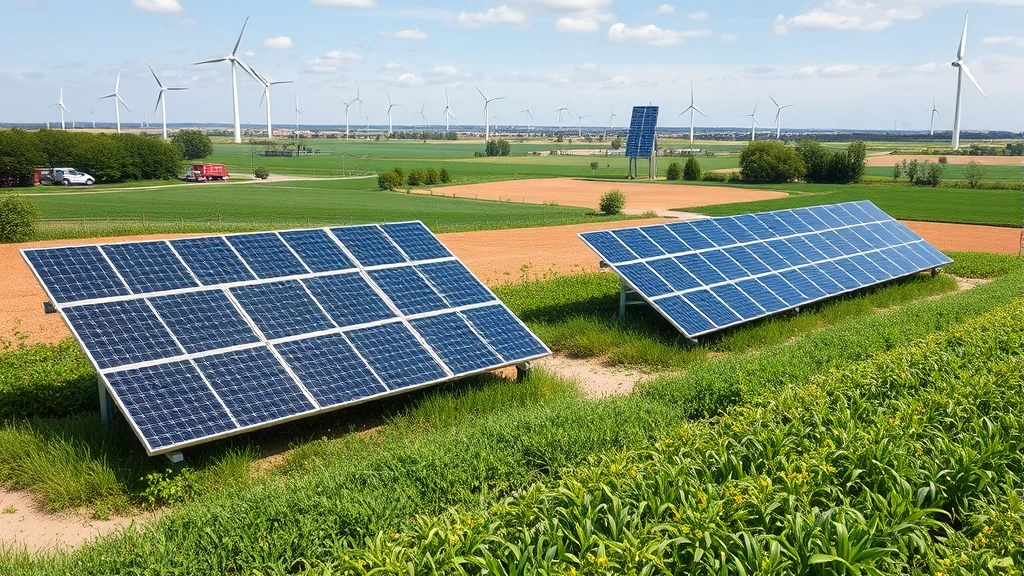
Technological advancement provides crucial pathways toward economic-environmental balance, though technology alone cannot solve systemic problems. Renewable energy costs have declined 90% over the past decade, making clean energy economically competitive without subsidies in many markets. This technological transformation enables decoupling of economic growth from emissions—a prerequisite for sustainable development.
Precision agriculture, using data analytics and automation, reduces input use while maintaining yields. Circular economy technologies enable material recovery and reuse, transforming waste streams into economic resources. Carbon capture and storage technologies, while currently expensive, offer potential for emissions reduction in hard-to-decarbonize sectors including cement and steel production.
However, technological optimism requires realistic assessment of deployment timelines and scalability constraints. Solar and wind generation require massive infrastructure buildout, energy storage solutions remain partially underdeveloped, and many technologies depend on mineral inputs with their own environmental costs. Technology succeeds most powerfully when embedded within policy frameworks that create incentives for deployment and adoption.
The environment awareness required for technological transition extends beyond technical innovation to encompass social and behavioral change. Consumer demand for sustainable products, investor pressure on environmental performance, and worker advocacy for green jobs create market and social forces that complement technological development.
Global Case Studies in Balanced Development
Costa Rica demonstrates that developing nations can achieve economic growth while expanding environmental protection. Through payment for ecosystem services programs, forest conservation incentives, and renewable energy investment, Costa Rica has increased forest coverage from 25% to 52% over four decades while achieving upper-middle-income status. Ecotourism revenues and carbon credit income create direct economic value from environmental preservation.
Rwanda’s ban on single-use plastics, implemented alongside environmental restoration initiatives, improved waste management while creating employment in waste collection and recycling. This approach illustrates how environmental policy can address multiple development challenges simultaneously—reducing pollution, creating jobs, and improving public health.
Bangladesh’s mangrove restoration programs provide flood protection worth billions of dollars annually while supporting fisheries and carbon sequestration. These ecosystem-based adaptation strategies prove more cost-effective than conventional infrastructure while generating multiple co-benefits.
Norway’s sovereign wealth fund, built on oil revenues, has divested from fossil fuels and concentrated investments in sustainable enterprises. This transition acknowledges that long-term prosperity requires moving beyond resource extraction toward knowledge-based, low-carbon economies. Other resource-dependent nations increasingly recognize this necessity, though implementation remains challenging.
The sustainable fashion brands emerging globally demonstrate consumer demand for environmentally and socially responsible production. While representing a small market share currently, rapid growth in sustainable fashion signals shifting consumer values and willingness to support higher environmental standards.

The World Bank’s environmental initiatives increasingly integrate climate and natural capital considerations into development financing, recognizing that projects ignoring environmental costs ultimately generate negative returns. This institutional shift reflects growing consensus that environmental and economic sustainability prove inseparable.
Research from ecological economics journals continues demonstrating that growth within planetary boundaries requires fundamental economic restructuring. The concept of degrowth in wealthy nations, while controversial, emerges from recognition that high-consumption lifestyles generate environmental impacts incompatible with planetary health.
FAQ
Can economies grow without harming the environment?
Yes, but growth must be decoupled from resource extraction and emissions. Wealthy nations have achieved GDP growth alongside emissions reductions through efficiency improvements, renewable energy, and service-sector expansion. However, current global growth patterns remain coupled with environmental degradation, requiring policy intervention to enable genuine decoupling.
What makes environmental accounting important for economics?
Standard GDP measurements exclude environmental costs, creating misleading impressions of economic health. When forests are clearcut, the timber revenue counts as income, but the loss of ecosystem services does not appear as a cost. Environmental accounting reveals true economic performance by incorporating natural capital depreciation.
How do carbon pricing mechanisms work?
Carbon pricing assigns a monetary cost to greenhouse gas emissions, either through direct taxes or tradeable permit systems. This internalizes the climate damage costs into production decisions, creating incentives for emissions reduction. However, pricing must be sufficiently high and complemented by regulations to drive meaningful change.
What are ecosystem services and why do they matter economically?
Ecosystem services are the benefits humans receive from natural systems, including pollination, water purification, climate regulation, and nutrient cycling. They matter economically because they provide value equivalent to trillions of dollars annually, yet remain largely unpriced in markets, leading to undervaluation and overexploitation.
How can businesses profit from environmental sustainability?
Businesses profit through cost reductions from resource efficiency, access to capital from ESG-focused investors, brand value enhancement, supply chain resilience, and employee attraction. Companies like Unilever and Interface demonstrate that sustainability integration increases profitability while reducing environmental impact.


