
Understanding Economy’s Impact on Ecosystems: A Comprehensive Study
The relationship between economic systems and ecological health represents one of the most critical challenges of our time. As global economies expand and industrial activities intensify, the degradation of natural ecosystems accelerates at an unprecedented rate. This comprehensive analysis examines how economic structures, market mechanisms, and human consumption patterns fundamentally reshape the world’s biological systems, from microscopic soil organisms to vast ocean biomes.
Modern economics has traditionally operated within a framework that treats nature as an infinite resource rather than a finite system with measurable carrying capacity. This fundamental disconnect between economic theory and ecological reality has created cascading environmental crises. Understanding the mechanisms through which economic activities impact ecosystems is essential for developing sustainable models that serve both human prosperity and planetary health.
Economic Growth and Resource Depletion
The pursuit of perpetual economic growth has become the dominant paradigm in global capitalism, yet this model operates on fundamentally flawed assumptions about planetary boundaries. Gross Domestic Product (GDP), the primary metric used to measure economic success, counts resource extraction as income rather than capital depletion. When a nation harvests its last old-growth forest or depletes an aquifer that took millennia to fill, economists record this as economic gain rather than loss.
According to research from the World Bank, natural capital depletion costs developing nations approximately 4-6% of their annual GDP. This hidden cost remains invisible in traditional economic accounting, creating a dangerous illusion of prosperity. Fisheries worldwide face collapse due to industrial-scale extraction that exceeds regeneration rates. The Grand Banks cod fishery, once thought inexhaustible, experienced complete commercial collapse in the 1990s after centuries of exploitation.
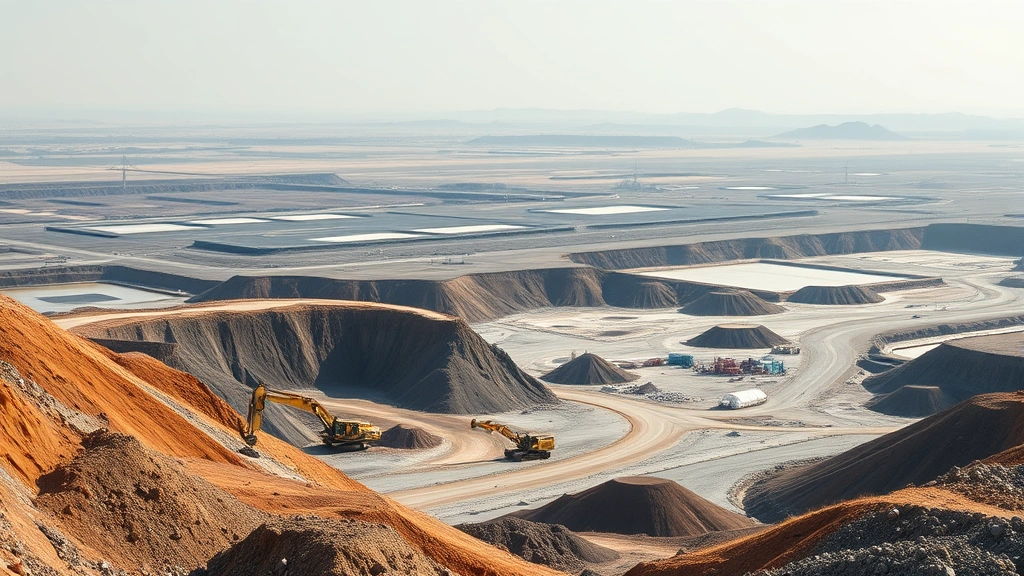
Mineral extraction exemplifies the linear economic model’s incompatibility with ecosystem health. Mining operations require removal of massive quantities of overburden, creating toxic tailings ponds and acid mine drainage that contaminates water systems for decades. The United Nations Environment Programme reports that mining generates approximately 100 million tons of waste annually, with mining companies responsible for creating roughly 30% of all toxic waste in the United States.
When examining scientific definition of environment, we recognize that all economic activities occur within interconnected ecological systems. These systems possess finite regenerative capacities that economic models systematically ignore. The depletion of aquifers in agricultural regions, the loss of topsoil through industrial farming, and the extraction of fossil fuel reserves all represent capital consumption disguised as income generation.

Market Failures and Environmental Externalities
Environmental externalities represent the fundamental failure of market mechanisms to account for ecological costs. When a coal power plant burns fuel and releases carbon dioxide, sulfur dioxide, and particulates into the atmosphere, these costs are not reflected in the price consumers pay for electricity. Instead, society bears these costs through increased healthcare expenditures, reduced agricultural yields, and accelerated climate change impacts.
Ecological economics, as detailed in research from leading environmental economics journals, demonstrates that conventional markets systematically underprice resources while externalizing environmental destruction. A gallon of gasoline priced at three dollars does not reflect the true cost of oil extraction, refining, transportation infrastructure, military spending to secure oil supplies, healthcare costs from air pollution, or climate change impacts. The true cost, according to Ecological Economics researchers, may exceed fifteen dollars per gallon.
The tragedy of the commons describes how rational individual economic actors create collectively irrational outcomes. When fishermen lack property rights or regulatory constraints, each individual maximizes personal catch, leading to collective overharvesting and fishery collapse. Similarly, atmospheric carbon dioxide functions as a shared resource with no price mechanism, creating incentives for unlimited emissions. Understanding how to reduce carbon footprint at individual levels addresses symptoms rather than the systemic economic structures that incentivize carbon-intensive activities.
Biodiversity loss accelerates as economic systems convert natural ecosystems into simplified, monetizable landscapes. Wetlands are drained for agriculture, forests are clearcut for timber and cattle ranching, and coral reefs are destroyed by fishing practices and warming oceans. These conversions generate short-term economic gains for specific actors while destroying ecosystem services—pollination, water filtration, carbon sequestration, flood regulation—that provide far greater long-term economic value.
Industrial Agriculture and Biodiversity Loss
Industrial agriculture represents perhaps the most spatially extensive economic system reshaping ecosystems. Approximately 40% of terrestrial land surface is now used for agriculture, and this expansion continues into remaining natural habitats. The conversion of diverse ecosystems into monoculture crops creates ecological deserts that support minimal biodiversity while requiring ever-increasing chemical inputs.
Modern industrial agriculture depends on three primary resources: fossil fuels for mechanization and synthetic fertilizers, water for irrigation, and pesticides for pest control. Each dependency creates cascading environmental impacts. Synthetic nitrogen fertilizers, while increasing short-term crop yields, have created dead zones in aquatic ecosystems where nutrient runoff triggers algal blooms that consume dissolved oxygen. The Gulf of Mexico dead zone, caused primarily by Mississippi River agricultural runoff, covers approximately 6,000-7,000 square miles annually.
Pesticide use, while controlling targeted pests, devastates non-target organisms essential for ecosystem function. Neonicotinoid insecticides, widely used in industrial agriculture, persist in soil and water while accumulating in insect tissues. These compounds have been implicated in pollinator decline, with honeybee populations, wild bee populations, and butterfly populations all experiencing dramatic reductions. Understanding benefits of eating organic food extends beyond individual health to encompass the ecosystem-wide impacts of agricultural chemical use.
Livestock agriculture generates additional environmental pressures through land conversion, water consumption, and methane emissions. Cattle ranching drives deforestation in the Amazon, where forest conversion to pasture releases massive carbon stores while eliminating habitat for millions of species. A single pound of beef requires approximately 1,800 gallons of water and generates greenhouse gas emissions equivalent to driving a car for six miles.
The economic incentive structure in agriculture rewards maximizing short-term yields rather than maintaining long-term soil health and ecosystem function. Farmers operating within capitalist markets face pressure to continuously increase production to maintain profitability as commodity prices decline. This creates a treadmill effect where environmental degradation accelerates despite individual farmers’ intentions.
Carbon Emissions and Climate Feedback Loops
The carbon cycle, a fundamental ecosystem process, has been disrupted by economic activities that release fossilized carbon at rates incompatible with natural absorption mechanisms. Since industrialization, atmospheric carbon dioxide concentrations have increased from 280 parts per million to over 420 parts per million, with the rate of increase accelerating. This rapid atmospheric change drives climate disruption with cascading ecosystem impacts.
Economic systems powered by fossil fuels generate greenhouse gas emissions that accumulate in the atmosphere, trapping heat and disrupting global climate patterns. These disruptions trigger positive feedback loops that accelerate climate change independently of continued emissions. Melting Arctic sea ice reduces planetary albedo (reflectivity), causing further warming. Thawing permafrost releases methane and carbon dioxide, amplifying warming. Warming oceans absorb less carbon dioxide while releasing stored carbon, creating another feedback loop.
Climate disruption damages agricultural productivity, freshwater systems, and coastal infrastructure while triggering species extinctions and ecosystem collapse. Coral bleaching events, triggered by warming ocean temperatures, have destroyed approximately half of the world’s remaining coral reefs. These ecosystems, despite covering less than 1% of the ocean floor, support approximately 25% of marine species. Their destruction represents an incalculable loss of biological and genetic diversity.
The economic costs of climate change far exceed the costs of emissions reductions, yet market mechanisms fail to incentivize decarbonization at necessary scales and timelines. Carbon pricing mechanisms, where implemented, typically underprice carbon while exempting major emitters. Renewable energy capacity has expanded rapidly, yet total fossil fuel consumption continues increasing due to overall energy demand growth and economic expansion in developing nations.
The Role of Monetary Systems in Ecosystem Degradation
Monetary systems based on debt-based currency creation embed growth imperatives into economic structures. Banks create money through lending, with the quantity of money in circulation dependent on expanding debt. This structural requirement for continuous economic growth, regardless of ecological consequences, drives overexploitation of natural systems.
Interest-bearing debt requires economic growth exceeding the interest rate simply to maintain the status quo. When interest rates are positive and debts accumulate across society, economies must expand perpetually or face defaults and financial collapse. This growth imperative operates independently of ecological carrying capacity, creating systematic pressure to convert natural capital into monetary value.
Corporate structures, designed to maximize shareholder returns, create additional incentives for short-term resource exploitation. A corporation that invests in ecosystem restoration over a ten-year period generates lower returns than a competitor that maximizes extraction and externalize environmental costs. Market competition selects for the latter strategy, creating a race-to-the-bottom dynamic in environmental standards.
Understanding environment and environmental science reveals that economic systems operate as subsystems within finite planetary boundaries. Yet monetary systems, through their growth imperatives and discounting of future impacts, systematically undervalue long-term ecological health relative to short-term economic gains.
Transition to Regenerative Economic Models
Emerging economic frameworks attempt to align economic activity with ecological limits and regenerative capacity. Circular economy models, based on material cycling rather than linear extraction-production-disposal, reduce resource consumption while minimizing waste. Regenerative agriculture practices restore soil health and sequester carbon while maintaining productivity. Steady-state economics proposes maintaining material and energy throughput at sustainable levels while allowing qualitative improvement in goods and services.
Measuring economic success through alternative metrics offers pathways beyond GDP’s flawed accounting. Genuine Progress Indicator (GPI) accounts for environmental degradation, resource depletion, and social factors ignored by GDP. Bhutan’s Gross National Happiness framework prioritizes citizen wellbeing and environmental conservation over economic expansion. These alternative metrics demonstrate that improved quality of life need not require continuous material growth.
Renewable energy deployment, while necessary for decarbonization, cannot alone resolve the fundamental incompatibility between growth-based economics and ecological sustainability. Renewable energy enables continued economic expansion without fossil fuel emissions, yet mineral extraction for solar panels and batteries, land use for wind farms, and manufacturing impacts all create environmental costs. Genuine sustainability requires combining renewable energy with reduced material consumption and regenerative production practices.
Policy interventions including carbon pricing, resource depletion taxes, subsidy reform, and ecosystem protection regulations create economic incentives aligned with ecological health. Removing subsidies for fossil fuels, industrial agriculture, and fishing fleets would immediately shift relative prices toward sustainable alternatives. Implementing natural capital accounting would reveal the true costs of economic activities and guide investment toward regenerative approaches.
Renewable energy for homes represents one pathway for individuals to reduce their economic system participation in carbon-intensive industries. However, systemic transformation requires fundamental restructuring of monetary systems, corporate governance, and growth imperatives that drive ecosystem degradation.
International cooperation through frameworks like those developed by UNEP and economic policy institutes focused on sustainable development offers potential pathways for coordinating global transitions. The World Bank‘s increasing emphasis on natural capital accounting and ecosystem services valuation indicates growing recognition that ecological health and economic prosperity are inseparable.
FAQ
How do economic systems directly damage ecosystems?
Economic systems damage ecosystems through resource extraction, pollution, habitat conversion, and climate disruption. Market mechanisms fail to account for environmental costs, creating incentives for overexploitation. Industrial agriculture, mining, fossil fuel combustion, and manufacturing generate externalities—costs imposed on ecosystems and future generations—that markets systematically ignore.
What is the relationship between GDP growth and environmental degradation?
GDP growth typically correlates with increased resource consumption, waste generation, and emissions. Traditional GDP accounting treats resource extraction and environmental destruction as economic gains rather than capital depletion. This accounting error creates illusions of prosperity while masking ecological decline. Some wealthy nations have decoupled GDP growth from emissions, yet global emissions continue rising as developing economies expand.
Can renewable energy alone solve environmental problems caused by economic systems?
Renewable energy is necessary but insufficient for genuine sustainability. While renewable energy eliminates fossil fuel emissions, it cannot address habitat destruction, biodiversity loss, resource depletion, or the fundamental growth imperative in debt-based monetary systems. Sustainable economics requires combining renewable energy with reduced material consumption, circular production models, and fundamental restructuring of growth-dependent financial systems.
How can individuals reduce their economic impact on ecosystems?
Individual actions including reducing consumption, supporting sustainable businesses, and advocating for policy change all contribute to reduced ecosystem impact. However, individual actions alone cannot address systemic drivers of environmental degradation. Approximately 70% of global emissions result from production of goods and services for wealthy consumers, yet individual responsibility frameworks obscure corporate and governmental responsibility. Systemic change requires policy interventions and economic restructuring alongside individual action.
What alternative economic models exist that align with ecological sustainability?
Circular economy, regenerative agriculture, steady-state economics, bioregional economics, and ecological economics offer frameworks that prioritize ecosystem health. These models emphasize material cycling, resource efficiency, local production, and qualitative improvement over quantitative growth. Implementation requires policy support, investment redirection, and cultural shift away from consumption-based identity and growth-dependent prosperity measures.


