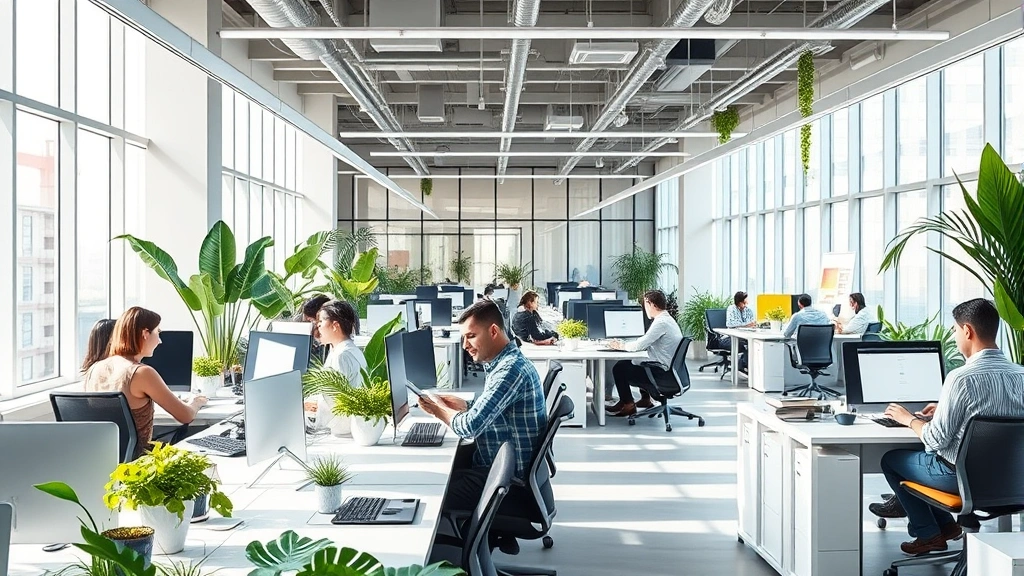
Work Environments & Economic Impact: A Study on Types of Work Environments
The evolution of work environments represents one of the most significant economic and social transformations of the 21st century. As organizations adapt to technological advancement, climate consciousness, and workforce expectations, the types of work environments available to employees have expanded dramatically—from traditional office spaces to remote setups, hybrid models, and specialized facilities. This shift carries profound implications for productivity, employee well-being, organizational costs, and broader economic systems.
Understanding how different work environments influence economic outcomes requires examining the intersection of workplace design, human behavior, environmental sustainability, and financial performance. Research increasingly demonstrates that work environment choices affect not only individual worker productivity but also organizational profitability, resource consumption, and ecological footprints. This comprehensive analysis explores how various workplace configurations generate measurable economic impacts while reshaping our understanding of labor markets and environmental stewardship.

Traditional Office Environments: Economic Foundations and Modern Challenges
For over a century, the centralized office environment served as the dominant model for organizing work and generating economic value. Traditional office spaces—whether corporate towers, industrial parks, or professional complexes—represented substantial capital investments that shaped urban development, real estate markets, and labor economics. These environments historically provided concentrated workforces, direct supervision capabilities, and physical infrastructure for collaboration that became foundational to modern capitalism.
The economic model underlying traditional offices relies on significant fixed costs: real estate leases, utilities, maintenance, security, and facility management. Organizations justified these expenses through enhanced productivity metrics, easier management oversight, and the assumption that physical proximity fostered innovation. However, contemporary analysis reveals complexities in this traditional equation. According to research from the World Bank, office-based work environments account for approximately 18% of commercial building energy consumption globally, translating to substantial operational expenses and carbon emissions.
The relationship between human environment interaction in office settings directly influences economic outcomes. Studies measuring office productivity have yielded paradoxical findings: while some research supports productivity gains from centralized work, other data indicates that commuting costs, office distractions, and environmental stressors substantially reduce net economic benefits. A worker spending two hours daily commuting incurs not only direct transportation expenses but also opportunity costs—time unavailable for productive work or personal well-being activities that could generate economic value elsewhere.
Modern traditional offices increasingly incorporate sustainability features and flexible layouts, attempting to optimize the economic-environmental calculus. These adaptations—from LED lighting systems to open-plan designs—represent attempts to reduce operational costs while maintaining the perceived benefits of centralized workplaces. Yet the fundamental tension remains: traditional offices inherently generate higher per-employee resource consumption than alternative work environments.

Remote Work Models: Redefining Economic Productivity
The rapid expansion of remote work, accelerated by global circumstances but enabled by technological infrastructure, fundamentally challenged assumptions about where economic productivity occurs. Remote work environments—whether home offices, co-working spaces, or distributed networks—represent a paradigm shift with measurable economic implications. Research from ecological economics journals demonstrates that remote work reduces infrastructure demands, transportation emissions, and facility-related expenses while creating new economic patterns.
Economic analysis of remote work reveals substantial cost reductions for organizations. Eliminating or reducing office space needs decreases real estate expenses by 20-40% for many companies. However, these savings must be balanced against increased technology investments, cybersecurity requirements, and potential productivity challenges. The paradox of remote work economics lies in measuring productivity—traditional metrics based on physical presence become obsolete, requiring organizations to develop output-focused evaluation systems.
Individual worker economics shift dramatically in remote environments. Commuting costs disappear, freeing resources for other economic activities or personal investment. Simultaneously, remote workers often shoulder increased home office expenses, internet connectivity costs, and utility increases. Data from environmental economics research indicates that remote workers collectively reduce transportation-related emissions by 54% compared to office-commuting counterparts, generating positive externalities that benefit broader economic and ecological systems.
The remote work model introduces geographic arbitrage dynamics into labor markets. Organizations can recruit talent from lower-cost regions without requiring relocation, potentially depressing wages in high-cost urban centers while increasing opportunities in underserved areas. This geographic redistribution generates complex economic consequences: reduced demand for urban office real estate and transportation infrastructure, but increased demand for broadband infrastructure and rural housing. Regional economies experience significant shifts as remote work decouples employment from physical location.
Productivity measurement in remote environments reveals nuanced economic impacts. Some sectors experience productivity increases of 13-47% in remote settings due to reduced distractions and increased autonomy, while others face coordination challenges and innovation deficits. The heterogeneous nature of remote work productivity means economic impacts vary substantially by industry, job type, and organizational culture.
Hybrid Work Environments: Balancing Flexibility and Organizational Economics
Hybrid work models—combining remote and office-based work—represent the emerging dominant paradigm, attempting to capture benefits while mitigating drawbacks of pure alternatives. Economic analysis of hybrid arrangements reveals complex cost-benefit calculations. Organizations maintain reduced office footprints while preserving collaborative infrastructure, typically achieving real estate cost reductions of 15-30%. However, these savings must account for increased technology investments, flexible space management, and coordination complexity.
The economic efficiency of hybrid models depends substantially on implementation design. Hot-desking arrangements—where employees share workspace—reduce per-worker real estate costs but may generate employee dissatisfaction and reduce sense of organizational belonging. Assigned hybrid schedules create predictability for resource planning but sacrifice flexibility. Flexible hybrid approaches maximize employee autonomy but complicate facility management and increase operational costs.
Labor economics in hybrid environments exhibit distinctive patterns. Organizations report improved employee retention, reducing costly turnover and associated productivity losses. Hybrid flexibility appears particularly valuable for workers with caregiving responsibilities, generating positive externalities by supporting workforce participation among underrepresented groups. However, hybrid arrangements can inadvertently create two-tier workforce dynamics where in-office workers receive greater advancement opportunities, potentially exacerbating economic inequality.
The human environment interaction within hybrid settings creates unique economic challenges. Employees must navigate multiple work environments with different tools, technologies, and social dynamics. This cognitive switching generates transaction costs—mental effort required to adapt between contexts. Research on environmental psychology suggests these switching costs reduce productivity by 8-15%, creating measurable economic losses that organizations must account for in hybrid implementation decisions.
Real estate economics in hybrid markets display interesting patterns. While overall office space demand decreases, demand for high-quality collaborative spaces increases. Premium office real estate in desirable locations commands higher rents, even as secondary office markets experience decline. This creates geographic concentration of hybrid-model economic benefits in major metropolitan areas, potentially increasing regional inequality.
Specialized Work Environments: Sector-Specific Economic Considerations
Beyond traditional office, remote, and hybrid models, specialized work environments serve specific economic functions. Manufacturing facilities, laboratories, retail spaces, healthcare settings, and agricultural operations represent distinct work environment types with unique economic characteristics and environmental implications.
Manufacturing environments represent capital-intensive work settings where physical infrastructure directly determines production capacity and economic output. These environments generate substantial employment but involve significant environmental costs—energy consumption, waste generation, and resource extraction. Economic optimization in manufacturing environments balances labor costs, equipment efficiency, and environmental compliance expenses.
Laboratory and research environments require specialized infrastructure supporting innovation and knowledge creation. These settings generate high economic value per square foot but demand significant capital investment in equipment and environmental controls. The environment and natural resources sectors increasingly recognize that research infrastructure must incorporate sustainability principles to align with ecological stewardship goals.
Retail and hospitality work environments combine physical product sales with customer experience provision. Economic productivity in these settings depends on location desirability, facility aesthetics, and customer flow optimization. Climate change and environmental concerns increasingly influence consumer preferences, affecting retail space economics as customers increasingly value sustainable business practices.
Healthcare work environments involve specialized facilities where patient safety and care quality directly generate economic value. These settings consume substantial energy and resources but generate critical health outcomes with measurable economic benefits. Optimizing healthcare facility economics requires balancing resource consumption against health outcome quality.
Economic Impact Analysis Across Work Environment Types
Comprehensive economic analysis of different work environment types reveals multifaceted impacts across organizational, individual, and systemic levels. Organizations implementing work environment transitions experience measurable financial consequences spanning real estate costs, technology investments, productivity changes, and employee retention effects.
Real estate economics represent the most quantifiable impact dimension. Organizations transitioning from traditional offices to hybrid or remote models report real estate cost reductions ranging from 15-50%, depending on implementation strategies. However, these savings require substantial upfront investments in technology infrastructure, often consuming 20-40% of anticipated real estate savings in initial years. The financial break-even point typically occurs within 18-36 months for organizations successfully implementing transitions.
Productivity economic impacts prove more challenging to quantify but equally significant. Meta-analyses of productivity research indicate that work environment impacts vary substantially by task type: routine cognitive work shows 10-25% productivity gains in remote settings, collaborative creative work shows 15-30% productivity losses, and hybrid arrangements typically achieve 5-15% productivity gains through reduced commuting time. These heterogeneous effects mean overall organizational productivity impacts depend on job mix and industry characteristics.
Employee cost implications extend beyond direct compensation. Organizations transitioning to remote or hybrid work often reduce benefits packages associated with office environments—subsidized meals, transportation allowances, fitness facilities—while potentially increasing home office stipends and technology allowances. Net employee economic impact varies substantially based on individual circumstances and organizational policies.
Recruitment and retention economics demonstrate significant work environment effects. Organizations offering hybrid or remote flexibility report 25-40% reductions in voluntary turnover, generating substantial cost savings given that employee replacement costs typically equal 50-200% of annual salary. Enhanced recruitment reach through geographic flexibility reduces recruitment costs by 15-30% while potentially accessing broader talent pools.
Sectoral economic impacts vary substantially. Technology and professional services sectors experience the most significant economic benefits from remote and hybrid models, while manufacturing, retail, and healthcare sectors face greater constraints due to physical environment requirements. This sectoral variation generates competitive dynamics where flexibility-enabling sectors gain economic advantages in talent acquisition and retention.
Environmental and Ecosystem Considerations
Work environment choices generate substantial environmental and ecosystem impacts with indirect economic consequences. Commuting represents one of the largest transportation-related emissions sources globally, with office-based work driving significant carbon footprints. The United Nations Environment Programme estimates that workplace commuting generates approximately 2.4 gigatons of carbon dioxide annually—equivalent to 5% of global emissions.
Remote and hybrid work arrangements directly reduce transportation emissions. A worker eliminating daily commuting prevents approximately 2.4 metric tons of carbon dioxide emissions annually—equivalent to planting 40 trees yearly. Aggregated across millions of workers, work environment transitions generate measurable climate impacts. Organizations adopting hybrid models report emissions reductions of 30-60% from transportation sources alone.
Building energy consumption represents another significant environmental impact dimension. Traditional office buildings consume 15-25 kilowatt-hours per square meter annually, generating substantial operational carbon footprints. Remote work shifts energy consumption to distributed residential settings, potentially reducing aggregate energy consumption but creating challenges for renewable energy adoption at residential scales. Hybrid arrangements optimize building utilization, potentially reducing per-square-meter energy consumption while maintaining collaborative infrastructure.
The carbon footprint reduction potential of work environment transitions extends beyond direct energy and transportation. Reduced office space demand decreases real estate development pressures on natural ecosystems. Lower commercial real estate demand reduces habitat conversion, preserving ecosystem services that generate unpriced economic value through carbon sequestration, water filtration, and biodiversity support.
Work environment choices influence consumption patterns with ecosystem implications. Office-based workers typically consume more prepared foods, beverages, and disposable products due to workplace convenience, generating packaging waste and resource consumption. Remote workers often prepare meals at home using reusable containers, reducing waste generation and associated environmental costs.
Water consumption patterns differ across work environment types. Traditional offices consume 50-100 liters per employee daily through bathrooms, cleaning, and facility maintenance. Remote work reduces per-worker water consumption by 40-60%, generating positive environmental externalities particularly significant in water-stressed regions. These water savings translate to reduced wastewater treatment requirements and lower associated economic costs.
Future Trends in Work Environments and Economic Implications
Emerging trends suggest continued evolution of work environment types with significant economic implications. Artificial intelligence and automation increasingly influence work environment requirements, potentially reducing demand for physical workspaces while creating new facility needs for human-AI collaboration and creative work.
Climate change directly impacts work environment economics. Extreme heat events, flooding, and severe weather increasingly damage or disrupt office facilities, generating economic losses and business continuity challenges. Organizations increasingly incorporate climate resilience into facility planning, investing in enhanced infrastructure that increases capital costs but reduces long-term risk exposure. Remote and distributed work arrangements provide natural climate resilience through geographic diversification of workforce locations.
Sustainability-focused work environments represent an emerging economic category. Organizations increasingly invest in LEED-certified buildings, renewable energy systems, and regenerative design features. These investments typically increase capital costs by 10-20% but generate operational savings of 20-30% through reduced energy and water consumption. The renewable energy adoption in workplace facilities continues accelerating, with solar and wind-powered offices becoming increasingly economically competitive.
Ecosystem restoration initiatives increasingly integrate with work environment design. Organizations recognize that workplace locations within or near natural ecosystems create employee well-being benefits while supporting ecological recovery. This emerging model—sometimes termed “regenerative workplace design”—attempts to generate positive environmental impacts while enhancing employee productivity and satisfaction.
The sustainability consciousness influencing consumer behavior increasingly extends to workplace expectations. Employees increasingly evaluate employers based on environmental commitments, with work environment sustainability becoming a recruitment and retention factor. Organizations implementing sustainable workplace practices report 15-25% improvements in employee attraction and retention metrics.
Future work environment economics will increasingly incorporate ecosystem service valuation. As natural capital accounting becomes mainstream, organizations will measure work environment impacts on ecosystem services—carbon sequestration, water filtration, pollination, and biodiversity support. This expanded economic framework will likely favor distributed, lower-impact work arrangements that reduce pressures on natural systems.
Technological advancement continues enabling new work environment possibilities. Virtual reality collaboration technologies may eventually enable immersive remote work experiences reducing hybrid arrangement needs. Conversely, augmented reality and advanced manufacturing may create new specialized work environment requirements. These technological shifts will generate continued economic disruption and opportunity within work environment sectors.
FAQ
What are the main types of work environments?
The primary work environment categories include traditional centralized offices, remote work settings, hybrid arrangements combining office and remote work, and specialized facilities serving specific industries like manufacturing, healthcare, or research. Each type generates distinct economic and environmental impacts with varying applicability across sectors and job types.
How do work environments affect economic productivity?
Work environment impacts on productivity vary substantially by job type and individual preferences. Remote work typically increases productivity for routine cognitive tasks by 10-25%, while collaborative creative work often experiences 15-30% productivity reductions. Hybrid arrangements typically achieve modest productivity gains through reduced commuting time and increased flexibility benefits.
What are the cost implications of different work environments?
Organizations transitioning from traditional offices to hybrid or remote arrangements typically achieve real estate cost reductions of 15-50%, though these savings require substantial technology investments. Individual workers in remote settings eliminate commuting costs but often increase home office expenses. Employee retention improvements generate substantial cost savings across all alternative work environment types.
How do work environments impact environmental sustainability?
Work environment choices significantly influence carbon emissions, energy consumption, and resource use. Remote and hybrid arrangements reduce transportation emissions by 30-60% compared to traditional office work, while building energy consumption varies based on facility efficiency and utilization rates. Distributed work patterns reduce development pressures on natural ecosystems.
Which work environment type is most economically efficient?
Economic efficiency depends on organizational context, industry characteristics, and individual job requirements. Technology and professional services sectors typically benefit most from remote and hybrid flexibility, while manufacturing and healthcare sectors require physical presence. Hybrid arrangements often provide optimal economic balance by reducing real estate costs while maintaining collaborative infrastructure.
How will work environments evolve in response to climate change?
Climate change will likely accelerate adoption of distributed work models and investment in resilient facility infrastructure. Organizations will increasingly incorporate climate adaptation features and renewable energy systems, increasing capital costs but improving long-term economic resilience. Ecosystem-integrated workplace design will likely become more prevalent as organizations recognize environmental and employee well-being benefits.


