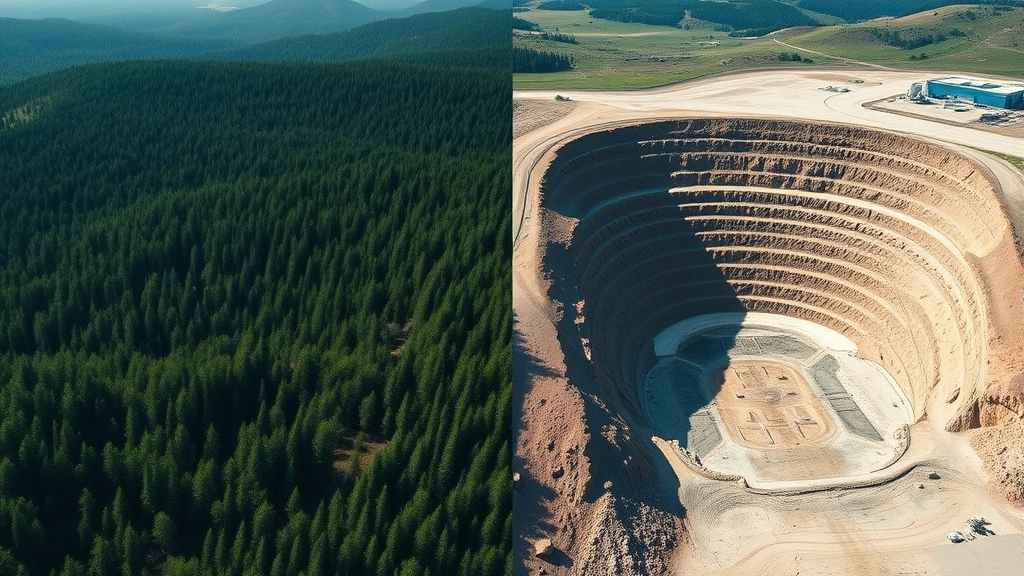
Impact of Economy on Ecosystems: A Scholar’s View
The relationship between economic systems and ecological health represents one of the most pressing intellectual challenges of our time. Modern economies operate within a framework that has historically treated natural ecosystems as infinite resources and waste repositories, a paradigm that scholarly research increasingly demonstrates as fundamentally unsustainable. Understanding how economic activities degrade, transform, and destabilize ecosystems requires interdisciplinary analysis that bridges environmental science, ecological economics, and systems thinking.
Economic structures shape environmental outcomes through multiple mechanisms: resource extraction, pollution generation, habitat destruction, and climate forcing. Yet the relationship is not merely unidirectional. Ecosystem degradation creates economic costs that compound over time, generating what economists term “negative externalities”—environmental damages not reflected in market prices. This scholarly examination explores the multifaceted connections between economic activity and ecosystem collapse, drawing on contemporary research, empirical data, and theoretical frameworks that illuminate pathways toward ecological-economic integration.
The stakes of this analysis extend beyond academic discourse. Global biodiversity loss, climate destabilization, and ecosystem service degradation threaten the material foundations of human prosperity. Understanding these connections at depth—as scholars in ecological economics have long argued—is prerequisite to designing economic systems that function within planetary boundaries rather than against them.

Economic Growth and Ecological Limits
Contemporary economic theory operates primarily within growth paradigms that assume perpetual expansion of material throughput and energy consumption. This assumption collides fundamentally with thermodynamic reality. Ecosystems operate within finite biogeochemical cycles—the carbon cycle, nitrogen cycle, water cycle—that cannot be expanded indefinitely. Economic systems that demand exponential growth in resource consumption inevitably generate ecological overshoot, a condition where human demands exceed ecosystem regenerative capacity.
The World Bank and other international economic institutions have begun acknowledging these constraints, though policy implementation lags substantially behind scientific understanding. Research demonstrates that wealthy nations have achieved per-capita ecological footprints 4-5 times sustainable levels. Global ecological footprint analysis reveals that humanity currently consumes resources at approximately 1.75 times Earth’s regenerative capacity annually, a deficit that accumulates as ecosystem degradation.
Scholars in environmental science and ecological economics have documented this trajectory extensively. The decoupling narrative—the claim that economic growth can be separated from resource consumption through efficiency—has proven largely illusory in practice. While relative decoupling (reduced resource intensity per unit GDP) has occurred in some sectors, absolute decoupling (declining total resource consumption while economies expand) remains rare and typically temporary, driven by outsourcing production to lower-income nations rather than genuine efficiency gains.
Economic systems structured around perpetual growth create systematic pressure toward ecosystem simplification. Biodiversity represents natural capital that provides no immediate economic return under current accounting frameworks, making its destruction economically rational within conventional cost-benefit analysis. This creates what might be termed a toxic work environment for ecosystems—conditions of relentless extraction and degradation justified by economic logic that externalized environmental costs from price signals and profit calculations.

Resource Extraction and Habitat Destruction
The material foundations of modern economies depend upon extraction of finite resources at accelerating rates. Mining, logging, agricultural expansion, and fossil fuel extraction constitute the primary mechanisms through which economic activity directly destroys habitats and reduces biodiversity. Humans affect the environment primarily through these extractive economic activities, which have transformed approximately 75% of Earth’s ice-free land surface and 66% of marine ecosystems.
Agricultural intensification exemplifies this dynamic. Converting diverse ecosystems into monoculture plantations eliminates habitat for countless species while degrading soil structure, reducing water retention, and increasing chemical pollution. The economic logic prioritizes yield maximization and cost reduction, not ecosystem preservation. A single hectare of industrial palm oil plantation replaces rainforest containing thousands of species with an economic system designed to produce a single commodity. The ecosystem services lost—carbon sequestration, water filtration, climate regulation—far exceed the economic value of palm oil production, yet conventional accounting renders these losses invisible.
Mining operations create permanent landscape transformation. Open-pit mining generates tailings containing heavy metals and sulfuric acid that contaminate watersheds for decades or centuries. The economic benefits—mineral extraction and processing profits—accrue to corporations and consuming nations, while ecosystem degradation costs are borne by local communities and global biosphere. This represents a systematic transfer of environmental costs to those with least economic power and least responsibility for generating demand.
Deforestation driven by economic demand for timber, cattle ranching, and agricultural land conversion eliminates carbon sinks while destroying habitat. The Amazon rainforest, which generates approximately 20% of global oxygen and regulates regional precipitation patterns, faces accelerating deforestation driven primarily by economic incentives for cattle ranching and soy production. Economic growth in beef and commodity crop sectors directly correlates with rainforest destruction, demonstrating the incompatibility between current growth models and ecosystem preservation.
Pollution as Economic Externality
Industrial and consumer economies generate pollution as an inherent byproduct of production and consumption. Chemical manufacturing, fossil fuel combustion, plastic production, and agricultural runoff create environmental contamination that damages ecosystem function and human health. Pollution represents perhaps the clearest example of economic externalities—costs imposed on society and ecosystems that market prices fail to capture.
Microplastics now pervade every ecosystem, from deepest ocean trenches to highest mountains, from soil to atmospheric precipitation. This global contamination results directly from economic systems designed around single-use plastic production and consumption. The externality is total—consumers and corporations benefit from cheap, convenient plastic products while environmental costs distribute globally and perpetuate indefinitely. Microplastics harm marine organisms, terrestrial invertebrates, and increasingly appear in human tissues, creating a feedback loop where pollution generated by economic activity harms the human populations that depend on that economy.
Chemical pollution from industrial agriculture—nitrogen and phosphorus runoff—creates dead zones in coastal ecosystems globally. The Gulf of Mexico, Baltic Sea, and numerous other regions experience seasonal hypoxia (oxygen depletion) driven by agricultural nutrient pollution. These dead zones eliminate fish habitat and disrupt marine food webs, yet the economic costs of agricultural intensification remain externalized. Farmers face economic pressure to maximize yields through chemical inputs; the resulting water pollution appears as a cost imposed on fishing communities and marine ecosystems rather than on agricultural producers.
Atmospheric carbon pollution represents perhaps the largest externality in human history. Fossil fuel combustion generates economic benefits through energy provision, transportation, and production, while climate forcing costs—sea level rise, extreme weather, ecosystem disruption, agricultural instability—will accumulate over centuries. Current economic systems systematically undervalue climate damages, treating atmosphere as a free waste repository capable of absorbing unlimited carbon dioxide. The scholarly consensus on climate economics demonstrates that genuine carbon pricing would require energy costs 3-10 times current levels, revealing how substantially current prices misrepresent true environmental costs.
The Toxic Work Environment of Extractive Economics
Economic systems structured around resource extraction and growth maximization create what might be understood as a toxic work environment—not for human workers alone, but for ecosystems themselves. Just as toxic workplace conditions undermine human wellbeing through stress, exploitation, and degradation, extractive economic systems undermine ecosystem health through relentless pressure toward simplification, degradation, and collapse.
The parallels warrant examination. In toxic human work environments, workers face conditions that systematically undermine their capacity to function, often justified by economic efficiency narratives. Ecosystems face similar conditions: relentless extraction pressure, pollution exposure, habitat simplification, and climate destabilization—all justified by economic growth imperatives. Ecosystems cannot negotiate, unionize, or exit these conditions. They experience what amounts to forced labor under conditions that generate profit for economic actors while accumulating damage to ecosystem function.
This framing illuminates why conventional environmental policy has largely failed. Treating ecosystem protection as a constraint on economic activity, rather than recognizing that economic activity fundamentally depends on ecosystem function, inverts appropriate priorities. Just as creating a humane workplace requires centering worker wellbeing rather than treating it as secondary to productivity, creating sustainable economies requires centering ecosystem health rather than treating it as external to economic calculation.
The toxic environment metaphor also highlights cumulative damage dynamics. Workers in toxic environments experience compounding health effects over time. Similarly, ecosystems under extractive pressure experience compounding degradation—soil depletion reduces productivity, which drives intensification, which further depletes soil; biodiversity loss reduces ecosystem resilience, which increases vulnerability to disruption, which accelerates further collapse. These feedback loops create accelerating degradation trajectories that become increasingly difficult to reverse.
Ecosystem Services and Economic Valuation
Ecological economics has developed frameworks for quantifying ecosystem services—the material and regulatory benefits ecosystems provide to human economies. These services include carbon sequestration, water filtration, pollination, climate regulation, soil formation, and countless others. Valuation studies consistently demonstrate that ecosystem services far exceed the economic value of extractive activities that destroy them.
A seminal study estimated global ecosystem services at approximately $125 trillion annually—approximately 1.7 times global GDP. Yet this value appears nowhere in national accounts, corporate balance sheets, or economic policy frameworks. A forest worth $1 million in timber extraction appears economically valuable when cut down, but the $10 million in annual ecosystem services it provides (carbon sequestration, water filtration, habitat provision) vanishes from economic calculation when the forest is destroyed.
This accounting failure represents perhaps the fundamental flaw in contemporary economics. By treating ecosystem destruction as economically beneficial (counting timber sales as income while ignoring the loss of ecosystem services), economic systems systematically incentivize their own material foundation’s destruction. It is as though a manufacturing firm counted the sale of its factory equipment as income while ignoring that this eliminated its production capacity—yet this is precisely how economies treat natural capital.
The United Nations Environment Programme and affiliated research institutions have documented that incorporating ecosystem service values into economic decision-making would dramatically alter policy priorities. Wetland protection, mangrove conservation, and rainforest preservation would emerge as economically superior to conversion to agriculture or development, once ecosystem services are properly valued. Yet policy implementation remains minimal, constrained by political economy factors and the distribution of economic benefits from extraction.
Pathways Toward Ecological Economics
Scholarly work in ecological economics has articulated frameworks for integrating economic activity within ecosystem constraints. These approaches reject growth-at-any-cost paradigms in favor of steady-state economics, circular economy models, and regenerative approaches that prioritize ecosystem health as the foundation for economic prosperity.
Circular economy frameworks attempt to redesign production systems to eliminate waste and maintain material value through multiple use cycles. Rather than linear extraction-production-disposal systems, circular approaches keep materials in use indefinitely. Sustainable fashion brands exemplify this transition, designing clothing for durability and recyclability rather than planned obsolescence. While currently marginal within global fashion systems, circular approaches demonstrate that economic viability need not require ecosystem destruction.
Carbon pricing mechanisms attempt to internalize climate externalities by assigning costs to emissions. When implemented at levels reflecting actual climate damages (estimated at $50-200 per ton CO2), carbon pricing would fundamentally restructure energy systems and transportation, making renewable energy economically superior to fossil fuels. The scholarly consensus supports carbon pricing as necessary for climate stabilization, yet political resistance remains substantial because current prices fail to reflect true costs.
Regenerative agriculture represents another pathway, designing food production systems that build soil health, increase biodiversity, and sequester carbon while producing food. These systems often generate lower yields per hectare than industrial monocultures but provide superior ecosystem services and greater resilience to climate variability. Reducing carbon footprint through regenerative approaches simultaneously improves ecosystem health and food security.
Scholars increasingly argue for fundamental economic restructuring toward steady-state models that maintain stable material throughput within ecosystem regenerative capacity. Rather than perpetual growth, these approaches prioritize stable populations, circular material flows, and equitable distribution. While politically challenging given current economic power structures, the alternative—continued growth within finite systems—guarantees eventual ecological collapse and economic disruption.
The transition requires policy innovation including natural capital accounting, payment for ecosystem services, removal of subsidies for extractive activities, and incorporation of ecosystem health metrics into national accounting systems. Human-environment interaction frameworks that recognize mutual dependence rather than separation would guide this restructuring.
International policy frameworks increasingly acknowledge these imperatives. The World Bank’s natural capital accounting initiatives and UNEP ecosystem assessments document ecosystem degradation and articulate economic implications. Yet policy implementation remains constrained by political economy factors—fossil fuel industries, agricultural corporations, and extractive industries actively resist policies that would internalize environmental costs.
FAQ
How do economists measure the impact of economic activity on ecosystems?
Ecological economists employ multiple measurement frameworks: ecosystem service valuation (quantifying benefits like carbon sequestration and water filtration in monetary terms), environmental impact assessment (documenting changes in biodiversity, water quality, soil health), and natural capital accounting (tracking natural resources and environmental assets in national accounts). Life cycle assessment traces environmental impacts of specific products across their entire production and consumption cycle. While these methods have limitations, they consistently demonstrate that economic activity imposes environmental costs far exceeding captured values.
Why don’t market prices reflect environmental costs?
Market prices reflect only costs borne by producers and consumers directly engaged in transactions. Environmental damages—pollution, habitat loss, climate forcing—are borne by society broadly and future generations, not by immediate market participants. This creates systematic underpricing of environmentally destructive activities. Economic theory recognizes this as the “tragedy of the commons”—when environmental resources lack clear ownership, individual economic actors have no incentive to restrict their use even when collective restriction would be beneficial. Correcting this requires policy intervention: carbon taxes, pollution regulations, ecosystem service payments, and natural capital accounting.
Can economic growth be decoupled from environmental impact?
Relative decoupling (reduced environmental intensity per unit economic output) has occurred in some sectors through efficiency improvements and technological change. Absolute decoupling (declining total environmental impact while economies expand) remains extremely rare and typically temporary. Most apparent decoupling results from outsourcing production to lower-income nations rather than genuine reduction in global environmental impact. Current evidence suggests that decoupling at sufficient scale and speed to prevent ecological collapse is unlikely without fundamental economic restructuring away from growth paradigms.
What would a sustainable economy look like?
Sustainable economic models prioritize ecosystem health as the foundation for human prosperity, maintaining material throughput within ecosystem regenerative capacity. They emphasize circular material flows (eliminating waste), equitable distribution, local resilience, and qualitative development rather than quantitative growth. These economies would feature: renewable energy systems, regenerative agriculture, circular production processes, natural capital accounting, and policies that internalize environmental costs. Transition would require substantial restructuring of current systems, but scholars increasingly argue this is necessary for long-term human flourishing.
How do ecosystem services relate to economic value?
Ecosystem services—carbon sequestration, water filtration, pollination, climate regulation—provide material benefits to human economies. Valuation studies demonstrate these services are worth trillions annually, yet conventional economics ignores them because they lack market prices. This creates perverse incentives: destroying a forest to sell timber appears economically beneficial despite eliminating far greater ecosystem service value. Incorporating ecosystem service values into economic decision-making would reverse many destructive policies, making conservation economically superior to extraction.


