Tasmanian Devil’s Role in Ecosystems: Study Insights
The Tasmanian devil, a carnivorous marsupial native to Tasmania, Australia, represents far more than a charismatic megafauna species. Recent ecological research has demonstrated that these fierce predators play a critical role in maintaining the structural and functional integrity of their ecosystems. As apex and mesopredators within Tasmania’s unique biodiversity landscape, Tasmanian devils influence nutrient cycling, regulate prey populations, and shape vegetation dynamics through complex trophic cascades. Understanding their ecological significance has become increasingly urgent as populations face severe threats from disease, habitat loss, and human pressures.
The economic implications of Tasmanian devil conservation extend beyond traditional conservation biology into the realms of ecosystem services valuation and natural capital accounting. When we examine environmental science frameworks, we recognize that predator populations generate measurable economic value through their regulatory functions. This article explores the multifaceted ecological role of Tasmanian devils, integrating recent scientific findings with economic perspectives on biodiversity conservation and ecosystem health.
Ecological Niche and Predatory Functions
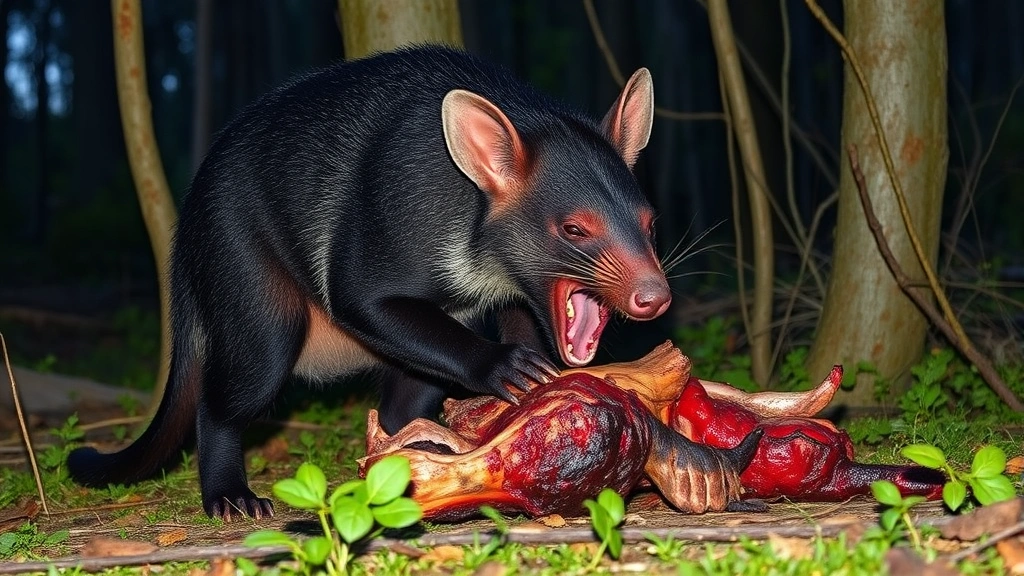
Tasmanian devils occupy a distinctive ecological niche within Tasmania’s carnivore guild, functioning as both apex predators and mesopredators depending on prey availability and environmental conditions. Adult devils, weighing between 8 and 12 kilograms, primarily hunt small to medium-sized mammals including wallabies, possums, and various rodent species. Their nocturnal foraging behavior and powerful jaws—capable of generating bite forces exceeding 1,200 pounds per square inch—enable them to access food sources unavailable to other predators, including bone marrow from carrion and tough-skinned prey.
The energetic requirements of Tasmanian devils drive substantial predation pressure on prey populations. A single devil consumes approximately 40 percent of its body weight when feeding, translating to significant biomass removal from prey populations. Research utilizing ecological monitoring methodologies has quantified predation rates across different habitats, revealing that devil density correlates with measurable reductions in small mammal populations. This predatory function extends beyond simple population control, as devils selectively target certain age classes and individuals, thereby altering prey population structure and demographic composition.
The scavenging behavior of Tasmanian devils represents an often-underestimated ecological function. Devils consume carrion from large vertebrates, including wallabies, kangaroos, and other wildlife, preventing carcass accumulation and reducing pathogen transmission risk. This nutrient redistribution service generates ecological value equivalent to that provided by vultures in African ecosystems, yet remains largely unquantified in economic terms. The removal of carrion also influences plant community structure by preventing localized nutrient overloading that would otherwise alter vegetation composition.
Trophic Cascades and Food Web Dynamics
Tasmanian devil predation initiates complex trophic cascades that propagate through multiple ecosystem levels, fundamentally altering community structure and ecosystem function. When devil populations decline, prey species experience reduced predation pressure, leading to population increases that subsequently impact vegetation through increased herbivory. Studies examining areas with depleted devil populations have documented significant changes in understory vegetation structure, with increased browsing by wallabies and possums resulting in reduced seedling recruitment and altered plant community composition.
The indirect effects of devil predation on vegetation extend to ecosystem-level consequences including altered fire regimes and habitat structure for other species. Dense understory vegetation resulting from reduced herbivory increases fuel loads and fire intensity, creating feedback loops that reshape ecosystem disturbance regimes. Conversely, areas maintaining healthy devil populations exhibit more open understory conditions, reduced fuel accumulation, and altered fire behavior. This demonstrates that human environment interaction through wildlife management directly influences fundamental ecosystem processes.
The competitive dynamics within Tasmania’s predator community reveal additional complexity in trophic interactions. Tasmanian devils compete with other carnivores including quolls, tiger snakes, and introduced foxes for shared prey resources. Devil presence suppresses smaller predator populations through both direct predation and resource competition, thereby structuring the entire carnivore community. Research from the World Bank environmental programs on ecosystem service provision emphasizes that maintaining predator diversity requires understanding these competitive relationships and their consequences for ecosystem stability.

Nutrient Cycling and Soil Health
The nutrient cycling functions performed by Tasmanian devils constitute a critical yet underappreciated ecosystem service. Devils transport nutrients across landscapes through predation and movement, concentrating prey biomass in predator tissues and subsequently redistributing nutrients through fecal deposition and mortality. This nutrient translocation mechanism becomes particularly significant in nutrient-limited ecosystems where Tasmania’s soils often display phosphorus and nitrogen constraints. Devils functioning as nutrient vectors enhance soil fertility in areas where they concentrate feeding activity.
The microbial communities within devil digestive systems process organic matter, transforming complex prey biomass into more readily available nutrient forms. Devil feces constitute a significant nutrient source for soil microorganisms and plant communities, particularly in areas distant from primary prey concentration zones. The nitrogen content of devil feces significantly exceeds that of most herbivore feces, reflecting their carnivorous diet and concentrated prey biomass processing. This creates nutrient hotspots that influence plant community composition and productivity patterns across the landscape.
Soil health indicators including microbial biomass, enzyme activity, and nutrient availability demonstrate measurable relationships with devil population density. Areas maintaining robust devil populations exhibit enhanced soil biological activity compared to areas experiencing population declines. These soil health improvements translate into increased ecosystem productivity and resilience, supporting greater overall biodiversity. The economic valuation of these soil health improvements remains underdeveloped, yet represents substantial natural capital enhancement that would otherwise require significant agricultural inputs to achieve comparable results.
Population Decline and Ecosystem Consequences
The catastrophic decline of Tasmanian devil populations since the 1990s, driven primarily by devil facial tumor disease (DFTD), has created an unintended ecological experiment demonstrating devil ecosystem importance. Population declines exceeding 80 percent in some regions have enabled documentation of ecosystem changes that would otherwise require decades of comparative research. These natural experiments reveal that devil removal triggers ecosystem reorganization across multiple trophic levels and functional groups.
Prey population responses to devil decline have been dramatic and well-documented. Wallaby populations in areas experiencing severe devil population crashes have increased 2-3 fold, leading to substantially increased herbivory pressure on vegetation. This intensified herbivory reduces plant species diversity, alters age structure of plant populations, and decreases seedling recruitment across multiple plant taxa. The cascading vegetation changes subsequently affect habitat quality for other wildlife species, including small mammals, birds, and invertebrates that depend on specific vegetation structure and composition.
The economic consequences of these ecosystem changes extend into human-dominated landscapes and agricultural systems. Increased wallaby populations spilling into agricultural areas increase crop damage and livestock competition, generating direct economic losses for farmers and rural communities. These costs represent negative externalities of devil population decline that directly impact how humans affect the environment through cascade effects. Quantifying these externalities demonstrates that devil conservation generates measurable economic benefits beyond traditional conservation justifications.
Fire ecology changes resulting from devil population decline represent long-term ecosystem consequences with profound implications for biodiversity and human safety. Increased fuel loads and altered vegetation structure in areas experiencing severe devil population declines generate conditions supporting larger, more intense wildfires. The 2019-2020 Australian bushfire season demonstrated these fire regime consequences, with regions experiencing severe devil decline showing particularly extensive fire damage and slower post-fire recovery patterns.
Conservation Economics and Management Strategies
The conservation of Tasmanian devils requires integrating ecological science with economic analysis to develop cost-effective management strategies. UNEP conservation programs emphasize that wildlife conservation investments generate ecosystem service returns exceeding implementation costs. Devil conservation investments yield measurable returns through maintained ecosystem functions including predation regulation, nutrient cycling, and fire regime stabilization.
Insurance populations maintained in captive breeding facilities represent a critical conservation strategy with quantifiable economic dimensions. These programs require substantial financial investment yet provide insurance against species extinction and enable future reintroduction efforts. The economic value of maintaining genetic diversity and population viability through captive breeding programs reflects long-term ecosystem service provision and existence value considerations. Cost-benefit analyses incorporating these ecosystem service values demonstrate that devil conservation represents economically rational investment in natural capital preservation.
Habitat management strategies supporting wild devil populations require integrating environmental awareness initiatives with landscape-level conservation planning. Protected areas maintained specifically for devil conservation generate spillover benefits for other species and ecosystem functions. These protected areas provide refugia for multiple wildlife species while simultaneously maintaining ecosystem processes dependent on devil predation. The economic valuation of these protected areas encompasses both direct conservation costs and ecosystem service provision benefits.
Disease management strategies addressing DFTD transmission represent critical conservation interventions with complex economic implications. Research from ecological economics institutions demonstrates that early investment in disease surveillance and population monitoring generates substantial long-term cost savings compared to reactive management of population crashes. The economic case for proactive disease management strengthens when ecosystem service provision is incorporated into cost-benefit analyses.
Human Interactions and Environmental Impact
Historical human activities fundamentally altered Tasmanian ecosystems in ways that modified devil ecological functions and population dynamics. Habitat loss through deforestation, land conversion, and urban development reduced available habitat and fragmented devil populations. These landscape changes constrain devil movement, reduce population connectivity, and increase vulnerability to localized extinction events. The economic drivers of habitat loss—agricultural expansion, resource extraction, and urban development—create persistent conflicts between devil conservation and human economic interests.
The introduction of exotic species including foxes, feral cats, and rabbits fundamentally restructured Tasmania’s predator-prey dynamics and altered the ecological context of devil populations. Foxes, in particular, compete with devils for shared prey resources and may directly prey on juvenile devils, thereby reducing devil population growth rates. The economic costs of managing invasive species to support devil conservation represent substantial ongoing expenditures that reflect the complex legacy of past human-environment interactions.
Climate change represents an emerging threat to Tasmanian devil populations and ecosystem functions through multiple mechanisms including altered prey availability, habitat changes, and disease dynamics. Warming temperatures may alter DFTD transmission rates and disease severity, creating new management challenges. The economic implications of climate change for devil conservation extend to broader ecosystem service provision, as climate-driven changes may fundamentally alter the ecological context supporting current ecosystem functions. Research integrating positive impacts humans have on the environment demonstrates that conservation efforts represent investment in ecosystem resilience and adaptive capacity.
Community engagement and environmental education initiatives supporting devil conservation recognize that long-term conservation success requires social license and public support. These programs generate co-benefits including increased environmental awareness, enhanced scientific literacy, and strengthened community connection to natural systems. The economic value of these social benefits, while difficult to quantify precisely, contributes substantially to overall conservation program value. Research from ecological economics journals emphasizes that conservation programs integrating social dimensions generate superior long-term outcomes compared to purely biological approaches.
FAQ
What is the primary ecological role of Tasmanian devils?
Tasmanian devils function as apex and mesopredators regulating prey populations, cycling nutrients across landscapes, and initiating trophic cascades that structure entire ecosystems. Their predation and scavenging activities influence vegetation composition, soil health, and fire regimes through multiple interconnected pathways.
How do declining devil populations affect other species?
Devil population declines reduce predation pressure on prey species, particularly wallabies and possums, leading to population increases that intensify herbivory on vegetation. These cascading effects alter plant community structure, reduce biodiversity, and modify habitat conditions for numerous other species.
What is devil facial tumor disease and why is it significant?
Devil facial tumor disease (DFTD) is a contagious cancer transmitted between devils through biting, causing severe population declines exceeding 80 percent in some regions. This disease represents the primary conservation threat to wild devil populations and has catalyzed ecosystem changes demonstrating devil ecological importance.
How do Tasmanian devils influence nutrient cycling?
Devils transport nutrients across landscapes through predation, movement, and fecal deposition, concentrating prey biomass and redistributing nutrients in forms available to soil organisms and plants. Their digestive processes transform complex prey biomass into more readily available nutrient forms, enhancing soil fertility and biological activity.
What conservation strategies are most effective for devil recovery?
Effective strategies integrate habitat protection, disease surveillance and management, captive breeding for insurance populations, invasive species control, and community engagement. Cost-benefit analyses incorporating ecosystem service provision demonstrate that these integrated approaches generate substantial economic returns beyond traditional conservation justifications.
How do climate changes affect Tasmanian devil conservation?
Climate change threatens devil populations through altered prey availability, habitat modifications, and potential changes to disease transmission dynamics. These climate-driven changes create management challenges requiring adaptive conservation strategies that enhance ecosystem resilience and adaptive capacity under future environmental conditions.


