
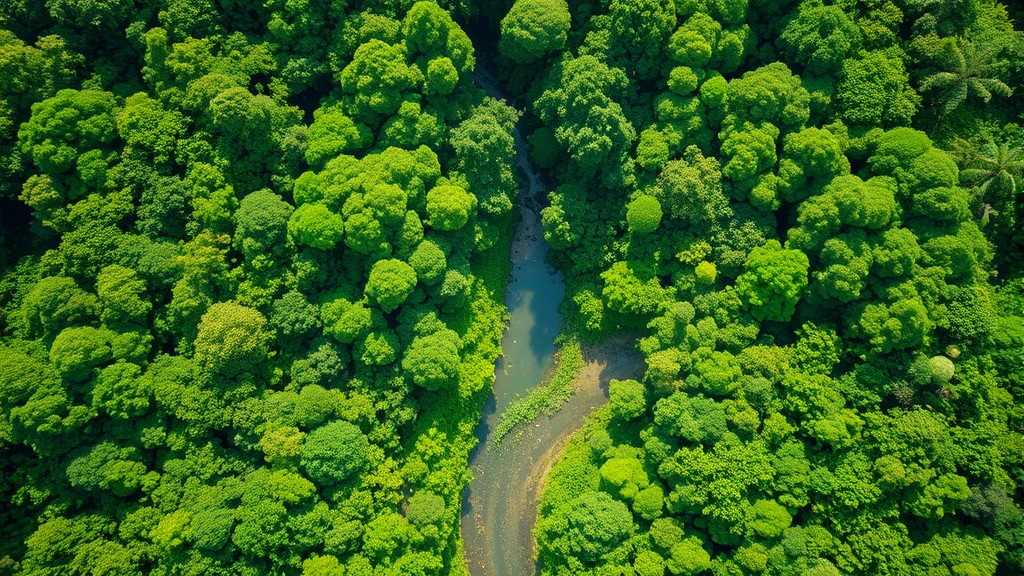
Can Eco-Tourism Boost GDP? Economist Insights on Environmental Economics and Economic Growth
Eco-tourism represents one of the fastest-growing sectors in the global tourism industry, with annual growth rates consistently exceeding 10-15% over the past two decades. As governments and economists increasingly recognize the potential of nature-based tourism to generate substantial economic returns, a critical question emerges: can eco-tourism genuinely boost GDP while maintaining ecological integrity? This article explores the intersection of environmental economics, sustainable development, and macroeconomic growth through the lens of eco-tourism’s contribution to national economies.
The relationship between ecosystem preservation and economic output has traditionally been viewed as antagonistic—a zero-sum game where environmental protection comes at the expense of growth. However, contemporary economic research challenges this narrative. Eco-tourism exemplifies how economic value can be extracted from pristine ecosystems without degrading them, creating what economists call “green growth” or “natural capital monetization.” Understanding whether eco-tourism can meaningfully impact GDP requires examining empirical data, methodological approaches to valuation, and the complex dynamics between tourism revenue, ecosystem services, and broader economic indicators.

Understanding Eco-Tourism Economics and GDP Contribution
Eco-tourism, defined as responsible travel to natural areas that conserves the environment and improves the well-being of local communities, generated an estimated $181 billion globally in 2021, representing approximately 3-6% of total international tourism revenue. For developing nations with significant biodiversity assets, eco-tourism’s contribution to GDP can be substantially higher. Costa Rica, for instance, derives approximately 4% of its national GDP directly from tourism, with eco-tourism accounting for a significant portion of this figure.
The GDP contribution of eco-tourism operates through multiple economic channels. Direct contributions include revenue from accommodation, guided tours, transportation, and entrance fees. Indirect contributions emerge through supply chain multiplier effects—local farmers supplying restaurants, construction companies building infrastructure, and artisans producing handicrafts. Induced contributions result from workers spending wages within their communities, creating additional economic activity. Research from the World Bank indicates that tourism multipliers in developing countries typically range from 1.5 to 2.5, meaning each dollar of direct tourism spending generates $1.50-$2.50 in total economic activity.
The macroeconomic significance depends heavily on baseline economic structure. For small island developing states like Seychelles or Mauritius, where tourism accounts for 20-30% of GDP, eco-tourism growth directly influences national income, foreign exchange earnings, and employment rates. The relationship between human environment interaction and economic prosperity becomes particularly evident when examining how ecosystem quality directly correlates with tourism competitiveness and premium pricing power.
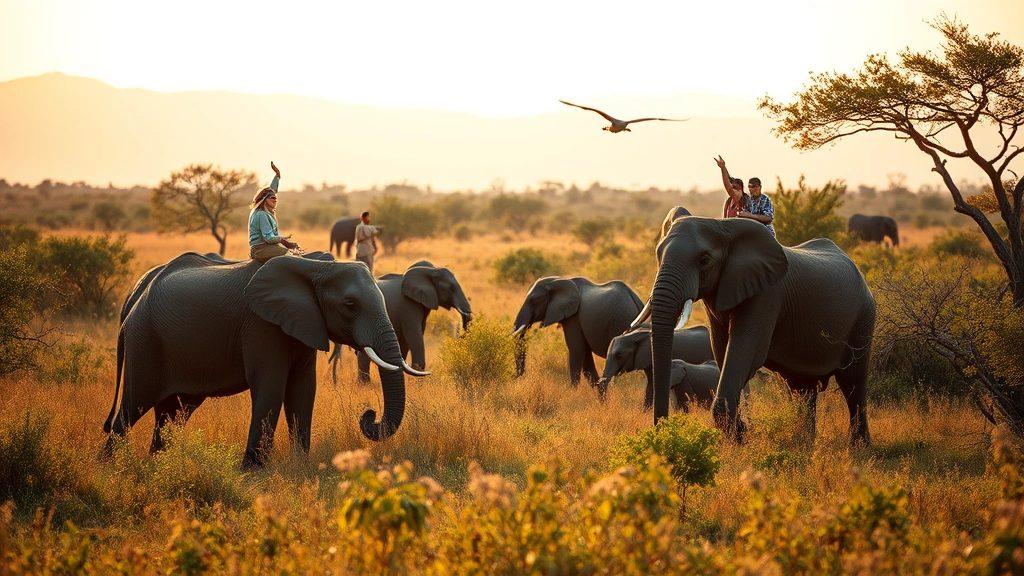
Measuring Economic Impact: Methodologies and Challenges
Accurately quantifying eco-tourism’s GDP contribution presents significant methodological challenges that economists must navigate carefully. The primary approach involves input-output analysis, which traces spending through economic sectors, and computable general equilibrium (CGE) modeling, which accounts for economy-wide adjustments and feedback effects. These methods provide different estimates, often varying by 20-40%, depending on assumptions about substitution effects and crowding-out phenomena.
Attribution remains problematic—determining what portion of tourism revenue stems specifically from ecological appeal rather than cultural heritage, adventure activities, or hospitality amenities requires sophisticated econometric decomposition. A visitor to Costa Rica might be drawn equally by rainforest ecosystems, indigenous communities, and adventure sports, making revenue attribution ambiguous. Surveys suggest that approximately 70-80% of eco-tourists cite environmental quality as a primary motivation, but this self-reported data may overstate true preferences compared to revealed preference analysis.
Double-counting represents another critical issue. When GDP accounting systems incorporate both direct tourism receipts and ecosystem service valuations, they may count the same environmental benefit twice. If a pristine watershed generates tourism revenue and simultaneously provides water purification services worth $X million, including both in GDP calculations artificially inflates environmental contributions to growth. Proper environmental accounting requires careful delineation between service flows and their economic valuation.
The temporal dimension adds complexity—eco-tourism creates immediate revenue flows but generates long-term ecosystem sustainability benefits. Traditional GDP accounting, which treats all economic activity in a given year equally regardless of sustainability implications, fails to capture whether current tourism practices maintain or deplete the natural capital stock. This limitation suggests that definition of environment science perspectives should inform economic measurement frameworks more thoroughly.
Case Studies: Eco-Tourism Success Stories
Rwanda’s mountain gorilla eco-tourism demonstrates compelling economic returns. By designating gorilla tourism permits at $1,500 per person and limiting daily visitors to 80, Rwanda generated approximately $50 million annually from gorilla tourism alone. This revenue, representing roughly 5-7% of national tourism earnings, funded conservation efforts while generating employment for 2,000+ guides, trackers, and support staff. The economic incentive for gorilla protection created political support for conservation that exceeds what traditional funding mechanisms achieved.
Ecuador’s Galápagos Islands illustrate both potential and pitfalls. Tourism revenue exceeded $700 million annually at peak levels, directly supporting 40% of local employment. However, uncontrolled growth threatened the very ecosystems attracting visitors, demonstrating that economic maximization without capacity constraints undermines long-term sustainability. Ecuador subsequently implemented stricter visitor quotas and environmental regulations, accepting lower short-term GDP growth to preserve long-term economic viability.
Kenya’s wildlife-based tourism generates approximately $1 billion annually, representing 5-7% of GDP and supporting 250,000+ jobs. The economic value of living wildlife—through tourism revenue and ecosystem services—substantially exceeds the value of wildlife conversion to agriculture or development, creating powerful incentives for conservation. However, benefits concentrate among tour operators and hotel owners rather than local communities, illustrating how how humans affect the environment economically depends heavily on institutional distribution mechanisms.
Bhutan’s famous “Gross National Happiness” framework integrates ecological preservation with economic development through tourism policy. By requiring visitors to book through licensed operators and imposing daily tariffs ($250-$290 per person), Bhutan maintains strict environmental controls while generating substantial revenue relative to its small population. This approach prioritizes long-term ecosystem stability over short-term GDP maximization, yielding consistent tourism revenue without capacity strain.
Environmental Accounting and Natural Capital Valuation
The relationship between eco-tourism GDP contributions and natural capital preservation requires sophisticated environmental accounting frameworks. Traditional GDP measures exclude environmental degradation, meaning an economy could theoretically boost GDP while depleting the natural resources generating tourism appeal—an economically irrational outcome described as “uneconomic growth.”
Adjusted Net Savings (ANS) or “Genuine Savings,” developed by World Bank economists, addresses this limitation by subtracting natural capital depreciation from conventional GDP growth. This measure reveals whether economic growth represents true wealth accumulation or merely resource liquidation. Countries investing eco-tourism revenue in conservation and sustainable infrastructure demonstrate positive ANS growth, while those extracting rents without reinvestment show declining genuine savings despite rising nominal GDP.
Ecosystem service valuation—quantifying benefits like water purification, carbon sequestration, and biodiversity support in monetary terms—provides another analytical tool. Research in ecological economics journals demonstrates that intact tropical forests generate $2,000-$6,000 per hectare annually in ecosystem services (carbon storage, water cycling, pollination, genetic resources), often exceeding agricultural conversion value. Eco-tourism captures a portion of this value through willingness-to-pay for access, creating economic incentives for preservation.
The concept of how to reduce carbon footprint intersects with eco-tourism economics when considering transportation emissions offsetting. Long-distance air travel to eco-tourism destinations generates substantial carbon footprints, potentially negating conservation benefits. Net environmental impact requires lifecycle carbon accounting comparing tourism-driven conservation against emissions from visitor transportation.
Sustainable Development Goals and Economic Integration
The United Nations Environment Programme (UNEP) identifies eco-tourism as a key mechanism for achieving multiple Sustainable Development Goals simultaneously. SDG 8 (Decent Work and Economic Growth), SDG 12 (Responsible Consumption), SDG 13 (Climate Action), SDG 14 (Life Below Water), and SDG 15 (Life on Land) all align with eco-tourism development. This multi-goal alignment creates opportunities for integrated economic planning where GDP growth and environmental objectives reinforce rather than conflict with one another.
Developing countries with significant biodiversity assets increasingly recognize eco-tourism as a comparative advantage in global markets. Unlike manufacturing or resource extraction, where developed nations dominate through capital and technology, biodiversity and ecosystem quality represent endowments where developing nations possess natural advantages. Policies leveraging these advantages through sustainable fashion brands principles—emphasizing authenticity, environmental responsibility, and community benefit—create differentiated market positioning.
Economic integration mechanisms, such as payment for ecosystem services (PES) programs, link conservation directly to income generation. Costa Rica’s pioneering PES system, established in 1997, compensates landowners for maintaining forest cover, generating $50-100 million annually in conservation payments. By monetizing ecosystem services, these mechanisms create economic logic for preservation that aligns with profit maximization, a powerful alignment in market economies.
Challenges and Limitations to GDP Growth
Despite eco-tourism’s potential, significant limitations constrain GDP contributions. Carrying capacity constraints prevent unlimited scaling—destinations possess maximum sustainable visitor numbers beyond which environmental degradation accelerates and experience quality declines, both reducing tourism appeal and economic viability. A pristine beach accommodating 500 daily visitors may degrade with 2,000 visitors, reducing its economic value and future earning potential.
Leakage—the proportion of tourism revenue flowing outside local economies—substantially reduces net GDP contributions. International hotel chains, tour operators, and airlines often extract 50-80% of tourism spending, particularly in developing countries lacking domestic tourism infrastructure. Local communities receive employment wages but not ownership returns, limiting multiplier effects and wealth accumulation.
Seasonality concentration creates economic inefficiency. Many eco-tourism destinations experience extreme seasonal fluctuations, with 70-80% of annual visitors arriving during brief peak seasons. This pattern requires infrastructure oversized for average utilization, increases labor market volatility, and reduces economic efficiency compared to steadier income streams.
Vulnerability to external shocks has become evident through pandemic and economic crisis experiences. Countries dependent on eco-tourism for substantial GDP portions experienced economic collapse when travel restrictions eliminated tourism revenue. This fragility suggests that while eco-tourism can boost GDP, it should complement rather than replace diversified economic structures.
The relationship between blog home resources and economic development requires acknowledging that not all communities possess tourism-viable ecosystems. Landlocked, arid regions or areas with limited biodiversity cannot rely on eco-tourism, requiring alternative sustainable development pathways. Geographic inequality in eco-tourism potential may exacerbate regional economic disparities.
FAQ
How much can eco-tourism realistically contribute to national GDP?
Eco-tourism contributions vary dramatically by country and context. Small island developing states may derive 20-30% of GDP from tourism, with eco-tourism representing 30-50% of tourism revenue. Larger diversified economies typically see 1-5% GDP contributions. Realistic expectations depend on ecosystem endowments, existing tourism infrastructure, and market positioning rather than universal percentages.
Does eco-tourism actually protect environments or just create green-washing?
Eco-tourism creates economic incentives for conservation, but protection effectiveness depends on governance quality and revenue reinvestment. Well-designed systems with strict environmental standards, community benefit-sharing, and reinvestment in conservation demonstrate genuine environmental protection. Poorly governed systems prioritizing short-term revenue over sustainability generate minimal conservation benefits.
Why don’t all countries maximize eco-tourism for economic growth?
Multiple constraints limit eco-tourism expansion: geographic limitations (not all regions have tourism-viable ecosystems), infrastructure requirements (roads, utilities, accommodation demand substantial upfront investment), governance capacity (enforcement of environmental standards requires effective institutions), and market dynamics (destinations require differentiation and marketing to attract visitors). Additionally, ecosystem carrying capacities create natural scaling limits.
How do economists measure whether eco-tourism truly boosts GDP or merely redistributes it?
Economists use input-output models tracking spending multipliers, computable general equilibrium models accounting for economy-wide effects, and satellite account analysis isolating tourism-specific contributions. Genuine GDP growth appears through increased total employment, higher productivity, and expanded economic capacity. Redistribution alone would show spending shifts without aggregate growth, identifiable through comprehensive economic accounting.
What’s the relationship between eco-tourism revenue and actual conservation outcomes?
Revenue generation doesn’t automatically ensure conservation—institutional design matters critically. Systems incorporating strict environmental standards, community benefit-sharing, transparent governance, and reinvestment commitments demonstrate strong conservation outcomes. Systems prioritizing revenue extraction without environmental constraints often generate economic growth at ecosystem expense, producing short-term GDP gains followed by long-term decline as resource degradation reduces future earning capacity.